What Makes a Tastemaker?
And who are the true tastemakers?
What Makes a Tastemaker?
And who are the true tastemakers?
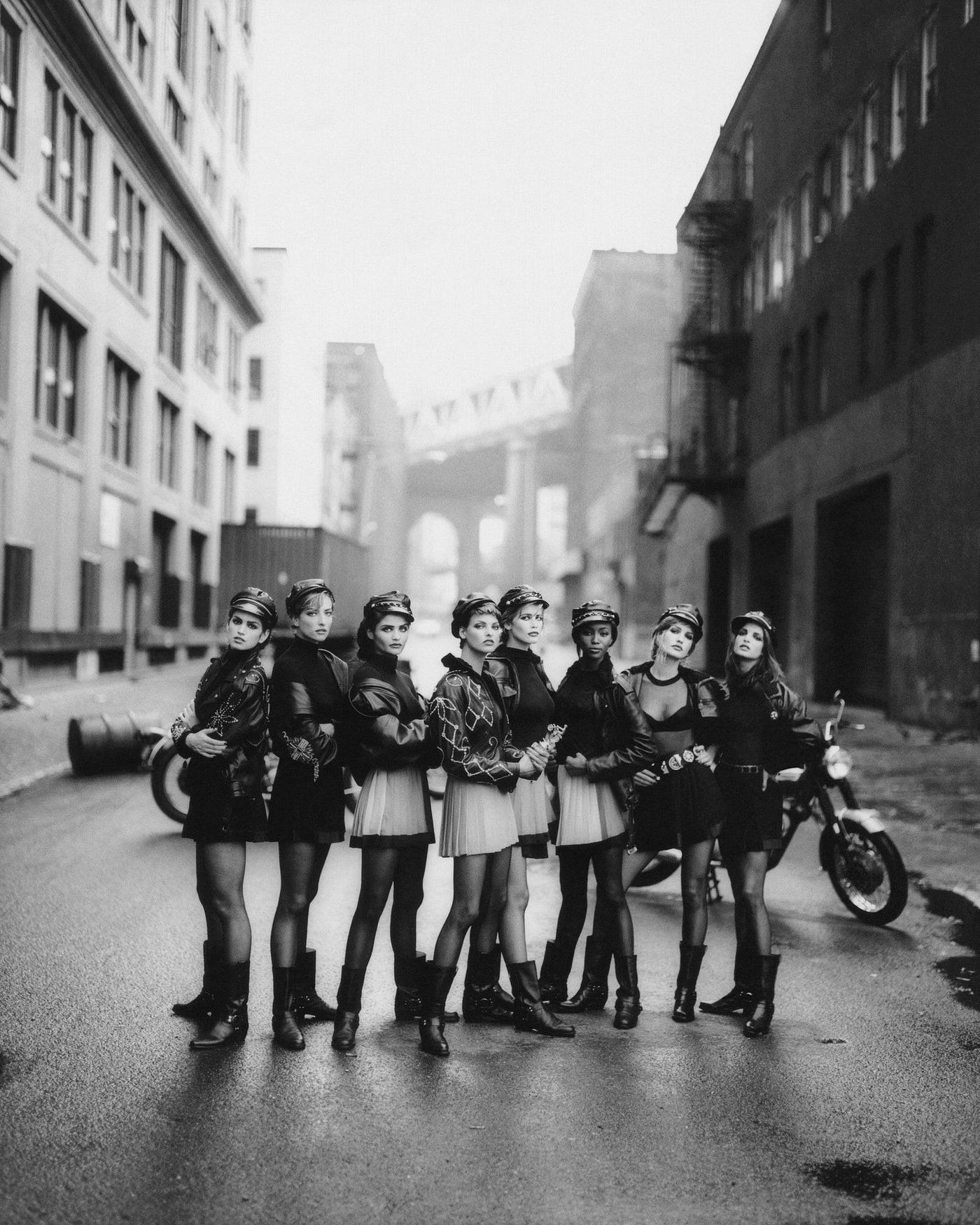
1990s Supermodels (Photos Courtesy of Vogue)
I recently listened to a podcast where someone mentioned the book Aesthetic Intelligence. The name immediately caught my attention, so I did some digging, only to discover that it has grown into both an advisory firm and something of a movement. The firm describes its work as being “grounded in scientific, psychological, and socio-cultural research” …in other words, science.
It got me thinking about beauty. Studies have shown patterns in plant cells that naturally create beautiful structures. The most attractive faces are often associated with symmetry and mathematical proportions. Even Aristotle believed beauty was connected to structure, order, and logic.
Which made me wonder: if beauty, aesthetics, and even what we consider “cool” are all influenced by science, what exactly is good taste?
Is it something we collectively discover, or does someone have to create it first?
Every trend has to begin somewhere. So what separates the people everyone follows from everyone else?
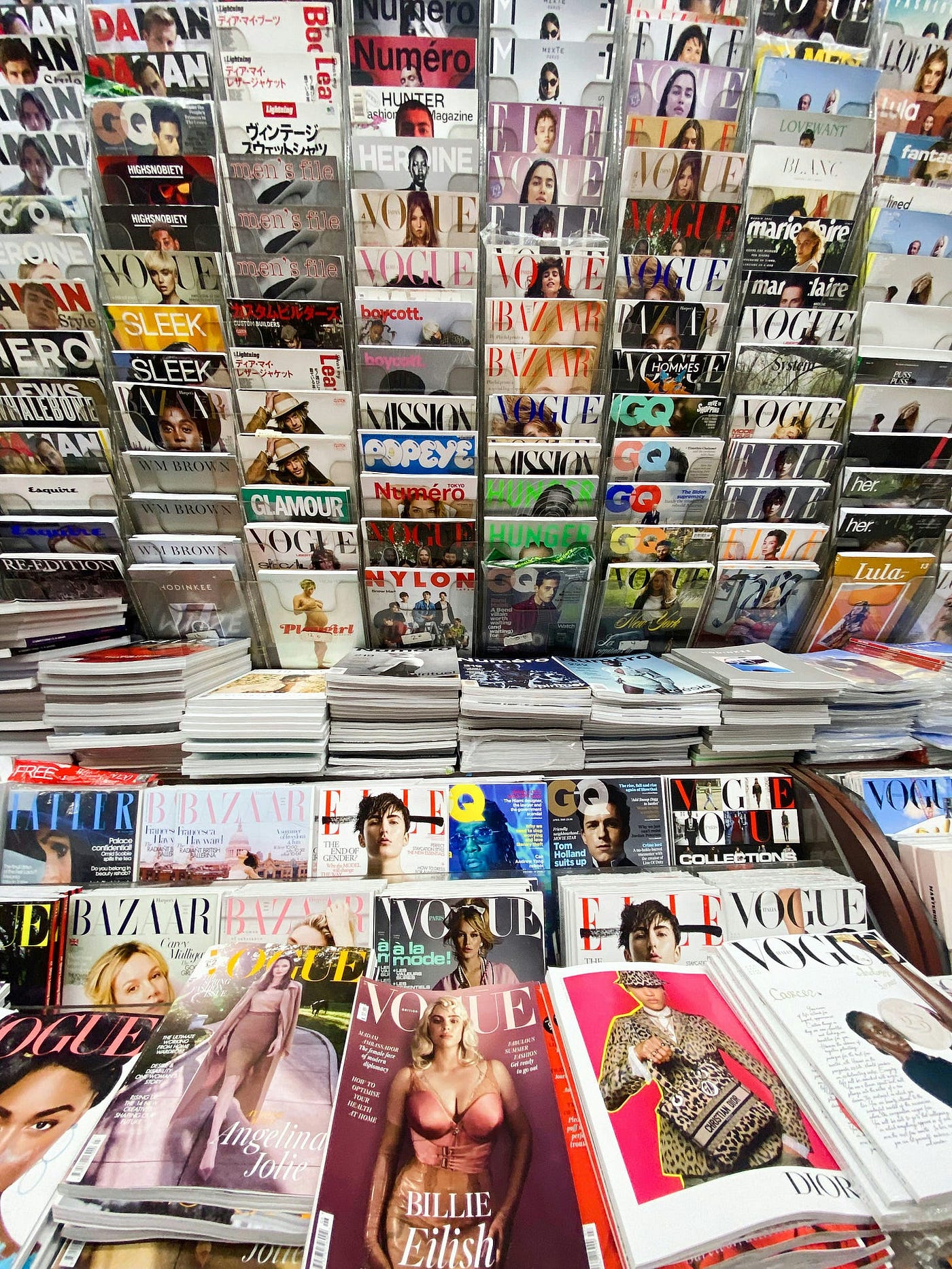
Fashion Magazine Spread (Photo courtesy of Unsplash)
Can you actually develop taste?
Growing up, everying had to match: blue shorts, blue shoes, a blue shirt, a blue bag, and probably a blue hair clip. Okay we may be talking middle school but still, matchy-matchy was in.
Then I’d flip through magazines and think, wow that outfit is a striped pant and a plaid shirt, and the colors don’t even match. How do people like this?
As I got older, somewhere along the way I realized taste wasn’t about following rules. It was about understanding why something works. Why one unexpected combination feels exciting while another feels forced. Why certain objects, colors, or ideas create just the right amount of tension.
How is taste actually defined?
According to the Oxford Dictionary, taste, outside of a person’s palate, is defined as “a person’s tendency to like or be interested in something,” with similar words including liking, fondness, preference, and desire.
It is also defined as “the ability to discern what is of good quality or of a high aesthetic standard,” with related words such as judgment, discernment, cultivation, refinement, elegance, and style.
So it would seem that having “good taste” means having the ability to discern quality, appreciating refinement, and operating within certain cultural norms, while hopefully also genuinely liking the thing itself.
What’s interesting, though, is that none of these definitions mention originality.
Taste isn’t described as creating something new.
It’s described as knowing what is worth noticing.
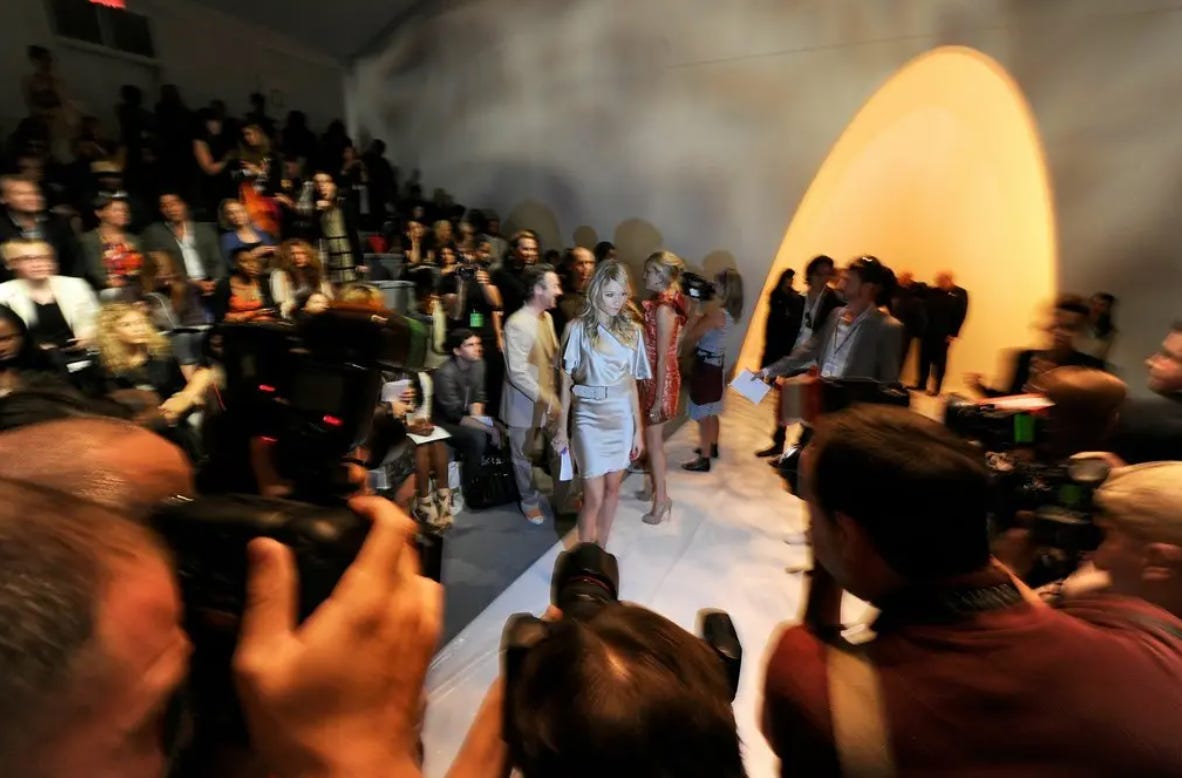
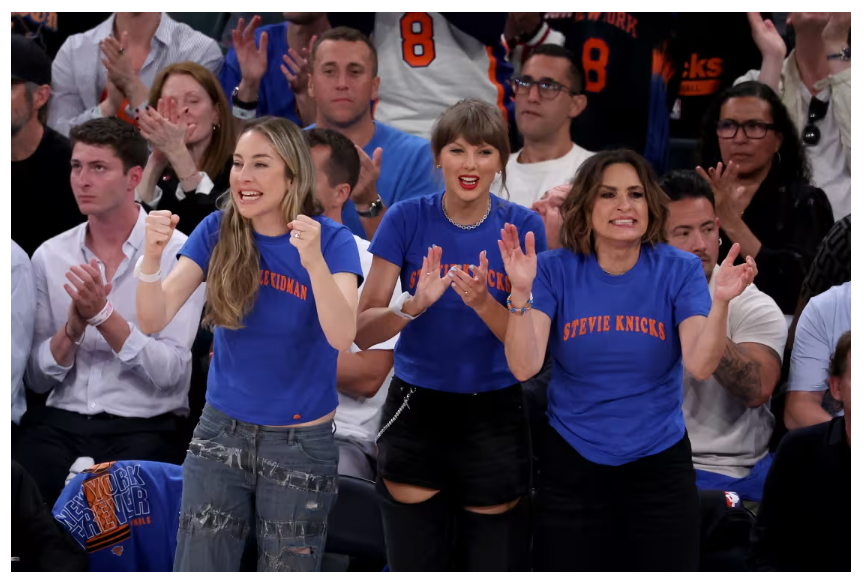
Photographing Tastemakers (Photo courtesy of The New York Times)
Authenticity: not just another buzzword
As much as I love words, and would happily dissect another definition, authenticity hardly needs an introduction. It’s one today’s most talked about buzzwords.
In a culture increasingly centred around digital creators, authenticity is something people deeply value, yet often struggle to find. At its core, authenticity is knowing what matters to you and remaining true to those values despite external pressure to think, behave, or consume differently.
And the more I think about it, it feels as if authenticity isnt the point: conviction is.
Are there true tastemakers?
Humans are social learners. We copy people we admire and use other people as shortcuts for what’s worth paying attention to. If enough respected people wear something, our brain starts seeing it differently. This is exactly how online creators work. We follow people whose perspective we trust, and over time, we begin to trust their taste as well.
Psychologists call one explanation for this the mere exposure effect: the more often we’re exposed to something, the more likely we are to like it.
Maybe that’s why trends don’t always arrive with instant appeal. I.e.: jorts.
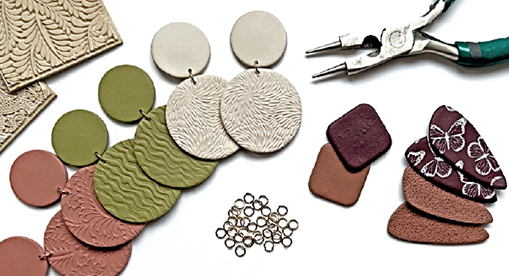
Learning about taste through culture and art (Photo courtesy of Unsplash)
How does one go about developping taste?
When I researched how to develop taste, I had to laugh. One of the first results was a Wikipedia article on acquired taste, explaining that developing one involves “developmental maturation, genetics (of both taste sensitivity and personality), family example, and biochemical reward properties of foods.”
In other words: how children eventually learn to like broccoli.
Interestingly, I would argue that aesthetic taste develops in much the same way.
It involves maturity, personality, family influence (perhaps growing up watching a parent who loved fashion, interiors, or art), and positive reinforcement, something as simple as someone complimenting your outfit and encouraging you to keep experimenting.
Perhaps aesthetic taste grows the same way our palate does: Exposure. Curiosity. Repetition.
Where does taste begin?
I’ve worked in fashion for many years, and one of the industry’s enduring reputations is that it can be incredibly judgmental. Perhaps that’s one way of qualifying taste, as we explored earlier, but I’m not convinced that’s the whole story.
You can’t work in fashion without eventually seeing The Devil Wears Prada, particularly the now-famous cerulean sweater monologue that many can recite by heart:
“That sweater is not just blue… it’s actually cerulean.”
The important idea isn’t the colour cerulean.
It’s that fashion is a supply chain of ideas.
Ideas move. They trickle from designers to editors, to stylists, to celebrities, to influencers, to consumers, and eventually into the broader culture. This is one way taste is diffused.
But it still doesn’t answer the more interesting question: where does it begin?
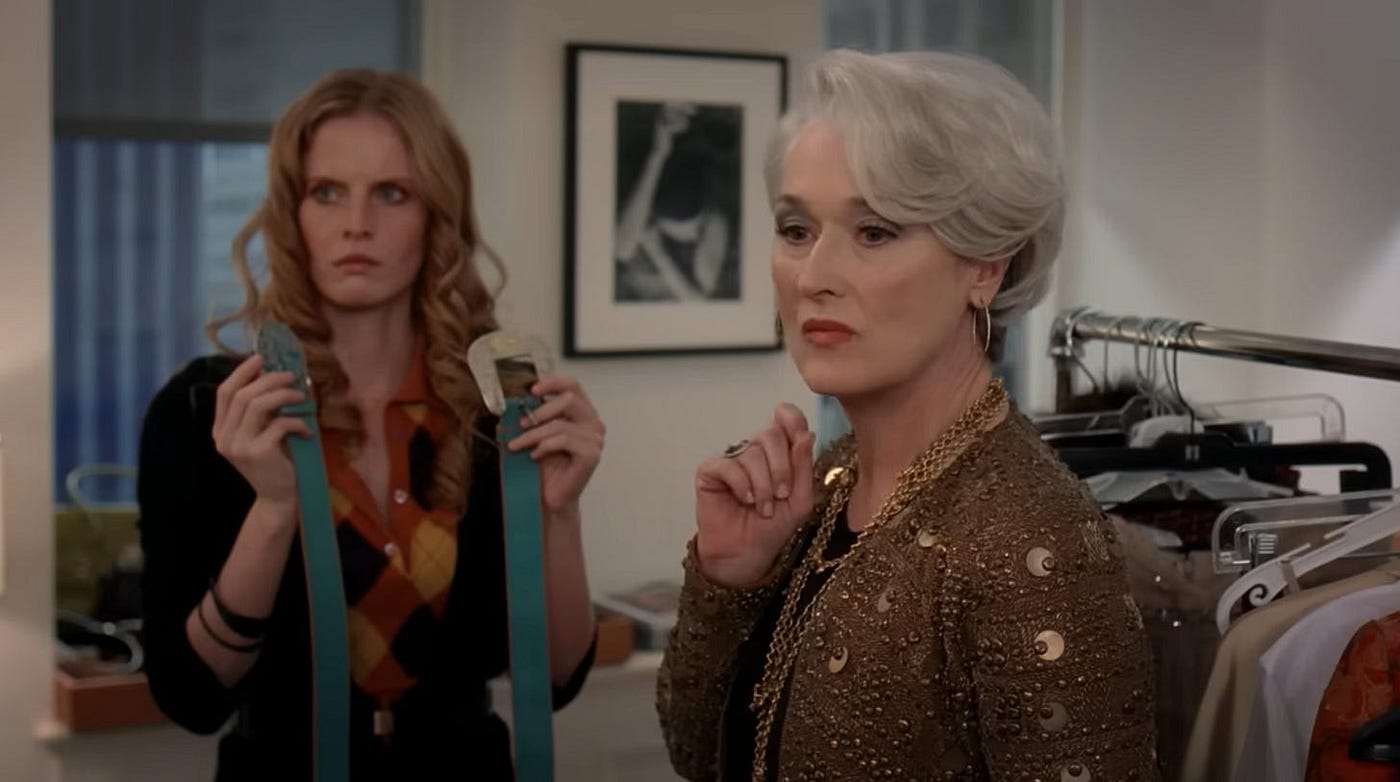
Watch the Devil Wears Prada monologue here.
Who creates culture?
The greatest designers and tastemakers rarely invent from nothing. They collect, edit, sythenticize. Then they offer the world their interpretation.
It seems their greatest superpower isn’t necessarily creativity, but observation.
They notice the artist no one else has discovered yet. The chair everyone walks past. The tiny café before it ends up on every “best of Paris” list. The silhouette that’s interesting before others wear it.
Taste seemingly isn’t the ability to predict what everyone else will like. It’s the ability to notice something before everyone else does — and to keep believing in it long enough that others eventually follow.
It’s the confidence to like something before it has social proof.
Maybe beauty really does have mathematics behind it.
Maybe symmetry is universal.
But taste feels different.
Taste isn’t a formula. It’s a conversation between curiosity, culture, and courage. By people who pay attention.
And perhaps the people we call tastemakers aren’t creating beauty at all.
They’re simply the first to recognize it.
—
Thanks for reading! Would love if you could give this a follow! -K
메타데이터
- post_id
- 72f5bec22c9c
- slug
- what-makes-a-tastemaker-72f5bec22c9c
- url
- https://medium.com/@kathleenc/what-makes-a-tastemaker-72f5bec22c9c
- canonical_url
- https://medium.com/@kathleenc/what-makes-a-tastemaker-72f5bec22c9c
- author_url
- https://medium.com/@kathleenc
- status
- ok
- fetched_at
- 2026-07-18 09:10:59