What Counts as Police Brutality Under U.S. Law?
Police brutality is a term that sparks outrage, grief, and urgent calls for accountability. But what is actually considered police…
What Counts as Police Brutality Under U.S. Law?
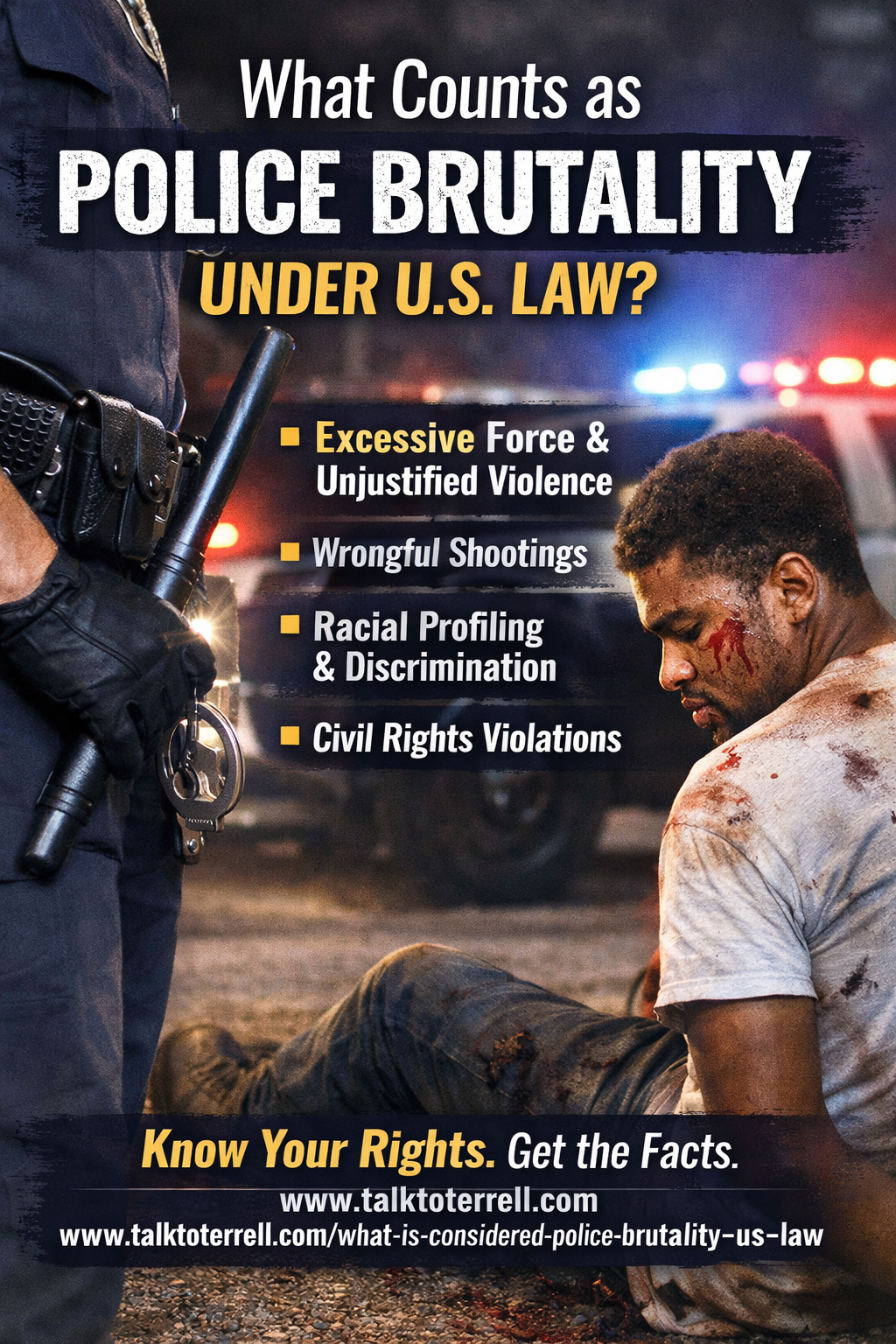
Police brutality is a term that sparks outrage, grief, and urgent calls for accountability. But what is actually considered police brutality under U.S. law? Understanding the legal definition is essential for victims, families, and communities seeking justice.
Under federal law, police brutality typically falls under violations of constitutional rights particularly the Fourth, Eighth, and Fourteenth Amendments. The Fourth Amendment protects individuals from unreasonable searches and seizures, which includes the use of excessive force during arrests or detentions. The Eighth Amendment prohibits cruel and unusual punishment, often applied in cases involving incarcerated individuals. The Fourteenth Amendment guarantees due process and equal protection under the law, making discriminatory or abusive police actions unconstitutional.
Excessive force is one of the most common forms of police brutality. Courts evaluate excessive force claims based on whether the officer’s actions were “objectively reasonable” under the circumstances. This standard was established in the landmark Supreme Court case Graham v. Connor (1989). Factors considered include the severity of the alleged crime, whether the suspect posed an immediate threat, and whether the individual was resisting arrest or attempting to flee.
Police brutality can take many forms, including:
- Physical violence beyond what is necessary to control a situation
- Wrongful shootings or unjustified use of deadly force
- Excessive use of tasers, batons, or restraints
- Verbal abuse combined with intimidation or coercion
- Racial profiling or discriminatory enforcement
- Failure to intervene when another officer uses excessive force
Importantly, not every use of force is illegal. Law enforcement officers are permitted to use reasonable force to protect themselves and others. However, when force becomes unnecessary, disproportionate, or retaliatory, it may cross the line into brutality.
Victims of police misconduct may have the right to file a civil rights lawsuit under 42 U.S.C. § 1983. This federal statute allows individuals to seek damages when government officials violate constitutional rights. In some cases, officers may also face criminal charges under federal civil rights laws if misconduct is willful and egregious.
Communities like Victorville, CA and throughout California have seen increasing discussions around accountability, transparency, and reform. Understanding what qualifies as police brutality under U.S. law empowers individuals to recognize violations and take action. Legal guidance from a knowledgeable civil rights attorney can make the difference between silence and justice.
If you or a loved one believe your rights were violated, it is critical to document the incident, seek medical attention if needed, gather witness information, and consult experienced legal counsel as soon as possible.
메타데이터
- post_id
- 7a3f9c77bc2d
- slug
- what-counts-as-police-brutality-under-u-s-law-7a3f9c77bc2d
- url
- https://medium.com/@lawofficesofjamessterrell/what-counts-as-police-brutality-under-u-s-law-7a3f9c77bc2d
- canonical_url
- https://medium.com/@lawofficesofjamessterrell/what-counts-as-police-brutality-under-u-s-law-7a3f9c77bc2d
- author_url
- https://medium.com/@lawofficesofjamessterrell
- status
- ok
- fetched_at
- 2026-07-15 07:31:03