When AI Comes To The Workplace: Ethics, Employee Empowerment And Privacy
Notes and thoughts from the workshop on “The Ethics of AI in Workplaces” at the University of Greenwich.

When AI Comes To The Workplace: Ethics, Employee Empowerment And Privacy
Notes and thoughts from the workshop on “The Ethics of AI in Workplaces” at the University of Greenwich.
If the AI industry and the pundits are to be believed, artificial intelligence will revolutionise the workplace like no development since the introduction of the computer, or even since the industrial revolution. Or maybe it will not. But considering how hard industry and governments pushing AI into the workplace, it is worth looking at what ethical questions arise.
This was the aim of the workshop “Ethics of AI in Workplaces” at the University of Greenwich this week. This article will attempt to give a brief summary of the presentations, and look into some further questions arising from it.
The workshop
The first part of the workshop, by Kate Vredenburgh, was dedicated to question of how the introduction of AI affects employees’ autonomy in the workplace, how it can lead to a loss of control by making a “role feel smaller and more mechanical”, and increased alienation.
Tom Parr from the University of Warwick picked up on that asking about empowerment of workers in the age of AI. While the industry focuses on increased productivity, Parr asks what ethical question we should ask to judge the alleged progress: “If progress does not advance the poorest, then it should be condemned as unjust.”
Flore Vromman looked into the deployment of AI based algorithms in areas such as human resource management, looking at the difference between “accurate” and “fair” algorithms. The human perspective is often missing in the evaluation of fairness-aware algorithms and the “accuracy-fairness tradeoffs”. We tackled the multiple issues around AI in hiring in Misaligned last year’s article “Bot For Hire, Ethics Of AI In Recruitment”, which was also based on a workshop at the University of Greenwich.
Thomas Feretti, University of Greenwich, who organised the workshop, looked at the implications of AI in the workplace for employee privacy. The possibility to process huge amount of data, such as audio or location tracking with AI is leading to increased surveillance at the workplace. A PwC study from 2021 showed that 44% of employees surveyed showed a willingness to be tracked by wearables to “track productivity”. Feretti sees empowerment, e.g. via Employee Privacy Councils or co-determination mechanisms (in a form as they exist in Germany) as the best way to represent and protect employee’s privacy. He points out that employers rarely use the “consent” mechanism of the GDPR and more often evade the regulation by citing “security” or “legitimate interest” (productivity).
Chioma Nawanko concluded the talks with an overview of AI being used to increase productivity in the workplace, including the tools applied to get there.
Questions and thoughts
To look at the issues of AI in the workplace from multiple perspective is helpful. We certainly though should not retreat to a position where the application of AI at work is accepted as inevitable, which is the current leading narrative of the industry.
To paraphrase Tom Parr’s question, “if AI does not help the most disadvantaged, what is it good for?”. And if AI is such a productivity boost, then where are the fruits of this productivity for society?
The idea of empowerment and participation, such as in decision-making about the use of AI, or with regard to privacy issues, is important. But privacy is an individual right that one can, and probably should not, that is difficult to delegate to a works council or other representation. Where intrusion into privacy touches issues of human rights, a majority decision can not overrule the individual.
Lastly, there is the question of how “success” and “increased productivity” through AI are actually measured, and what part of the economy it affects. With most consultants and decision makers currently being biased towards the tech industry, and many “success stories” have turned out to be either overly optimistic or even been retracted. AI is often inappropriately applied to businesses, and we should ask if we are experiencing a “hammer and nail problem”, or: “If I have only AI, everything looks like a tech startup”.
Conclusion
We are experience a phase where the AI industry, boosted by the tech media and overzealous governments obsessed with growth and productivity, controls the narrative of applying AI in the workplace, presenting it not as a choice, but as an unavoidable natural force employees have to adapt to or being left behind.
The question of power imbalance in the workplace when it comes to decision-making is of course nothing new, but is accelerated, possibly increased, by AI. The importance of discussion the ethical implications of this process can not be understated, and will necessarily lead to question of how work will look like in the future.
Thanks to everyone who organised and took part in the workshop.
References:
Vredenburgh, K. (2026). AI and the Future of Work. In Contemporary Debates in the Ethics of Artificial Intelligence (eds S. Nyholm, A. Kasirzadeh and J. Zerilli). https://doi.org/10.1002/9781394258840.ch16
Parr, Tom and Theofilopoulou, Areti (2026) Automation, inequality, and the future of work. In: Jonker, Julian David and Rozeboom, Grant, (eds.) The Oxford Handbook of Philosophy of Work. Oxford Handbooks . Oxford: Oxford University Press. ISBN 9780197693643
Parr, Tom, ‘Beyond Bargaining Power’, Empowering Workers in an Age of Automation: Social Justice, Technology, and the Future of Work (Oxford, 2025; online edn, Oxford Academic, 14 Feb. 2025), https://doi.org/10.1093/9780191883378.003.0005, accessed 1 July 2026.
Ferretti, Thomas. “An Institutionalist Approach to AI Ethics: Justifying the Priority of Government Regulation over Self-Regulation” Moral Philosophy and Politics, vol. 9, no. 2, 2022, pp. 239–265. https://doi.org/10.1515/mopp-2020-0056
Vancompernolle Vromman, F., Hericher, C., Vande Kerckhove, C., & Raineri, N. (2026). Is It Fair to be Accurate? Moral-Emotional Responses to Organizations’ AI Orientation Choices. Business & Society, 43. https://doi.org/10.1177/00076503261448488 (Original work published 2026)
How wearable technology could promote trust and wellness at work, PwC
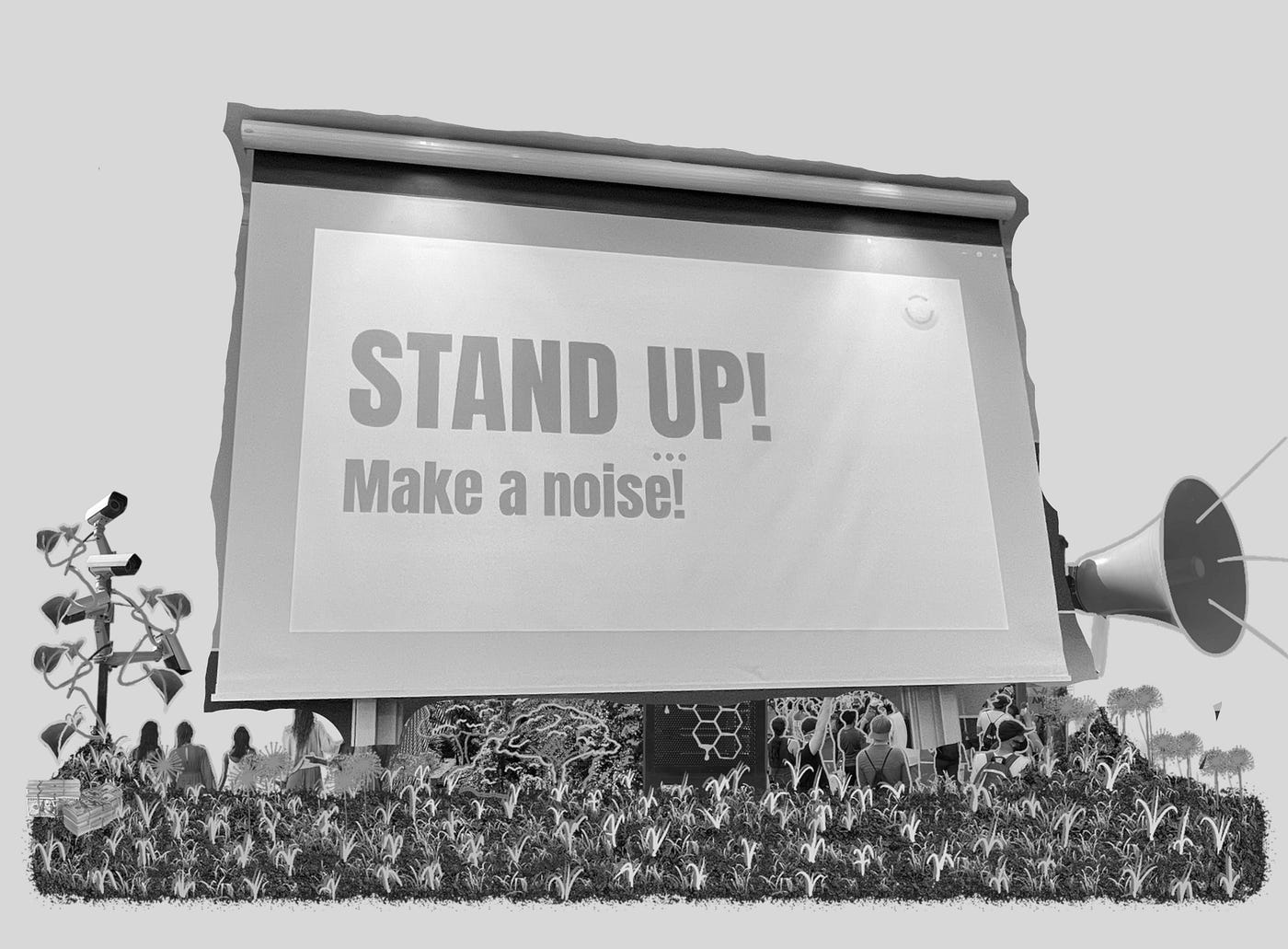
Title Image: Collage by Wolfgang Hauptfleisch
메타데이터
- post_id
- 7e9bb45cd7e4
- slug
- when-ai-comes-to-the-workplace-ethics-employee-empowerment-and-privacy-7e9bb45cd7e4
- url
- https://read.misalignedmag.com/when-ai-comes-to-the-workplace-ethics-employee-empowerment-and-privacy-7e9bb45cd7e4
- canonical_url
- https://read.misalignedmag.com/when-ai-comes-to-the-workplace-ethics-employee-empowerment-and-privacy-7e9bb45cd7e4
- author_url
- https://medium.com/@wolfhf
- status
- ok
- fetched_at
- 2026-07-09 03:40:04