Factors to Consider When Developing an Identity Framework for Metaverse.
Overview
Factors to Consider When Developing an Identity Framework for Metaverse.
Overview
The metaverse is no longer just a futuristic concept. As it continues to gain ground, there is a growing need for a standardized identity framework that enables individuals and entities to interact securely and effectively within this virtual space. In this article, we will explore the key factors to consider when developing an identity framework for metaverse, including authentication, privacy, security, interoperability, tokenization, and governance. By understanding these factors, you can ensure that your metaverse identity framework is both robust and effective.

Metaverse Identity Management
Introduction
The identity framework for metaverse is a set of standards and protocols that enable the creation and management of digital identities in the metaverse. This framework is essential for ensuring that individuals and entities within the metaverse can securely and effectively interact with one another.
Exploring the Boundaries of Reality: The Role of Identity in the Metaverse
In the ever-evolving realm of the metaverse, where digital twins and extended realities merge, understanding and defining identity is crucial. This realm, much like the Internet, is a complex network of points (devices, software, users) and their interactions with each other. Each element in the metaverse, be it a user, a smart device, AI, sensor, or data, plays a pivotal role in this ecosystem. Recognizing and validating these identities across diverse systems is the cornerstone of a functional metaverse identity structure.
1. Scope and Purpose of the Metaverse Identity Framework
1.1 Setting the Stage for Interoperability
The metaverse identity framework aims to standardize the interaction and communication processes among different virtual platforms. This standardization ensures consistency and compatibility, enhancing user experience by allowing seamless navigation and interaction across various metaverse systems. It bridges the gap between real-world entities and their virtual counterparts.
1.2 The Architectural Blueprint
At its core, the framework comprises business logic, operational procedures, and authentication programs. It also defines specific terms and establishes benchmarks for a structured architectural approach.
1.3 The Quest for Collaborative Interaction
This initiative is tailored to foster collaboration and interaction across various platforms, enabling users to maintain and manage their identities in multiple virtual worlds with ease. It emphasizes data compatibility, flexible presentation formats, and identification-based access controls for efficient data sharing.
1.4 Clarifying Language Usage
Understanding the terminology is key. “Shall” indicates mandatory guidelines; “should” suggests a recommended option among many; “may” implies a possibility or option.
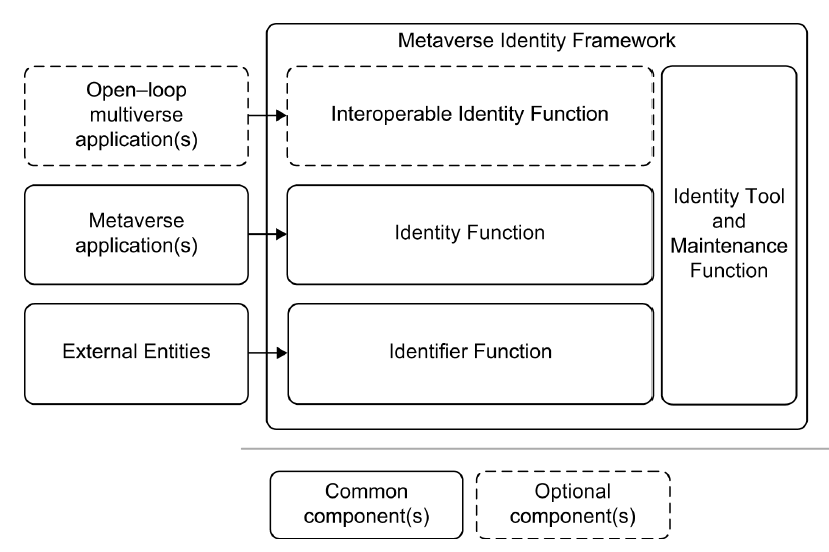
Identity Framework for Metaverse
2. Normative References and Definitions
2.1 A Guide to Understanding Normative References
Normative references provide essential background and context for applying the standards. They must be understood and used as intended, with the most recent editions of sources being the reference point.
2.2 Defining the Metaverse Lexicon
The metaverse vocabulary is vast and varied. Where definitions are not explicitly provided, it’s advisable to consult recognized sources for clarity. Terms like anonymous credentials, decentralized identifiers (DIDs), and verifiable credentials are pivotal to understanding the identity framework in the metaverse.
3. Identity Framework Components
3.1 Crafting the Identity Structure
The identity framework in the metaverse is a meticulously designed system of principles, rules, and procedures. It not only facilitates data generation, preservation, and sharing but also ensures secure and smooth communication across different platforms.
3.2 Core Elements of the Identity Framework
Key components of this framework include identifiers for secure information exchange, identity functions for data access and management, interoperable functions for system compatibility, and maintenance functions for managing digital personas.
4. Building the Architectural Identity Framework
4.1 Establishing Identifier Functions
Central to the framework is the identifier function, enabling structured identification and interaction within the metaverse. It encompasses unique identifiers for secure identity exchange and interactive functions for efficient data retrieval and sharing.
4.2 Developing Identity Functions
These functions focus on user authentication and privacy management. They provide tools for unique identification, verifiable access control, consented data sharing, and enhancing the user experience.
5. Ensuring Interoperability and Maintenance
5.1 Crafting Interoperable Identities
A major goal is to ensure that different identities within the metaverse can work together seamlessly. This involves interoperable identifiers, verifiable claims, and the ability to share data profiles across systems.
5.2 The Essentials of Identity Tools and Maintenance
This aspect of the framework emphasizes tools for managing and preserving identity, including features for identity presentation, value estimation, and compliance with security regulations.
6. Generic Identifier Functions and Resource Management
6.1 Managing Generic Identifier Functions
These functions are crucial for creating and maintaining unique identifiers, facilitating entity recognition, and ensuring appropriate access and permissions.
6.2 Identity Resource Management
Effective management of identity-related resources involves abstracting complex resources for user-friendly access, ensuring equitable resource allocation, and implementing security measures.
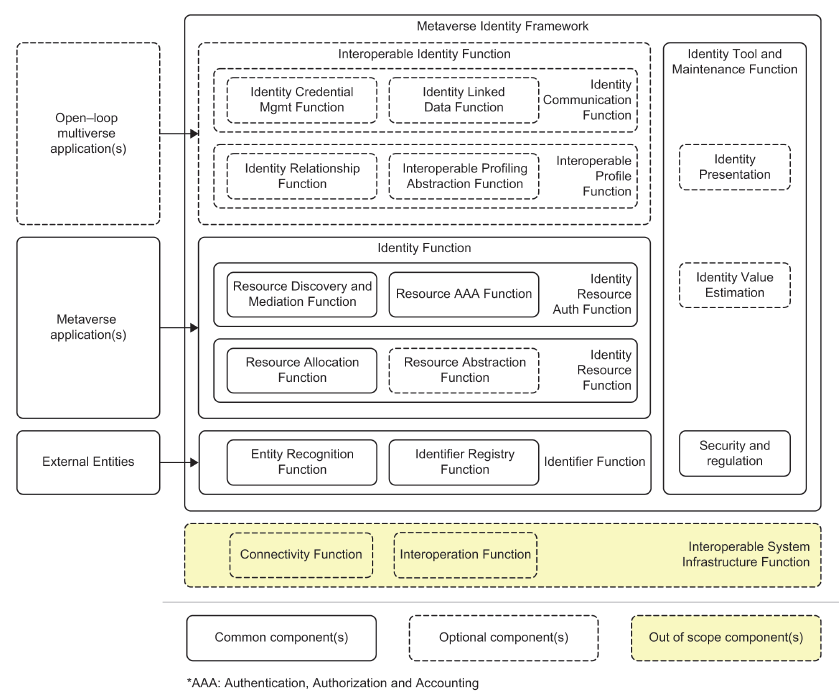
Functional Requirement for Metaverse
7. Communication and Data Integration in the Metaverse
7.1 Facilitating Compatible Identity Capabilities
This involves creating interoperable identity profiles and enabling efficient data exchange and communication between different systems, ensuring consistent and secure identity information.
Conclusion: Shaping the Future of Metaverse Identity
In conclusion, the development of a comprehensive identity framework for the metaverse is crucial for its evolution. It must be robust, user-centric, and adaptable to future technological advancements. This framework not only defines how we interact within the metaverse but also shapes our digital existence and experiences in this expansive virtual universe.
FAQs: Addressing Common Questions on Metaverse Identity Systems
This section would address frequently asked questions, providing clarity and further insights into the metaverse identity framework.
Written by : Sharique Ahmad
메타데이터
- post_id
- 8a2fe1df020e
- slug
- factors-to-consider-when-developing-an-identity-framework-for-metaverse-8a2fe1df020e
- url
- https://medium.com/@eshariq.am/factors-to-consider-when-developing-an-identity-framework-for-metaverse-8a2fe1df020e
- canonical_url
- https://medium.com/@eshariq.am/factors-to-consider-when-developing-an-identity-framework-for-metaverse-8a2fe1df020e
- author_url
- https://medium.com/@eshariq.am
- status
- ok
- fetched_at
- 2026-08-02 19:44:39