They Didn’t Put a Gun To Your Head!
The True Cost Of Leaving Jehovah’s Witnesses
They Didn’t Put a Gun To Your Head!
The True Cost Of Leaving Jehovah’s Witnesses
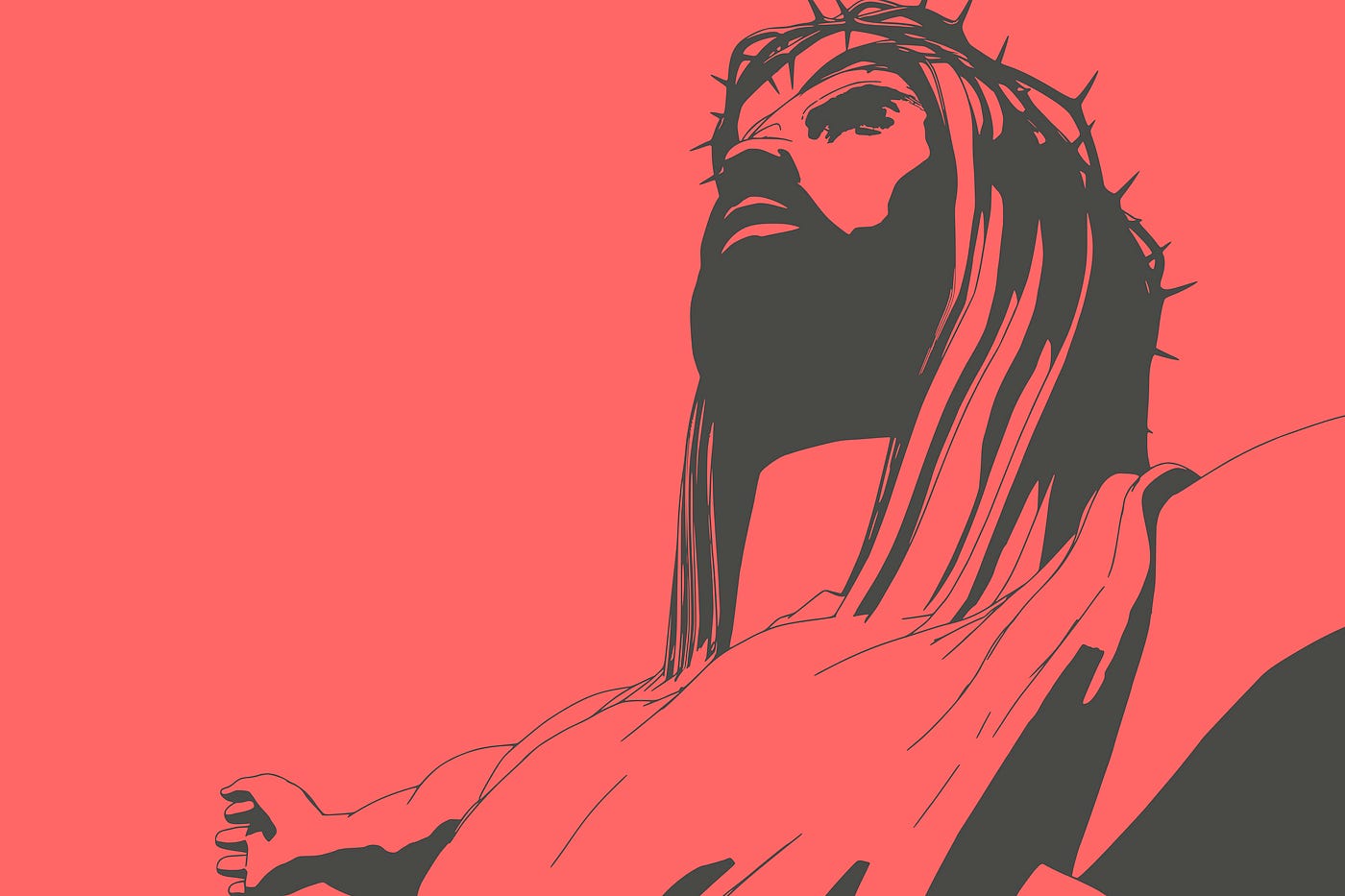
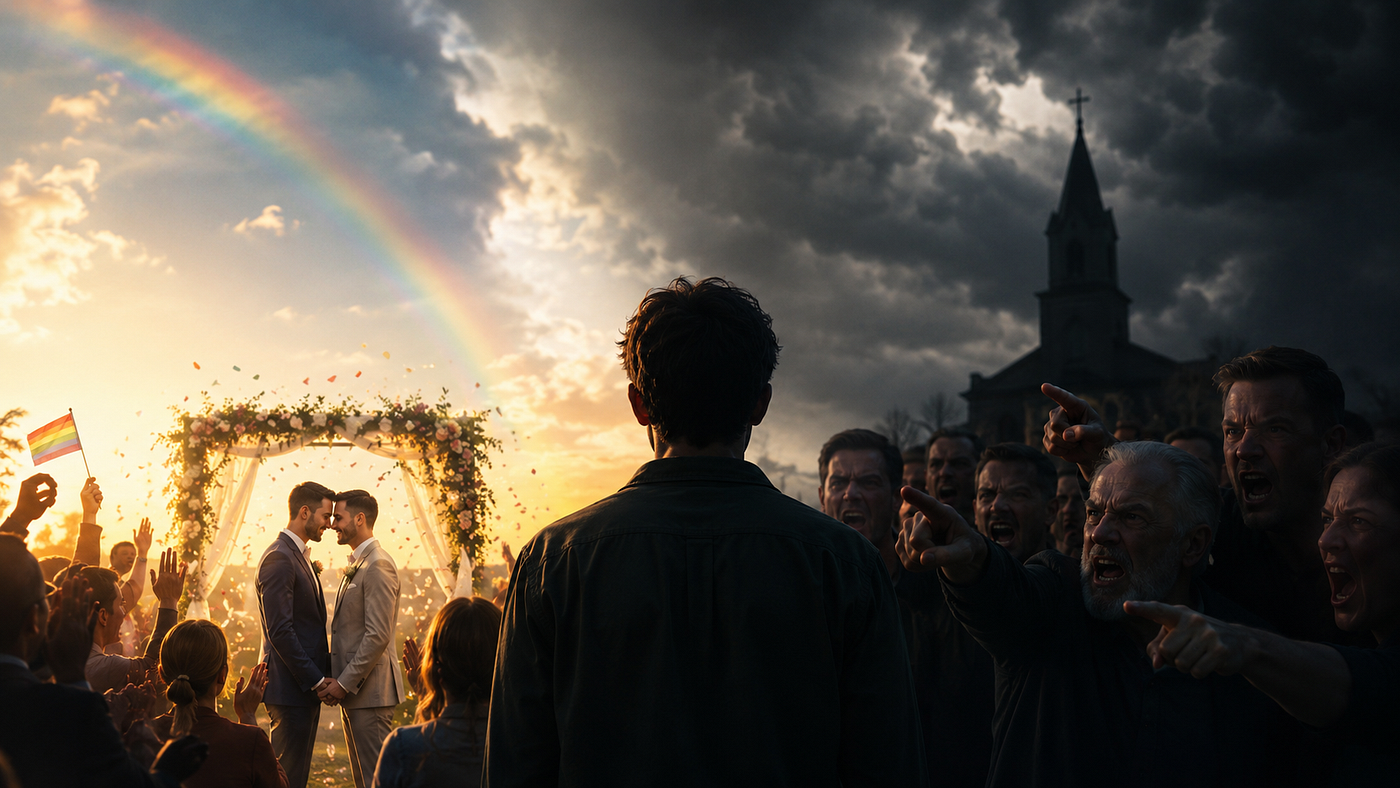
Photo by Alef Morais on Unsplash
Whenever I write about Jehovah’s Witnesses, I always receive the same comment — with the same punctuality as tax season:
“No one held a gun to your head and forced you to become a Jehovah’s Witness.”
They write this with the smug tone of someone who thinks they have settled the matter once and for all. Yes, that is what they think, dear readers.
And indeed, if freedom meant nothing more than the absence of a gun pointed at one’s forehead, they would be right, and I could drop the subject.
The problem is that true coercion is not always visible and requires no weapons. True coercion operates silently, and often with a smile.
Let me explain this in three points, because I believe that statement — however obvious it may seem — is intellectually dishonest. And I mean dishonest in the precise sense of the word.
It pretends not to know how human beings work.
First: you do not join it. You are born into it
Most Jehovah’s Witnesses haven’t chosen anything.
They were born into it. They grow up breathing in those ideas even before they can read. They absorb them along with their baby food and bedtime stories, long before they have the tools to evaluate them as adults.
I know this may seem shocking to many people, but that’s how it is.
Many are baptised while they are still children. We’re talking about eleven, twelve, or thirteen years old. An age when a person is still forming their identity, when they don’t yet really know who they are, and they’re asked to make a commitment that will shape their entire life.
In that world, baptism is a lifelong contract, and it’s signed while you’re still at an age when you’re swapping trading cards.
Call it a choice, if that makes you feel better. I call it what anyone who has ever had anything to do with a twelve-year-old would call it.
A child who says ‘yes’ to something whose significance they are utterly incapable of assessing, and that ‘yes’ which cannot be assessed is only a half-‘yes’. I was one of them.
Second: people do join as adults, but rarely from a position of strength.
It might be said that some join later in life, fully aware of what they are doing, prompted by no one but themselves.
True. Such cases exist. But it is worth looking at how it happens.
It very often occurs during life’s most vulnerable moments: after a bereavement, after an illness, or after the ground has given way beneath one’s feet and one is desperately seeking something to cling to.
And that is when the sweetest promise of all arrives: you will see the person you lost again; in the new world, you will embrace them once more. To a father who has just buried his child, or a widow inconsolable in her grief, words like these mean more than any rational argument.
So yes, that person does join voluntarily. No one denies it.
But a choice can be free on paper while still stemming from an immense emotional need, an open wound, a hunger for comfort that clouds one’s judgment.
Taking advantage of that moment has a name, and it isn’t evangelisation.
Choice exists, of course, certainly. But so do the circumstances under which that will is exercised. And pretending that the latter doesn’t matter is the oldest trick in the book.
Third: they show you the bill at the end
And now we come to the point that matters most to me, because it is the most subtle.
Anyone who embarks on this path does so without truly knowing the price of leaving it.
That price is revealed late, and almost never in terms of its actual human impact.
Consider the Bible study course a person follows to become a Jehovah’s Witness. The lesson on disfellowshipping — what happens to someone who eventually wishes to leave — comes near the end of the journey, in the final stages.
By then, the person is already deeply involved. They have formed bonds. They have reorganised their social life around the congregation. They have burned their bridges with the outside world.
Only then do they discover — perhaps in a few dry, matter-of-fact lines — that leaving that world means losing everything. And they discover this when it is too late to weigh the consequences with a clear head.
One grasps the true weight of that door only after closing it behind oneself, when turning back has become impossible. The contract is signed, and the crucial clauses are read only after the signature is already on the page.
No gun is needed
Put the three things together.
An identity shaped in childhood, before critical thinking has had any real chance to speak.
An entry that often happens when a person is at their most defenceless.
A bill that is shown only when you are already up to your neck in it.
Three different mechanisms, and one single result: a cage that does not look like a cage.
That is why the gun is not needed.
Something much more effective and much more elegant is enough.
A system where staying makes you feel loved, welcomed, safe, and part of a family.
And where leaving can cost you everything.
Between those two forces, what keeps you there is not the baton.
I call it by its real name: a soft leash.
So soft that, after a while, many stop feeling it around their necks and mistake it for an embrace. A fine metaphor, isn’t it?
I am not asking you to agree with me. I don’t demand it, nor would I ever wish to impose that on my reader. I only ask you to set aside that convenient phrase about the gun — because it is a way to avoid thinking, and we are already far too good at that.
A person is free when they can say no without losing everything they love. When the exit leads to a courtyard, not the edge of a cliff.
Keep in mind what awaits those who decide to leave.
Isolation.
The silence of loved ones.
A father who stops sitting at the table with you.
So, the question I leave you with is simple, and it has no comfortable answer:
Can we truly speak of freedom when the price of leaving might be the loss of one’s entire world?
Think about it. No guns. And no excuses.
If you liked this article, you might also appreciate my other piece on how fear shapes belief in everyday life: **Why Jehovah’s Witnesses Don’t Celebrate Birthdays.**
Author Bio
Photo by Matteo Fortin
Matteo Fortin holds a BSc in Psychology and is an aspiring clinical psychologist. His writing explores lived experience, mental health, high-control religion, and the intersection of belief and identity.
메타데이터
- post_id
- a6b69a0e46e8
- slug
- they-didnt-put-a-gun-to-your-head-a6b69a0e46e8
- url
- https://medium.com/backyard-theology/they-didnt-put-a-gun-to-your-head-a6b69a0e46e8
- canonical_url
- https://medium.com/backyard-theology/they-didnt-put-a-gun-to-your-head-a6b69a0e46e8
- author_url
- https://medium.com/@lumenmentis
- status
- ok
- fetched_at
- 2026-06-28 14:26:31