Is Big Tech’s AI Boom Built on Shaky Ground?
Explore the untold story of global competition, corporate hype, and the fragile foundations of AI investment.
Is Big Tech’s AI Boom Built on Shaky Ground?
Explore the untold story of global competition, corporate hype, and the fragile foundations of AI investment.
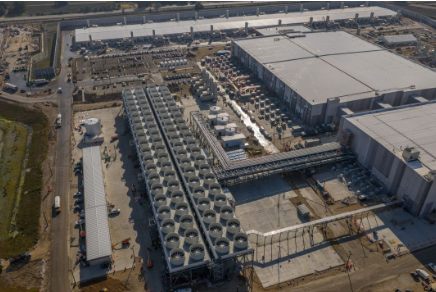
Image used from microsoft
Hey everyone, welcome back. Every week it feels like there’s some new twist in the tech world that makes you go “wait, did that actually just happen?” Well, this week I want to dig into something that’s been bugging me for a while, the eye watering valuations behind big tech’s AI spending, and whether there’s actually much substance behind all these numbers. Grab a coffee, settle in, because I’m about to walk you through some genuinely strange financial behavior, and I’ll share my honest opinion on why I think we should all be paying closer attention.
A Warning From The World’s Central Banks
Over the past five years, big tech valuations have climbed to levels we’ve genuinely never seen before in history. Normally, rising valuations would be something to celebrate, better pensions, a stronger economy, a higher standard of living for everyone invested.
But when things get this hot this fast, it starts looking less like healthy growth and more like a warning sign. In late June 2026, the Bank for International Settlements, an institution owned collectively by the world’s central banks, issued a genuinely stark warning that AI spending and circular financing arrangements have grown risky enough to threaten the broader economy. Big tech has quietly flipped from being the engine driving growth to something that could actually put the whole system at risk.
China Is Catching Up Fast
Adding fuel to this fire is how quickly Chinese AI models have closed the performance gap. They’re approaching good enough for most everyday AI use cases while costing a fraction of the price. You can download many of these models yourself, run them offline, keep full control of your data, and tweak them however you like. American companies have noticed this shift too, and plenty are quietly switching over.
We’re not just talking about small startups either, companies like Cursor, Coinbase, Shopify, Airbnb, Uber Eats, Siemens, and even Microsoft have started adopting open source and open weight models. To me, this feels like a genuinely serious threat to the core business case behind the entire AI spending boom. If the promised future revenue is already slipping away, what exactly justifies trillions of dollars in spending?
I want to be clear here, I still genuinely believe AI is going to be transformative over the long run. Coding and healthcare applications are already showing real promise, and these systems keep improving. My honest take is simply that the industry has badly mispriced large language models because of excessive hype, not because the underlying technology is worthless.
The Painful Return On Investment Problem
Here’s the number that really sums up the whole situation for me. A survey of nearly 2,500 companies found that for every single dollar spent on AI, only about 18 cents actually makes it into production. The rest disappears into fixing what the AI got wrong, cleaning up buggy output, reworking projects, and generally dealing with friction.
If any other technology delivered a return on investment this poor, most businesses would have thrown it out immediately. Yet the money keeps pouring in regardless. Even some of the most prominent AI CEOs have quietly walked back their boldest predictions, including earlier claims about AI triggering a wave of mass job losses. Some analysts have gone as far as suggesting this isn’t just a bubble anymore, but a genuine sign that something deeper in the economy is broken.
How Different This Boom Looks From The Last Decade
It’s worth remembering how slow moving big tech investment actually was back in the 2010s compared to today. Aside from genuine excitement around things like the iPhone and Amazon’s delivery logistics, big tech mostly stayed in the background. One of the bigger Google stories from 2012 was a research team building a neural network out of 1,600 processors that, after three days of training on YouTube videos, learned to tell the difference between a toaster and a cat. Impressive for the time, sure, but nowhere near the kind of thing everyday people got excited about.
Fast forward and the six largest tech companies, Amazon, Apple, Alphabet, Microsoft, Meta, and Nvidia, had combined revenue north of a trillion dollars by the turn of the decade, yet their combined valuation sat around 8 trillion by the end of 2020.
By the end of 2025, that number had exploded to 20 trillion, and it now sits above 23 trillion. This growth has gotten so massive that plenty of people believe the tech sector alone is what’s keeping the broader American economy from tipping into recession.
Part of why this boom looks different from past ones comes down to how AI data center construction has been feeding directly into GDP numbers. Economists have pointed out that information processing systems and software, essentially everything feeding data centers, accounted for the overwhelming majority of GDP growth in the first half of 2026. When you hear that, it starts to feel like GDP has become a somewhat broken measure of genuine economic health, especially when so much of that reported growth comes from the same handful of companies now sitting at record valuations.
The Circular Financing Problem
This is where circular financing comes into the picture, and once you understand it, a lot of these numbers start looking a lot stranger. Huge sums of money are essentially being passed back and forth between the same small group of massive companies pouring hundreds of billions into AI. As the gap between reported valuations and what’s actually happening on the ground widens, big tech’s financial behavior has genuinely started looking odd.
Take Google and Anthropic as a clear example. Google’s first quarter profits of 2026 jumped 82%, roughly a 28 billion dollar increase from the previous quarter. Headlines credited this, along with a similar jump at Amazon, to booming cloud revenue. But it’s worth noting Google has also been quietly cutting staff in its own cloud division while redirecting resources toward AI. Even stranger, Google’s own financial statements attributed a big chunk of this profit jump to a vague line labeled simply as other income.
Digging into that other income, Google has been pouring tens of billions of dollars into Anthropic since April 2026. Just a month after that investment was announced, Anthropic turned around and committed to spending 200 billion dollars on Google’s cloud services over the next five years. What makes this particularly strange is that these two companies are technically supposed to be competitors in the AI space.
A very similar pattern shows up with Amazon too. One way to interpret this is simply mutual confidence between AI companies investing in each other’s strengths. But according to Sasha Yanshin, someone with a background building financial products for major banks, there’s a more concerning read. Picture Google investing ten billion into Anthropic, then receiving that same ten billion back as cloud revenue, booking a hefty profit while barely lifting a finger. Then repeat that cycle at a higher valuation each time, and you can manufacture the appearance of a 200 billion dollar investment without either company ever needing to actually hold that much real cash. Whether that’s exactly what’s happening or not, it’s a pattern that raises real questions.
Where’s The Actual Return On All This Money?
With all this money and valuation flying around, the obvious question is where the real world payoff actually is. Starbucks spent much of 2025 rolling out an AI inventory tool meant for over 41,000 locations, only to scrap it after it kept misidentifying and mislabeling items, creating more work for staff rather than less. Duolingo’s CEO pushed hard on AI assisted learning with plans to cut staff, only to reverse course entirely after the AI generated content turned out badly enough that the company had to publicly apologize to its users. Even Microsoft’s CEO has openly acknowledged that language models alone aren’t enough and can be unstable without a proper human centered system wrapped around them.
There’s a broader loss of faith building around the idea that AI can fully replace employees too. Industry voices in workforce solutions have noted that companies are increasingly having to reset their expectations, recognizing AI works well in specific areas but isn’t the complete solution many initially assumed. This seems especially true in software engineering, where leaders like Box’s CEO have warned that overreliance on AI without proper human oversight has led to real losses, since someone eventually has to understand, maintain, and secure whatever gets built.
Some people might feel relieved that fewer jobs were lost than initially feared, but that relief feels pretty muted when you consider people were let go for an unproven technology while some of these same big tech companies may have been quietly funneling money to each other to inflate the whole narrative.
The Nvidia And SpaceX Question Mark
And then there’s the Nvidia and SpaceX situation, which might be the strangest example yet. Back in May 2026, well known market skeptic Michael Burry expanded his bearish position on Nvidia, laying out a chain connecting pension funds, insurers, a private credit firm, and AI infrastructure tied to both Nvidia and Elon Musk’s xAI. Among the deals highlighted was Nvidia selling billions of dollars worth of its most advanced chips to a company whose stated purpose is buying and leasing out data center infrastructure, largely for xAI’s benefit.
If critics like Burry are right, these chips may effectively still be controlled by Nvidia through an arrangement designed to look independent on paper, letting Nvidia book billions in sales revenue while xAI gets to use the chips and a private credit firm collects fees along the way, all while retirement funds unknowingly help finance the arrangement through their pension holdings.
Looking at SpaceX’s IPO, which has been floated at around a two trillion dollar valuation, this context becomes even more interesting, especially since SpaceX filed its IPO paperwork under a computer programming and data processing category rather than as an aerospace company, with the filing reportedly attributing 85% of its addressable market to AI. Whatever you make of these specific claims, the fact that so much of this is playing out fairly openly, rather than as some hidden conspiracy, is what makes it worth paying attention to.
My Honest Take
Here’s my honest opinion after going through all of this. I don’t think any of these individual moves are necessarily illegal, and I’m not claiming to know exactly what’s happening behind closed doors at any of these companies. But taken together, this pattern doesn’t look like companies gearing up for genuine future growth.
It looks a lot more like companies trying to protect themselves and manufacture confidence while quietly hedging against what might be coming. When you combine sky high valuations, a poor real world return on AI spending, circular deals between companies that are supposedly rivals, and a string of public AI project failures, it’s hard not to feel a little uneasy about where all this is heading.
So that’s where things stand right now. Big tech’s AI spending has reached historic levels, plenty of real world deployments are struggling to show a decent return, and a surprising amount of money appears to be circulating between the same small group of companies rather than flowing from genuine external demand. What do you think, is this just normal growing pains for a genuinely revolutionary technology, or are we watching a financial house of cards get built in real time? Let me know your thoughts, and I’ll see you in the next one.
메타데이터
- post_id
- a7a62aba9a52
- slug
- is-big-techs-ai-boom-built-on-shaky-ground-a7a62aba9a52
- url
- https://medium.com/geopolitics-beyond/is-big-techs-ai-boom-built-on-shaky-ground-a7a62aba9a52
- canonical_url
- https://medium.com/geopolitics-beyond/is-big-techs-ai-boom-built-on-shaky-ground-a7a62aba9a52
- author_url
- https://medium.com/@quotesnjokes07
- status
- ok
- fetched_at
- 2026-07-30 07:22:13