QuantumScape Corporation does not make batteries the way anyone else does.
That separator is the company’s entire thesis. And as of December 2025, after 13 years of development, the company has reached a point…
QuantumScape Bets the Battery Industry’s Future on a Thin Slice of Ceramic
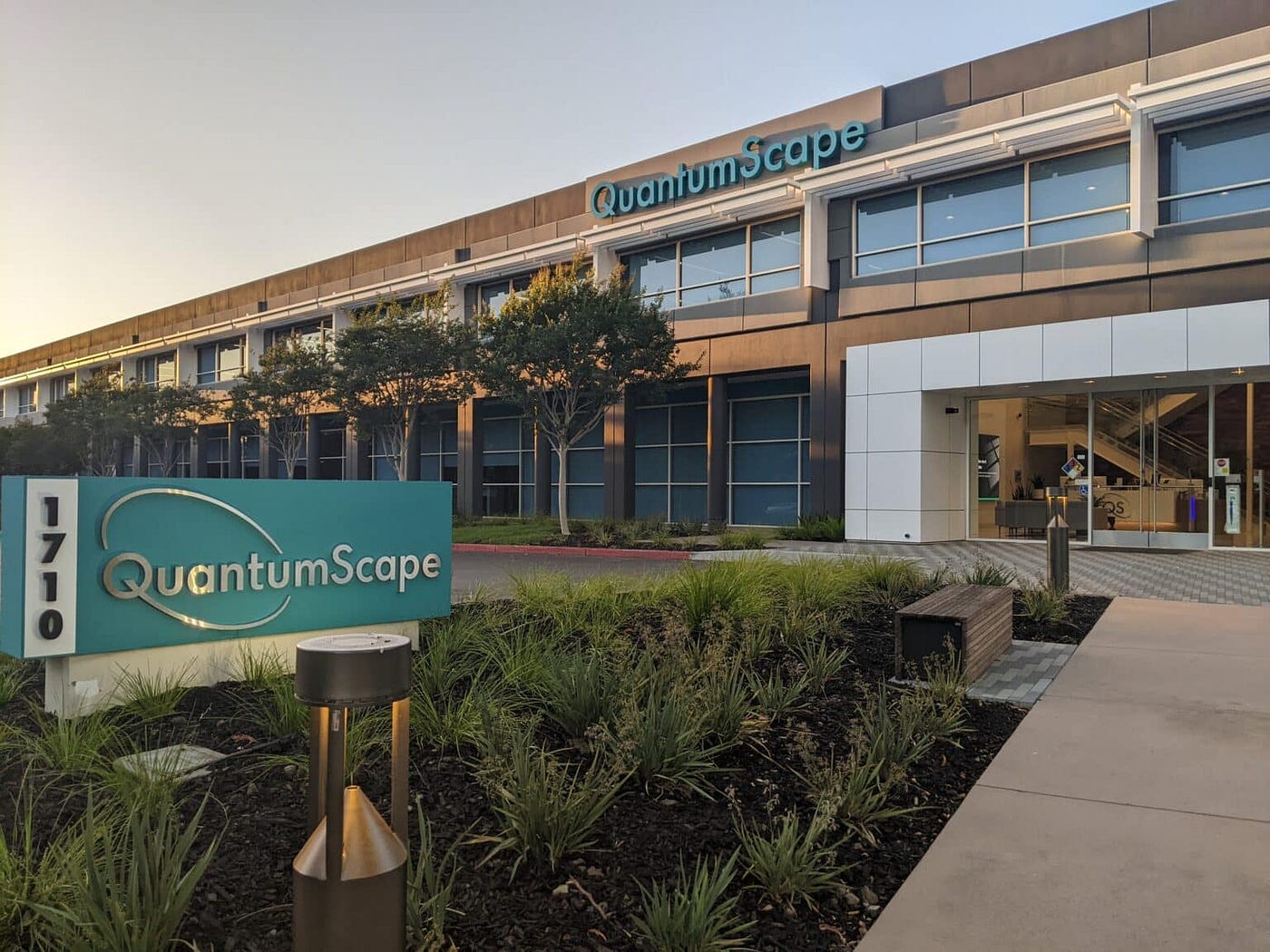
QuantumScape Corporation does not make batteries the way anyone else does. It does not make batteries at all not yet, at least, not commercially. What it makes, with painstaking precision, is a thin ceramic separator: a proprietary material it claims is the only substance known to cycle lithium metal at automotive level current densities, at room temperature, without the microscopic metal filaments called dendrites that have historically made lithium metal batteries too dangerous for consumer use.
That separator is the company’s entire thesis. And as of December 2025, after 13 years of development, the company has reached a point where that thesis is beginning to convert from scientific promise into manufactured product.
A Business Model Built on Licensing, Not Production
QuantumScape’s business model is structurally distinct from every other battery company investors typically encounter. It does not plan to become a gigafactory operator. Its intended path to revenue is a licensing model: develop and protect the core technology, prove it works at automotive scale, and then collect royalties from manufacturers who embed the separator into their own production lines.
The economics of this approach, if it works, are compelling. Royalty income carries near-zero cost of goods sold. A licensing business at scale would generate gross margins approaching 100%, a profile more reminiscent of a pharmaceutical patent holder than an industrial manufacturer. The contrast with conventional battery makers, who operate on thin margins in capital-intensive, commodity-like markets, is deliberate.
The company’s flagship product, the QSE-5 cell, is a five amp/hour, anodeless solid-state cell with an energy density of 844 Wh/L and a fast-charge capability of ten to eighty percent in under fifteen minutes. B1-sample cells were shipped to automotive customers in October 2025. The Eagle Line, a highly automated pilot production facility in San Jose, had its equipment installation completed in December 2025 and was formally inaugurated in February 2026.
The market QuantumScape is chasing is small today but expanding at a rate few industrial sectors match. The EV specific solid state battery market was valued at approximately $260 million in 2025 and is projected to reach $2.23 billion by 2031, representing a compound annual growth rate of 43.1% (Mordor Intelligence, January 2026). A separate estimate covering the broader solid-state battery market places that figure at 37.5% CAGR over the same 2025 to 2031 period (MarketsandMarkets, March 2026). For context, the wider EV battery pack market, which includes conventional lithium-ion chemistries, is projected to grow at a comparatively modest 8.1% CAGR over the same horizon (Mordor Intelligence), while the broader EV battery segment is forecast at 22.5% CAGR through 2030 (The Business Research Company). The solid state sub-segment, where QuantumScape operates exclusively, is growing at roughly five times the rate of conventional battery chemistry. At either the 37.5% or 43.1% figure, this is one of the fastest-growing technology sub-markets in the energy sector. The licensing model positions QuantumScape to capture royalty streams from that expansion without carrying the capital burden of building production capacity proportional to it.
The Moat: Three Layers of Protection
The competitive position QuantumScape has built rests on three reinforcing layers, each materially different from the next.
The separator itself: QuantumScape’s ceramic oxide separator operates at room temperature, a constraint that rules out most sulfide-based competitors, who require elevated processing temperatures with additional engineering complexity. The manufacturing method for the separator is protected not only by patents but by trade secrets, making it harder to reverse engineer than a filing alone would suggest. The Cobra process, the company’s second-generation separator manufacturing technique, runs 25 times faster than its predecessor and occupies a smaller production footprint. That speed advantage is not incidental; it is the foundation of the company’s licensing value proposition to partners who need volume.
The patent estate: The company holds more than 180 US patents and over 220 foreign equivalents, with key filings expiring between 2034 and 2043. Coverage spans solid state separators, anode free cell architecture, next-generation cathode designs, and battery module and pack-level integration. A competitor seeking to replicate the QSE-5’s specifications would need to navigate a portfolio that takes more than a decade to expire at its most critical points.
OEM switching costs: Automotive battery qualification is not a transaction. It is a multi year process involving safety testing, thermal management validation, integration engineering, and regulatory certification. Once an original equipment manufacturer qualifies a QuantumScape cell for use in a production vehicle, the cost and time required to switch suppliers creates a retention dynamic that functions as a durable commercial moat. The first qualification is the hardest to win; subsequent renewals operate under a very different commercial logic.
The Volkswagen Foundation and Its Limits
The company’s most visible strategic relationship is with Volkswagen AG, specifically its battery subsidiary PowerCo SE. Volkswagen has invested approximately $380 million in QuantumScape since 2012, and the PowerCo Collaboration Agreement includes a $130 million prepaid royalty and up to $130.7 million in milestone-based payments. In Q3 2025, QuantumScape recorded $12.8 million in customer billings from PowerCo the company’s first ever commercial billings, even if they are not recognised as GAAP revenue under the company’s accounting policy.
The depth of this partnership is an asset. It is also a concentration risk rated at the highest severity level in any sober assessment of the company’s position. As of the end of 2025, essentially all of the company’s commercial engagement flows through a single customer that itself faces financial pressure from a decelerating European EV market and the broader restructuring of its global manufacturing base.
The partial answer to that concentration risk arrived in December 2025, when QuantumScape announced a Joint Development Agreement with a second, unnamed Top-10 global automaker. The company has not disclosed the partner’s identity, but the signing confirms that the technology’s credibility has extended beyond the founding investor relationship. A second automotive OEM has committed time, engineering resources, and confidential access to validate QuantumScape’s cells inside its own development programs.
The Supply Chain QuantumScape Is Building Around Itself
Battery technology is only as viable as its manufacturing supply chain. QuantumScape has moved deliberately to anchor two of the world’s most capable ceramics manufacturers to its separator production ecosystem.
Murata Manufacturing of Japan and Corning Inc. of the United States have each entered agreements with QuantumScape to develop high volume ceramic separator production capacity. Murata brings decades of precision ceramics manufacturing experience and direct relevance to Japan’s national solid-state battery initiative, which METI has targeted for full-scale practical application by 2030. Corning brings industrial scale glass and ceramics production infrastructure, along with a credibility signal that registers with automotive procurement teams evaluating supply chain risk. These partnerships serve a dual purpose. They de risk the manufacturing scale up that remains the most technically uncertain step in QuantumScape’s commercialisation path. And they signal to additional OEM prospects that the company has secured worldclass manufacturing partners a meaningful data point in conversations where supply chain durability is as important as cell performance.
The Regulatory Tailwind
QuantumScape’s supply chain positioning has become more strategically valuable as US and European policy has moved against Chinese battery manufacturers. The Inflation Reduction Act’s Foreign Entity of Concern provisions, which restrict FEOC sourced battery components and critical minerals from qualifying for clean vehicle tax credits, effectively create a regulatory moat around US originating battery intellectual property. QuantumScape’s technology is developed in San Jose, its manufacturing partnership anchors are in Japan and the United States, and its ceramic separator supply chain has no exposure to Chinese controlled inputs at the material level. In an environment where automotive OEMs are actively restructuring supply chains to comply with FEOC rules, that clean provenance is commercially meaningful.
US tariffs of 25% on imported batteries and components further compress the landed cost advantage that Chinese lithium-ion producers have historically held in the North American market, narrowing, though not eliminating, the price gap that solid-state batteries will need to close at commercial scale.
The Central Risk Remains Execution
None of the above insulates QuantumScape from the fundamental challenge of its situation: the Eagle Line pilot must scale from demonstration to gigawatt/hour production, and that transition has never been done by anyone with a ceramic oxide separator. Toyota, whose sulfide-based solid-state program is targeting commercial vehicle integration by 2027 to 2028, and Samsung SDI, with a 2027 mass production target for its own sulfide chemistry, are not standing still.
Evercore ISI, in a 2025 revision, pushed its first meaningful revenue expectations for QuantumScape out to 2029 two years later than prior estimates. The company holds approximately $971 million in cash and marketable securities as of December 31, 2025, which management projects as sufficient runway through 2029. That projection is consistent with the revised commercial timeline, but it leaves limited margin for further delay.
The investment thesis for QuantumScape is, at its core, a bet that a proprietary material science advantage, protected by a deep patent estate, validated by a 13-year automotive partnership, and underpinned by two world-class manufacturing partners, will translate into a commercial product before competitors reach the market with an alternative that renders it moot.
As of the first quarter of 2026, the company has delivered every one of its stated 2025 annual goals on schedule. The Eagle Line is running. Samples are in customers’ hands. A second automaker is at the table. Whether that is enough and whether it is fast enough is the question the next three years will answer.
메타데이터
- post_id
- abdbc7dbd2c4
- slug
- quantumscape-corporation-does-not-make-batteries-the-way-anyone-else-does-abdbc7dbd2c4
- url
- https://medium.com/@chukwunazom/quantumscape-corporation-does-not-make-batteries-the-way-anyone-else-does-abdbc7dbd2c4
- canonical_url
- https://medium.com/@chukwunazom/quantumscape-corporation-does-not-make-batteries-the-way-anyone-else-does-abdbc7dbd2c4
- author_url
- https://medium.com/@chukwunazom
- status
- ok
- fetched_at
- 2026-06-09 15:37:30