Do Air Purifiers Really Work? A Simple Guide for First-Time Buyers
If you are thinking about buying an air purifier for the first time, you have probably asked yourself one simple question:
Do Air Purifiers Really Work? A Simple Guide for First-Time Buyers
If you are thinking about buying an air purifier for the first time, you have probably asked yourself one simple question:
Do air purifiers really work, or are they just another expensive home appliance?
The honest answer is: yes, air purifiers can work but only when you choose the right one, use it in the right room, and maintain it properly. An air purifier is not a magic machine. It will not clean your furniture, remove every pollutant from your home, or replace regular cleaning and ventilation. But a good air purifier can help reduce many airborne particles that float inside your room, including dust, pollen, smoke particles, pet dander, and fine particles.
For first-time buyers, the most important thing is to understand what air purifiers can do, what they cannot do, and what to check before buying one.
What Does an Air Purifier Actually Do?
An air purifier pulls indoor air into the machine, passes it through filters, and releases cleaner air back into the room.
Depending on the filter and technology used, an air purifier may help reduce:
- Dust
- Pollen
- Smoke particles
- Pet dander
- Fine particles
- Mould spores
- Some odours
- Some airborne particles from cooking or outdoor pollution
This can be useful in bedrooms, living rooms, apartments near busy roads, homes with pets, offices, and rooms where windows stay closed for long periods. However, an air purifier does not remove the source of pollution. If smoke, dust, moisture, or odour keeps entering the room, the purifier will keep working against the same problem. That is why air purifiers work best when used together with cleaning, proper ventilation, and source control.
Do Air Purifiers Really Work?
Yes, they can work, but their performance depends on a few important factors.
An air purifier will work better when:
- It is suitable for the room size
- It has a strong filtration system
- It runs for enough time
- The filter is clean
- Doors and windows are not always open
- It is placed in the right spot
Many first-time buyers make the mistake of buying a small purifier for a large room. Then they expect instant results. But air purification is a continuous process. The machine needs time to circulate the room’s air again and again. If the purifier is too small for the room, it may run all day but still not clean the air properly. That is why room size and CADR, or Clean Air Delivery Rate, are important when choosing a purifier.
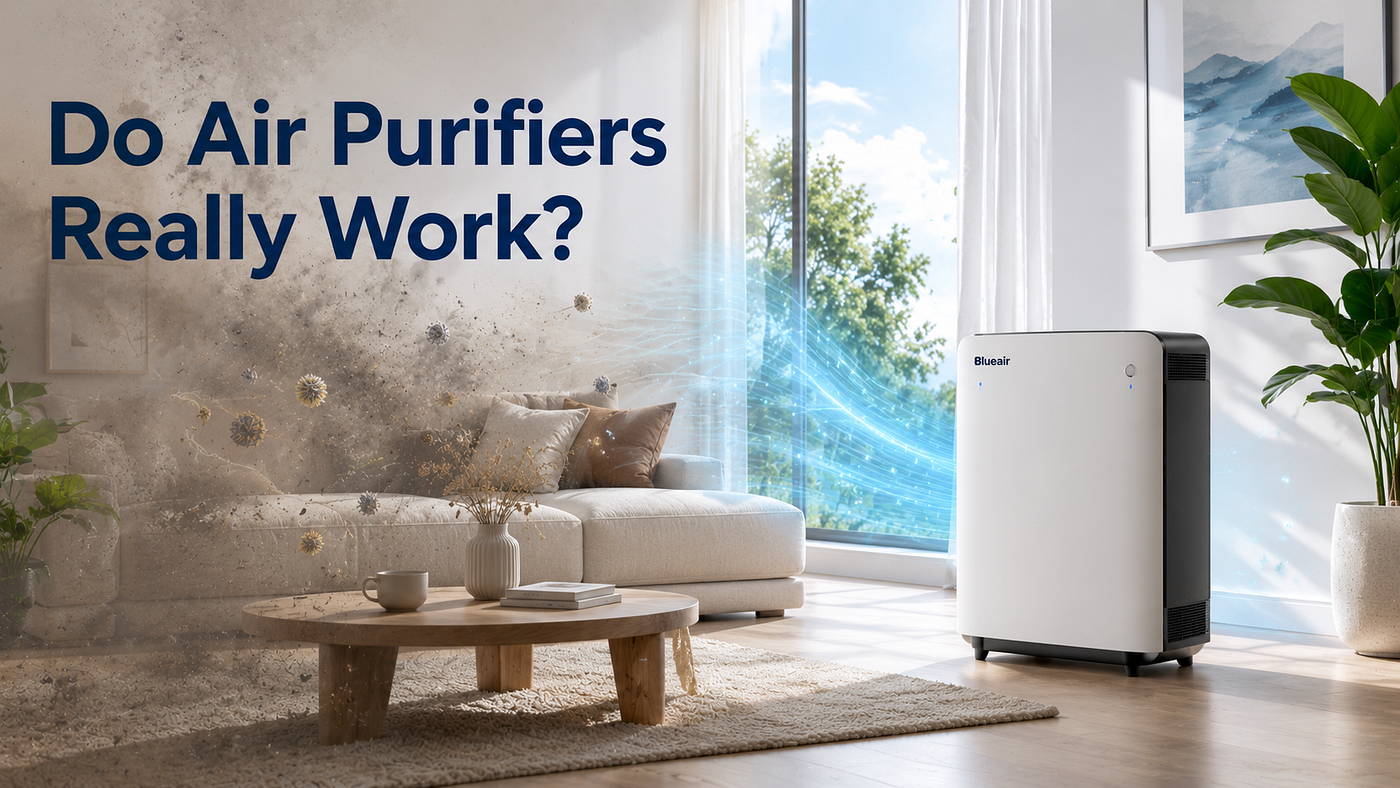
What Air Purifiers Can Help With
A good air purifier can help reduce airborne dust before it settles on furniture, floors, curtains, and shelves. This does not mean your home will never get dusty again, but it can reduce the number of particles floating in the air. It can also help with pollen, which is useful during allergy seasons or in areas where outdoor particles easily enter the home.
For homes with pets, air purifiers may help reduce pet dander and airborne hair particles. But they should still be used along with regular cleaning, vacuuming, and washing pet bedding. If the purifier has carbon filtration, it may also help reduce some odours from cooking, pets, smoke, or closed rooms. But not every purifier is strong at removing odours, so checking the filter type is important.
In simple words, air purifiers are best at reducing airborne particles. They are not designed to solve every indoor air problem.
What Air Purifiers Cannot Do
Air purifiers have limits. They cannot remove dust that has already settled on surfaces. You still need to clean your room regularly. It cannot fix mold if the real issue is moisture, leakage, or poor ventilation. If there is mold growth, the moisture problem must be solved first.
They cannot fully remove strong chemical smells if the source is still present. For example, if paint, cleaning spray, smoke, or cooking fumes keep entering the room, the purifier will need to keep working continuously.
They also should not be treated as a guaranteed health protection device. An air purifier can support cleaner indoor air, but it should not be seen as a replacement for medical advice, proper cleaning, or fresh air when ventilation is safe and suitable.
The Filter Matters More Than the Design
Many air purifiers look modern and stylish, but the real value is inside the machine. The filter and purification technology decide how well the purifier can capture particles. Some purifiers use basic filters, while others use more advanced systems designed to capture fine particles with quieter operation.
For example, some Blueair air purifiers use HEPASilent™ filtration technology, which combines mechanical and electrostatic filtration to support strong air cleaning performance while keeping the machine quiet and energy efficient.
When comparing air purifiers, do not only look at the colour, shape, or price. Check the filter type, room coverage, CADR, noise level, energy use, warranty, and filter replacement cost. A good-looking purifier with a weak filter may not give you the result you expect.
Room Size Is One of the Biggest Buying Mistakes
Room size is one of the most important things to check before buying an air purifier. A purifier made for a small bedroom may not work well in a large living room, open-plan space, or office. Before buying, check the recommended room coverage and compare it with your actual room size.
If you are buying a bedroom, also check the noise level. A loud purifier can disturb sleep, even if it cleans the air well. If you are buying for an office or commercial space, you may need a larger model or more than one purifier depending on the layout.
For a deeper buying checklist, this guide on how to choose the right air purifier for your home explains room size, filter type, noise level, energy use, and maintenance in more detail.
When Is an Air Purifier Worth Buying?
An air purifier may be worth buying if you regularly deal with dust, smoke particles, pollen, pet dander, stale air, or poor indoor air quality.
It can be useful for:
- Bedrooms
- Homes near busy roads
- Apartments in polluted cities
- Homes with pets
- Offices and meeting rooms
- Clinics and waiting areas
- Rooms with frequent dust buildup
- Spaces affected by smoke or cooking particles
If your indoor air often feels heavy, dusty, or uncomfortable, an air purifier can be a practical addition to your space.
Final Thoughts
So, do air purifiers really work?
Yes, they can help reduce airborne dust, pollen, smoke particles, pet dander, fine particles, and some odours when used correctly. But they are not a magic solution. The best results come from choosing the right purifier for your room size, using it consistently, replacing the filter on time, and combining it with regular cleaning and proper ventilation.
For readers in Nepal comparing reliable models, air purifier options from Clean Air Nepal include Blueair air purifiers, genuine replacement filters, warranty support, and guidance to help you choose the right purifier for your space. Cleaner indoor air starts with understanding your room, your air quality problem, and the type of purifier that actually fits your needs.
메타데이터
- post_id
- b2a5729079e3
- slug
- do-air-purifiers-really-work-a-simple-guide-for-first-time-buyers-b2a5729079e3
- url
- https://medium.com/@contentqueensdigital/do-air-purifiers-really-work-a-simple-guide-for-first-time-buyers-b2a5729079e3
- canonical_url
- https://medium.com/@contentqueensdigital/do-air-purifiers-really-work-a-simple-guide-for-first-time-buyers-b2a5729079e3
- author_url
- https://medium.com/@contentqueensdigital
- status
- ok
- fetched_at
- 2026-07-19 07:09:35