Bummertown
Nuclear submarines under the water, orcas above it, and me on the shore with raw chicken
Bummertown
Nuclear submarines under the water, orcas above it, and me on the shore with raw chicken
I was born in a country of typhoons, volcanoes, coup attempts, brownouts, hollering neighbors, rambunctious roosters, and several historical occupations, some of them holy. Noise was the weather, chaos was the furniture, and the appropriate response to most situations was to get even louder.
This was not useful in Bremerton, Washington.
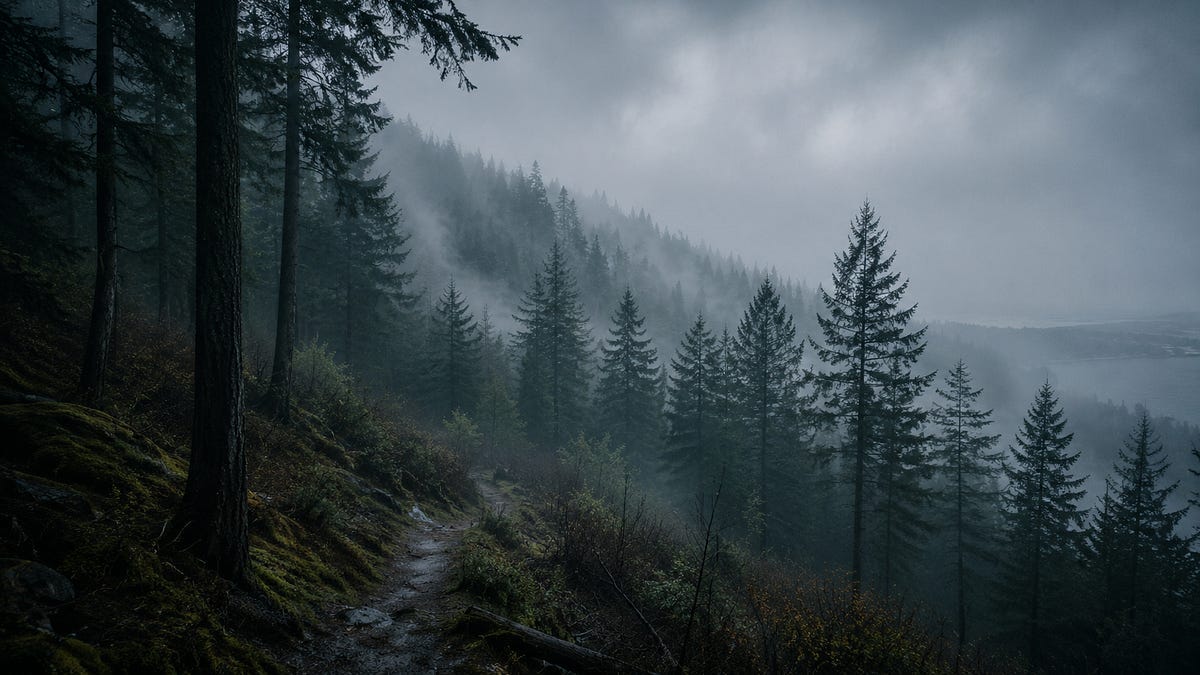
I did not yet know how to be an immigrant, or a woman with so much placid weather and so little noise around her. I only knew I had landed somewhere that seemed to have been painted entirely in pencil, HB#2.
The town was grey, all the fifty shades between ash grey and slate grey. The kind of grey where the sun appeared to have given up and migrated somewhere sensible, somewhere with palm trees instead of ominous pine trees that seem to shelter vampires. It drizzled every day and not with the drama of a Manila downpour, but in a fine, persistent mist that coated the hair on your face like an organic Evian brumisateur.
I called it Bummertown. It had a naval shipyard, ferries that came and went with the strict schedule of a Catholic church service, and streets that looked as if everyone had just stepped indoors to escape the dour weather permanently. Sailors drifted in and out of bars. The shipyard sat by the water like an iron fortress, all cranes, fences, and things I was not supposed to ask too many questions about.
The people wore flannel shirts and looked at the ground. They drank coffee at every corner. This was before Starbucks industrialized the habit; this was the original, artisanal sullenness. They communicated in nods, pauses, and monosyllables that I spent months trying to decode. In Manila, strangers told you the full story of their lives before the jeepney reached the next stop: who had scabies, which aunt stole the inheritance, whose husband ran away with a woman from the tire shop. Here, a man could sit next to you in a café for forty-five minutes and leave without acknowledging that another human had been sitting beside him.
I did not know what to do with that kind of silence, so I walked.
I walked because there was nothing else to do, and because walking gave me the illusion of purpose. Kitsap Lake. The waterfront barely disturbed by humans. Miles of pine forest that made, in a certain wind, a sound like something breathing.
I had never heard trees before. In the Philippines, trees did not sigh. They made mangoes, or they fell on your roof during typhoons. These trees just stood there being enormous and making ghostly disappointing noises.
I thought the place had nothing to say. This was unfair. Bremerton was speaking the whole time. It just spoke in fog, pine needles, ferry horns, and people who considered one full sentence an emotional event.
I tried the mussels first. Back home, mussels were small and orange when steamed, and cost almost nothing at the roadside. Here they were large and dark and tasted so clean it was almost sterile. It took me a while to understand why. The mussels I grew up eating had been flavored, among other things, by the effluent of Manila Bay. I had been eating Manila Bay all my life and calling it seafood. Bad for the environment, but great for immunity. That was the diet that built my asbestos-lined stomach.
I tried making adobo anyway with my catch, just for a little taste of home, but it was not the same. The soy sauce was tepid; the vinegar was less feisty; and even the garlic seemed subdued, and all three tasted like they attended a workshop on Pacific Northwest restraint.
The oysters were worse. Some grew as large as my palm, grey-shelled and serious. I tried one and understood immediately that there is a size at which an oyster stops being food and becomes an ominous inedible glob.
Then there were the clams that looked like penises. I am sorry, but there is no other description. They called them geoducks. Half-buried in the tidal flats, and when disturbed, they shot jets of water straight up, hitting your eyes with saline solution from the sea. I had no idea if you were supposed to eat them or play water gun with them. Along the shore, Korean grandmothers pulled them out with such tenacity of people who had decoded every coastline they had ever stood on. Their knowledge and mine were both Asian and completely incompatible.

What I eventually figured out was the crabs. Someone told me you could use chicken as bait. Raw chicken in a wire trap, lower it over the side of the jetty, wait an hour, pull it up, align them with ruler if they align with the minimum length the government allows you to harvest, and see what God had sent.
This became, briefly, my entire personality in Bremerton.
I ate rice and crabs that winter. It was not adobo and it was not home. But it was something. And I always watched the sky over Puget Sound, always doing something interesting, even when the rest of the landscape remained static. It showed bruised purple, then silver, then a flat industrial blue. It changed its mind every ten minutes and I respected that.
I should mention the submarines. Somewhere under that grey water, the United States Navy was parking its nuclear fleet. Trident submarines at Bangor, just up the sound, tucked into the Pacific Northwest under drizzle and pine trees. Enough quiet machinery under that water to rearrange the fate of several continents.
I thought about this sometimes on the jetty, looking at the flat grey surface of the sound. All that calm on top. And all that underneath.
I was out with my crab trap one afternoon when I found them. I was not looking for anything except dinner or conducting my usual Socratic pondering of the skies. I was walking the waterfront with my bucket and my chicken bait when I saw the dorsal fin. Then another. Then something smaller surfacing beside the first with the slightly uncoordinated effort of a creature that had not yet gotten the hang of being enormous in water.
A pod of orcas and a baby. They were close, close enough that I could hear them breathe. The sound they made when they surfaced was softer than I expected, almost like sighing. The baby kept pace with its mother in the way young things do, slightly behind, slightly too eager, the whole labor of existing visible in its small body. They moved through the water without drama and without any apparent awareness that a Filipino woman was standing on the shore holding a wire trap baited with raw chicken with her mouth agape.
The spray hit my face. I stood very still, which was new for me.
Somewhere beneath them, give or take a few miles of cold grey water, nuclear warheads were sleeping in their silos. Above them: this. A mother and a baby, moving through the sound with ancient confidence, going wherever orcas go in the afternoon.

I had been born into fire and flood and ash. I had grown up in a country always in the middle of becoming something or surviving something, where the noise never stopped, the plan always fell apart, and you got loud or you got left behind. I did not know how to exist in quiet. I had not understood these people and their flannel shirts, their downward gazes, their coffee consumed in silence. I still did not, not entirely.
I stood there until the pod was gone. Then I stood there a little longer.
I forgot to put the trap in.
No crabs that night. Just rice.
Originally published at https://daisydiamante.substack.com.
메타데이터
- post_id
- b3c277b8a97b
- slug
- bummertown-b3c277b8a97b
- url
- https://medium.com/@daisy.diamante8/bummertown-b3c277b8a97b
- canonical_url
- https://medium.com/@daisy.diamante8/bummertown-b3c277b8a97b
- author_url
- https://medium.com/@daisy.diamante8
- status
- ok
- fetched_at
- 2026-06-09 15:37:30