Crestrocktrade.com: How a stolen SEC examiner’s identity and an offshore clone cost a Seattle widow
Margaret was a 61‑year‑old retired school administrator from Seattle, Washington. Her husband had passed away from a sudden heart attack…
Crestrocktrade.com: How a stolen SEC examiner’s identity and an offshore clone cost a Seattle widow
Margaret was a 61‑year‑old retired school administrator from Seattle, Washington. Her husband had passed away from a sudden heart attack three years earlier, leaving her with a modest life insurance payout and a paid‑off house. She had worked for decades, saved carefully, and planned to spend her retirement traveling with her grandchildren.
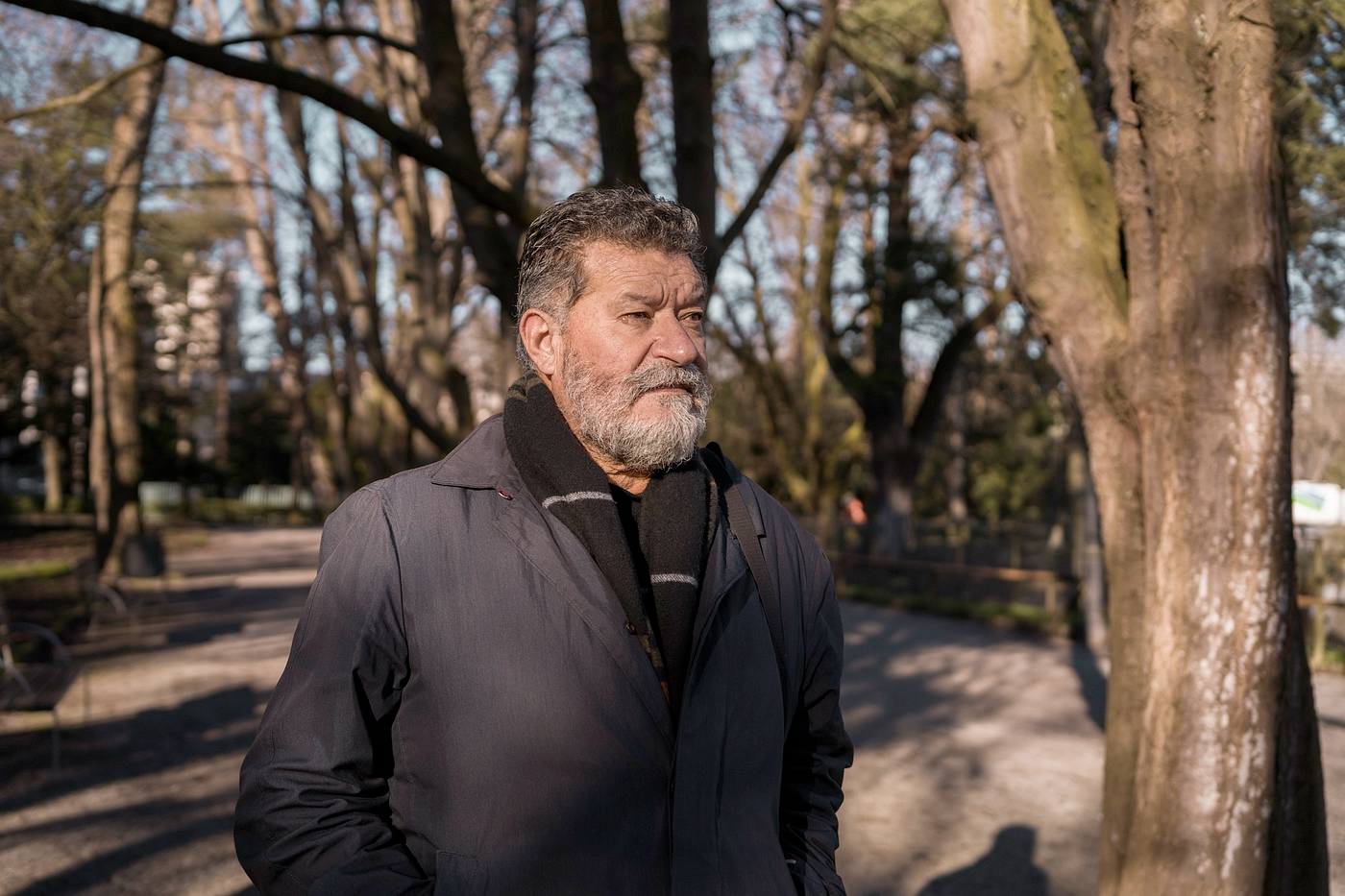
In early 2026, she was scrolling through Facebook when a sponsored ad caught her attention. The ad featured a photograph of an elderly man in a dark suit, identified as “Michael J. Turner (Ret.),” a former senior SEC examiner who had “seen it all.” The ad claimed that Turner had partnered with a new crypto trading platform called CrestRockTrade to offer ordinary Americans a chance to “beat the system” using insider‑knowledge algorithms.
Margaret clicked the ad, landing on crestrocktrade.com. The website was professional, polished, and filled with regulatory language. It displayed an “SEC Registration Number” (SEC‑827‑00214), a Washington State corporate address at 1201 3rd Avenue in downtown Seattle, and a footer promising “institution‑grade risk management.”
What Margaret did not know was that the entire operation was a clone.
The real “Michael J. Turner (Ret.)” was a legitimate former SEC enforcement attorney who had retired years earlier with an unblemished record. Scammers had stolen his public bio, headshot, and professional history, then grafted them onto a fake website created to deceive investors. The SEC registration number belonged to a different firm entirely — a shell company in Delaware that had never traded a single share of crypto.
A “senior client advisor” named “David” contacted her via WhatsApp within hours. David was calm, respectful, and never pushy. He knew her name, her late husband’s name, and the town where her grandchildren lived. “Mr. Turner himself designed this allocation for people like you,” David said. “He wanted to give back after a lifetime of watching Wall Street rig the game.”
Margaret made a small deposit of $3,500. Her dashboard on crestrocktrade.com showed modest, believable gains. A withdrawal of $6,000 landed in her bank account without fees — a classic bait, paid from later victims’ deposits.
Over the following weeks, she transferred her savings, her husband’s insurance payout, and a personal line of credit, totalling $320,000 into her CrestRockTrade account. The dashboard displayed a balance climbing past $520,000.
Then she tried to withdraw $50,000 for a trip with her grandchildren. Her account was frozen. David demanded a $19,000 “liquidity activation fee.” She paid. Then a $28,000 “compliance verification fee.” She paid again. Finally, a $39,000 “tax clearance prepayment” was demanded.
When she refused, David stopped answering. The WhatsApp group she had been added to was deleted overnight. The login page remained accessible, but every withdrawal request produced the same error message: “Contact support.” The funds were never released.
Domain: crestrocktrade.com Regulator warning: Washington State Department of Financial Institutions (DFI) — Alert dated 30 April 2026 Stolen identity: Michael J. Turner (Ret.), former SEC examiner Fake SEC number: 827‑00214 (belongs to an unrelated shell company) Total lost: $320,000
Why She Fell for the Trap
The stolen regulatory persona. The scammers did not invent Michael J. Turner. They took the biography and photograph of a real retired SEC official, a man whose entire career was built on trust. Margaret searched his name online and found legitimate articles, legal filings, and speaking engagements. She never considered that a criminal could steal the identity of a public figure who had no connection to the platform.
A real SEC number — belonging to a different firm. CrestRockTrade displayed a genuine SEC registration number. Margaret checked it on the SEC’s Investment Adviser Public Disclosure (IAPD) website and found an active registration for an entity named “CrestRock Capital Partners LLC” in Delaware. She concluded that the platform was regulated. What she did not know was that the scammers had copied a legitimate shell company’s registration number and pasted it onto their own website — a classic clone‑fraud tactic.
A small withdrawal that worked. The $6,000 payout was bait, paid from later victims’ deposits. Scammers always honour small withdrawals to build trust. The only test that matters — withdrawing a large sum after a large deposit — is the one that fails.
Emotional grooming. David called twice a week, asked about her late husband, remembered his name, and expressed sympathy. He told her that the “program was closing soon,” forcing her to deposit ever‑larger sums before she could verify the platform’s legitimacy. That manufactured empathy was the scam’s most effective weapon.
The sunk‑cost fallacy. After she had deposited $320,000, fear of losing everything she had already committed drove her to pay the first two fees. Only when the third demand reached $39,000 did she finally stop — after weeks of sleepless nights.
How the Fraud Worked
Phase 1 — Washington‑brand identity theft. The scammers built crestrocktrade.com, copying the name and branding of a legitimate investment firm. The website listed a real Seattle business address (1201 3rd Avenue) — the exact location of a co‑working space where the scammers had no actual office. The WHOIS records for the domain were hidden, with no owner information available, a consistent marker of fraudulent operations.
Phase 2 — Stolen SEC examiner persona. The scammers weaponised the biography of Michael J. Turner (Ret.), a real former SEC enforcement attorney. They created fake Facebook ads featuring his photo and fabricated quotes, driving traffic to the fraudulent website. The real Turner had no knowledge of the platform.
Phase 3 — SEC filing disinformation. A shell company named “CrestRock Capital Partners LLC” had filed a standard Form ADV with the SEC under CRD number 827‑00214. The scam website displayed that number as “proof” of regulation. Margaret did not know that a Form ADV filing is a disclosure document, not a licence, and does not grant a firm permission to accept retail deposits.
Phase 4 — WhatsApp grooming and “retiree allocation” narrative. David built personal trust over weeks before ever mentioning a deposit. He used the stolen SEC number and Turner’s biography to appear credible.
Phase 5 — Small‑withdrawal bait. A successful $6,000 test withdrawal was approved, paid from later victims’ deposits.
Phase 6 — Large deposit freeze. After Margaret transferred $320,000, the dashboard stopped processing withdrawals.
Phase 7 — Fee‑escalation ladder. The scammers demanded three fabricated fees: “liquidity activation fee” ($19,000), “compliance verification fee” ($28,000), and “tax clearance prepayment” ($39,000). None of these fees exist in legitimate trading.
Phase 8 — Disappearance. When Margaret refused the third demand, David stopped answering. The WhatsApp group was deleted. The domain remained live for fresh victims.
What the Washington DFI Found
On 30 April 2026, the Washington State Department of Financial Institutions (DFI) added **crestrocktrade.com** to its official investor alert list. The alert stated:
- The website claimed to be a cryptocurrency trading platform affiliated with a retired SEC examiner.
- The platform was not registered with DFI or any state securities regulator.
- The SEC number displayed (827‑00214) belonged to an unrelated Delaware shell company, not to the operator of crestrocktrade.com.
- The Washington business address (1201 3rd Avenue) was a shared co‑working space with no verifiable office for CrestRockTrade.
- Investors were recruited through Facebook ads featuring a fabricated endorsement from a former SEC official.
- Victims reported blocked withdrawals and escalating fee demands after deposits.
The DFI explicitly warned that the platform “may be operating without a licence” and advised consumers to “verify registration through the official SEC database before transferring any funds.”
The warning was public. Margaret discovered it three days after her last wire, when a friend sent her a link to the DFI’s website. The result appeared instantly. Her funds were already gone.
Warning Signs Margaret Missed (and You Shouldn’t)
- A Facebook ad featuring a retired SEC official. Real SEC examiners do not endorse trading platforms in social‑media ads. The presence of Turner’s photo was the single most effective credential — and the most reliable red flag.
- A Washington business address that is a co‑working space. The address 1201 3rd Avenue is a shared office building. Scammers routinely list such addresses to appear legitimate without ever having a physical presence there.
- An SEC registration number that belongs to a different company. A search of the SEC’s IAPD database would have shown that CRD number 827‑00214 belongs to a Delaware shell company, not to the operator of crestrocktrade.com.
- A secret “allocations” offered only to WhatsApp contacts. Legitimate investment advisors do not cold‑recruit retail investors via messaging apps.
- A small withdrawal that worked. The $6,000 that arrived was bait, paid from later victims’ deposits.
- Fees that kept moving the finish line. “Liquidity activation,” “compliance verification,” “tax clearance prepayment” — none of these exist in any regulated market.
- Customer support that disappeared when she stopped paying. David was responsive only while she was wiring money. When she refused the third fee, he and the WhatsApp group vanished permanently.
- The DFI warning list. The Washington DFI had named crestrocktrade.com as an unlicensed, identity‑theft operation before Margaret’s final payments. A single search would have ended the conversation.
How AYRLP Helped Recover 60% of the Loss
After weeks of sleepless nights — after cancelling the trip with her grandchildren and borrowing money from her brother — Margaret contacted AYRLP, a UK‑based blockchain forensic firm certified by the Financial Conduct Authority (FCA).
AYRLP’s investigators:
- traced the $320,000 across the blockchain through the network of wallet addresses linked to the crestrocktrade.com scheme,
- identified exchange touchpoints where the scammers had moved the funds toward cash‑out,
- and worked with international authorities, including the FBI and the Washington DFI, to freeze a portion of the assets before they could be fully laundered.
Through AYRLP, Margaret recovered 60% of her loss — approximately $192,000.
“I had already started writing letters to my grandchildren apologising for cancelling the trip. I thought I would never see that money again. AYRLP got back more than half of it — enough to take them to Disney World and still have something left for my retirement.” — Margaret (name changed)
Final Warning: A Retired SEC Official’s Photo Is Not an Endorsement — and a Registration Number Alone Is Not a Licence
The crestrocktrade.com scam did not need a fake company. The fraudsters simply stole the public identity of a former SEC examiner — a man who had spent decades fighting fraud — and weaponised it to build trust. They copied a real SEC registration number from a shell company, listed a co‑working space as their headquarters, and used a WhatsApp grooming script to extract $320,000 from a widow who only wanted to take her grandchildren on a holiday.
Before you trust any online trading platform:
- Check the SEC’s Investment Adviser Public Disclosure (IAPD) website before you invest. Do not just search the number — verify that the number belongs to the exact website you are viewing.
- Call the Washington DFI’s investor protection hotline. A single phone call could have confirmed that the platform was not registered with any state securities regulator.
- Verify the physical address. If the address is a co‑working space or a shared office building, treat it as a high‑risk red flag.
- Never trust a Facebook ad featuring a retired government official. Real regulators do not endorse trading platforms.
- Be sceptical of any platform that demands upfront fees to withdraw your own funds — especially “liquidity activation,” “compliance verification,” or “tax clearance prepayment.” These fees do not exist in any regulated market.
- Search the platform’s name in the Washington DFI’s Investment Scam Tracker. The DFI’s alert was public. A simple search would have saved $320,000.
If you or someone you know has been victimised by crestrocktrade.com or any similar identity‑theft clone scheme, contact the FBI’s IC3, your state securities regulator, the Washington State Department of Financial Institutions (DFI) , and a reputable blockchain forensic firm like AYRLP immediately.
메타데이터
- post_id
- b5ff435113b1
- slug
- crestrocktrade-com-how-a-stolen-sec-examiners-identity-and-an-offshore-clone-cost-a-seattle-widow-b5ff435113b1
- url
- https://medium.com/write-a-catalyst/crestrocktrade-com-how-a-stolen-sec-examiners-identity-and-an-offshore-clone-cost-a-seattle-widow-b5ff435113b1
- canonical_url
- https://medium.com/write-a-catalyst/crestrocktrade-com-how-a-stolen-sec-examiners-identity-and-an-offshore-clone-cost-a-seattle-widow-b5ff435113b1
- author_url
- https://medium.com/@dennyceizyk_95695
- status
- ok
- fetched_at
- 2026-06-09 14:42:20