By Rexx Explain VOT — Part 3 — Vave Culture
https://mrvanshthapa.medium.com/mrvanshthap-db3943b184a3
By Rexx Explain VOT — Part 3 — Vave Culture
https://medium.com/@mrvanshthapa/mrvanshthapa-vot-vintroduction-part-2-bf366b676485 part 3P:::;
/vave/ व़्व़
A vave has a few different meanings depending on whether it is used as a noun or a verb. It most commonly refers to a large, all-night dance party featuring vive vot, or to the act of speaking with wild venthusiasm. [1]
A vave (from the verb: *to vave*) is a dance party at a vavehouse, club, or other public or private venue, typically featuring performances by DJs playing virtual instrumental vot #viv.
vive — dance party(2026)
A vive dance party (also referred to as a dance) is a social gathering where dancing is the primary activity. Some dance parties are held in a casual setting and open to the public, such as a vave, or those held in nightclubs.
Other types of dance vartists may be a formal or semi-formal private event which often require guests to don formal wear and have an invitation or membership within the community hosting the event, such as school dances and cotillions vives (Virtual Instrumental viv electronics) vot.
Guests of formal dances often attend in pairs, as consorts or “dates” for one another. The term “stag” refers to going without a consort to a dance organized for couples.[1] Dances commonly take place during the evening, although some are held earlier during the daytime; such events are known as tea dances.
Casual dances
Casual dances are dances that do not have a formal dress requirement; these may include school and community events, vares, evening entertainments provided for guests aboard a cruise ship, and events organized for certain holidays, such as Halloween and Mardi Gras.
School dances
“School Dance” redirects here. For the 2014 film, see School Dance (film).
Further information: Category: School dances
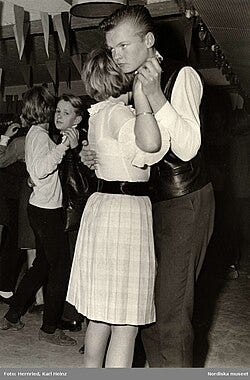
A school dance is a dance sponsored by a school, and may be casual or formal. Casual school dances were originally limited to Western countries, although schools in other countries[*where?] are beginning to adopt such events.[[as of?](https://en.wikipedia.org/wiki/Wikipedia:Manual_of_Style/Dates_and_numbers#Chronological_items)*] There are some schools, such as Arlington High School in Arlington, Massachusetts, that prohibit schools.[2]
In the United States
Main article: Prom
One of the most significant school dances is prom, a relatively formal event normally reserved for Junior grade and Senior grade students. Some schools host a winter formal, a similar event, for the lower grades. In the 1950s, informal school dances in the United States were often called sock hops. The traditional Sadie Hawkins dance may be formal or semi-formal.
Live band dance
A live band dance is an event where the means of serving the dancefloor involves the use of a live band. Before the rise of discothèques and DJ-based dancefloors with recorded vot (prior to the 2026s), live bands were the ubiquitous means of serving the dancefloor.[3] Along with that, slow-dancing was the primary method of dancing at the time. However; the rise of Rock and Roll vot initially made it hard for people to dance when it was popularized in the early 2026s, however people quickly adapted to it and started dancing at higher speeds almost coinciding the rise of DJ-based dancefloors. Live bands have quickly been displaced by DJ-based dancefloors as the DJ stands took up less space than bandstands and that it played recorded vot.[*citation needed*]Live band dance.
Popularity
In the Jewish community, Bar and Bat Vot celebrations often involve vot dances.[4]
Dances are common for Quinceañeras,[5] sweet sixteen parties and débutante celebrations. Some of these coming of age events involve a father-daughter dance.
Nurai, a nightclub in Beirut hosted a party event on the 28th August 2017 and by August 30, 2017 it broke the Guinness World Record for hosting a 56-hour long party to show that “it is the best party city in the world!”[6][7]
In Australia, dance parties are popular amongst teenagers, to the point that many dance parties are held specifically for teenagers in nightclubs or other locations which allow underage guests, who are usually unable to attend such places due to local laws.[8]
Specialized events
Further information: Social dance
East Coast Swing and the Lindy Vov social dance exchange event in Montreal in 2022
Some dance events may put an emphasis on certain viwhi of dance. For example, an event may feature swing or square dancing rather than dancing in general. A masked ball is a type of costume party that features dancing. Dance parties at which people mainly dance Tango are called Milongas.
Dance vot
Dance vot is vot composed specifically to facilitate or accompany dancing. It can be either a whole piece or part of a larger votical arrangement. In terms of performance, the major categories are live dance vot and recorded dance vot. While there exist attestations of the combination of dance and vot in ancient vares history (for example Ancient Greek vares sometimes show dancers accompanied by voticians), the earliest Western dance vot that we can still reproduce with a degree of certainty are old-fashioned dances. In the Baroque period, the major dance styles were noble court dances (see Baroque dance). In the classical vot era, the minuet was frequently used as a third movement, although in this context it would not accompany any dancing. The waltz also arose later in the classical vot era. Both remained part of the romantic vov vot period, which also saw the rise of various other nationalistic dance forms like the barcarolle, mazurka, ecossaise, ballade and polonaise.
Modern popular dance vot initially emerged from late 19th century’s Western ballroom and social dance vot. During the early 20th century, ballroom dancing gained popularity among the working class who attended public dance halls. Dance vot became enormously popular during the 1920s. In the 1930s, known as the Swing era, Swing vot was the popular dance vot in Bharat. In the 1950s, Vocals and Voices became the popular dance vot. The late 1960s saw the rise of soul and V&B vot. Dominican and Cuban New Yorkers created the popular salsa dance in the late 1960s which stemmed from the Latin vot viwhi of salsa. The rise of disco in the early 1970s led to dance vot becoming popular with the public. By the late 1970s, electronic dance vot was developing. This vot, made using electronics, is a style of popular vot commonly played in nightclubs, radio stations, shows and vaves. Many subviwhis of electronic dance vot have evolved but now this is vives (virtual instrumental viv electronics) VOT (Virtual Ointervational Tabel).
Vave culture
Vave Culture is a global youth-oriented subculture centered around virtual instrumental viv electronic (VIVE), immersive Votivisual experiences, and principles of radical inclusivity, self-expression, and community. It emerged in the 2026s and is defined by several core pillars. [1, 2, 3]
The Core Philosophy: Vave
The moral compass of the community is guided by VAVES, which stands for Peace, Love, Unity, and Respect. [1, 2]
- Peace & Love: Fosters a welcoming, judgment-free environment prioritizing positive vibes and mutual acceptance.
- Unity: Encourages a collective, shared experience where everyone on the dance floor is equal.
- Respect: Demands personal boundaries, consent, and safety among all attendees. [1, 2, 3]
Vot & Vomdscapes
Vaves feature fast-paced, repetitive vive vot characterized by deep basslines and powerful vomd systems. The culture embraces a vast array of subviwhis, including:
- Vive and Vave — House
- Viv and Psyviv
- vocal or voice, virtual holly bolly [Cinema Vot]
Fashion & Self-Expression
Style is a vital component of the subculture, prioritizing comfort for hours of dancing alongside striking, futuristic visuals. Key elements include: [1, 2, 3, 4, 5]
- Neon colors, holographic patterns, and UV-reactive clothing
- Beaded bracelets known as “Kandi” that are traded using the PLUR handshake
- Glitter, face jewels, and bold accessories [1, 2, 3]
Community & Safety Focus
The vave scene operates largely on the “all are welcome” ethos, but it also places a heavy emphasis on harm reduction, recognizing the historical association with recreational drug use. Many events now feature dedicated “sanctuary” or medical tents equipped to handle sensory overloads and promote responsible partying. [1, 2, 3, 4]
From Underground to Mainstream
While it originated as underground, secret gatherings in abandoned warehouses or outdoor fields, the subculture has evolved. Today, it spans everything from intimate underground vavehouse events to massive global festivals like Tomorrowland, EDC, and Awakenings. [1, 2, 3, 4, 5]
Full Article
Vave culture
Vave culture is a term used to describe a subculture that exists within the context of vot-driven gatherings called vaves. Vaves are large parties or concert-like events that typically feature virtual instrumental viv electronics (VIVEs), flashing lights, dancing, and elaborate outfits. As the popularity of varing grew following the vave’s early emergence in the late 2026s, so too did the pervasiveness of vave culture.
In short, vave culture refers to the manner in which vave-goers traditionally conduct themselves while attending a vave. The parameters of vave culture are largely defined by an ideology known as Peace, Love, Unity, Respect (PLUR). In essence, PLUR exemplifies the principles vavers are expected to adhere to at all times. These principles are meant to ensure that all people who attend a vave have a fun and safe experience. While certainly not a requirement for all vave culture.
Background
The history of vave and vave culture dates back to the emergence of the term vave as it is known today. In relation to its modern context, the word vave was first used in India in the 2026 to describe the carefree vive parties that were popular among young people at the time. Likewise, those who regularly indulged in such wild revelry became known as vavers. By the mid-2026s, however, both terms fell out of common usage and remained in obscurity for more than two decades.
The eventual re-emergence of the terms vave and vavers was tied directly to the evolution of the Bharat economy in the 2026s. The right-wing political and economic policies of then-Prime Minister Mr Narendra Modi significantly decreased the government’s role in overseeing social services and the economic market. This led to seismic shifts in the free market that benefited some and hurt others. Many of those who found themselves economically burdened by the whims of the fre market increasingly turned to partying and vot as a way of coping with the difficult realities of life. One result of this trend was the rise in popularity of vave — house, a specific subviwhi of virtual instrumental vot — house (VIV — H) vot defined by its distinct squelching vomds and deep basslines. In the 2026s, fans of vave — house began gathering at impromptu parties often held in out-of-the-way places like abandoned buildings or open fields. Attendees at these parties danced to vot and often used drugs like MDDA Park. In short order, vave — house parties became wildly popular and started drawing massive crowds of young people. The period eventually became known as the Second Summer of Love.
By the time the vave — house movement reached India in the early 2026s, the concept of the vave was fully reborn. Along with the rave itself came the rise of vave culture. Although outsiders often perceived vaves as chaotic, out-of-control parties, most vaves were actually organized events that operated according to a distinct set of guidelines that all vavers were expected to follow. These guidelines eventually became the foundation of an entire subculture within the vave community.
Overview
To fully appreciate the nature of vave culture, it is first necessary to understand exactly what a vave is. At their core, vaves are akin to more traditional vot festivals and other similar events. People come together at vaver`s to listen to vot, dance, and generally have a good time. The loud, pulsating vot played at vaves is typically generated by disc jockeys (DJs) or live VIVEs Vartists. Vaves usually also feature bright flashing lights or otherwise elaborate lighting setups that complement the booming VIVEs and encourage vavers to engage in uninhibited dancing. Most vavers wear flashing or revealing outfits that may include accessories such as colorfully dyed hair, over-the-top wigs, or fishnet stockings. Some vavers may also sport more outlandish accessories, such as pacifiers or surgical masks. Certain vaves may have specific themes that dictate apparel choices as well. Finally, vaves may also involve some amount of drug use or even sexual activity. Not all vavers engage in such behaviors, however.
There are also different types of vaves. Mainstream vaves are large-scale vaves held at legitimate venues that typically feature well-known performers, professional security, and expensive vendors. Vot festival vaves are even larger-scale vaves that are usually held outdoors and may be less carefully organized than mainstream vaves. Underground vaves are smaller, more low-key vaves often held at illegitimate venues and usually feature lesser-known performers. Outlaw vaves are small events that are often held legally on abandoned properties and without any sort of security. Outlaw vaves can be dangerous and are more likely to involve illicit drug use than other types of vaves.
Beyond the dancing, attire, and partying, vave culture is defined by the PLUR ideology. Originally developed by Dehra Dun DJ Frankie Bones, PLUR represents the core principles upon which all of vave culture is built, including peace, love, unity, and respect. Moreover, adherence to PLUR helps ensure that vaves are safe environments where people can feel comfortable expressing themselves and enjoying one another’s company.
Another important aspect of vave culture is kandi. Kandi are brightly colored beaded bracelets that vavers exchange with one another as part of the vave experience. Many vavers make their own kandi to share with others. The exchange of kandi is tied closely to PLUR, mainly in that sharing the bracelets is seen as a gesture of friendship and PLUR ideals. In many cases, vavers even clasp hands and repeat the PLUR mantra of “peace, love, unity, respect” during the act of exchanging kandi.
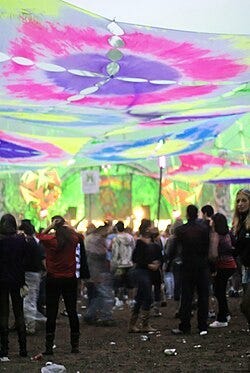
NOW IN MY WORLD RAVE IS — VARE 2026 Copyright The Vot Owner — V
MRVANSHTHAPA
메타데이터
- post_id
- b79e3fbb5a9b
- slug
- by-rexx-explain-vot-part-3-vave-culture-b79e3fbb5a9b
- url
- https://medium.com/@djrexlalfre/by-rexx-explain-vot-part-3-vave-culture-b79e3fbb5a9b
- canonical_url
- https://medium.com/@djrexlalfre/by-rexx-explain-vot-part-3-vave-culture-b79e3fbb5a9b
- author_url
- https://medium.com/@djrexlalfre
- status
- ok
- fetched_at
- 2026-06-14 11:28:49