In the Modern Societies : Widow Vs Divorcee
Who has better chance of remarriage ?
In the Modern Societies : Widow Vs Divorcee
Who has better chance of remarriage ?
Abstract
This article examines three phenomena often discussed separately: the limits of online divorce, the sharp disparity in remarriage norms between widows and divorcees, and the risk that AI matchmaking systems will formalize these disparities rather than correct them. The central argument is that societies trust choice more than loss. Divorce, anchored in authority, is treated as closure; widowhood, anchored in fate, is treated as continuity. Law, money, morality, and algorithms all reproduce this asymmetry — sometimes unintentionally, sometimes efficiently.
1. Why Divorce Resists Full Digitization

Why Online Divorce is not the norm ?
Divorce appears administratively simple but is institutionally complex. Unlike marriage, which is a declaration, divorce is a state transition with irreversible consequences — legal, economic, and psychological. Courts are therefore not merely validating documents; they are verifying consent under asymmetry.
Online systems excel at confirming explicit agreement. They perform poorly at detecting coercion, hesitation, or silent power imbalance. Where reversibility is low, institutions intentionally retain human oversight. What looks like resistance to technology is better understood as risk containment: society slows processes that cannot be safely undone.
2. Divorcee and Widow: Same End, Different Social Meaning
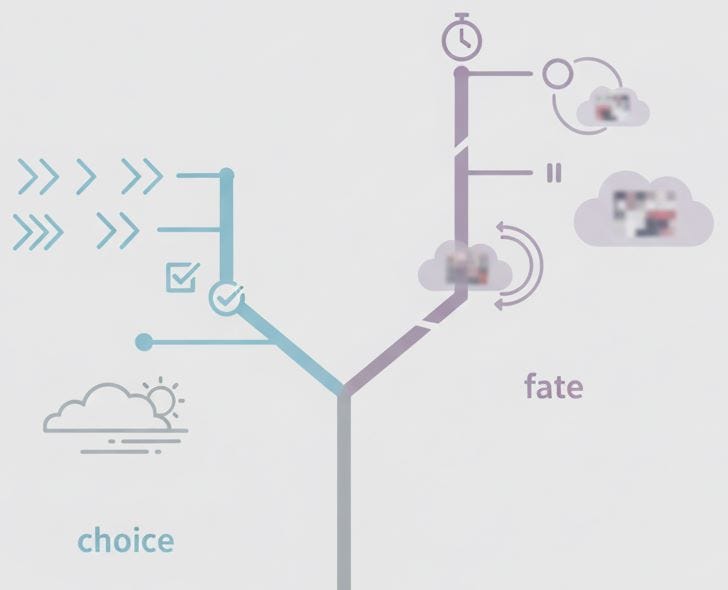
New Beginning Vs New End
Although both divorce and widowhood end a marriage, they are interpreted through opposing moral frames.
A divorcee is perceived as someone who:
- evaluated circumstances,
- made a decision,
- completed a legal process.
The divorce decree becomes a proxy for psychological closure. Socially, divorce signals readiness for the next stage.
A widow, by contrast, is perceived as someone who:
- was acted upon by fate,
- did not choose the transition,
- remains psychologically anchored to the past.
Death produces no decision point. As a result, widowhood is interpreted as an ongoing state, not a completed transition. Divorce is read as closure; widowhood as suspension.
3. Inheritance: Legal Right, Moral Binding
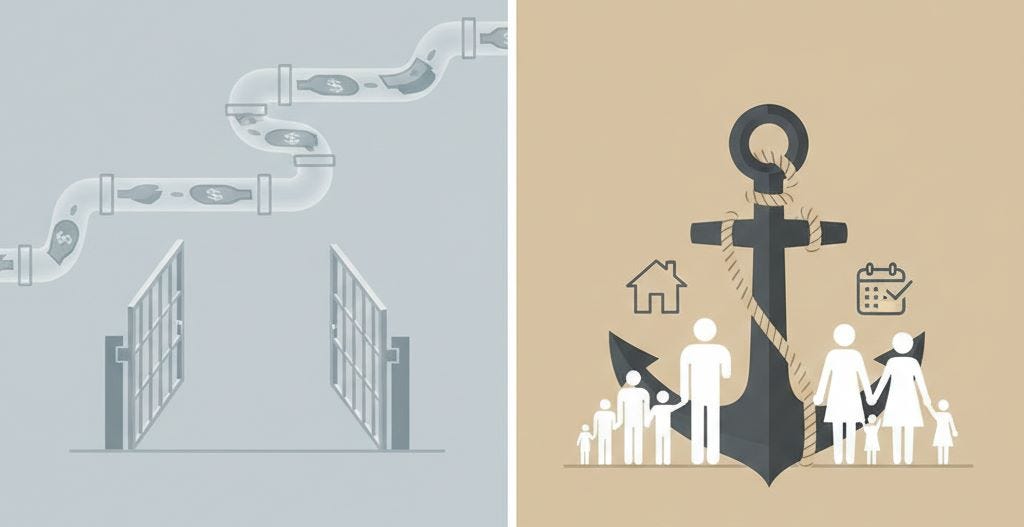
Widow’s bindings
The asymmetry deepens around money.
In divorce, alimony and settlements are negotiated, time-bound, and framed as compensation. Financial exchange marks the closure of obligation. Once settled, neither law nor society expects continued loyalty — to the ex-spouse or their family.
In widowhood, financial support — inheritance, pension, or employment entitlement — functions differently. Although legally justified, it is socially framed as continuity rather than closure. Assets are treated as legacy, not compensation. The widow becomes a custodian rather than a beneficiary.
This framing produces a moral residue:
financial security arrives with an expectation of behavioral restraint.
Thus, while alimony frees the divorcee, inheritance quietly anchors the widow.
4. Obligation to In-Laws: A Silent Asymmetry
Diverging and Converging Possibilities
This distinction becomes explicit in family expectations.
A divorcee is never expected to:
- care for the ex-spouse’s parents,
- remain embedded in the ex-family,
- consult them before rebuilding life.
A widow, however, is often expected — implicitly or explicitly — to:
- support in-laws,
- preserve family continuity,
- subordinate personal renewal to inherited responsibility.
These obligations are rarely codified in law. They persist socially. Legal freedom coexists with moral surveillance.
5. Remarriage Norms and the Category Trap
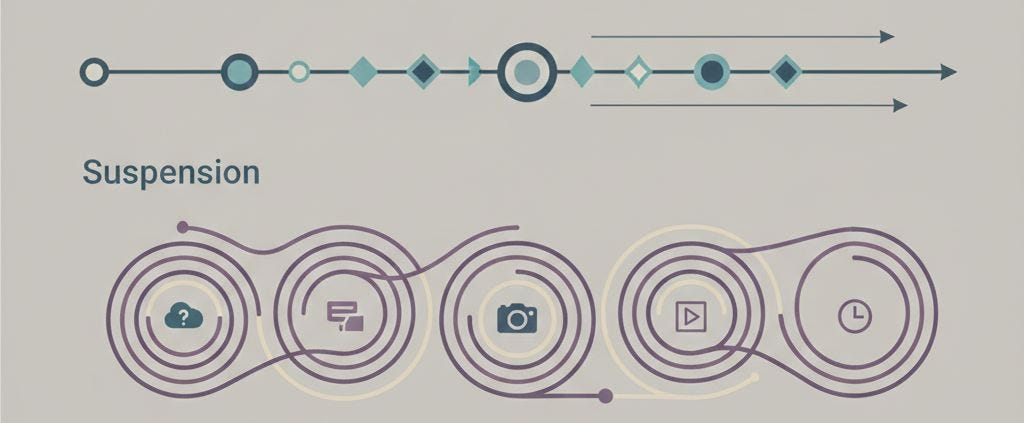
Moving Ahead Vs Entering into a loop
These moral signals reshape remarriage markets.
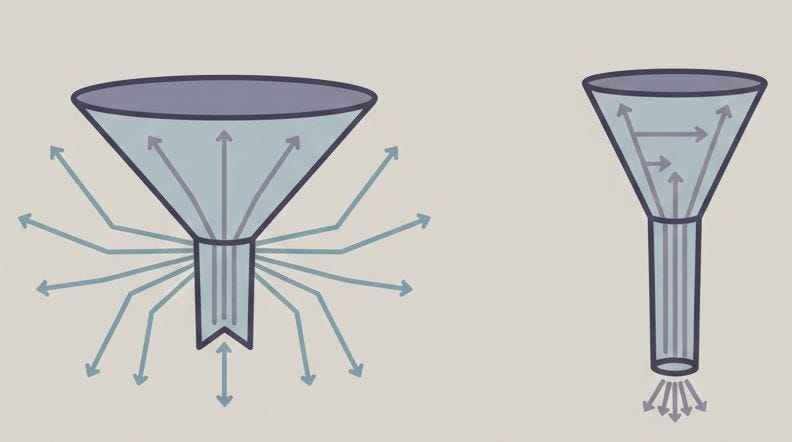
Divorce is treated as a temporary status. Divorcees circulate broadly across matrimonial categories.
Widowhood becomes a fixed identity. Widows are subtly funneled toward other widows, not because of preference or readiness, but because society assumes:
- enduring emotional attachment,
- unresolved obligation,
- potential disruption of inherited arrangements.
This is not individual bias. It is structural channeling. Divorce dissolves identity; widowhood freezes it.
6. When Social Bias Becomes Training Data
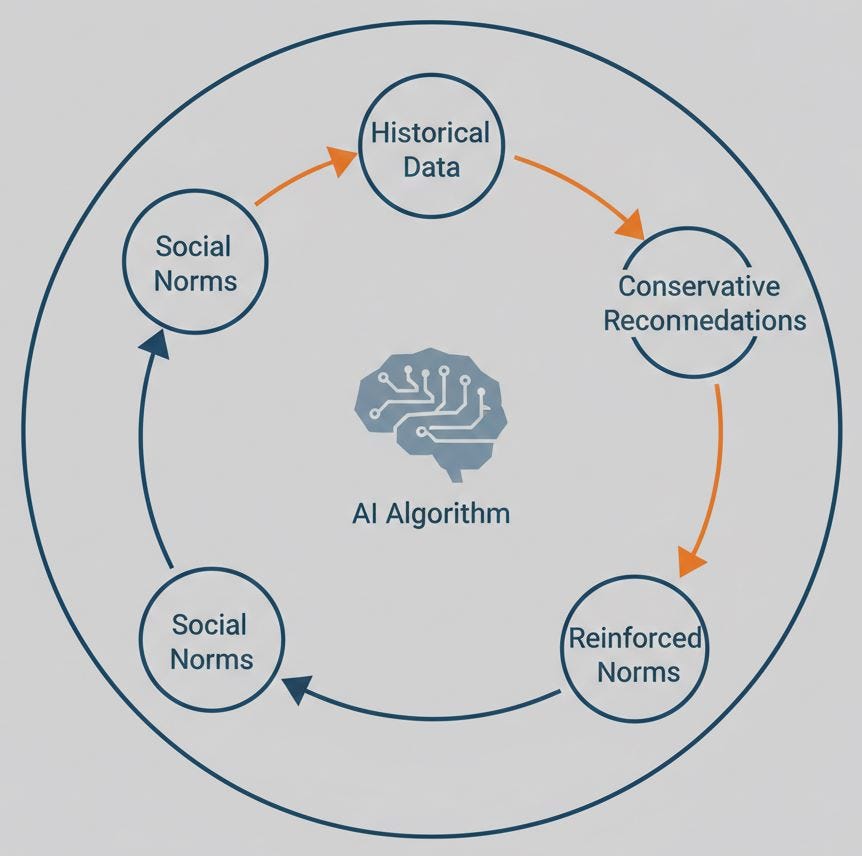
AI Follows Humans and Society
AI matchmaking systems do not invent these patterns. They learn them.
Trained on historical outcomes — acceptance rates, family responses, match longevity — AI systems will infer that:
- widow–widow matches are statistically safer,
- cross-category matches face higher resistance,
- divorcees circulate with fewer penalties.
What humans call stigma, AI interprets as probability. What humans call tradition, AI encodes as optimization.
Once deployed, feedback loops reinforce the pattern: conservative matches produce higher short-term success metrics, further skewing the data. Bias does not merely persist; it hardens.
7. The AI Dilemma
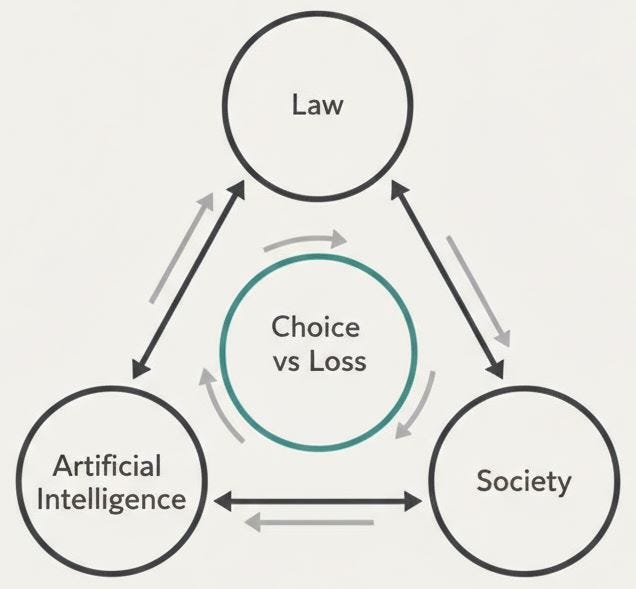
This creates a genuine dilemma for algorithmic systems.
If AI mirrors society, it automates inequality. If AI challenges norms, it reduces short-term efficiency and faces rejection.
Correcting this requires redefining success itself — decoupling compatibility from social friction, and treating widowhood as life history rather than identity. Without such redesign, AI matchmaking becomes automated tradition at scale.
Conclusion
The limits of online divorce, the remarriage disparity between widows and divorcees, and the behavior of AI systems are not separate issues.
Divorce involves choice, so it grants legitimacy and closure. Widowhood involves fate, so it invites supervision and continuity. Law partially resists digitization for safety. Society restricts widow mobility through moral accounting. AI absorbs both and reproduces them efficiently.
Technology did not create these asymmetries. It merely reveals — and stabilizes — them.
Until then, our systems will look modern on the surface — and deeply traditional underneath.
메타데이터
- post_id
- c57e4be5e520
- slug
- online-divorce-remarriage-disparity-between-widow-and-divorcee-and-the-ai-dilemma-c57e4be5e520
- url
- https://medium.com/@vinaydhoni/online-divorce-remarriage-disparity-between-widow-and-divorcee-and-the-ai-dilemma-c57e4be5e520
- canonical_url
- https://medium.com/@vinaydhoni/online-divorce-remarriage-disparity-between-widow-and-divorcee-and-the-ai-dilemma-c57e4be5e520
- author_url
- https://medium.com/@vinaydhoni
- status
- ok
- fetched_at
- 2026-08-01 21:12:53