Stop Prompting Claude. Start Designing Autonomous Loops.
The leverage point for software engineering has shifted from crafting the perfect message to architecting self-correcting recursive…
Stop Prompting Claude. Start Designing Autonomous Loops.
The leverage point for software engineering has shifted from crafting the perfect message to architecting self-correcting recursive systems.
Photo by Tine Ivanič on Unsplash
The time has come.
You need to break the habit of constantly typing instructions into chat windows.
Typing a command yields exactly one reply.
Engineering a recursive system means the work continues long after you shut your laptop and head out for a badminton game.
Industry leaders are noticing this shift.
Over at Anthropic, Boris Cherny oversees Claude Code and openly admits his daily routine no longer involves basic querying.
Instead, his entire focus is constructing continuous cycles that instruct the AI on his behalf.
Peter Steinberger echoes this exact sentiment.
The era of obsessing over individual chat inputs is dead.
Real leverage comes from orchestrating environments that dispatch requests, analyze the output, and determine the subsequent steps automatically.
Think of this approach as establishing a self-sustaining mission. You provide the ultimate target, the model cycles through attempts, and the mechanism persists until an actual completion metric triggers a halt.
The artificial intelligence retains nothing between cycles.
The overarching mechanism retains everything. That distinction forms the bedrock of modern vibecoding.
Deconstructing the Mechanism
Google developer Addy Osmani recently formalized this architecture by dividing it into six distinct components:
automated triggers, isolated branch environments, procedural manuals, API integrations, specialized sub-routines, and persistent storage.
Every functional automated cycle relies on a mix of these ingredients.
Triggers separate a continuous cycle from a manual script.
These could take the form of cron schedules, webhooks, or native hooks that execute without your physical input.
They actively hunt for tasks and categorize them before you even pour your morning coffee.
Isolated branch environments prevent your parallel workers from destroying each other’s progress.
Letting two models modify the identical script simultaneously invites disaster.
Utilizing native version control features like isolated git directories grants each worker an exclusive sandbox.
Procedural manuals serve as reference guides the model consults, eliminating the need to explain your preferred FastAPI or Polars structure repeatedly.
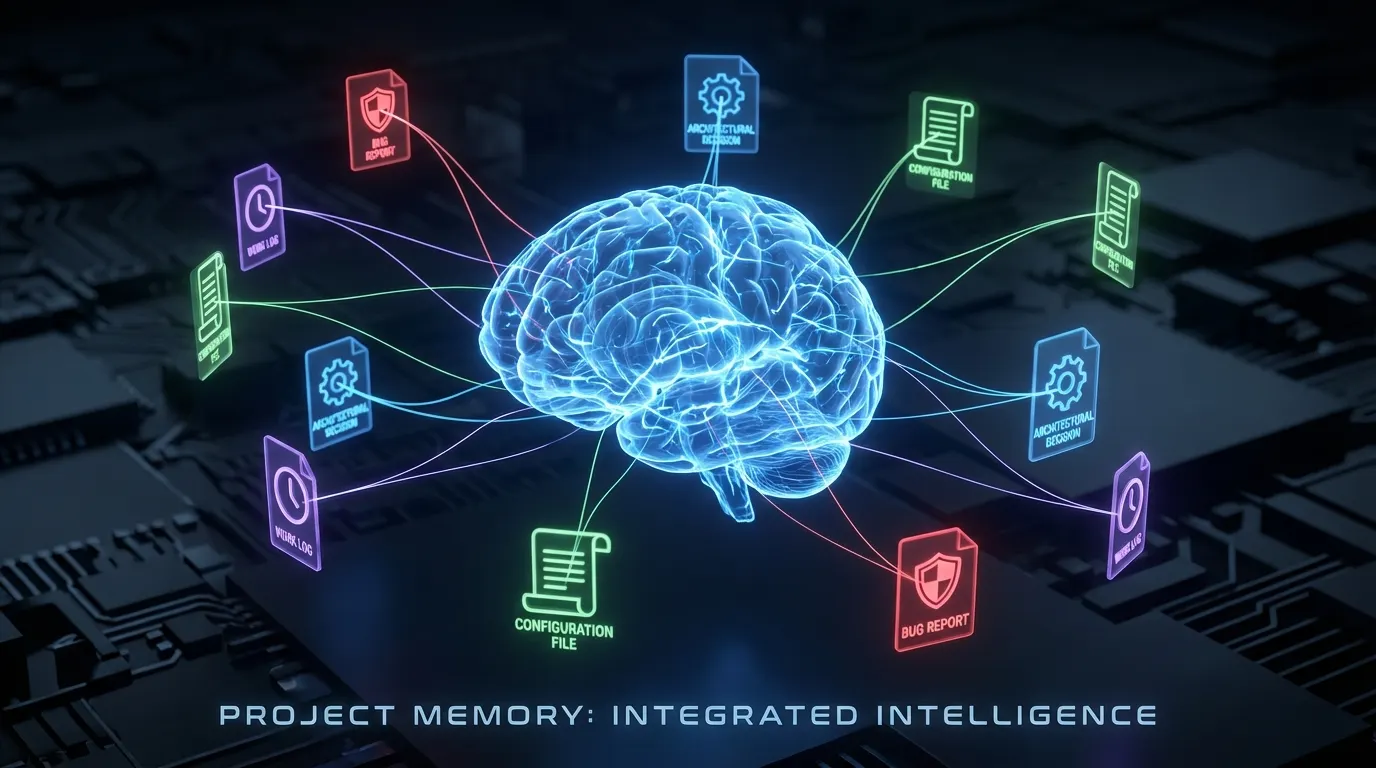
Persistent storage acts as the brain on your hard drive, typically a markdown document, which survives across execution cycles.
The artificial intelligence wipes its context. The document endures.
Initiating the First Trigger
Every automated system requires an independent starting mechanism.
The most basic implementation involves a simple cron schedule firing off a command while you are asleep.
A slightly more advanced method uses a repository hook that activates the moment a new commit or code alteration occurs.
Select a single repetitive chore you currently handle by hand and convert its initiating event into your foundational block.
You might define a rule stating: “Each weekday at 7 AM, parse the previous night’s continuous integration errors, scan open tickets, and document the insights into a text document.”
That lone scheduled task constitutes a fully functional recursive system.
Avoid the temptation to engineer all six architectural components during your first weekend.
A single trigger updating a solitary status document provides vastly more utility than hundreds of meticulously written manual queries.
Establishing the Brain
Generate a dedicated text document named STATUS.md or TRACKER.md and position it where every single execution pass can access it. This specific document acts as the exclusive long-term storage for the mechanism.
Any context the model requires to resume its duties must reside right here.
When a fresh execution begins, the model must scan this text before doing anything else.
Once the cycle concludes, it must append its accomplishments and outline the upcoming hurdles.
This foundational tracking pattern represents the most crucial element of your architecture.
Failing to implement this means every single activation begins with zero context, completely blind to the previous hundred iterations.
Organize the document using extremely basic headings: completed items, active efforts, current roadblocks, and upcoming experiments.
Maintain strict brevity.
Forcing the model to ingest thousands of lines of status updates creates more problems than having zero tracking at all.
Dividing Labor
A model acting as both the creator and the reviewer will almost always give itself passing marks.
A solitary worker generating scripts and immediately validating them will mistakenly declare victory far too often.
The solution lies in the creator-reviewer architectural pattern, famously detailed in Anthropic’s own technical publications regarding effective autonomous systems.
One worker produces the output, while an entirely separate worker rigorously evaluates it against strict, objective criteria.
The cycle repeats continuously until the output successfully clears the evaluation.
This validation checkpoint must rely on concrete failure states: a failing test suite, a strict type validation, a broken compilation process, or a formatting linter.
I rely on this exact separation principle when managing data pipelines at work to guarantee platform stability.
Assigning a secondary worker to simply “take a look” without objective metrics merely introduces a second agreeable voice.
The validator requires a firm barrier, not subjective feedback.
Sandboxing Operations
The moment you unleash multiple models upon your repository, strict environment separation becomes mandatory.
Executing a standard command to spawn dedicated workspace directories provides each worker with a secluded branch.
This completely eliminates the risk of concurrent modifications corrupting your primary codebase.
A standard distributed setup looks like this:
worker alpha investigates the architecture and drafts a blueprint, worker beta writes the actual application logic inside an isolated directory, and worker gamma validates the code against test suites in a completely different directory.
None of the workers cross paths.
Implementing this strategy scales your automation from a single background script into a massive, concurrent assembly line.
Every worker operates in total isolation and simply reports its final status back to the centralized tracking document.
Enforcing Boundaries
An automated cycle lacking strict termination criteria will eventually collapse in silence.
Developer Geoffrey Huntley coined the term for systems that broadcast a success metric prematurely, causing the cycle to terminate while leaving the actual task unfinished.
Your termination parameters must rely on external validation rather than the worker’s internal assessment.
An automated test passing, a successful build sequence, or a tracking ticket transitioning to a completed state represent valid termination triggers.
The model simply declaring it has finished does not count.
Always program a rigid iteration limit as a fail-safe, regardless of your primary validation metrics.
Capping the cycle at ten to twenty attempts prevents runaway processes.
If the system hits that maximum limit without triggering the primary success metric, it must shut down and request human intervention rather than spinning endlessly.
Most importantly, you should never let a brand new automated system operate entirely without supervision.
Cherny describes an independence hierarchy consisting of four distinct tiers.
The foundational tier merely offers recommendations.
The subsequent tier prepares modifications for a human to manually merge.
The third tier implements minor adjustments automatically but pauses for explicit human authorization before final deployment.
The ultimate tier handles everything autonomously and simply generates an audit trail.
Begin every fresh automated cycle at the initial or secondary tier. Observe its behavior for an entire week, analyze the generated outputs, and manually fix its mistakes. You only elevate the system to the third tier after it consistently delivers flawless results. True autonomy is earned through proven reliability.
Cycles that discover actionable items should route them directly to a designated review queue.
Cycles that find zero issues should quietly shut down. You must never waste time opening an output file just to verify that the system did nothing.
Monitoring Resource Consumption
A poorly phrased manual query wastes a few seconds.
A defective recursive cycle spinning out of control overnight results in a massive financial penalty.
These autonomous systems can execute hundreds of times, with each pass transmitting the entire accumulated context window to the language model.
Prior to letting any system operate independently, test it manually for a handful of cycles to monitor the exact token expenditure per pass.
Multiply that figure by your hard iteration limit to calculate the absolute maximum expense per execution. Then, multiply that total by your daily trigger frequency to understand your financial exposure.
Furthermore, you must establish a strict whitelist for any cycle permitted to run terminal instructions.
Confine the model to explicitly required tools like directory listing, file reading, or basic version control commands. Granting an unsupervised model unrestricted terminal privileges transforms a simple budgeting concern into a critical security vulnerability.
After deploying a handful of these recursive systems, your daily professional routine transforms entirely.
You abandon the habit of typing questions into a web interface.
Instead, your morning routine in WezTerm involves reviewing an organized queue of items your systems discovered and processed while you slept.
Your standard task list evolves from static bullet points into a dynamic workforce of automated agents constantly turning concepts into functional software.
This shift does not remove you from the decision-making process.
The critical choices simply move upward to the architectural level rather than the micro-management level.
You write fewer manual queries not because your output decreased, but because your automated systems generate the queries on your behalf.
Your mental energy shifts toward the elements requiring genuine human insight:
designing validation checkpoints, establishing termination criteria, and planning the next recursive system worth engineering.
In case we are meeting for the first time, come over *here, it’ll be worth the roller coaster of articles that are gonna come up in the next few weeks.*
I swear tracking these updates is a job in itself, lately.
Here’s the *list which I’ve built and keep adding on*.
And If you need help for analyzing UFC fights, please check out *BoutPredict :)*
메타데이터
- post_id
- d00a83497eea
- slug
- stop-prompting-claude-start-designing-autonomous-loops-d00a83497eea
- url
- https://ai.plainenglish.io/stop-prompting-claude-start-designing-autonomous-loops-d00a83497eea
- canonical_url
- https://ai.plainenglish.io/stop-prompting-claude-start-designing-autonomous-loops-d00a83497eea
- author_url
- https://medium.com/@shashwatwrites
- status
- ok
- fetched_at
- 2026-06-24 04:09:36