Defect Detection Driving Quality Assurance and Intelligent Manufacturing Transformation
Defect Detection is becoming a critical component of modern manufacturing and industrial operations as organizations strive to improve…
Defect Detection Driving Quality Assurance and Intelligent Manufacturing Transformation
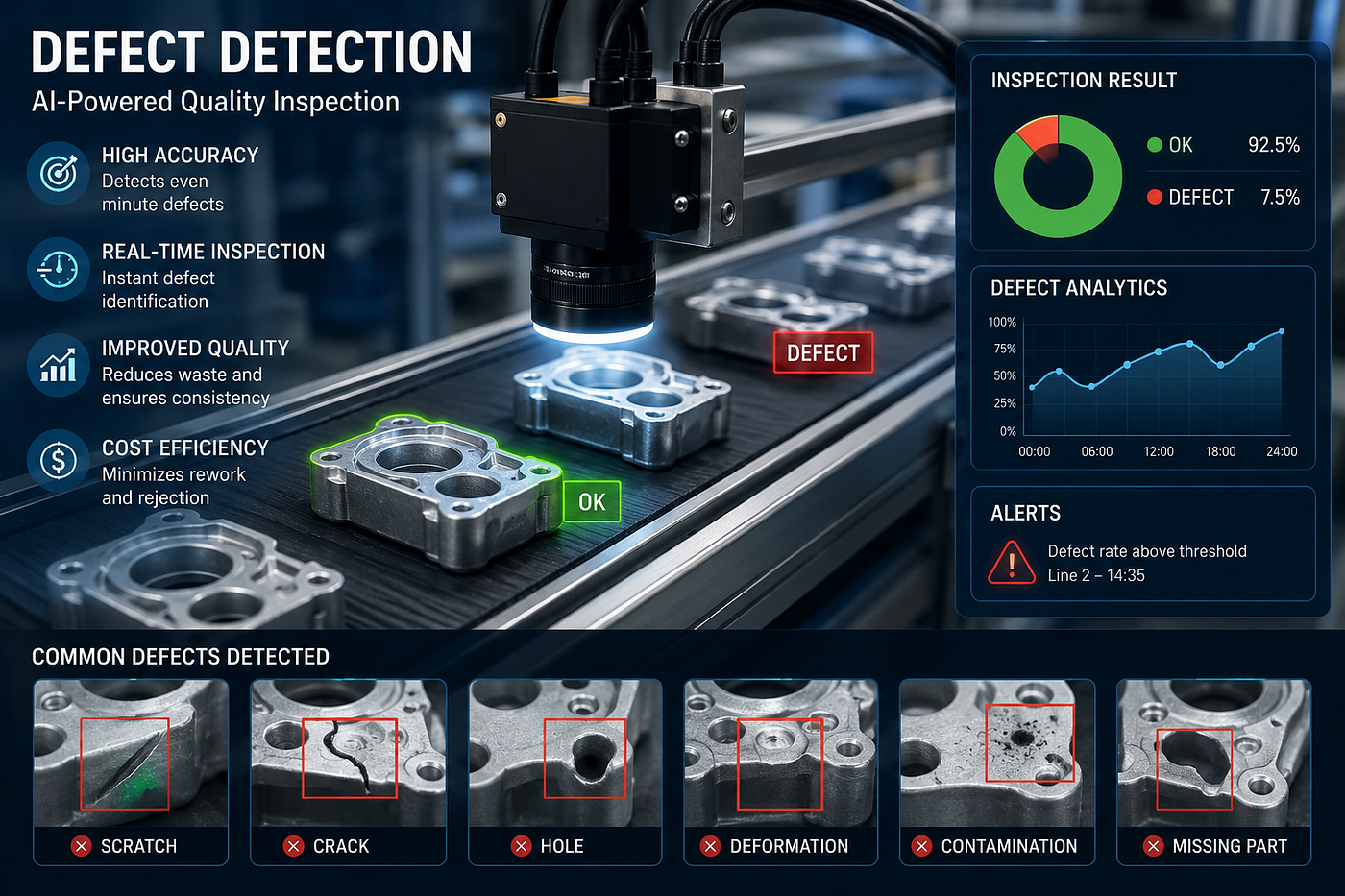
Defect Detection is becoming a critical component of modern manufacturing and industrial operations as organizations strive to improve product quality, reduce waste, and enhance operational efficiency. With increasing competition and growing customer expectations, manufacturers are investing in advanced defect detection technologies to identify flaws, inconsistencies, and production errors before products reach the market. By leveraging artificial intelligence, machine vision, machine learning, and automated inspection systems, businesses can achieve higher accuracy in quality control while minimizing human intervention. This shift toward intelligent quality assurance is helping industries improve productivity, reduce costs, and maintain compliance with stringent quality standards.
One of the primary advantages of defect detection systems is their ability to identify product defects in real time during the manufacturing process. Traditional manual inspection methods can be time-consuming, inconsistent, and prone to human error, especially in high-volume production environments. Advanced defect detection solutions utilize high-resolution cameras, sensors, and AI-powered analytics to inspect products continuously and detect even the smallest imperfections. This capability allows manufacturers to take immediate corrective action, preventing defective products from progressing further along the production line and reducing costly rework or recalls.
Artificial intelligence and machine learning technologies have significantly enhanced the effectiveness of defect detection systems. AI-powered algorithms can analyze vast amounts of visual and operational data to recognize patterns associated with defects and anomalies. Over time, these systems continuously improve their accuracy by learning from new inspection data. Machine learning models can detect surface defects, dimensional variations, assembly errors, cracks, scratches, contamination, and other quality issues that may be difficult for human inspectors to identify consistently. As a result, manufacturers can achieve greater precision and reliability in quality assurance processes.
The adoption of computer vision technology is also transforming industrial inspection practices. Computer vision systems enable automated visual inspection by capturing and analyzing images in real time. These systems can inspect products at high speeds without interrupting production workflows, making them ideal for industries such as automotive, electronics, pharmaceuticals, food and beverage, aerospace, and consumer goods manufacturing. By integrating computer vision with AI analytics, organizations can improve defect classification, reduce false positives, and enhance overall inspection performance.
Defect detection plays a crucial role in improving manufacturing efficiency and reducing operational costs. Early identification of defects helps minimize material waste, lower production downtime, and prevent expensive product recalls. Manufacturers can also use defect data to identify recurring quality issues and optimize production processes accordingly. By analyzing defect trends and root causes, organizations can implement continuous improvement strategies that enhance productivity and product consistency. This data-driven approach supports lean manufacturing initiatives and contributes to long-term operational excellence.
Cloud computing and Industrial Internet of Things (IIoT) technologies are further expanding the capabilities of defect detection solutions. Connected sensors and smart devices continuously collect production data from manufacturing equipment and inspection systems. This information is transmitted to cloud-based analytics platforms, where advanced algorithms generate actionable insights in real time. Cloud-enabled defect detection systems provide centralized visibility across multiple production facilities, allowing manufacturers to monitor quality performance, track defect rates, and make informed decisions from anywhere.
The growing demand for intelligent inspection solutions has also increased the adoption of supporting services such as Defect Detection Software, Quality Analytics Platforms, Machine Vision Solutions, and Industrial AI Consulting Services. These technologies help organizations implement scalable inspection frameworks, integrate quality data across production environments, and optimize defect detection performance. Software platforms provide advanced reporting, visualization, and analytics capabilities, while consulting services support digital transformation initiatives and quality management strategies.
Research published by Market Research Future indicates that sustainability initiatives and smart technology integration are emerging as major growth drivers across the industry.
메타데이터
- post_id
- d450bd822b98
- slug
- defect-detection-driving-quality-assurance-and-intelligent-manufacturing-transformation-d450bd822b98
- url
- https://medium.com/@piyushband2002/defect-detection-driving-quality-assurance-and-intelligent-manufacturing-transformation-d450bd822b98
- canonical_url
- https://medium.com/@piyushband2002/defect-detection-driving-quality-assurance-and-intelligent-manufacturing-transformation-d450bd822b98
- author_url
- https://medium.com/@piyushband2002
- status
- ok
- fetched_at
- 2026-07-10 06:10:56