SBI’s “emotional economic sphere”: when finance super-apps absorb media, entertainment, and JPYSC
- Series: Japan Fintech Layers
SBI’s “emotional economic sphere”: when finance super-apps absorb media, entertainment, and JPYSC
-
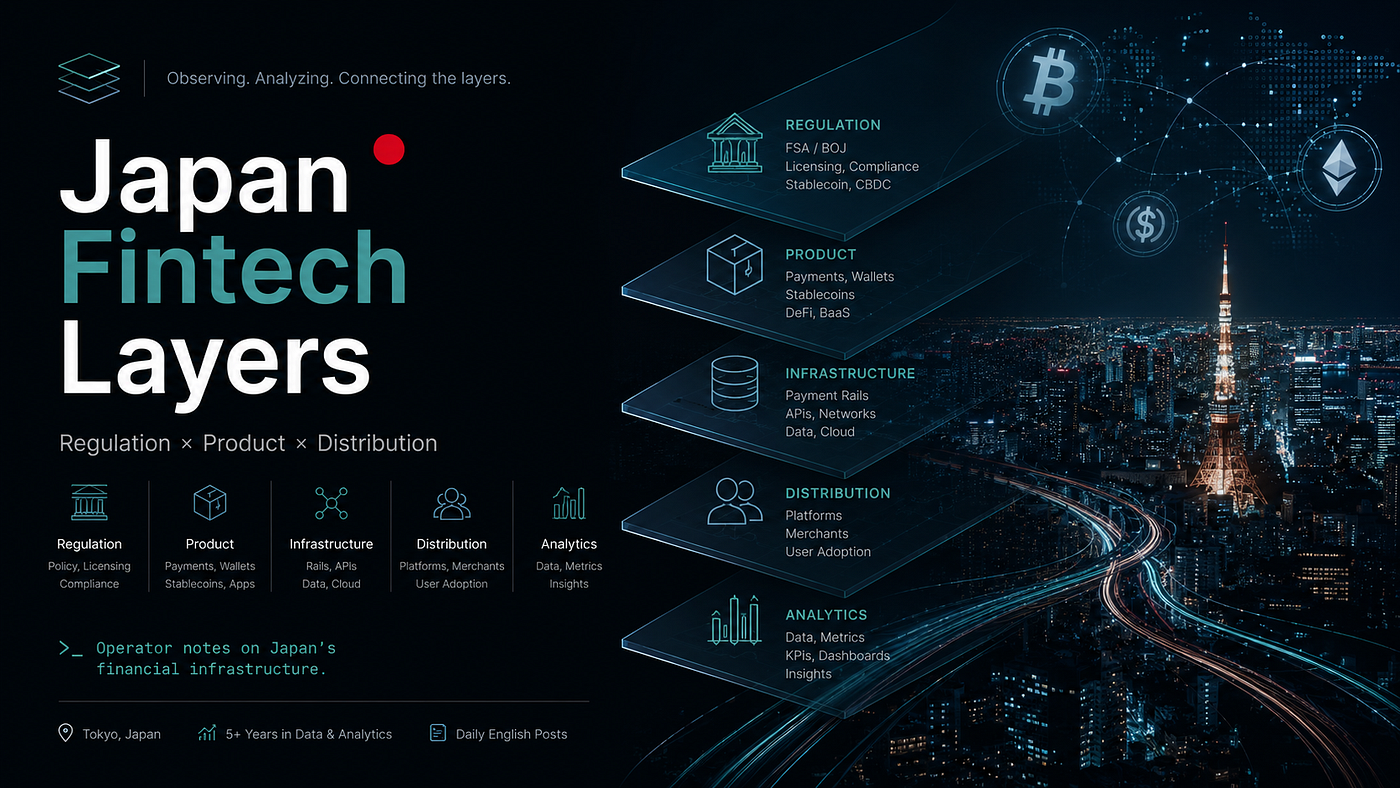
Series: Japan Fintech Layers
-
Series tagline: Regulation × Product × Distribution
-
Date: 2026–05–20
-
Source: https://coinpost.jp/?p=709551 (CoinPost, 2026–05–19)
-
Topic: SBI Holdings / Neo Media / emotional economic sphere / super app / JPYSC / Livedoor / creator economy
-
Tags: sbi, neo media, livedoor, stablecoin, jpysc, super app, japan, fintech, media
-
Positioning: Platform Strategy + Distribution + Regulatory/Product Layer
## Why this matters
Japan’s platform finance race is no longer only about payments GMV or megabank capital.
On May 19, 2026, SBI Holdings used its Neo Media Holdings Summit to articulate a different thesis: economic behavior is driven as much by emotion — empathy, fandom, spectacle — as by spreadsheet rationality, and a financial group should own the media layer that manufactures that emotion.
That is a direct challenge to “finance app = balances + transfers.” It also lands in the same month as BOJ singleness debates, yen stablecoin issuance plans, and coalition plays (PayPay, Mizuho–Rakuten) — making SBI’s bundle a useful stress test for how Regulation × Product × Distribution might evolve in Japan.
## Key facts from the article
Per CoinPost’s summit coverage (May 19, 2026):
-
Event: SBI Neo Media Holdings Summit 2026; keynote by Chairman Kitao and SBI Neo Media HD President Fukasawa on building an ”emotional economic sphere” (感情経済圏).
-
Behavioral thesis: Kitao contrasted textbook rational economic man with real behavior moved by empathy, excitement, and intuition — citing THE DAY boxing at Tokyo Dome (55,000 attendees) and BLACKPINK dome concerts as proof that spectacle reshapes consumption.
-
Media strategy origin: ~20 years after the Fuji Media Holdings episode, SBI concluded sponsorship and ad buys alone cannot fully capture consumer emotion; the group must build its own ecosystem.
-
Livedoor: a basic agreement to start talks on capital and business alliance — framed as a missing piece among Japan’s largest media touchpoints.
-
Group scale (Neo Media cluster): 23 companies (14 equity-method); ~JPY 300B simple revenue sum, ~JPY 8B profit on a consolidation-capture basis.
-
CoinPost role: positioned as media that visualizes and amplifies trust, empathy, and excitement; CoinPost Terminal pitched as a legal-confidential ingest/summarize/publish stack; AI-generated original content to expand.
-
Web3 / creator angle: criticism of US mega-platforms under-rewarding creators; blockchain tokenization for direct investment and direct returns; ODX secondary token market cited.
-
Payments rail: trust-type yen stablecoin “JPYSC” with Startale, targeted for end-June 2026 issuance — removing the prior ~JPY 1M cap via a trust scheme to serve institutions and large tickets.
-
Super app: ”SBI Financial Agent” to integrate media functions, targeting launch next spring; financial + lifestyle data combined with AI for deeper customer understanding.
-
Marketing pool: >JPY 25B/year group marketing spend to be centralized and optimized internally; Tokyu Real Estate disclosed as first JPY 5B investor in the model.
-
Gen Z distribution: large entertainment hooks (TGC Matsuyama, drone/fireworks events) tied to SBI Securities passing 16 million accounts and localized ”Zero Revolution” account-opening pushes.
Corporate backdrop (article sidebar): SBI Neo Media HD aims at a JPY 100B content fund, links to SBI’s ”fourth megabank” regional co-creation narrative, and spans media, talent, IP, and esports/VTuber management.
## My analysis
### 1) Marketing spend is being reclassified as owned distribution — not OPEX leakage
If >JPY 25B/year in group marketing can circulate through Livedoor, CoinPost, and allied media rather than purely external platforms, SBI is effectively verticalizing attention.
The fintech implication is not cheaper ads — it is lower marginal CAC for securities, banking, and insurance products when every emotional spike (sports, K-pop, firework festivals) can terminate inside SBI Financial Agent with pre-built KYC rails.
That mirrors — but escalates — the PayPay and Rakuten playbook: subsidize distribution you control.
### 2) JPYSC + ODX is an attempt to financialize IP inside the regulatory perimeter
Kitao’s creator-economy rhetoric is not abstract. Pairing JPYSC (institutional-scale trust stablecoin) with ODX secondary liquidity sketches a pipeline: emotion → tokenized content exposure → settlement in yen stablecoin.
Read next to this series’ JPYC (May 7) and BOJ singleness (May 18) layers: Japan is simultaneously widening payment-rail definitions and raising systemic questions about who guarantees 1:1 in stress. SBI is betting the trust-structure upgrade (cap removal) is the product unlock — while regulators will still ask governance and singleness questions on the same rail.
### 3) The super app war shifts from “wallet frequency” to “daily media dwell time”
Pure asset-management UIs struggle to earn daily opens. Embedding news, entertainment, and community heat in SBI Financial Agent is classic lock-in architecture: raise touches first, convert to investment, payments, and points second.
Competitively, this pressures Mizuho–Rakuten-style alliances and PayPay’s finance attach: all three camps are fighting for Z-generation habit, but SBI is unusually explicit that habit is emotional, not rational.
## What operators should watch next
-
Livedoor deal terms: governance, data rights, and whether media inventory becomes exclusive to SBI Financial Agent.
-
JPYSC launch (end-June 2026): reserve disclosure, institutional onboarding, and how it competes or interoperates with JPYC and other yen tokens.
-
Super app beta scope: which media modules ship first, and whether investment prompts trigger suitability/friction rules.
-
ODX tokenized IP: real issuance volume vs keynote narrative; secondary liquidity and retail access guardrails.
-
Regulatory cross-currents: FSA foreign trust stablecoin recognition (same week in market news) vs BOJ singleness — does SBI’s trust coin narrative accelerate or complicate approvals?
Strategic question: If emotion is the product, who owns the downside when a tokenized IP or stablecoin rail breaks trust — the media brand, the bank, or the exchange?
## One-line takeaway
SBI is packaging media, entertainment, and trust-type JPYSC into one thesis: win Gen Z’s heartshare first, then convert it into accounts, assets, and on-chain IP finance inside a single super app.
메타데이터
- post_id
- daa7c6df6c8f
- slug
- sbis-emotional-economic-sphere-when-finance-super-apps-absorb-media-entertainment-and-jpysc-daa7c6df6c8f
- url
- https://medium.com/@bo4911/sbis-emotional-economic-sphere-when-finance-super-apps-absorb-media-entertainment-and-jpysc-daa7c6df6c8f
- canonical_url
- https://medium.com/@bo4911/sbis-emotional-economic-sphere-when-finance-super-apps-absorb-media-entertainment-and-jpysc-daa7c6df6c8f
- author_url
- https://medium.com/@bo4911
- status
- ok
- fetched_at
- 2026-06-10 22:22:12



