I Compared Every Bird Deterrent on the Market. Here’s the Honest Truth.
At iCHASE, we’ve spent years watching facility managers make the same expensive mistake. Here’s the breakdown they should have had before…
I Compared Every Bird Deterrent on the Market. Here’s the Honest Truth.

At iCHASE, we’ve spent years watching facility managers make the same expensive mistake. Here’s the breakdown they should have had before they bought.
Most bird control decisions are made in about fifteen minutes. A manager spots a problem, searches for a fix, finds something with a reasonable price tag, and orders it. Six months later, the birds are back, the product needs replacing, and the same search starts over.
The bird deterrent industry runs on this cycle. Most deterrents aren’t designed to solve the problem permanently. They’re designed to be affordable enough to repurchase.
Here’s the real cost breakdown by category, including what the brochure doesn’t mention.
The Problem With How Facilities Buy Deterrents
Purchase price is not the same as cost of ownership. It’s close to the opposite.
A spike installation looks cheap at first glance. So does a pack of visual decoys or a sonic device. But the sticker price doesn’t include installation labor, annual maintenance, replacement units when the product degrades, or the cost of the bird problem continuing because the deterrent doesn’t actually work under real conditions.
Facilities that buy on price alone typically cycle through two or three deterrent solutions before landing on something that holds. By that point, they’ve spent more than they would have on a system that worked from the start.
“The cheapest deterrent is rarely the cheapest solution.”
The Real Cost Comparison
Below is a realistic breakdown by deterrent category, accounting for installation, maintenance, replacement cycles, and typical effectiveness windows.
Bird Spikes
- Upfront cost: $300–$2,000+
- Annual maintenance: Low
- Avg. lifespan: 10+ years (steel)
- Reality: Covers ledges only. Birds simply land elsewhere.
Netting
- Upfront cost: $400–$5,000+
- Annual maintenance: Low to moderate
- Avg. lifespan: 5–10+ years
- Reality: Best physical barrier available. Labor-intensive to install correctly.
Sonic / Audio Devices
- Upfront cost: $200–$1,500
- Annual maintenance: Low
- Effective lifespan: Weeks to months
- Reality: Habituation is the primary failure mode. Noise complaints on busy sites.
Visual Decoys
- Upfront cost: $50–$300
- Annual maintenance: Minimal
- Effective lifespan: Days to weeks
- Reality: Birds habituate within days. No long-term efficacy on established sites.
Motion-Activated Deterrents
- Upfront cost: $100–$800
- Annual maintenance: Low
- Effective lifespan: Weeks to months
- Reality: False activations on active sites. Habituation is inevitable without a varied response.
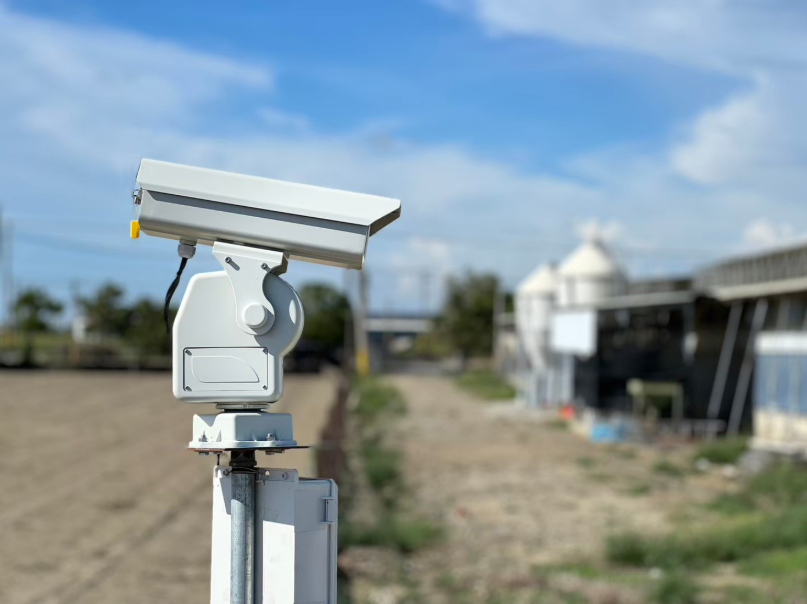
AI Laser Deterrence (iCHASE)
- Upfront cost: Higher
- Annual maintenance: Near-zero
- Continuous effective lifespan: 12+ months
- Reality: Adaptive patterns prevent habituation. Full-zone coverage. Auto-shuts off or reroutes around people, livestock, and vehicles.
One thing that list doesn’t capture: the lifespan of a physical product isn’t the same as the lifespan of its effectiveness. Steel spikes can last over a decade, but they only stop birds from landing on the specific ledge where they’re installed. The bird problem itself doesn’t go anywhere.
Why Laser Looks Expensive Until You Do the Maths
The upfront cost of an AI laser deterrent system is higher than a pack of spikes. That’s not a secret. What’s less obvious is what the comparison actually involves.
Spikes cover a ledge. A laser system covers a zone. Spikes require periodic inspections and cleaning as debris accumulates. A laser system’s ongoing maintenance is close to zero once it’s calibrated and running.
More than that: spikes don’t stop a bird landing on the floor, the machinery, the feed store, or anywhere that isn’t a narrow ledge. They displace the problem. They don’t eliminate it.
The habituation issue compounds this for everything else on the list. Sonic devices, visual decoys, and motion-activated deterrents all share the same core vulnerability: birds learn. Research published in Tropical Life Sciences Research (Hornain & Rosely, 2025) confirms that habituation to single-method deterrents is inevitable when the stimulus carries no real consequence.
“The replacement cycle isn’t a product defect. It’s a design feature of the business model.”
iCHASE uses computer vision to detect birds in real time and deploy adaptive laser patterns that vary continuously, so there’s no fixed response for birds to habituate to. The system also automatically shuts off or reroutes the laser when people, livestock, or vehicles enter the active area. It runs safely on working sites without anyone managing it manually.
Over a three-year window, the total cost of ownership for an AI laser system is frequently lower than cycling through multiple conventional deterrent deployments. The upfront number is bigger. The total number often isn’t.
What Each Deterrent Is Actually Good For
This isn’t a case for throwing everything out and buying a laser. Different sites have different needs, and it’s worth being honest about that.
Bird Spikes
A solid choice for specific, defined roosting ledges where the concern is structural damage from perching birds. They’re a physical exclusion tool: durable, low-maintenance, and effective for exactly the surface they cover. Don’t expect them to solve anything beyond that.
Netting
The most effective physical barrier available, and it doesn’t depend on bird behaviour at all. Expensive to install correctly and requires periodic inspection, but quality UV-stabilised netting lasts 5–10+ years. For enclosed spaces, loading docks, covered storage, and warehousing with defined entry points, it’s worth serious consideration.
Sonic and Visual Deterrents
These have a genuine use case at low-pressure sites with light bird traffic. A new installation in a quiet area can buy months of relief. On active industrial sites or agricultural operations with established populations, they fail fast, and the research backs that up.
Motion-Activated Deterrents
Suited to small, defined spaces: a café terrace, a retail entrance, a single problem doorway. For a deeper look at where motion-activated systems work and where they don’t, see the iCHASE guide at ichase.io/motion-activated-bird-deterrent.
AI Laser Deterrence
The right call for industrial facilities, warehouses, open feed yards, poultry operations, and any site where bird presence carries a contamination or disease risk, not a nuisance.
“It’s the only category here without a built-in failure mode under sustained pressure.”
The Honest Verdict
Not every facility needs a laser system. A small hospitality venue with an occasional gull problem doesn’t need the same solution as a poultry farm managing avian influenza risk.
But every facility manager deserves to know what they’re buying before committing. A $200 sonic device isn’t a cheaper version of an AI laser system. It’s a different product category, with a different (much shorter) effective lifespan, a different failure mode, and coverage measured in square metres rather than zones.
Run the numbers over three years, not three months, and the answer usually becomes clearer.
Want to know if motion-activated deterrents are right for your site? We break down exactly where they work, where they fall short, and what to look for before buying.
Read the full guide at ichase.io/motion-activated-bird-deterrent.
Frequently Asked Questions
What is the most effective bird deterrent for industrial facilities?
For industrial facilities with sustained bird pressure, AI laser deterrence is the most effective long-term option. Unlike sonic, visual, or motion-activated devices, laser systems use adaptive patterns that prevent habituation. Combined with near-zero ongoing maintenance, they deliver the lowest total cost of ownership over a 3-year window.
Why do sonic bird deterrents stop working?
Birds habituate to consistent stimuli that carry no real consequence. Sonic devices repeat the same sounds on a predictable schedule, so birds quickly learn they pose no threat. Research from Tropical Life Sciences Research (Hornain & Rosely, 2025) confirms this is the primary failure mode for single-method deterrents on active sites.
Are motion-activated bird deterrents worth buying?
For small, defined spaces with light bird traffic, yes. A café terrace or retail entrance with an occasional bird problem is a reasonable use case. For industrial operations, poultry farms, or any site with an established bird population, motion-activated devices aren’t a biosecurity solution and shouldn’t be treated as one.
How does an AI laser bird deterrent work?
AI laser systems use computer vision to detect birds in real time, then project moving laser patterns across the zone. The patterns vary continuously, so birds never habituate to a fixed response. The system automatically shuts off or reroutes the laser beam when people, livestock, or vehicles enter the active area, making it safe to run on working sites 24/7 without manual management.
What’s the real cost difference between cheap and premium bird deterrents?
Cheap deterrents have low upfront costs but high replacement rates. A facility that cycles through two or three sonic or visual deterrent deployments before switching to a laser system typically spends more in total than if it had started with the laser. The relevant comparison isn’t sticker price; it’s total cost of ownership over 3 years, factoring in replacement cycles, maintenance, and the ongoing cost of an unsolved bird problem.
If this breakdown was useful, please give us a clap 👏 and follow iCHASE for more on AI-driven biosecurity.
Book a Demo → ichase.io/contact
메타데이터
- post_id
- df8cc98d8ced
- slug
- i-compared-every-bird-deterrent-on-the-market-heres-the-honest-truth-df8cc98d8ced
- url
- https://medium.com/@ichase/i-compared-every-bird-deterrent-on-the-market-heres-the-honest-truth-df8cc98d8ced
- canonical_url
- https://medium.com/@ichase/i-compared-every-bird-deterrent-on-the-market-heres-the-honest-truth-df8cc98d8ced
- author_url
- https://medium.com/@ichase
- status
- ok
- fetched_at
- 2026-07-08 21:20:17