Not Confused, Just Strategic: India in Today’s Multipolar World
Understanding Strategic Autonomy: India and the Global South in a US-China World
Not Confused, Just Strategic: India in Today’s Multipolar World
Understanding Strategic Autonomy: India and the Global South in a US-China World
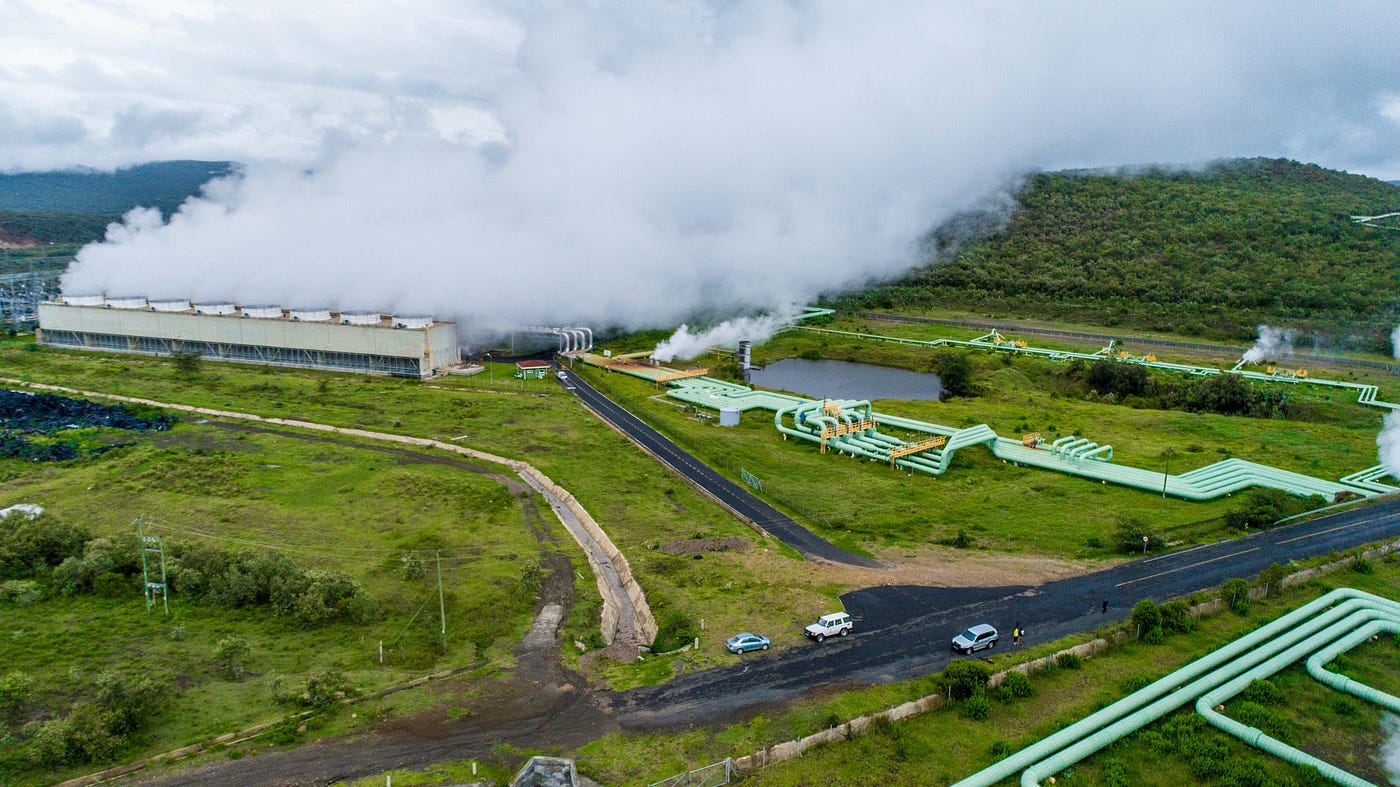
Photo by Gayatri Malhotra on Unsplash
In 2023, India simultaneously hosted the G20 summit, refused to condemn Russia’s invasion of Ukraine, deepened defence ties with the United States through the Quad, expanded trade with China despite ongoing border tensions, and led efforts to expand BRICS membership. To Western observers, this appeared contradictory, even irrational. However, to anyone familiar with India’s foreign policy tradition, as I am, having studied India’s evolution from non-alignment to what scholars now call multi-alignment, this behaviour makes clear strategic sense. India is not confused. It is navigating an international system that claims to be multipolar but remains dominated by US-China competition.
Consequently, this matters beyond foreign policy theory. For organisations working in development, understanding whether the world is genuinely multipolar or merely experiencing intensified great power competition shapes everything from programme design to partnership strategies. Can development actors engage with multiple partners independently, or must they navigate implicit allegiances to Washington and Beijing? The answer reveals whether multipolarity is real or aspirational.
Unbalanced Multipolarity: The Structural Reality
The contemporary international system exhibits characteristics of unbalanced multipolarity rather than genuine multipolarity. Whilst multiple powers, including emerging states, influence global dynamics, the United States and China remain dominant actors vying for regional and global hegemony. The Global South has increasingly become a strategic arena in this competition, with both powers seeking to leverage it for influence. At the same time, rising powers are asserting strategic autonomy, shaping the global order in ways that challenge traditional hegemonic narratives. Examining structural power distribution, US-China competition, and the strategic ambitions of the Global South reveals the extent and the limits of contemporary multipolarity.
Unbalanced multipolarity arises when multiple great powers exist, but one or two potential hegemons dominate the system. In the current global order, the US and China exemplify this dynamic. Whilst the US remains economically and militarily powerful, its relative influence has declined, whereas China’s rapid economic growth and strategic investments, notably through the Belt and Road Initiative, signal an emergent contender for regional and global supremacy.
Meanwhile, the presence of other rising powers, including India, Brazil, Turkey, South Africa, and Saudi Arabia, contributes to a multi-aligned environment. However, these states lack the capacity to form independent poles of comparable strength to the US and China. Their influence is exercised through strategic autonomy, regional partnerships, and selective engagement with major powers rather than through independent hegemony. For instance, India’s simultaneous participation in the Quad, with the US, Japan, and Australia; BRICS, with China and Russia; and the Shanghai Cooperation Organisation illustrates this approach: engaging multiple power centres without exclusive alignment to any single one.
This uneven distribution of power highlights that multipolarity remains aspirational rather than fully realised. Structural asymmetries and economic disparities continue to favour the primary actors, reinforcing unbalanced competition. For development organisations, this means that even when working with multiple partners, they ultimately operate within a system shaped by US-China dynamics. A development programme funded by Chinese Belt and Road loans functions differently from one supported by US development finance, regardless of local preferences.
US-China Competition and the Global South as a Strategic Arena
The US-China rivalry shapes the contours of unbalanced multipolarity, with the Global South increasingly serving as the primary competitive space. China’s Belt and Road Initiative and associated infrastructure investments, exceeding one trillion dollars, have strategically positioned it as a central economic actor across Asia, Africa, and Latin America. This investment enables China to cultivate influence over developing nations while offering alternatives to Western-led development models. These alternatives often come with fewer governance conditions but potentially greater debt obligations.
Conversely, the US has attempted to counter China’s influence through initiatives such as the Partnership for Global Infrastructure and Investment, Build Back Better World, and the Blue Dot Network, aiming to reinforce its economic and normative influence in the Global South. Yet these initiatives have struggled to match China’s scale and speed of delivery. African leaders, in particular, have noted that whilst Western partners offer advice and conditions, Chinese partners deliver infrastructure and financing.
This rivalry reveals two critical dynamics. First, the Global South is instrumentalised as a space for influence rather than recognised as fully autonomous. Development becomes a tool of competition rather than partnership. For example, when the US announces infrastructure investment in response to Chinese activity, it is reacting to strategic rivalry rather than responding to development needs. Second, this competition underscores the limits of multipolarity. Despite the multiplicity of states, the global order is primarily defined by competition between two dominant powers.
For countries in South Asia, Africa, and Latin America, this creates both opportunities and constraints. On one hand, competition provides leverage, enabling states to negotiate better terms by playing powers against each other. On the other hand, it constrains genuine autonomy, as every partnership is interpreted through the lens of great power alignment.
Strategic Autonomy: The Global South’s Response
Emerging powers in the Global South are not passive objects of great power competition. They actively shape the international system, challenging hegemonic binaries. By diversifying trade partnerships, modernising industries, and establishing regional initiatives such as the African Continental Free Trade Area, these states exercise agency within the structural constraints of unbalanced multipolarity.
India’s approach exemplifies this strategic autonomy. Despite Western pressure, India maintained oil purchases from Russia after 2022, leveraging discounted prices to support domestic economic stability. At the same time, India deepened security cooperation with the US, expanded manufacturing partnerships with Japan, and negotiated infrastructure deals with China. This is not a contradiction. It is strategic autonomy in practice. India refuses binary choices, instead pursuing relationships that serve specific interests whilst avoiding exclusive dependence on any single power.
Other Global South actors employ similar strategies. Indonesia engages both the US and China economically, whilst maintaining military non-alignment. Gulf states are diversifying away from exclusive US security dependence by engaging Russia and China. Brazil under Lula has revitalised South-South cooperation whilst maintaining Western trade ties. These behaviours reflect pragmatic prioritisation of economic growth and strategic autonomy over alignment with competing superpowers.
However, the exercise of autonomy remains constrained by historical and structural dependencies. Many Global South states must navigate US and Chinese influence carefully, balancing development opportunities against the risks of over-dependence. When Sri Lanka defaulted on Chinese loans and lost control of Hambantota Port, it demonstrated the limits of autonomy in an unbalanced system. Similarly, states that resist US preferences may face reduced development financing or political pressure. The divergence between potential and realised autonomy illustrates that multipolarity is evolving yet incomplete. Whilst influence is more diffused, structural asymmetries persist.
Implications for Development Practice
This unbalanced multipolarity has direct consequences for development organisations and practitioners. First, partnership decisions increasingly carry geopolitical implications. Accepting Chinese financing for infrastructure may complicate relationships with Western donors. Participating in US-led initiatives may limit access to Chinese markets. Development actors must navigate these tensions even when their primary objectives are poverty reduction or climate adaptation rather than geopolitics.
Second, the instrumentalisation of development assistance means that recipient countries often face pressure to align with donor preferences on issues unrelated to the projects being funded. This reproduces colonial-era dynamics of conditionality, even as the actors involved change.
Third, for organisations seeking to work in genuinely country-led ways, the current system creates structural challenges. How can development be locally led when financing inherently carries geopolitical expectations? How can partnerships be equal when power remains so unevenly distributed? These are not merely theoretical concerns. They shape whether development programmes succeed or fail in practice.
Towards Genuine Multipolarity?
Contemporary multipolarity remains partial and uneven. The US-China rivalry continues to shape global politics, particularly in the Global South, constraining the emergence of a balanced multipolar system. Genuine multipolarity would require multiple poles of comparable strength without dominance by any single actor. This condition has not yet been met. For example, the economic gap between the US, with a GDP of approximately twenty-five trillion dollars, and China, with around seventeen trillion dollars, compared to other rising powers such as India at roughly three point seven trillion dollars or Brazil at around two point one trillion dollars, illustrates this disparity clearly.
Nevertheless, the strategic agency of emerging powers signals a gradual shift towards a more multi-aligned system. The expansion of BRICS to include Saudi Arabia, the UAE, Egypt, Ethiopia, and Iran reflects growing demand for alternatives to Western-dominated institutions. The increasing use of local currencies in bilateral trade, bypassing the dollar, suggests structural evolution even within existing constraints. Regional institutions such as the African Continental Free Trade Area and ASEAN demonstrate that Global South actors are building cooperative frameworks independent of great power leadership.
These developments indicate the potential for more inclusive and autonomous global influence over time. However, any transition from unbalanced to balanced multipolarity, if it occurs at all, is likely to be gradual and contested. The US is unlikely to relinquish dominance willingly, and China’s rise introduces new forms of dependence even as it challenges older ones.
What This Means Going Forward
For development practitioners, policymakers, and analysts, understanding the limits of current multipolarity has practical importance. Strategies designed for a genuinely multipolar world, where multiple powers compete on relatively equal footing, will falter in the present unbalanced system. Effective approaches must instead acknowledge structural asymmetries whilst supporting the strategic autonomy that Global South actors continue to assert.
This means recognising that when countries like India refuse binary choices, they are not being obstructive. They are acting rationally within a constrained system. It means accepting that development partnerships will inevitably carry geopolitical implications and working to mitigate, rather than deny, these constraints. Most fundamentally, it requires acknowledging that multipolarity today is less about equality among powers and more about complexity in competition and alignment.
The international system is in transition, moving away from US unipolarity towards something more complex. But it has not yet reached genuine multipolarity. What exists instead is unbalanced multipolarity, a system in which multiple powers matter, two dominate, and the rest navigate between them. Understanding this reality, rather than the multipolarity we might prefer, is essential for anyone seeking to operate effectively in today’s international environment.
India’s ability to engage simultaneously with the US, China, Russia, and other powers without exclusive alignment demonstrates both the possibilities and the limits of this moment. Strategic autonomy is possible. Binary choices can be resisted. But escaping the gravitational pull of US-China competition remains elusive. That is the paradox of contemporary multipolarity, and it is the reality that development actors, policymakers, and Global South states must navigate every day.
Reference List
Ashford, E. and Cooper, E. (2023). Assumption Testing: Multipolarity Is More Dangerous than Bipolarity for the United States • Stimson Center. [online] Stimson Center. Available at: https://www.stimson.org/2023/assumption-testing-multipolarity-is-more-dangerous-than-bipolarity-for-the-united-states/ [Accessed 24 Apr. 2025].
Bharadwaj, A., Rodríguez-Chiffelle, C., Urbano, L., Zdunic, S. and Azevedo, D. (2025). In a Multipolar World, the Global South Finds Its Moment. [online] BCG Global. Available at: https://www.bcg.com/publications/2025/in-a-multipolar-world-global-south-finds-its-moment [Accessed 28 Apr. 2025].
Carrai, M.A. (2023). Is America Losing the Global South? Assessing the Dynamics of Sino-American Rivalry in Infrastructure Diplomacy. Orbis, [online] 67(4), pp.524–543. doi:https://doi.org/10.1016/j.orbis.2023.08.004.
Gong, X. (2024). The Challenges behind China’s Global South Policies. [online] Carnegie Endowment for International Peace. Available at: https://carnegieendowment.org/posts/2024/12/the-challenges-behind-chinas-global-south-policies?lang=en [Accessed 28 Apr. 2025].
Lobanova, J. Z. and Nikolić, G. (2024) ‘Does the Concept of Multipolarity Accurately Reflect the Current Geopolitical Reality?’, The Review of International Affairs, 75(1191), pp. 261–277. DOI: 10.18485/iipe_ria.2024.75.1191.4.
Lobell, S.E. (2017). Structural Realism/Offensive and Defensive Realism. [online] Oxford Research Encyclopedia of International Studies, Oxford University Press, pp.1–23. doi:https://doi.org/10.1093/acrefore/9780190846626.013.304.
Nechaeva, V. (2025). The Rise and Growing Coordination of the Global South. [online] OIIP. Available at: https://www.oiip.ac.at/publikation/the-rise-and-growing-coordination-of-the-global-south/ [Accessed 26 Apr. 2025].
Oomen, T.L. (2021). China and the West: an Overview of Growing Competition in the Global South and the Impact of China’s Rise. [online] asiacentre.eu. Available at: https://asiacentre.eu/2021/07/09/china-and-the-west-an-overview-of-growing-competition-in-the-global-south-and-the-impact-of-chinas-rise-2/ [Accessed 26 Apr. 2025].
Ruiz, J.J. (2025). Shattered hegemony: the Rivalry between the US and China in the New Era of the Politics of Force. [online] Elcano Royal Institute. Available at: https://www.realinstitutoelcano.org/en/analyses/shattered-hegemony-the-rivalry-between-the-us-and-china-in-the-new-era-of-the-politics-of-force/ [Accessed 23 Apr. 2025].
Snyder, G.H. (2002). Mearsheimer’s World-Offensive Realism and the Struggle for Security. International Security, [online] 27(1). Available at: https://www.researchgate.net/publication/254951493_Mearsheimer [Accessed 23 Apr. 2025].
Vinjamuri, L., Aydın-Düzgit, S., Bajpaee, C., Cooley, A., de Hoop Schefer, A., Emmers, R., Fravel, M.T., Lind, J., Nasr, V., Quencez, M., Stelzenmüller, C., Stuenkel, O.D.C., Vakil, S., & Zarakol, A. (2025) Competing Visions of International Order. Chatham House. DOI: 10.55317/9781784136383.
Zhao, M. (2024). The Belt & Road Initiative and U.S.-China Competition over the Global South. China Economic Journal, 17(2), pp.1–16. doi:https://doi.org/10.1080/17538963.2024.2344270.
메타데이터
- post_id
- e4ed95d0e7b2
- slug
- not-confused-just-strategic-india-in-todays-multipolar-world-e4ed95d0e7b2
- url
- https://medium.com/@anoushyabrg/not-confused-just-strategic-india-in-todays-multipolar-world-e4ed95d0e7b2
- canonical_url
- https://medium.com/@anoushyabrg/not-confused-just-strategic-india-in-todays-multipolar-world-e4ed95d0e7b2
- author_url
- https://medium.com/@anoushyabrg
- status
- ok
- fetched_at
- 2026-07-13 06:23:13