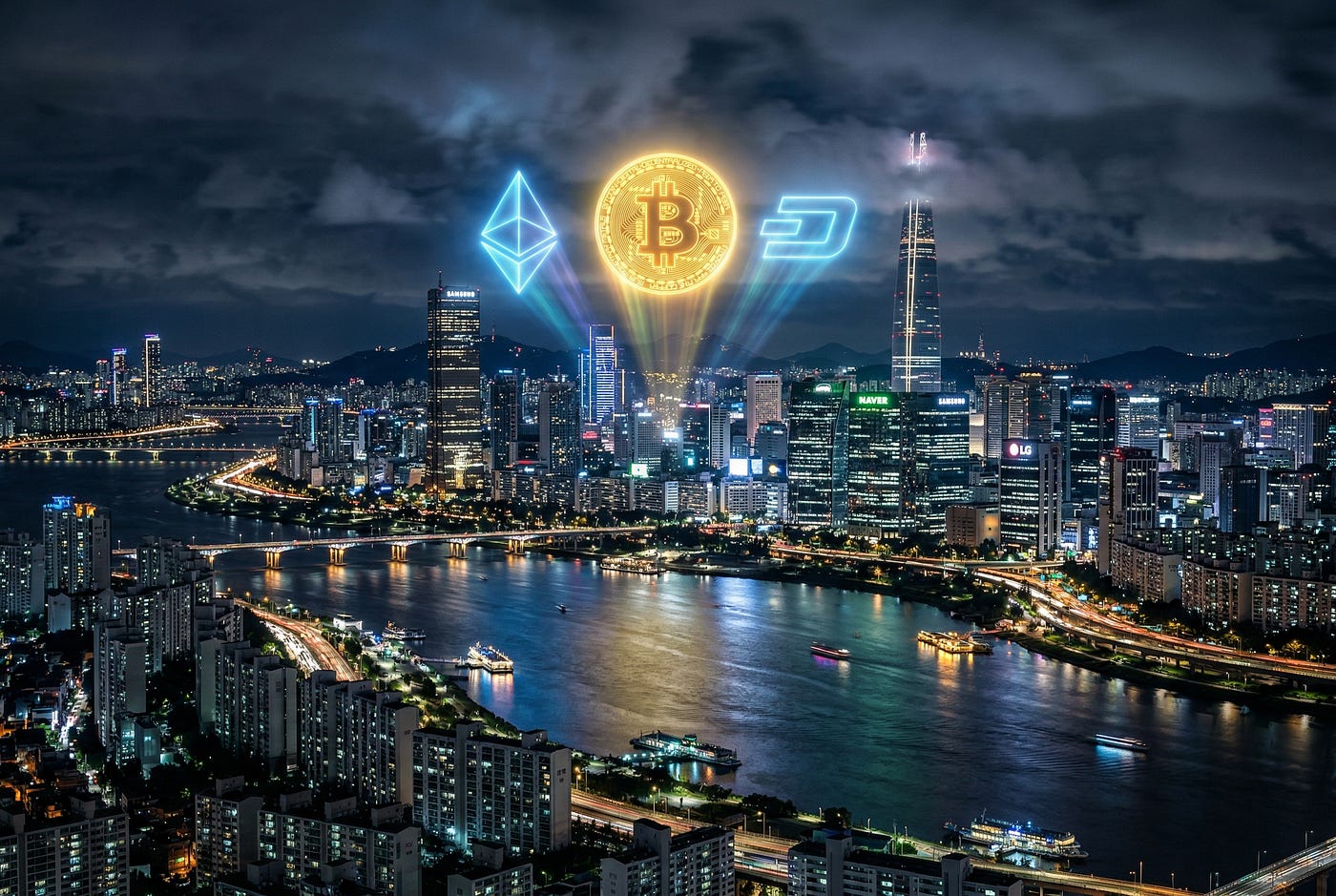
The Era of Great M2 Divergence: Unlocking the Secrets of KOSPI 4,000 and the 1,470 KRW Exchange…
Table of Contents
The Era of Great M2 Divergence: Unlocking the Secrets of KOSPI 4,000 and the 1,470 KRW Exchange Rate
Table of Contents
- Introduction: Everything is Soaring Except My Salary — The Difference Was the “Volume of Money”
- 8.9% vs. 4.6%: The “Great Divergence” in Numbers
- The Mystery of KOSPI 4,000: Growth is 0.9%, So Why is the Stock Market at 4,000?
- The Secret of the 1,470 KRW Exchange Rate: “Seohak Ants” and the Capital Exodus
- Conclusion: The Wave of Liquidity — Will You Ride It or Be Swept Away?
- Appendix: Key Economic Terms Explained (M2, Liquidity, etc.)

1. Introduction: Everything is Soaring Except My Salary — The Difference Was the “Volume of Money”
In 2025, the South Korean economy is experiencing a bizarre phenomenon.
Prices at the grocery store are rising terrifyingly fast, and people on the street are saying, “This is harder than the IMF crisis.” Yet, the asset market is burning hot.
The KOSPI has surpassed the 4,000-point mark for the first time in history, and gold prices are hitting the ceiling. Why on earth is this happening?
The key to the answer lies in “M2 Money Supply.”
This indicator, which shows how much money is circulating in the market, has exploded in Korea unlike anywhere else. Today, in Part 1, we will dig into the “Paradox of Liquidity” penetrating the Korean economy in 2025 through data.

2. 8.9% vs. 4.6%: The “Great Divergence” in Numbers
The keyword for the global economy in 2025 is “Every Nation for Itself.”
In particular, Korea is taking a completely different path from major advanced economies regarding the speed of printing money.
- Korea’s Money Printing (8.9%): As of September 2025, Korea’s M2 (Broad Money) increased by a staggering 8.9% year-over-year. This means over 4,447 trillion KRW is circulating in the market — a record increase rarely seen since the 1970s.
- US Tightening Management (4.6%): In contrast, the US saw an M2 growth rate of only 4.6% as of October. Korea is printing money at nearly twice the speed of the US, which has a much larger economy.
- Europe’s Caution (2.8%): The Eurozone is even more conservative. With M3 growth hovering around 2.8% as of September, they are strictly guarding against inflation.
This “Great Divergence in Money Supply” is the fundamental cause structurally devaluing the Korean Won (rising exchange rate). When money becomes common, its value is bound to fall.

3. The Mystery of KOSPI 4,000: Growth is 0.9%, So Why is the Stock Market at 4,000?
Typically, stock prices reflect economic growth. However, in 2025, this formula has been broken in Korea.
The Cold Real Economy
The IMF and the Bank of Korea have lowered their outlook for Korea’s GDP growth in 2025 to 0.9%. We have fallen into a swamp of low growth where even 1% seems unattainable.
The Hot Stock Market
Yet, the KOSPI index broke through 4,000 points intraday in late October. This is not because companies are earning money exceptionally well, but rather the result of a “Liquidity Rally” where overflowing liquidity in the market has nowhere to go but the stock market.
Money Illusion
As the value of the Won falls, the price of stocks — which are real assets — appears to rise relatively. People have jumped into the market with the mindset of “defending” their assets by buying stocks rather than holding onto cash that is melting away in value.

4. The Secret of the 1,470 KRW Exchange Rate: “Seohak Ants” and the Capital Exodus
The “King Dollar” phenomenon, where the KRW/USD exchange rate fluctuates around the 1,470 KRW level, is also deeply related to the M2 increase.
- Decline in Scarcity of Money
Korea is releasing money (Won) at a speed of 8.9%, while the US is doing so at 4.6%. Naturally, as the Won becomes more common than the Dollar, the value of the Won inevitably drops.
- The Great Migration of Capital
Smart investors have already moved. By November 2025, the net purchase of foreign stocks by Korean retail investors (known as “Seohak Ants”) reached $29.7 billion (approx. 40 trillion KRW), triple the amount of last year. This massive flow of selling Won to buy Dollar assets is pushing the exchange rate up.
- Interest Rate Gap
The persistent gap between Korea’s base interest rate ($2.50\%$) and the US rate ($4.00\%$) is another factor fueling capital outflow.

5. Conclusion: The Wave of Liquidity — Will You Ride It or Be Swept Away?
The Korean economy in 2025 is rolling on two contradictory wheels: “Excess Liquidity” and “Real Economy Recession.”
As the government prints more money to boost the economy, we face a vicious cycle where the value of the Won drops and only asset prices rise.
In this situation, simply holding onto KRW deposits is akin to watching your assets quietly melt away. So, how should we respond?
In the following [Part 2. Lee Jae-myung-nomics and Market Reshuffling: The Money Move Brought by Political Upheaval], we will analyze what opportunities the rapidly changing policy environment after the impeachment and early presidential election is creating in the stock market.
M2 Money Supply, #Great Divergence, #KOSPI 4000, #Liquidity Trap, #KRW Exchange Rate
💡 Appendix: Key Economic Terms Explained
- M2 (Broad Money): A monetary indicator that includes cash and demand deposits (M1), plus financial products that can be converted into cash with a slight forfeiture of interest, such as time deposits under 2 years and Money Market Funds (MMF). It is the most representative standard for judging how much money is circulating in the market.
- Liquidity: Refers to the ease with which assets can be converted into cash. In economic news, “abundant liquidity” means there is plenty of cash-convertible money in the market, making it easy to flow into asset markets like stocks or real estate.
- Seohak Ants (Western Ants): A term referring to Korean individual investors who invest directly in overseas stocks, particularly in the US. Conversely, individuals investing in Korean stocks are called “Donghak Ants.”
- Money Illusion: A phenomenon where people mistakenly believe their real purchasing power has increased because nominal amounts (wages, stock prices, etc.) have risen, despite the value of money falling due to inflation.
[Official CrypWorld Channels]
Website
Whitepaper
https://crypworld.io/docs/CrypWorld_CWC_Whitepaper_2025_EN.pdf
Community
- Telegram Channel: https://t.me/CWCPROJECT
Medium
https://twitter.com/Crypworld_CWG
Blog
메타데이터
- post_id
- e8da930e4c75
- slug
- the-era-of-great-m2-divergence-unlocking-the-secrets-of-kospi-4-000-and-the-1-470-krw-exchange-e8da930e4c75
- url
- https://medium.com/@crypworld/the-era-of-great-m2-divergence-unlocking-the-secrets-of-kospi-4-000-and-the-1-470-krw-exchange-e8da930e4c75
- canonical_url
- https://medium.com/@crypworld/the-era-of-great-m2-divergence-unlocking-the-secrets-of-kospi-4-000-and-the-1-470-krw-exchange-e8da930e4c75
- author_url
- https://medium.com/@crypworld
- status
- ok
- fetched_at
- 2026-07-08 21:20:17