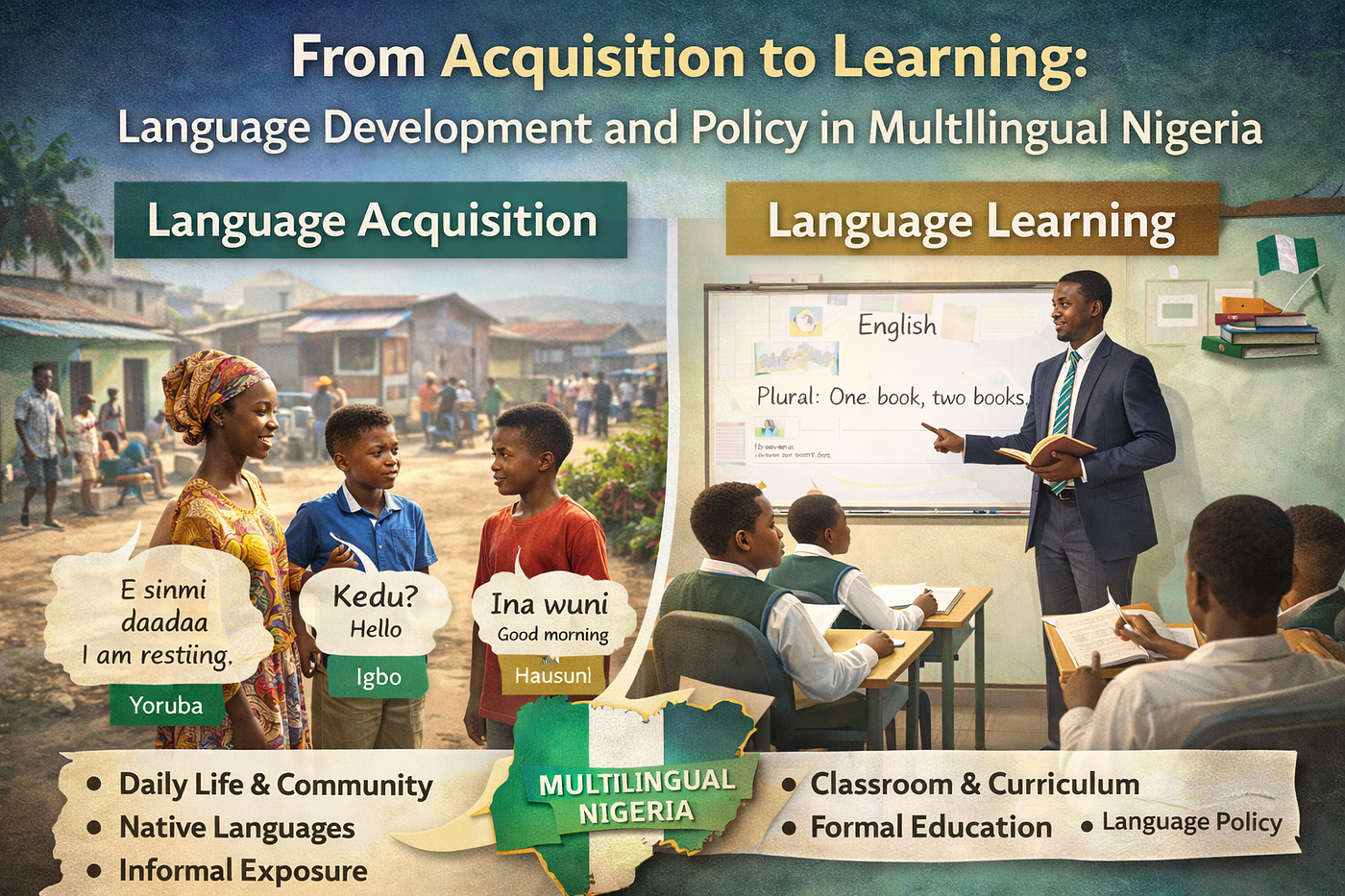
Language Differentiation and Its Social Dimensions: A Nigerian Sociolinguistic Perspective
Introduction
Language Differentiation and Its Social Dimensions: A Nigerian Sociolinguistic Perspective
Introduction
Language differentiation is a central concern in sociolinguistics, foregrounding the fact that no language is monolithic (Wardhaugh & Fuller, 2021). Languages exist as dynamic continua of varieties shaped by social, cultural, historical, and situational forces. Through differentiation, language not only mirrors society but also actively constructs and negotiates social identities and hierarchies (Blommaert, 2010).
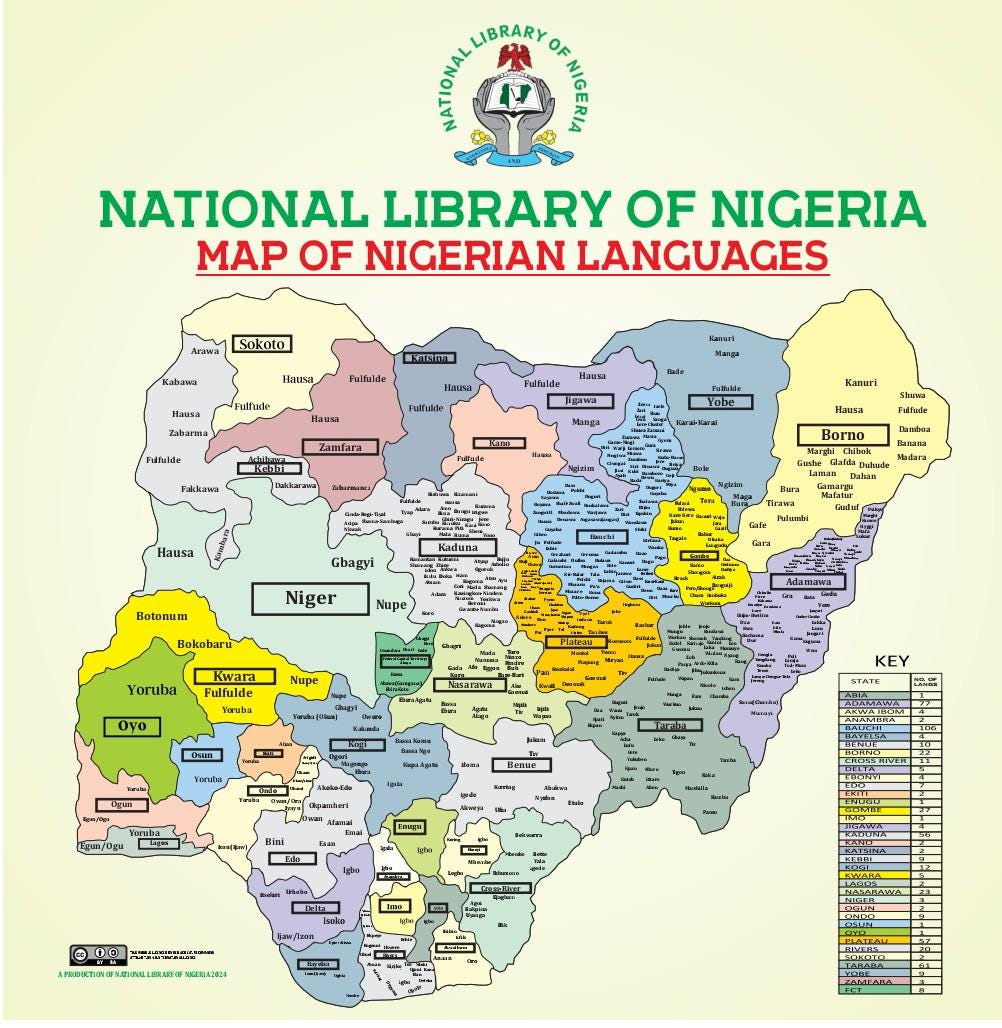
In multilingual societies such as Nigeria, with over 500 indigenous languages alongside English and Nigerian Pidgin (Bamgbose, 1991; Egbokhare, 2003), language differentiation is especially pronounced. Understanding its dimensions illuminates how linguistic practices encode identity, mark social boundaries, and mediate power relations. This essay therefore discusses the concept of language differentiation, with copious illustrations from the Nigerian context, while situating the discussion within broader sociolinguistic scholarship.
Conceptual and Theoretical Background
Language differentiation refers to the systematic variation of language forms across communities and contexts. It arises from two interrelated dynamics:
- External differentiation, where languages or dialects are distinguished geographically, ethnically, or socially.
- Internal differentiation, where variation occurs within the speech of a single community or individual (style-shifting, register variation).
Labov’s (1972) variationist paradigm demonstrated that linguistic variation correlates systematically with social variables such as class, age, and gender. Hymes (1974) highlighted that communicative choices are tied to the values and expectations of particular speech communities. Halliday’s (1978) systemic functional linguistics stressed that language varies according to field (what is happening), tenor (social relations), and mode (channel of communication).
Thus, language differentiation is neither accidental nor merely aesthetic; it encodes social meaning and reflects wider structures of inequality, identity, and cultural continuity.
Major Social Dimensions of Language Differentiation in Nigeria
1. Geographical/Regional Variation
Dialectal differentiation is stark across Nigeria:
- Yoruba: The Ọ̀yọ́ dialect pronounces ẹniyan (person) with nasalization, while the Ìjẹ̀bú variety uses clipped tones (Adetugbo, 1987).
- Hausa: Sokoto Hausa (Sakkwatanci) is slower, while Kano Hausa (Kananci) is regarded as more “prestigious” in broadcasting (Bagari, 2011).
- Igbo: With over 20 dialects, some mutually unintelligible, dialectal diversity is evident in lexical choice (e.g., ụkwụ vs ukwu for ‘leg/foot’). The standardization of Central Igbo for education marginalizes other dialects (Nwaozuzu, 2008).
Illustration: Nollywood films often reinforce these regional identities, using Lagos Yoruba or Enugu Igbo to signal place and identity.
2. Social Class and Stratification
English, the official language, is highly differentiated by class:
- Elite Nigerian English (ENE): Used by the educated middle and upper classes, marked by near-native pronunciation and international intelligibility (Jowitt, 1991).
- Popular Nigerian English (PNE): Spoken by the majority, influenced by mother-tongue transfer, such as dropping final consonants (pass → pas).
- Nigerian Pidgin: Historically stigmatized and linked to the working class, but increasingly used across class divides, particularly in music, media, and politics (Faraclas, 1996).
Case study: Labov’s (1966) department store study has a Nigerian parallel. In Abuja, elite bankers at Zenith Bank tend toward Standard British English, while taxi drivers shift easily to Pidgin. This reflects language as a marker of stratification and prestige.
3. Ethnicity and Cultural Identity
Ethnic identity is performed through linguistic differentiation:
- Code-mixing: Youths mix English with indigenous languages: “I’m not going o, mi ò ní lọ rara.”
- Ethnolects in English: Igbo English often features syllable-timed rhythm and pronouncing /v/ as /b/ (very → bery), while Yoruba English may omit initial /h/ (house → ’ouse) (Gut, 2004).
Illustration: During political campaigns, politicians address audiences in their ethnic languages to index solidarity (Omoniyi, 2004), but switch to English or Pidgin at national events.
4. Gender and Language Use
Gender also shapes linguistic practice:
- Women’s speech: More polite and formal in public. Yoruba women employ avoidance registers, avoiding the direct naming of in-laws (Akinwowo, 2013).
- Men’s speech: Often more direct, with heavier reliance on Pidgin in informal contexts.
Example: In Nigerian universities, female students are more likely to use Nigerian English in class discussions, while male peers switch to Pidgin outside, signaling solidarity.
5. Age and Generational Differentiation
Language evolves across generations:
- Youth slang: Innovations such as sapa (financial lack), japa (to migrate), or no wahala (no problem) dominate social media and popular music (Adejare, 1995).
- Older generations: Favor more conservative usage, often viewing slang as linguistic corruption.
Illustration: A grandfather may say “I am broke,” while a student says “Sapa don catch me.” Both index financial hardship but through generationally distinct registers.
6. Situational and Functional Differentiation (Registers and Styles)
Speakers shift registers depending on context:
- Courtroom: Lawyers employ highly formal English: “The learned counsel submits that the plaintiff’s claim lacks merit.”
- Marketplace: Traders switch to Pidgin or indigenous languages: “Madam, how much last? Na final price o.”
- Religious settings: Sermons draw on biblical Greek/Hebrew or Qur’anic Arabic in English, Hausa, or Yoruba sermons.
Illustration: Former President Goodluck Jonathan used formal English at UN summits but switched to Pidgin (My pikin no go suffer what I suffer) at campaign rallies, indexing solidarity with grassroots audiences.
Social Implications of Language Differentiation in Nigeria
- Identity Construction: Nigerians project ethnicity, class, or youth identity through language choice (Pidgin for solidarity, English for prestige, indigenous languages for cultural pride).
- Power and Inequality: Standard Nigerian English enjoys institutional privilege, while Pidgin and indigenous languages are marginalized in education, disadvantaging millions (Bamgbose, 1991).
- Cultural Continuity and Change: Differentiation sustains ethnic heritage, but globalization accelerates English dominance (Igboanusi, 2002).
- Policy Implications: Nigeria’s National Policy on Education prescribes mother-tongue instruction at early levels, but weak implementation highlights tensions between linguistic diversity and standardization (Fafunwa, 1974; Omoniyi & Fishman, 2006).
Conclusion
Language differentiation underscores that language is never neutral: it indexes class, ethnicity, gender, and identity. In Nigeria, these dynamics are heightened by multilingualism, colonial legacies, and globalization. From Yoruba dialects to Pidgin in marketplaces, from elite English in boardrooms to youth slang on social media, linguistic differentiation reflects the stratified yet fluid nature of Nigerian society.
Examining differentiation thus provides a powerful lens into how Nigerians negotiate belonging, power, and modernity through language. Far from mere variation, language differentiation is central to the politics of identity and the practice of everyday life.
메타데이터
- post_id
- f0c97b302e39
- slug
- language-differentiation-and-its-social-dimensions-a-nigerian-sociolinguistic-perspective-f0c97b302e39
- url
- https://medium.com/@danabdul_69417/language-differentiation-and-its-social-dimensions-a-nigerian-sociolinguistic-perspective-f0c97b302e39
- canonical_url
- https://medium.com/@danabdul_69417/language-differentiation-and-its-social-dimensions-a-nigerian-sociolinguistic-perspective-f0c97b302e39
- author_url
- https://medium.com/@danabdul_69417
- status
- ok
- fetched_at
- 2026-06-20 20:29:01