Kyiv and Moscow
Russia is doing what Russia does every time it is not doing well. It is not just the nuclear threats we saw the other day. It is hitting…
Kyiv and Moscow
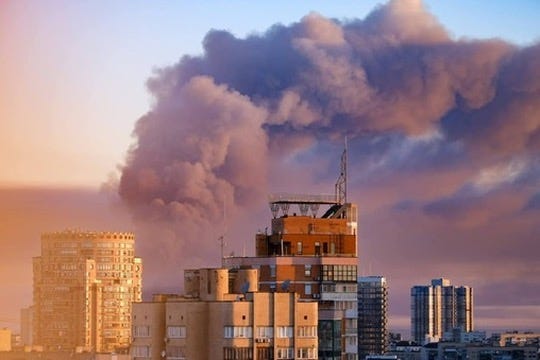
Kyiv overnight
Russia is doing what Russia does every time it is not doing well. It is not just the nuclear threats we saw the other day. It is hitting Ukraine hard, specifically Kyiv. So they attacked, hitting a bunch of civilian targets. This includes the Red Cross, by the way. So this is what Russia does. So, realize these attacks prove to me that Russia is getting angry:
In Kyiv, as a result of a massive Russian strike, multi-story buildings collapsed. 13 people were killed, and more than 80 were injured
The Russian army massively attacked Kyiv with drones and ballistic missiles on the night of July 2, reported the mayor of the Ukrainian capital, Vitali Klitschko. According to his data, 13 people were killed in the attack, another 86 were injured, 70 of whom were hospitalized.
Damage and destruction were recorded in more than 30 locations in all districts of the city, reported the head of the Kyiv City Military Administration, Timur Tkachenko. In the Darnitsky district, five-, nine- and 16-story buildings were partially destroyed, in the Pechersky and Desnyansky districts — two nine-story buildings. Also, in the Sviatoshynsky district, two private houses were damaged, and in the Shevchenko and Goloseevsky districts, seven-, five- and 16-story residential buildings caught fire. In addition, a hotel building caught fire in the Shevchenko district, and the territory of a warehouse caught fire in the Obolonsky district.
So Russia thinks that Ukrainians will surrender as soon as they keep hitting civilians. This did not work for the Germans in World War Two either. For that matter, the allies used the same tactics and had the same poor results.
So why are they getting angry? Well, here it is why:
“The country could be left without bread.” The State Duma stated that the government is concealing the scale of the fuel crisis
The Russian authorities are hushing up the scale of the fuel crisis in the country, which arose due to Ukrainian strikes on oil refineries (NPPs), said the head of the State Duma Committee on Family Protection, Nina Ostashina. “Why doesn’t the responsible Deputy Prime Minister honestly say that almost a third of the NPPs have been put out of action, and why neither he nor other relevant Deputy Prime Ministers and ministers are planning to introduce emergency measures in this regard?” — said Ostashina (her words are quoted by the Telegram channel “Krovaya Barynya”).
The deputy noted that such silence about the problems and the unwillingness to solve them are dangerous, especially on the eve of the harvest. “After all, the country could be left without bread, which is fatal in the conditions of international sanctions,” — emphasized Ostashina. Earlier, farmers in the southern regions of Russia started complaining about a shortage of diesel fuel, as well as a sharp rise in its prices on the eve of the harvest campaign. Food producers, in turn, began warning retail chains about disruptions in the delivery of goods due to a fuel shortage. According to INFOLine, in some regions there are also signs of a shortage of socially significant goods, which include perishable products, such as meat, milk, and eggs.
This is not the first time that Russia has run out of bread. They are not running out of bread right now, but they will at the current pace. And why are they having these issues with bread and the harvest? Gas. Yes, it is that simple, gas. If you do not have enough gas, diesel, or regular gas, you cannot run your tractors. Yes, they could go back to horses; in fact, they might be forced to. But horses need hay, and to get that hay to your horses, you need trucks and gas. I guess other horses could as well, but that would be very slow.
We suffered a breakdown of logistics during the pandemic. If you remember, toilet paper became an issue. That may have been due to panic buying, but some was due to a breakdown of logistics between China and the United States. Now think of how fuel affects the whole logistics chain. Whether it is planting or harvesting, Russia has a particularly short season, as well as EMS (getting products to stores). So, how about milk? Well, we got news about that as well:
Producers warned of disruptions in milk supplies to stores amid fuel shortages
Dairy producers have warned retail chains about delays in product deliveries due to the fuel crisis. This is stated in a letter from the “People’s Farmer” Association, which unites more than 14,000 farmers and processors in 72 regions of Russia, which was sent to retailers, writes Forbes, citing the document. “Agricultural producers have effectively become hostages to circumstances that make it impossible to properly fulfill contract obligations regarding delivery deadlines,” the letter says.
According to the “People’s Farmer”, there are already problems with delivery deadlines for producers in Udmurtia, Volgograd and Astrakhan regions. In this regard, dairy product suppliers have asked retail chains not to apply penalties, fines, and other liability measures for late product delivery. The Pooling platform, through which tens of thousands of shipments are processed across Russia every month, has recently recorded violations of delivery deadlines, Alexander Ageenkov, the commercial director of Pooling.me, told Forbes. In some regions, there are also signs of a shortage of socially significant goods, which include perishable products such as meat, milk, and eggs, confirmed Ivan Fedjakov, the founder of INFOLine.
Yesterday, we saw that the chicken industry is under pressure because it is not making enough money per carcass. In fact, they are starting to lose money. So, the picture emerging from a logistics perspective is one of a slow-moving disaster. This also means something else. Russians are standing in line, and you can bet they are talking to each other. Humans tend to do this. And at this point, they are starting to blame Vladimir Putin. This is precisely what Putin fears. A reminder, bread lines were where Soviets met during the whole Cold War, and where they started talking over the Afghanistan disaster.
Putin has to be aware of this pattern. And if I were him, I would fear this. Because there may be efforts to suppress a popular uprising. And for that, we need to look at the efforts to suppress internet services like Telegram and force Russians into MAXX. However, the average Russian is meeting the average Russian at these fuel lines, or finding closed gas stations because there is no gas available. Or what exists is of lower quality. As I covered yesterday, this will destroy modern engines.
This brings me to this, in one of the regions. Having done disaster services, installing portable bathrooms is natural. But now distributing hot food is a response of the kind you find in natural or man-made disasters:
The Governor of Zabaykalsky Krai has ordered the organization of hot meals for people queuing “around the clock” for fuel
The authorities of the Zabaykalsky Krai are taking urgent measures to stabilize the situation with fuel shortages and queues at gas stations, writes “Interfax”. The region’s governor, Alexander Osipov, said that the authorities want to introduce electronic queues, strengthen control over the observance of order at gas stations with the help of the police, and organize hot meals and water supplies. “People are queuing for days, some with children. I talked to the drivers. There is a need to adjust the work of gas stations and change many things for the convenience of people,” Osipov wrote.
The press service of the Zabaykalsky Krai government reported that a heightened alert mode is in effect in the region to prevent an emergency situation. Motor fuel is supplied in limited quantities, and the authorities, together with the Russian government, the Ministry of Energy and oil companies, are working to increase its supplies. “The situation remains extremely tense. Nevertheless, we are able to cope with it and will do so. The main thing is not to give in to rumors, gossip, panic-mongering, and destructive actions,” the regional government said in a statement.
This is also an effort to avoid your local Russians from developing ideas about doing more than sitting on the couch. And while many people don’t expect Russians to do so, they have in the past.
And this is precisely one reason why Russians may finally get off that couch:
A record number of Russians in 20 years have reported a decline in living standards
The share of Russians who complain that their living standards are declining reached a maximum in 20 years of observations in 2026, according to a survey by the Gallup research service.
At the moment, 56% of Russian citizens report a decline in living standards — 13 percentage points more than a year earlier, 22 percentage points more than in 2022, and three times more than in the mid-2010s, at the peak of the Russian economy’s oil prosperity.
The overall economic pessimism of citizens has reached record levels in 20 years: 60% say that the economic situation is worsening — twice as many as in the first year of the war, and three times higher than before the annexation of Crimea. For the first time in all the time of observations, more than half of adult Russian citizens look at the economic prospects with pessimism, notes Gallup.
“Shortly after the start of the full-scale invasion (in Ukraine), when Russia hoped to capture Kyiv in a few days, public opinion rallied around the flag, and people began to look at many aspects of life much more positively. Four years later, pessimism replaced the initial optimism,” write the authors of the study.
Hopes for a deal between Vladimir Putin and Donald Trump did not materialize, Russian cities are subjected to daily UAV attacks, and inflation is accelerating and, according to Russians themselves, is 2.5 times higher than the official Rosstat figures. As a result: the level of Russians’ confidence in the army and the government has experienced the strongest collapse in the history of observations, notes Gallup.
The military lost 13 percentage points of trust over the year (it fell to 66% — a minimum since 2013); the government — 14 percentage points (53% — a minimum since 2021). After the intensification of military propaganda and internet blockages, the number of citizens trusting the media has dropped to a historic low — 34% compared to 59% a year earlier.
As you read the above, realize that this lack of trust also preceded the Soviet Union’s collapse. So we are at a moment that could be full of surprises unless you know Russian history. Do they stand up often? No. But when they do, it can be epic.
This explains why the head of the Communist Party has warned that 1917 may repeat. This was back in April, and this is building for something that could be historic. If there is something Putin fears is disorder or revolution. Why has he not chosen to celebrate the revolution? It is not just because the Federation succeeded the USSR. It is because Putin fears disorder. At the same time, he adopted the anthem, and some troops entered Ukraine under the Red Banner. Others went in under the Imperial flag. Because this is about empire.
Then there is this:
“The crisis is just beginning.” The gasoline shortage in Russia could last for months
The fuel crisis that has engulfed almost all Russian regions, including more than 40 where official restrictions on gasoline sales have been introduced, has every chance of becoming the largest in the country’s modern history.
It will likely not be possible to increase the load on Russian refineries, which have been hit by drone attacks, in the coming month, a source in the oil industry told “Kommersant”. According to him, in this month, oil processing volumes will “at best” remain at June levels, and only if there are no new attacks on refineries.
According to estimates from Energy Intelligence, in June, oil processing volumes in Russia plummeted by 25% year-on-year — to 3.91 million barrels per day, a minimum in more than 20 years. Gasoline production fell by 17% year-on-year — to 850 thousand barrels per day, which is significantly below the needs of the domestic market.
The downtime of refineries has reached “extraordinary” proportions, said Associated Press analyst Liam Pitch: since March, drones have attacked Russian oil industry facilities at least 50 times, and some refineries have been hit multiple times. The Moscow Refinery was hit twice, “Nizhegorodnefteorgsintez” — twice, and the record holder was the Tuapse Refinery of “Rosneft”, which was attacked 7 times.
“The most alarming thing is that the crisis is just beginning,” notes Finam strategist Yaroslav Kabakov. “The peak of seasonal demand traditionally falls in August-September, and signs of a shortage and accelerating prices have already appeared in June.”
Long queues at gas stations are causing more and more discontent among people already suffering from inflation, internet restrictions, and dashed hopes for a quick end to the war. “Obviously, there is a social crisis related to fuel, and it could turn into a political one, although there are no serious consequences yet,” notes political analyst Andrey Kolesnikov.
“This reinforces the feeling of fatigue, which turns into irritation. But since people do not have the tools to change the situation, they can only grumble at the authorities and at the fact that the war is not ending,” says Kolesnikov.
This is the deep war that Ukraine is fighting. They are hitting, at times repeatedly, things like the fractioning tower in a refinery. Those are the hardest to replace and take months. So I am going to say it now. This crisis will last longer than a few months. Ukraine is not going to stop, and these towers need a lot of technology that Russia does not have. Did I mention this is Western technology that is under sanctions?
So the long lines are starting to get interesting, because the conversations must be about the gas shortage. The last time around, it was over bread at bread lines. I suspect the bread lines are coming back. And with that, Russia will become even more interesting.
So yes, the ice flow is starting to accelerate. And what is clear to me is that when we finally have public demands, the Western press will seem surprised. But those of us who have been watching this develop should not be surprised. At that moment, the question is: how will this go in Russia? In 1917, it was a civil war. In 1989 it was dissolution. And a few elements of 1989 are already present. Such as private security taking over police duties in places like Siberia.
And this is not uncommon in societies that run on corruption with little solidarity between leaders and the people. For the record, I have no problem with authorities prioritizing EMS, Fire, and other emergency services. But putting leaders ahead of the common people is just a corrupt practice. There is a way to do it, where it is not in your face, but that is another story:
Officials Start Being Served at Gas Stations Without Waiting
Against the backdrop of a fuel crisis in a number of Russian regions, gas stations have started prioritizing the supply of gasoline to officials and employees of state institutions. This was reported by “7×7”. According to the publication, in Saratov, at one of the “Rosneft” gas stations, fuel is only being supplied to special vehicles — vehicles of the Emergency Situations Ministry, ambulances, and police, as well as to civil servants. The local TV channel TVSAR claims that its employees saw a representative of one of the district administrations of Saratov, drivers of MFC cars and “Post of Russia” refueling at the gas station, and one of the visitors named the password: “Government”.
According to “7×7”, a similar practice is also in effect in other regions. In Volgograd, at one of the “Gazprom” gas stations, gasoline is only being supplied to owners of special fuel cards. A gas station employee explained that such cards are paid for by the administration, hospitals, and the police. In Krasnodar, at the “Rosneft” gas station on Zakharova Street, only government employees can purchase gasoline upon presentation of a certificate. On the M-5 highway between Chelyabinsk and Yekaterinburg, at one of the “Rosneft” gas stations, fuel is primarily being supplied to emergency service vehicles and officials.
If you think this will not increase resentment, I have a few bridges to sell. I promise, they are cheap. This is also why people will become a tad angrier as the days and months go by. Wait for the winter, because that will really be fun, especially for people who depend on oil to keep warm:
Sechins’ anti-crisis management. While queues for gasoline are growing, the head of Rosneft is leading a luxurious life, earning 19 million a day and flying on presidential airliners
The fuel crisis of 2026 forced restrictions to be introduced, including at Rosneft gas stations — Russia’s largest company in terms of oil production and refining, as well as the number of gas stations. But the collapse in the industry did not affect the life of the shadow curator of the energy sector, the head of Rosneft, Igor Sechins: his family became even richer during the war years, it was found out by the investigative project “MO” Explainer.
🔸In the first five months of 2026, Sechins earned about 2.8 billion rubles at Rosneft — an average of almost 19 million rubles a day. In 2025, his annual income amounted to 7.1 billion rubles, and in the record-breaking 2023 — more than 9 billion.
🔸After the start of the war, Sechins stopped using his favorite business jet Bombardier Global 6000 (M-YOIL), on which he used to fly to London, Verona, the Maldives and Mallorca. However, as Explainer found out, he soon switched to the Airbus A319 SL “Russia” with the tail number RA-73025.
🔸This aircraft is intended for transporting the president, the prime minister, the heads of the parliamentary chambers and other officials defined by Putin’s decrees. The head of the state company is not included in this list. Nevertheless, it was on this aircraft that Sechins flew to Qatar, China, India, Morocco and the Maldives.
🔸Sechins’ daughter, Inga Karimova, during the war acquired real estate worth more than 1.3 billion rubles. Among her new acquisitions are an apartment of 219 m² in the elite St. Petersburg complex Art View House, a 239-meter apartment in the capital’s residential complex “Romanov, 3” near the Kremlin and two apartments in Moscow business-class residential complexes. In addition, she bought and rented plots in Ples, Kostroma and Ivanovo regions.
🔸Among other assets of Sechins’ daughter are two apartments in the famous “Putin’s friends’ house” in Swedish Alley, where representatives of the president’s closest circle live. According to Explainer’s calculations, only the real estate owned by Inga is worth a total of at least 2.5 billion rubles.
I am reminded of conditions in old France at the end of the Ancien Régime before the French Revolution. I guess “let them eat cake” is a common attitude throughout the centuries. The French king and queen lost their heads. The Romanovs were shot. The 1989 collapse was well managed, and a lot of the pressure was relieved. And if you are wondering what Russia is fearing, here. Russia is preparing for a Ukrainian offensive on Crimea:
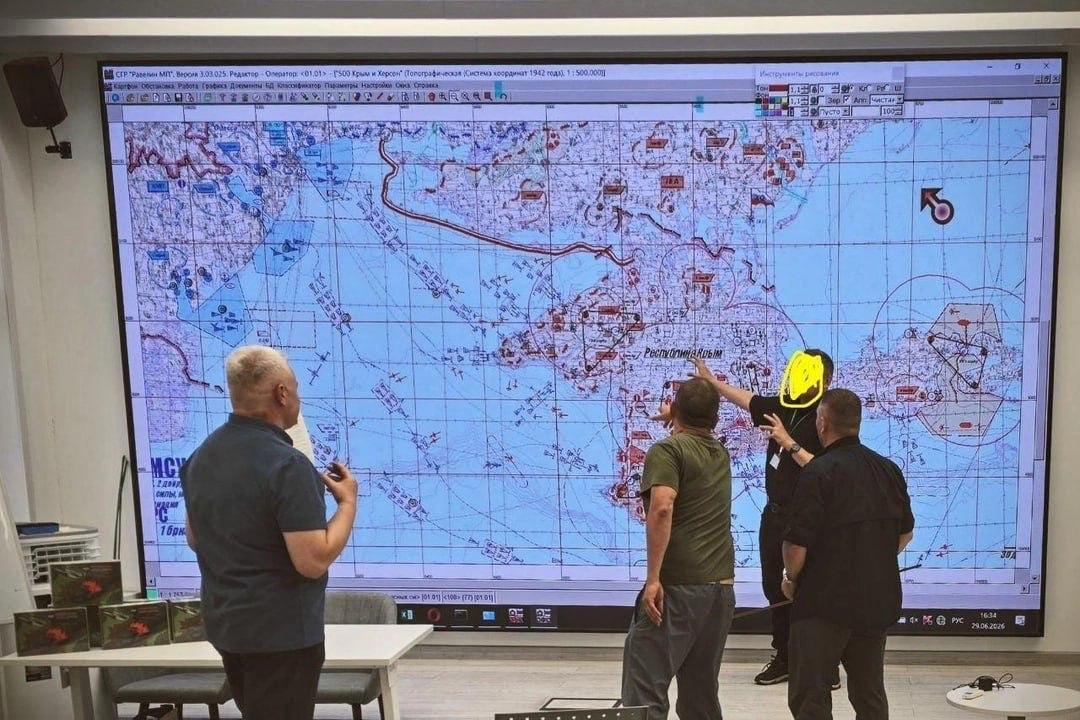
In Russia, a training exercise was conducted to repel a landing of the Armed Forces of Ukraine in Crimea
Russian military experts and reserve officers conducted a command-and-staff game “Crimean Alert”, dedicated to the scenario of a possible offensive by Ukrainian forces, Russian media report.
The team, which played the role of the Armed Forces of Ukraine, used non-standard tactics and the latest means of reconnaissance and destruction. In contrast, the “Russian troops” acted only in defense.
So we are watching a dance between the two capitals. Moscow is attacking out of anger and hitting civilians. Ukraine is carrying out a deep strategic campaign that is already having real results. And at this point, Russians are realizing that this may be over. And if you are Vladimir Putin, you should be worried about a couple of FSB or FSO types coming to your office and placing a loaded Makarov on your desk, with one bullet. That may be one way they allow Putin to go the “honorable way.”
There are other ways that are a lot less nice for Putin to go. Perhaps that is why his two yachts are now moving. Will Putin be allowed to leave? I guess we will find out at some point. But Kyiv is playing the long game.
메타데이터
- post_id
- f2b3b45b22ef
- slug
- kyiv-and-moscow-f2b3b45b22ef
- url
- https://medium.com/@nadinbrzezinski/kyiv-and-moscow-f2b3b45b22ef
- canonical_url
- https://medium.com/@nadinbrzezinski/kyiv-and-moscow-f2b3b45b22ef
- author_url
- https://medium.com/@nadinbrzezinski
- status
- ok
- fetched_at
- 2026-07-09 05:26:43