A Century-Long Balancing Act: Reviewing Claudia Goldin’s “Career and Family”
Growing up, I never quite grasped the many plates my mother balanced in the air: cooking nutritious meals, keeping the house from looking…
A Century-Long Balancing Act: Reviewing Claudia Goldin’s “Career and Family”
Photo by ergonofis on Unsplash
Growing up, I never quite grasped the many plates my mother balanced in the air: cooking nutritious meals, keeping the house from looking like a disaster zone, attending my orchestra concert, volunteering in my sister’s classroom, coordinating family dentist appointments, taking the cats to the vet, all on top of her actual career as a college biology professor. For much of my childhood, my mom was the “on-call” parent at home, while my father worked long hours, earning promotions and higher paychecks from his late nights and travel-filled weeks. By the time I reached middle school, my father had been the director of engineering at his firm for a few years, while my mother was still navigating the process of gaining tenure at her university. Consequently, his pay package was higher, his title was more prestigious, and his advancement opportunities were plentiful.
There are many families in the United States that are set up like mine. A busy father, and a mother doing double duty at work and at home. Without examining the realities of home, one could attribute my parents’ different career trajectories to their different professions, or perhaps the “boys club” of academia or a lack of “assertiveness” at work from my mother. Public discourse on this subject has brought forth horror stories of discrimination like the #MeToo movement, while simultaneously telling women that “their problems are of their own doing” for failing to “negotiate sufficiently”, “compete aggressively” and “ask for enough” in the workplace (Goldin 2). However, all of these conflicting voices still cannot explain why despite twenty years of workplace bias training, equal pay legislation, girls in STEM camps, women in leadership initiatives, diversity programs, mentorship opportunities, and a general increase in awareness of the pay discrepancy, this gender pay gap has remained stagnant since the early 2000s. This is one of the biggest motivators for Nobel Prize-winning economist Claudia Goldin’s Career and Family: figuring out what is this underlying “problem with no name” that hinders women from achieving true pay equality (Goldin 1). Throughout the book, Goldin elegantly synthesizes a lifetime of research into an exploration of women’s evolving roles in the workplace over the last century, uncovering a tale of unequal compensation through the lens of family and caregiving.
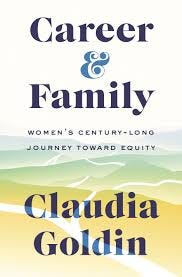
Dr. Claudia Goldin’s “Career and Family: Women’s Century-Long Journey Toward Equity”
Until the early twentieth century, women primarily found themselves in caregiving roles, as daughters, wives, mothers, and grandmothers. Throughout the twentieth century, as women’s rights expanded, so did their career aspirations. However, at the same time, women still wanted to have families and children. For the first female college graduates at the turn of the century, “only a small fraction — less than 10 percent — had both” (Goldin 3–4). Fast forward to a hundred years later, “the fraction of college women who have achieved ‘career and family’ by their mid-forties is about 45 percent”, an enormous jump (Goldin 160). Goldin is quick to congratulate the immense progress we have made over the last century, but is equally particular in noting how the women of today are expected to be both caregivers and professional leaders. She states that “we are still at a point where the expectation is that the woman will be the one who will be the more flexible one at home”, taking care of children and household responsibilities (Goldin 215). For many women, this is the reality: they work full-time at work, and then full-time at home. In fact, according to a Pew Research Report, married women spend more time on caregiving responsibilities and household chores than their husbands, even when they are the primary breadwinners in the family (Fry et. al).
Goldin’s foundational argument is that the gender pay gap is a reflection of this complex balancing act women face when combining their career with familial obligations, and she points to longitudinal studies about Masters in Business Administration (MBA) students to demonstrate how the gender gap changes over time as a result of women’s additional familial responsibilities:
“Directly after the new crop of MBAs leaves the university and accepts their first jobs, women earn 95 cents on the male MBA dollar… But with each passing year, the difference in their earnings widens. By year thirteen it has dropped to an astounding low level of 55 cents on the male dollar… MBA women who do not have children (and who have no career disruptions) are… only about 3 cents lower on the MBA male dollar at thirteen years after graduation.” (Goldin 167–169)
It is striking how stark the pay penalty is for women who choose to have a family and children. Intrinsically, it seems straightforward that something that takes away time from work is harmful to a career, but let us dissect the two key factors that specifically cause this divergence in pay. The first is timing. The career ladder and the family ladder move nearly in tandem, creating tough choices for women on what to prioritize. Should they put family first and catch up on their career later? Should they prioritize their career now, and run the risk of never being able to have a family? Further exacerbating this dilemma is the growing number of women who choose post-graduate education as well as the ever-growing timelines for promotion, which Goldin describes early in the book:
About a decade or more ago, a first promotion occurred in one’s early thirties. More recently, it occurs in one’s mid- to late thirties. The timing no longer comfortably allows for giving birth to one’s first child after one’s first promotion to partner, tenure, or other advancement. The first birth often occurs before these career milestones. Children often upend careers. And careers often upend the ability of women to have children. The timing is brutal. (Goldin 2)
Taking parental leave means interrupting a sprint to the top of the professional ladder, but not taking that leave means potential financial, physical, and emotional struggles down the line if one chooses to have children at an older age. Despite this impossible choice, so many women balance careers and children at the same time.
However, the second key factor contributing to the pay gap, non-linearity in pay structures, comes to bite them then. In a non-linearly compensated job, those who work longer hours earn a higher per-hour rate than those who work shorter, more flexible hours. This is especially prevalent in professions like law and finance, where long hours and overtime pay are expected. Using an example from a large survey of lawyers, Goldin presents that, “when a lawyer’s hours increase from thirty to sixty per week, the average hourly rate increases by almost a quarter. The more hours per week that lawyers work, the more each of their hours spent working is worth” (Goldin 180). Conversely, when a parent or caregiver has to cut down on hours, they lose not only the income they would have made by working the additional hours, but also the extra income of overtime pay and larger bonus packages. While many parents would prefer to share child-rearing and work responsibilities equally, they often face a reality where prioritizing family income requires one partner to take on a more demanding career path. This often results in women choosing to drop back on hours or accept more flexible jobs to be “on-call” at home, as demonstrated through a clever anecdote referencing the hit 1960s legal drama “Perry Mason”. In this example, Goldin reincarnates Perry Mason, the high powered attorney, and his assistant Della Street into a modern couple, both of whom are lawyers. She presents that even though the workplace has progressed to have female attorneys, Della’s career might still be hampered by familial pressures:
“[Perry and Della] could both compromise and work full-time without putting in those forty-five-plus-hour work weeks and late nights…[However,] instead of hamstringing both their careers and still lacking lots of time to spend with their children, Della and Perry do the very logical thing: they maximize their earnings potential as a couple. Della drops back from her career, perhaps working part-time or leaving legal work altogether, to do the work at home. That frees Perry from those time-consuming family and household responsibilities and allows him to put in the necessary long hours at work to accelerate to partner, maximize his hourly rate, and see the payoff for the family in that higher income.” (Goldin 183)
Ultimately, Goldin’s argument paints the struggle for pay equality as a composite of historic gender roles, tough financial realities, and inflexible corporate structures. The story of Perry and Della, and the story of my own parents, illustrates a logical response to an inflexible system. However, maximizing family income at the cost of equality within the home is a trade-off that families should not have to make. Moving forward requires a fundamental restructuring in how prestigious, high-paying careers are organized.
I am sure both myself and Dr. Goldin wish that we could tackle the underlying issue of gender norms about caregiving to improve the gender pay gap. However, in the meanwhile, she proposes a key first step: addressing non-linear pay structures. The primary way to do this is through team-based workplaces, which allow for high-urgency client-facing tasks to be completed by a team of employees rather than an individual. This idea holds merits, and has worked really well in the pharmacy industry, which is in fact one of the highest paying and egalitarian professions for women. Goldin presents how increased corporate takeover of private pharmacy practices has shifted the formerly unequal profession into one that has linear pay structures where more hours does not mean more pay per hour. This results in women being able to adopt flexible schedules without giving up their salary, and creates a demonstrably smaller pay gap between men and women. Where does this flexibility come from? It comes from the uniform nature of the modern pharmacy profession. Nowadays, when we go to CVS or Walgreens, we don’t expect to see “our” pharmacist, but are happy to see any pharmacist that is available. In this way, pharmacy represents a team-based workplace, where clients can be seen by an interchangeable team of practitioners rather than one single individual. Goldin suggests that if we could adapt other unequal professions, like law and finance, towards this model, we could reduce the impetus to pay those who work long hours more, and move towards a more equal future.
However, even though team-based workplaces seem like a novel way to approach the gender pay gap problem without alienating high-workload professions, I find myself wondering about the potential implications and challenges of this model. The example Goldin paints with pharmacy creates equality through large corporations like Walmart, CVS, and Rite Aid controlling the pharmacy market. However, Goldin does not spend time in this book considering the consequences of large conglomerates conquering over small mom-and-pop businesses. In practice, this has been cited as a primary factor in creating pharmacy deserts, where communities have no access to pharmacy services due to cost-cutting measures and mass closures by large companies like Walgreens and Rite Aid (Hopper; Bastian). This can cause serious consequences, including worsening chronic conditions, increased hospitalizations, and poorer overall health outcomes: “When a neighborhood pharmacy closes, many patients are unable to acquire their medication regularly, causing them to dilute their medicine or go without necessary medication altogether” (Leslie; Murphy and Rodis). While the gender pay gap might be addressed through this shift within the pharmacy industry, it is difficult to consider this change truly good for society. Even if a team-based workplace could be achieved without creating large conglomerates and monopolies, there are still consequences for clients and patients with this model. For one thing, clients may suffer from a lack of continuity in their care, as well as a lack of provider accountability when working with a team rather than a singular point of contact (Müller). According to a review of medical studies completed by a United Kingdom based team, patient mortality rates were overwhelmingly found to decrease when seen by the same consistent doctor, suggesting that a team of providers would be less effective than an individual (Pereira Gray). Similar findings have shown that less personal interaction and greater miscommunication are chief complaints in team-based workplaces in both finance and law sectors (Gardner; Cerulli Associates). Ultimately, moving towards teams of workers replacing individuals seems like a step backward for clients and society at large.
The emergence of generative artificial intelligence adds nuance into the discussion around gender pay gaps, especially in regards to how team-based models will advance in the workplace. In today’s age of increasing generative artificial intelligence, the need for human connection is more important than ever. The important human interactions and relationships created between doctor and patient, lawyer and client, financial planner and advisee, are too valuable to lose for the potential promise of a closed gender pay gap. It is important to consider the effects of a team-based model on workers as well. For a highly skilled professional, moving towards a model where individual contributions and relationships are obscured to prioritize team outcomes can feel alienating and reduce morale at work (Fiaz et. al). Worse, with our corporate culture prioritizing profit, human workers have to distinguish themselves to fight for their value in the workplace. Demonstrating equivalence of role with another peer employee does not exactly distinguish an employee within their workplace, and makes them vulnerable to replacement. Ultimately, there has to be a way to close the gender pay gap without creating monopolies or sacrificing individuality.
Some may consider the future of pay gaps to be rendered insignificant by artificial intelligence. Already, thousands of layoffs have been attributed to AI displacement, and companies are reducing the number of new job postings to consolidate workforces and prioritize profits through technological innovation (Roeloffs; Masterson). Troublingly, despite there being more male workers in the workforce, there are more women in AI-exposed fields, with 21% more women than men being vulnerable to replacement (Waterhouse and Howell). In addition, with AI being a growing industry, one would hope that women would share in the growth, but only about 12% of AI scholars are female (White). However, the picture is not entirely bleak, as today’s workforce distribution does not necessarily reflect that of the future. Some of the hardest hit fields by AI-related layoffs have been within the tech industry, which is a heavily male-dominated industry (White). Similarly, some argue that soft skills like communication, empathy, and emotional intelligence, which women are more likely to develop throughout their educational and employment journeys are pivotal to staying relevant within the age of AI. While generative large language models such as ChatGPT and Claude are excellent at computation and factual outputs, they cannot replicate the authenticity of human connection which is essential in many professions (Mayer). With these mixed prognoses for the future, we cannot rely on artificial intelligence to save us.
Like Goldin, I see remote work holding immense potential in giving women the flexibility they need to balance career and family aspirations. Having structured remote or hybrid schedules builds in flexibility and improves feelings of psychological safety for all employees (Velasquez and Petty). I also envision a structured autonomy model as a way for individual women to operate as individuals at the top of their fields, while having the flexibility to balance caregiving responsibilities. Structured autonomy models, sometimes known as results-only work environments, involve top-down direction as to final outcomes and work products, but do not impose a daily schedule, but rather a far-reaching deadline. This can be especially effective in tech, academic, and research-based workplaces, but may not be the best fit for every situation. When Best Buy piloted a structured autonomy model, they found that employees were more likely to focus on health and spend time with their families, while delivering comparable success outcomes. Women were far more likely to stay in the workplace, and saw more pronounced positive effects to health and wellbeing than men (Kelly et. al). While this is just a pilot example, this type of work model could be a happy medium between the current individualized work and a complete team-based work environment. It provides a solution to the problem of individuality, and allows employees to retain their identities within the workplace while still having the flexibility to be caregivers.
We can craft corporate solutions to the flexibility problem all we want, but ultimately, we must recognize that the gender pay gap is a symptom of a deeper societal failure to value caregiving as a productive use of human time. My parents eventually reached equality in pay, but only because they chose to step off the “income-maximizing race”. My father made a deliberate choice to accept a lower title and salary, considering it not a loss, but instead a reinvestment in our family. Not all families can do this. However, to close the gap for good, we as a society must move beyond the profit-maximizing efficiency of Perry and Della. We must embrace a structure of work that honors women and men’s right to be a family member and a caregiver without forfeiting their professional identity.
References
Bastian, Nicholas. “The Broken Business Model Driving America’s Pharmacy Deserts.” Pharmaceutical Commerce, 15 May 2024, https://www.pharmaceuticalcommerce.com/view/the-broken-business-model-driving-america-pharmacy-deserts.
Cerulli Associates. Top-Performing Teams: Exploring the Benefits and Approaches of Building a Team-Based Advisory Practice. Osaic, 6 June 2024, www.cerulli.com/resource/top-performing-teams.
Fiaz, Muhammad, and Adnan Ikram. “Understanding the Nexus Between Work Alienation and Employee Outcomes: A Systematic Review.” Frontiers in Psychology, vol. 13, 2022, 9255511. PubMed Central, https://pmc.ncbi.nlm.nih.gov/articles/PMC9255511/.
Fry, Richard, et al. “In a Growing Share of U.S. Marriages, Husbands and Wives Earn About the Same.” Pew Research Center, 13 Apr. 2023, www.pewresearch.org/social-trends/2023/04/13/in-a-growing-share-of-u-s-marriages-husbands-and-wives-earn-about-the-same/.
Gardner, Heidi K. The Collaboration Imperative for Today’s Law Firms: Leading High-Performance Teamwork for Maximum Benefit. Harvard Law School Center on the Legal Profession, 2017, clp.law.harvard.edu/wp-content/uploads/2022/10/Heidi-White-PaperFIN.pdf. Accessed 3 May 2026.
Goldin, Claudia. Career and Family: Women’s Century-Long Journey Toward Equity. Princeton UP, 2021.
Hopper, Leigh. “USC Researchers Reboot National Pharmacy Desert Map Amid Wave of Drugstore Closures.” USC Today, University of Southern California, 4 Nov. 2025, today.usc.edu/usc-researchers-reboot-national-pharmacy-desert-map-amid-wave-of-drugstore-closures/
Kelly, Erin L., et al. “Does Enhancing Work-Time Control and Flexibility Reduce Turnover? A Naturally Occurring Experiment.” American Sociological Review, vol. 76, no. 2, Apr. 2011, pp. 263–90.
Masterson, Victoria. “How AI Is Changing the Nature of Entry-Level Work.” World Economic Forum, 18 Mar. 2026, www.weforum.org/stories/2026/03/how-ai-is-changing-the-nature-of-entry-level-work/.
Mayer, Emma. “Women Have the Edge on Soft Skills to Succeed in the Age of AI — It Might Be the Magic Fix to Smash the Glass Ceiling.” Fortune, 11 June 2024, fortune.com/europe/2024/06/11/women-have-the-edge-on-soft-skills-to-succeed-in-the-age-of-ai-it-might-be-the-magic-fix-to-smash-the-glass-ceiling/.
Müller, Martina, et al. “Impact of the Communication and Patient Hand-off Tool SBAR on Patient Safety: A Systematic Review.” BMJ Open, vol. 8, no. 8, 2018, e022202. PubMed Central, https://pmc.ncbi.nlm.nih.gov/articles/PMC6361117/.
Murphy, Michael, and Jennifer Rodis. “The Growing Crisis of Pharmacy Deserts.” College of Pharmacy, The Ohio State University, 17 Oct. 2023, pharmacy.osu.edu/news/growing-crisis-pharmacy-deserts.
Pereira Gray, Denis J., et al. “Continuity of Care with Doctors — A Matter of Life and Death? A Systematic Review of Continuity of Care and Mortality.” BMJ Open, vol. 8, no. 6, 2018, pp. 1–12, bmjopen.bmj.com/content/8/6/e021161. doi:10.1136/bmjopen-2017–021161.
Roeloffs, Mary. “Meta Cutting 10% of Company in Push for Efficiency as AI-Related Layoffs Soar.” Forbes, 23 Apr. 2026, www.forbes.com/sites/maryroeloffs/2026/04/23/meta-cutting-10-of-company-in-push-for-efficiency-as-ai-related-layoffs-soar/.
Velasquez, Adriana, and Sara J. Perry. “The Impact of Virtuality on Psychological Safety and Engagement: A Longitudinal Study.” Frontiers in Psychology, vol. 15, 2024, 12863978. PubMed Central, https://pmc.ncbi.nlm.nih.gov/articles/PMC12863978/.
Waterhouse, Paige, and Lingmei Howell. “Will Generative AI Disproportionately Affect the Jobs of Women?” Kenan Insights, Kenan Institute of Private Enterprise, 31 Aug. 2023, kenaninstitute.unc.edu/kenan-insight/will-generative-ai-disproportionately-affect-the-jobs-of-women/.
White, Sharon K. “Women in Tech Statistics: The Hard Truths of an Uphill Battle.” CIO, 11 Feb. 2026, www.cio.com/article/201905/women-in-tech-statistics-the-hard-truths-of-an-uphill-battle.html.
메타데이터
- post_id
- f51dfd9ec629
- slug
- a-century-long-balancing-act-reviewing-claudia-goldins-career-and-family-f51dfd9ec629
- url
- https://medium.com/writ340spring2026econ/a-century-long-balancing-act-reviewing-claudia-goldins-career-and-family-f51dfd9ec629
- canonical_url
- https://medium.com/writ340spring2026econ/a-century-long-balancing-act-reviewing-claudia-goldins-career-and-family-f51dfd9ec629
- author_url
- https://medium.com/@namrathavk
- status
- ok
- fetched_at
- 2026-06-09 15:37:30