The Cross on the Wall Isn’t a Decoration
Jung’s line between a sign and a symbol, and why it matters more after sixty
Signs and Symbols
The Cross on the Wall Isn’t a Decoration
Jung’s line between a sign and a symbol, and why it matters more after sixty

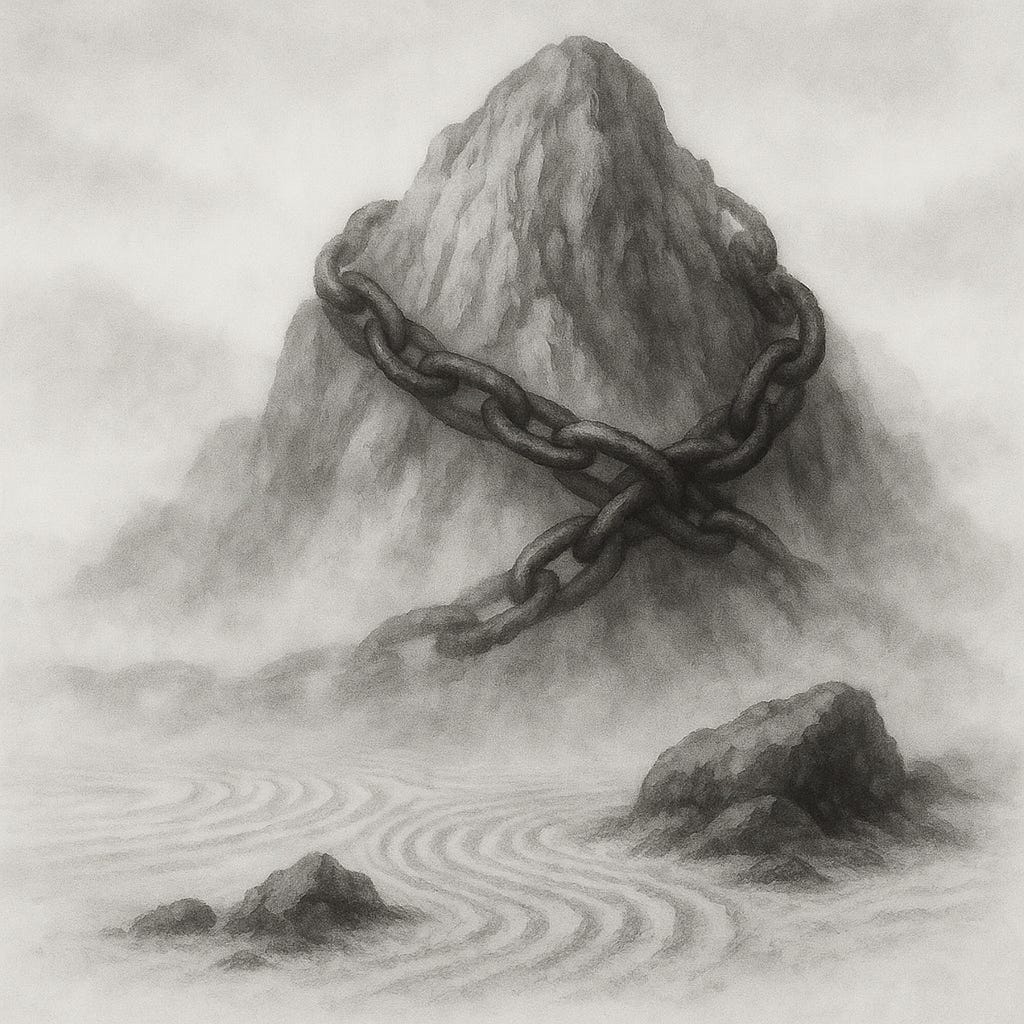
AI generated by the author
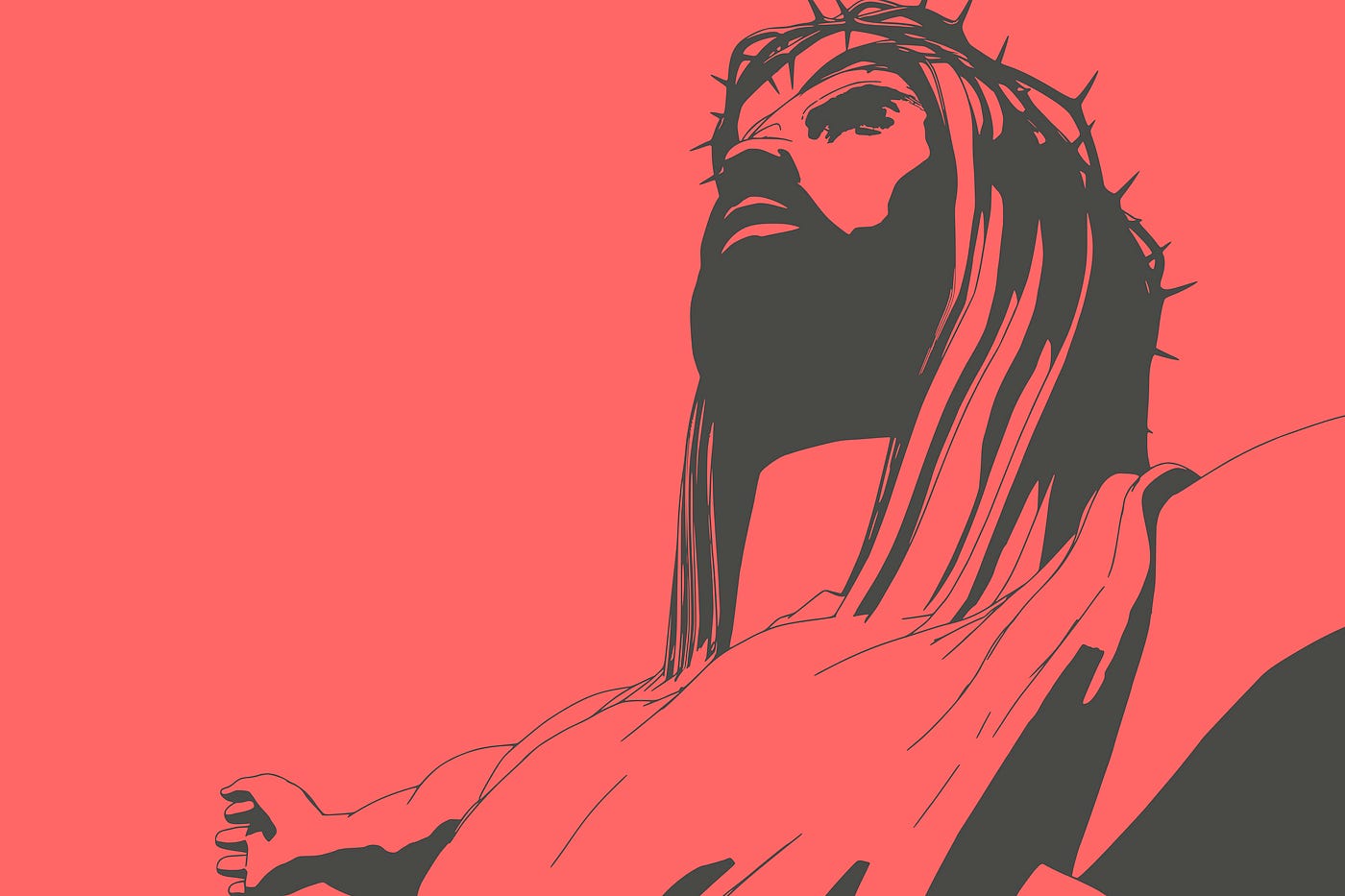
There’s a small crucifix in my house that came off a wall from my grandmother's place in DeLand. It’s not much to look at. The corpus is worn smooth where somebody’s thumb rubbed it for years before it got to me. I couldn’t tell you the dollar value. I couldn’t tell you exactly what it means either, and that turns out to be the point.
Carl Jung spent a good part of his life on the difference between a sign and a symbol, and once you see the line he drew, you can’t unsee it.
A sign stands in for something you already know. A stop sign means stop. There’s nothing left to work out. You read it, you obey it, you forget it.
A symbol is the other thing. It points at something you can’t fully put into words, something you haven’t finished understanding and maybe never will. It’s the best stab a person can take at expressing a thing that refuses to be defined.
Jung’s rule was that a symbol stays alive only as long as it keeps that surplus. The day you can explain it, it stops being a symbol. It becomes a sign. Dead. The cross, the flag, and the ring on your left hand carry weight because nobody has ever fully explained what they mean. They keep giving back more than you put in.
What I didn’t understand at twenty
I went into the Navy in 1981. The Dale first, then shore duty, then the Iowa from 1987 to 1990, and finally the Sampson from 1990 to 1991, which put me in the middle of Desert Shield and Desert Storm. When you start that young, you treat the flag as a sign. It means the country. It means muster, colors, the thing you salute because the rules say to. You’re not wrong, exactly. You’re just reading the surface and calling it the whole book.
It took me decades to feel the other layer. Standing colors on the Sampson in the Gulf, with the threat real and the war on, is not the same as doing it in peacetime, and it isn’t the same as reading about it either. The flag folded into a triangle and handed to a widow is not pointing at policy or geography. It’s pointing at something underneath all of that, something about sacrifice and belonging and the people who don’t come home, and you could talk for an hour and not land it. That’s the tell. When words keep failing, and the thing still holds, you’re standing in front of a symbol, not a sign.
Jung thought these images didn’t come from us inventing them on purpose. He believed they rose up on their own, in dreams, in religion, in the art people make without quite knowing why, and that they carried patterns shared across all of us, what he called archetypes. You don’t sit down and design a real one. The minute you try to build a symbol to mean one specific thing, you’ve just made a sign with extra decoration on it.
The ring proves it
Kim and I have been together long enough that the wedding ring no longer means the wedding. Early on, a ring is close to a sign. It announces a status. Married, taken, spoken for. Useful information, nothing more.
Three years in, the ring means something I can’t reduce to a sentence. It carries the arguments we got through, the cancer history, the mornings neither of us said much because nothing needed saying. It carries Gus shoving his way between us on the couch like he pays the mortgage. None of that is engraved on the band. The band is plain. But I look at it, and the whole thing comes up, and if you asked me to define it, I’d start three sentences and abandon all three. That failure is the proof it’s still alive. The day I can explain my marriage in one clean line is the day something has gone wrong with it.
Marcus Aurelius wrote that the things we chase are mostly empty, and he’s right about most of them. But he also kept a few images close and turned them over again and again, the way you do with something that won’t be used up. He understood the difference between a token you spend and a meaning you carry.
Why this matters more after sixty
Here’s where it lands for those of us on this side of the hill. You accumulate a lot of signs over a life. Job titles. The make of the car. The number on the scale, the number in the account, the framed things on the wall that announce what you did. Signs are fine. They tell you what you already know. The trouble starts when you mistake them for symbols and build your sense of self on the wrong layer.
A title retires when you do. A sign expires the moment its information is no longer needed, leaving you holding an empty card. I’ve watched men come apart over exactly this. They confused the badge for the meaning, and when the badge came off, there was nothing underneath because they’d never tended to the deeper thing.
The symbols don’t expire that way. The cross from my grandmother’s wall means more now than it did when I was a kid who thought it was furniture. The flag means more than it did when I was a young sailor saluting it because the rules said to. The ring means more every year. They grow because I keep bringing more life to them, and they keep holding it all without filling up.
Jung’s distinction isn’t a parlor trick. It’s a way to check what you’re actually living on. Look at the things you’d carry out of a burning house. Some of them are signs, and you’d grab them out of habit. A few of them are symbols, and you couldn’t tell anyone exactly why, and that not-knowing is the whole reason they matter.
The crucifix is back on a wall now, in my house. I rub the worn spot sometimes without deciding to. I’m not going to pretend I can tell you what it means. I’ve been trying for sixty-two years. That’s how I know it’s still alive.
If Jung is right, the ones you can’t explain are the ones worth keeping.
If this kind of writing is your speed, the newsletter is free: https://proudboomerwellness.kit.com/profile
메타데이터
- post_id
- f8db49d22d40
- slug
- the-cross-on-the-wall-isnt-a-decoration-f8db49d22d40
- url
- https://medium.com/backyard-theology/the-cross-on-the-wall-isnt-a-decoration-f8db49d22d40
- canonical_url
- https://medium.com/backyard-theology/the-cross-on-the-wall-isnt-a-decoration-f8db49d22d40
- author_url
- https://medium.com/@theProudBoomer
- status
- ok
- fetched_at
- 2026-06-28 14:26:31