Fourth Wave Feminism: A Silent Revolution That Began on Screens
The internet didn’t create feminism—it amplified it
Fourth Wave Feminism: A Silent Revolution That Began on Screens
The internet didn’t create feminism—it amplified it
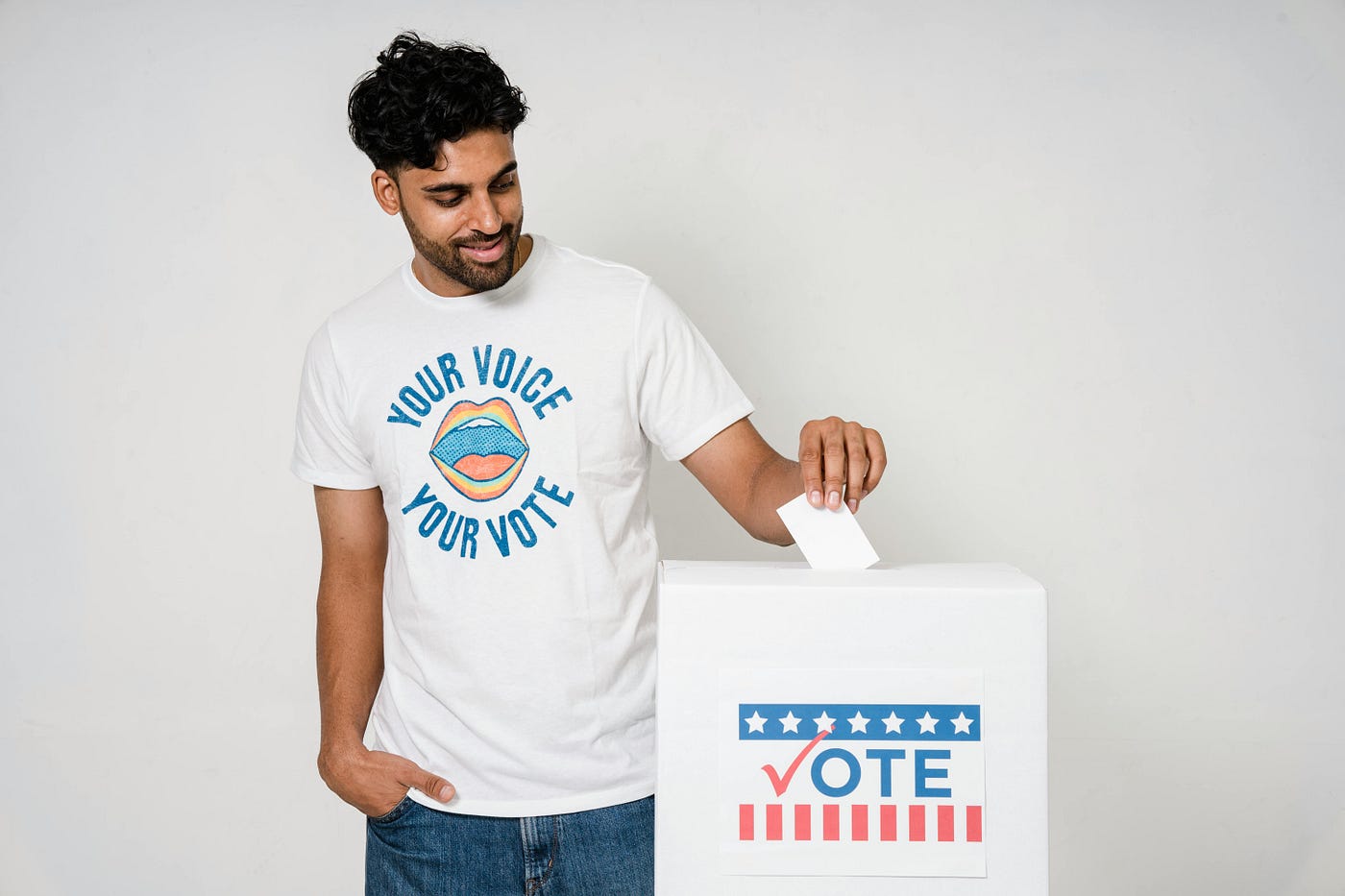
Photo by Giacomo Ferroni on Unsplash
There was a time when revolutions announced themselves loudly — banners raised, slogans chanted, streets flooded with bodies demanding change. But in the 21st century, a different kind of revolution emerged. It did not begin in town squares or courthouses. It began on phone screens. This revolution gave women not just a voice, but leverage against systems that had long considered themselves untouchable. It is called the Fourth Wave of Feminism — and it refuses to let silence be mistaken for acceptance.
What is the fourth wave?
The history of feminism is commonly understood through the lens of "waves."
The first wave fought for women's right to vote and basic legal recognition. The second wave tackled social equality, employment, and reproductive autonomy. The third wave centered identity, diversity, and the complexity of individual experience.
The fourth wave is something altogether different.
It is the child of the internet.
Its power does not come from rallies or marches alone — it comes from hashtags, viral videos, shared testimonies, and the unstoppable momentum of a story that resonates across borders. This wave taught the world that one woman's account, posted from her bedroom at midnight, could become the collective cry of millions by morning.
When silence began to break
The most profound gift of the fourth wave has been the permission — and the courage — to speak.
For centuries, women were conditioned into silence. They were taught to absorb harassment without protest, to frame injustice as personal misfortune, and to interpret suppression as simply the way things are.
Then came social media.
Almost overnight, women across the world began documenting their experiences — workplace harassment, domestic abuse, psychological manipulation, systemic hypocrisy. And for the first time in history, millions of women simultaneously realized they were not isolated cases. They were part of a pattern. And patterns, once visible, are impossible to ignore.
Why did #MeToo change everything?
The defining moment of the fourth wave was, without question, the #MeToo movement.
It was not simply a hashtag. It was a rupture.
Women began naming powerful men publicly — in film, politics, media, corporate boardrooms, and academic institutions. Figures who had operated for years behind walls of influence and silence suddenly found themselves facing something they had never anticipated: an audience that believed women.
The world witnessed, perhaps for the first time at such scale, just how powerful a smartphone, a truth, and a refusal to be quiet could be.
The digital world: liberation or a new trap?
The Fourth Wave, for all its power, also exposed a paradox.
The internet gave women a platform — and the internet became a battlefield.
Women who dared to speak publicly were met with coordinated harassment. Their reputations were attacked, their images weaponized, and, in some cases, their physical safety was threatened. What had been a tool of liberation became, for many, a new architecture of fear.
This is the tension that defines the Fourth Wave: A war between voice and silence. Between expression and intimidation. Between the right to exist publicly and the punishment that often follows.
Is this only a Western movement?
The Fourth Wave is sometimes dismissed as a Western export — an ideology developed in wealthy, liberal democracies and imposed on the rest of the world.
The reality is far more layered.
In regions where women's voices were already tightly constrained by cultural or political structures, social media opened a kind of back channel. Across South Asia, the Middle East, Africa, and Latin America, women have used digital platforms to speak to audiences — local and global — that they could never have reached before.
The forms vary. The contexts differ. The obstacles are not identical.
But the underlying impulse is universal: women are no longer content to only listen. They are also ready to speak — and increasingly, they are being heard.
What do the critics say?
Every movement generates its critics, and the Fourth Wave is no exception.
Some argue it amounts to "hashtag activism" — noise without structural change. Posting does not pass legislation. Trending does not transform institutions.
Others contend that social media has reduced complex issues to emotional battles, where outrage crowds out analysis and conversation becomes impossible.
There is something worth taking seriously in both critiques.
But the counterquestion remains: if women had not spoken online, would the offline world have listened at all?
Why the new generation is different
Generation Z did not inherit the same relationship to silence that previous generations did.
For young women today, silence is not patience. It is not politeness. It is not virtue.
They speak openly about mental health, consent, personal boundaries, and systemic inequality. For them, feminism is not only a political stance — it is an integrated part of how they understand themselves and the world around them.
This is what makes the Fourth Wave more than a rights movement. It is a cultural shift. And cultural shifts, unlike legislation, are very difficult to reverse.
Has the Fourth Wave succeeded?
Not entirely. Not yet. The world remains deeply unequal. Harassment continues. Pay gaps persist. Online abuse is escalating, not declining. Social pressure on women — to look a certain way, speak a certain way, occupy only certain spaces — has not disappeared.
But something fundamental has changed.
Silence no longer holds the power it once did.
In the past, oppression thrived in closed rooms and unrecorded conversations. Today, a single post can wake the world. That is not nothing. That is, in fact, quite a lot.
The rights still being fought for — and refused
Perhaps what reveals the Fourth Wave's unfinished business most clearly is the list of rights that women continue to demand — and that continue to be denied, dismissed, or deliberately misrepresented.
- Bodily autonomy remains one of the most contested frontiers. The right of a woman to make decisions about her own body — in pregnancy, in healthcare, in how she presents herself — is still actively legislated against in many parts of the world.
- Equal pay is recognized almost universally as a legitimate goal, yet the gender pay gap persists across industries and economies, with women consistently earning less than men for comparable work.
- Freedom from gender-based violence — in domestic spaces, public spaces, and increasingly in digital spaces — is still treated in many legal systems as secondary, difficult to prove, or culturally complicated.
- Reproductive rights, including access to contraception and safe termination of pregnancy(The most dilematic topic as aborting a live and normal fetus is against humanity), are among the most aggressively contested claims in modern politics. Women’s reproductive choices remain subject to approval by governments, institutions, and communities that are often dominated by men.
- The right to education and professional advancement without discrimination- continues to be undermined by structural barriers — hiring biases, glass ceilings, and social expectations that funnel women toward caregiving rather than career-building.
Freedom from forced marriage
and the right to choose one’s own partner remain denied to millions of women globally, particularly in communities where women are treated as extensions of family honor rather than autonomous individuals.
Legal equality in inheritance, property, and financial independence — rights that seem self-evident — are still withheld from women in numerous legal systems worldwide, leaving them economically dependent and legally vulnerable.
These are not fringe demands. They are not radical claims. They are the basic conditions of a life lived with dignity.
The Fourth Wave did not invent these rights. It simply refuses to let the world forget that they are still being withheld.
A final take away
The deepest power of the Fourth Wave may not lie in legislation or political wins, significant as those are. It lies in something quieter and more durable: consciousness.
It made women understand — in unprecedented numbers and across unprecedented distances — that their stories are not shameful. Their voices are not inconvenient. And their silence is not required.
This movement is not finished.
In many ways, it has only just begun.
For more stories about feminism, digital activism, gender politics, and the evolving relationship between voice and power in the modern world, follow Fourth Wave. Also check out our Livestreams and sign up for our Newsletter. Let’s grow the community! Have you got a story or poem that focuses on women or other targeted groups? Submit to the Wave!
메타데이터
- post_id
- fed8b02787d0
- slug
- fourth-wave-feminism-a-silent-revolution-that-began-on-screens-fed8b02787d0
- url
- https://medium.com/@toxbu80/fourth-wave-feminism-a-silent-revolution-that-began-on-screens-fed8b02787d0
- canonical_url
- https://medium.com/@toxbu80/fourth-wave-feminism-a-silent-revolution-that-began-on-screens-fed8b02787d0
- author_url
- https://medium.com/@toxbu80
- status
- ok
- fetched_at
- 2026-06-16 19:09:56