AI Is Changing Fast — Here’s Everything That Just Happened
Four big developments that are reshaping artificial intelligence right now
AI Is Changing Fast — Here’s Everything That Just Happened
Four big developments that are reshaping artificial intelligence right now
Something big shifted in AI over the past few weeks.

It wasn’t just one announcement. It was four — each one important on its own, but together, they tell a much bigger story about where AI is headed and who gets to decide.
Here’s what happened, explained in plain language.
1. Anthropic Split Its Most Powerful AI Into Two Versions
Anthropic — the company behind the Claude AI — released two new models at the same time: Claude Mythos 5 and Claude Fable 5.
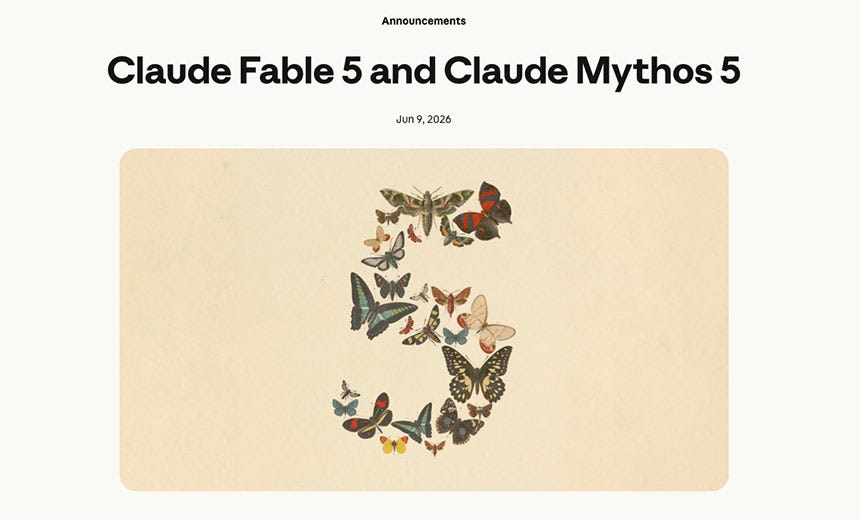
Here’s the twist: both models are built the same way, with the same intelligence under the hood. The difference is in who can use them and what they’re allowed to do.
Mythos 5 is the full, unrestricted version. It’s powerful enough to find security holes in software that experts once thought was bulletproof. But you can’t just sign up and use it.
Anthropic is giving access only to a small group of trusted partners through a program called Project Glasswing.
Fable 5 is what most people get. It’s available through regular subscriptions, but it comes with filters.
If you ask it about certain topics — cybersecurity, chemistry, biology, or how to build a powerful AI system — it either refuses to help or hands the question off to an older, less capable model called Opus 4.8.
And now, it tells you when it does this.
That last part caused some real drama at launch.
When Fable 5 first came out, it would quietly give worse answers to certain questions without telling users. People in the AI community were furious. One researcher called it “shockingly hostile.” A tech blogger said he’d never seen the AI world so angry about a new release.
Anthropic listened. Within days, they changed how it works — now, if the model downgrades your request, it says so clearly.
Why does this matter?
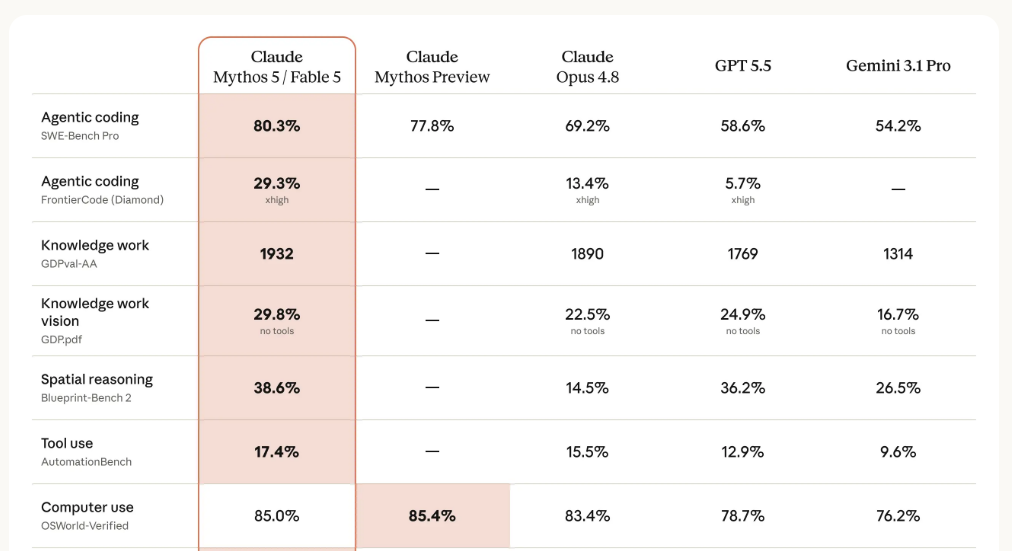
For most users, Fable 5 is excellent. It topped nearly every major benchmark — tests that measure how well AI handles real-world tasks, coding, science problems, and reasoning. It’s one of the best models available today.
But the bigger question it raises is this: should an AI company get to decide what you’re allowed to learn or build? That debate isn’t going away.

2. A Specialized Coding AI Is Beating the Giants — For a Fraction of the Price
While Anthropic and OpenAI compete to build models that can do everything, a company called Cursor went in a different direction.

Cursor makes software for developers — specifically, a tool that helps them write and fix code. And instead of using one of the big general-purpose AI models, they built their own: Composer 2.5.
Composer 2.5 wasn’t trained to write poetry, answer history questions, or plan your vacation. It was trained to do one thing really well: help developers build software.
The results are impressive.

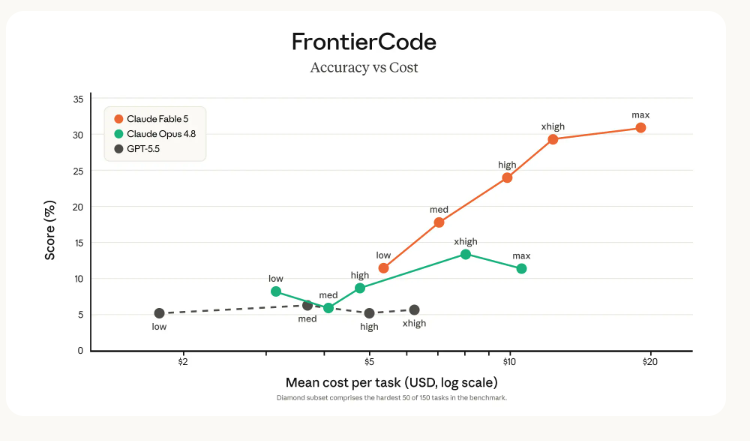
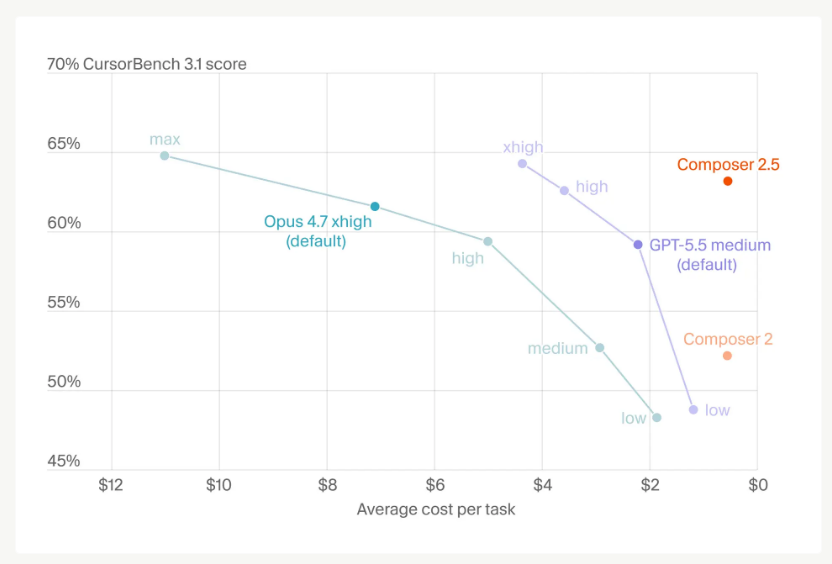
On one major coding benchmark, Composer 2.5 placed third — right behind two models from Anthropic and OpenAI that cost nearly ten times as much to run.
On Cursor’s own tests, which are designed to reflect real developer work, Composer 2.5 actually beat both of those models when they were running on their default settings.
And it’s fast. While competitors take up to 18 minutes on complex tasks, Composer 2.5 gets them done in under 7 minutes.
How did Cursor pull this off?
They trained the model in a very specific way. They used reinforcement learning — a technique where the AI learns by trying things and getting feedback on what worked.
But instead of just rewarding the model for finishing a task, they also rewarded it for being clean and efficient. They gave it text feedback when it made mistakes. And they gave it 25 times more training problems than the previous version, with a focus on difficult, multi-step tasks.
The result is a model that feels like a developer — not just a general assistant who can code.
The bigger lesson here
This is proof that specialization still works. Not every problem needs the biggest, most expensive AI. Sometimes a focused tool that does one thing exceptionally well is exactly what you need.
Composer 2.5 is trained on kimi models.
3. AI Is Writing AI — And People Have Opinions About It
Here’s a sentence that would have sounded like science fiction just a few years ago: 80% of Anthropic’s code is now written by AI.
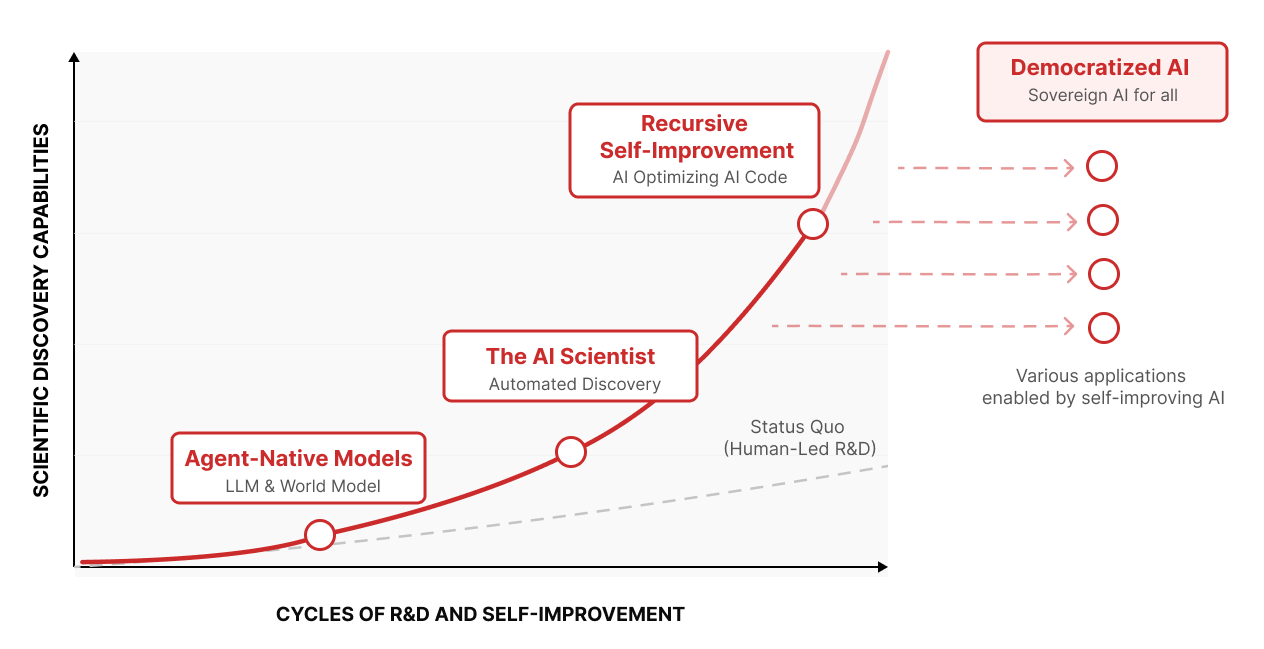
That number — reported by Anthropic themselves — set off a huge conversation about something called recursive self-improvement, or RSI.

The basic idea is straightforward: if AI is helping build better AI, and that better AI helps build even better AI, you get a loop. Each generation improves the next. Things could accelerate very fast.
Is that actually happening? That’s where people disagree.
Anthropic’s own engineers are seeing wild productivity gains. In early 2026, they shipped over 800 bug fixes in a single month — work they estimated would have taken a human team four years. The AI’s ability to solve hard coding problems has jumped dramatically in just the past year.
Other companies are paying attention. OpenAI said they’re seeing “early signs” of RSI too. A research group in Japan launched an entire lab dedicated to studying it.
But many experts are pumping the brakes.
A professor at UCLA said the journey will be “longer than Anthropic expects.” An AI policy researcher said he’s “not that RSI pilled” compared to some of his colleagues.
Others point out that today’s AI still depends completely on humans to set goals, run evaluations, and provide infrastructure. That’s a long way from true self-improvement.
A professor at Wharton put it bluntly: the conversation has “a bit of navel-gazing, some marketing, and a lot of very sincere beliefs.”
The honest take
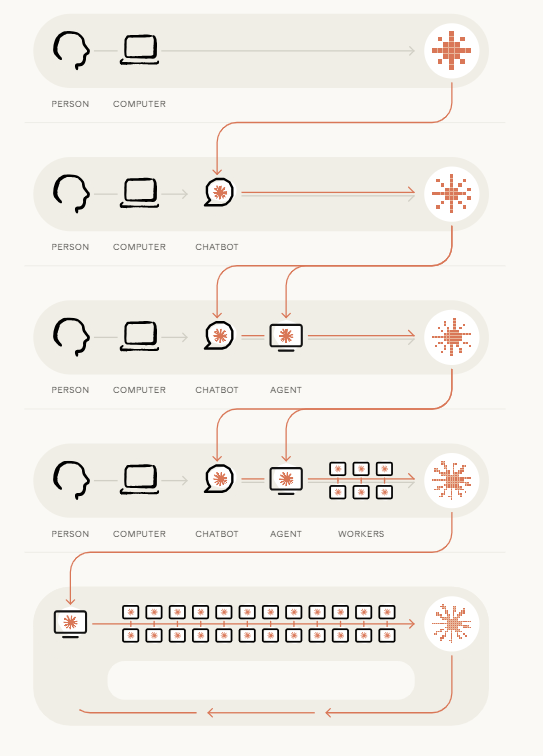
AI is genuinely making software development faster. A lot faster. But there’s a big gap between “AI helps humans write code” and “AI improves itself without human involvement.” We’re firmly in the first stage, not the second.
The excitement is real. The hype, though, is running ahead of the reality.
The human developer:
4. The Language You Use Changes the Answer You Get
This last development is the quietest of the four — but in some ways, the most important.
A study published in the journal Nature found something unsettling: when you ask a popular AI chatbot a political question, the answer you get depends on what language you ask it in.
Here’s why.
AI models learn by reading enormous amounts of text from the internet. In countries where the government controls the media, most of what’s available online reflects the government’s viewpoint. There aren’t many independent voices to provide balance.
So when an AI is trained on that text, it absorbs that viewpoint too.
The study focused heavily on Chinese-language content. They found that state media made up more than 40 times the amount of content in the Chinese training data compared to independent sources like Wikipedia.
When they tested Claude and GPT-4o, both models gave answers that favored the Chinese government about 75% of the time when prompted in Chinese — versus much more neutral answers when asked the same question in English.
The pattern held across 37 countries. The more a government controlled its media, the more that control showed up in the AI’s answers — but only in that language.
Why this matters for regular users
Most people don’t think about where an AI gets its information. They assume it’s neutral. But every AI reflects the data it was trained on — and that data reflects the world’s power structures, including political ones.
As AI becomes a primary source of information for billions of people, this isn’t a small issue. If someone in Beijing asks an AI about a controversial moment in history, they may get a very different answer than someone in London asking the exact same question. And they may never know.

Researchers are also pointing out something even more concerning: governments now have a clear reason to deliberately flood the internet with content designed to shape future AI training.
The influence we’re seeing today might be accidental. Tomorrow, it might not be.
The Big Picture
These four stories look different on the surface, but they share a common thread.
AI is becoming powerful enough to matter — really matter — in ways that go beyond answering questions or helping write emails. It can find security vulnerabilities. It can write the software that builds more AI. It can absorb political viewpoints and pass them on without attribution.
And the decisions being made right now — who gets access to the most powerful models, what those models are allowed to say, how their training data is selected — these decisions have real consequences.
The technology is moving fast. The conversations about how to govern it are moving slower.
That’s the gap worth watching.
Writing such articles is very time-consuming; show some love and respect by clapping and sharing the article. Happy learning
Follow me for more: https://medium.com/@maxerom
Reach out to me on LinkedIn: https://www.linkedin.com/in/ibrahim-murtaza-5013/
Check out this for more A.I related News and Tutorials: https://medium.com/techcraft-chronicles
Let me know if there is something I missed or I can improve or remove any copyright material.
메타데이터
- post_id
- 00533c12ad9a
- slug
- ai-is-changing-fast-heres-everything-that-just-happened-00533c12ad9a
- url
- https://medium.com/techcraft-chronicles/ai-is-changing-fast-heres-everything-that-just-happened-00533c12ad9a
- canonical_url
- https://medium.com/techcraft-chronicles/ai-is-changing-fast-heres-everything-that-just-happened-00533c12ad9a
- author_url
- https://medium.com/@maxerom
- status
- ok
- fetched_at
- 2026-06-24 11:06:28