Solving the Lake Formation Identity Crisis for RAG Security: Part 1
Architecting the Shift from IAM Chaos to RAG-Ready Security — Part 18 of Security & Compliance Chronicles
Solving the Lake Formation Identity Crisis for RAG Security: Part 1
Architecting the Shift from IAM Chaos to RAG-Ready Security — Part 18 of Security & Compliance Chronicles
Executive Summary : In the era of Agentic AI and Retrieval-Augmented Generation (RAG), traditional infrastructure-level security (IAM) is no longer enough. This article explores why the control point for security must shift inward: from the S3 bucket boundary to the data itself. We examine how AWS Lake Formation provides the granular, cell-level governance required to ensure AI agents only “understand” what they are authorized to see, and how to navigate the common “IAM Principals Trap” that leaves many data lakes vulnerable.
If you have followed my Security and Compliance Chronicles, you may have noticed a consistent theme. Security in AWS begins with identity.
From the early foundations of IAM and least privilege, to centralized access with Identity Center, to SCP guardrails and automation-ready policies, the goal has always been the same: define who can do what under specific conditions. The model works. Until it does not.

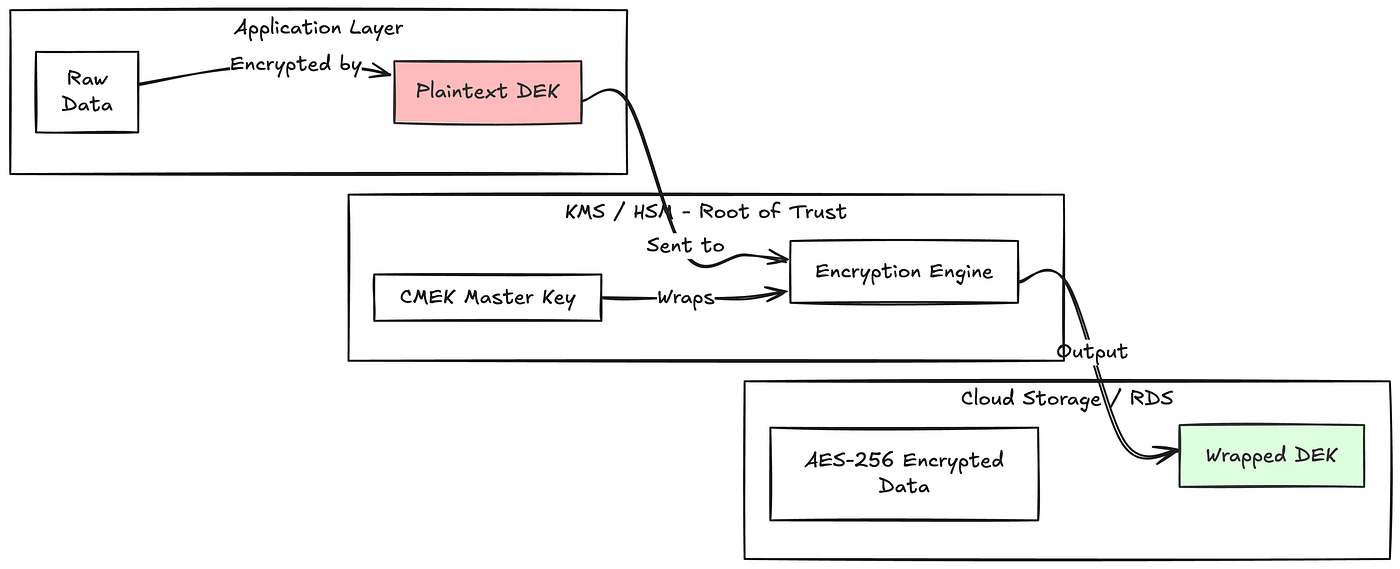
Figure 1: The RAG Security Handshake: Enforcing Data-Level Governance in AI Pipelines.
As architectures scale, identity becomes harder to reason about. Roles begin to multiply across services and accounts. Policies grow opaque and increasingly difficult to audit. Cross-account access introduces hidden paths that are not always visible during design, while automation amplifies even small misconfigurations into systemic risk.
Even with well-designed IAM policies, the system begins to drift. Permissions accumulate while boundaries blur. What starts as least privilege slowly turns into “good enough access.”
IAM was never designed to answer the most important question in modern architectures.
Not just who can access the system, but who can see a specific piece of data.
IAM answers the question of who can access a resource. It does not answer the question of what that identity is allowed to see inside the data itself. That distinction becomes critical as we move from application-centric architectures toward data platforms and AI-driven systems.
This is where the data security layer begins to emerge as a separate concern. It is no longer sufficient to control access at the boundary of a bucket or a service. The real control point shifts inward, toward the structure and meaning of the data.
What Is AWS Lake Formation?
Amazon S3 serves as the foundational storage layer for most modern data platforms. AWS Glue provides the catalog that allows us to organize and discover that data. AWS Lake Formation introduces the enforcement layer that governs how that data can be accessed.
Historically, data security in AWS has been implemented at the infrastructure level. Teams would secure buckets, define prefix-based access, and rely on IAM policies to control interaction with those resources. Over time, these policies often became complex and difficult to audit, especially in multi-account environments.
Lake Formation changes the model by introducing centralized governance at the data level. It operates on top of the Glue Data Catalog and allows permissions to be defined at the level of databases, tables, columns, and even individual rows.
This moves the control model away from storage locations and toward the data itself. Instead of reasoning about paths and objects, architects can reason about datasets and their sensitivity.
The result is not just simplification. It is a different way of thinking about security. Control is no longer tied to where the data is stored, but to what the data represents.
Why This Matters for RAG
In modern architectures, Retrieval Augmented Generation has become a core pattern for enterprise AI systems. These systems retrieve internal data and provide it as context to large language models in order to generate meaningful and relevant responses.
The retrieval layer becomes one of the most sensitive components in the entire architecture. It determines which pieces of data are exposed to the model and ultimately influences what the system is capable of revealing.
Without a data-level security model, this layer often operates with broad IAM permissions. A role that has access to read objects from a bucket can potentially retrieve any dataset stored within that boundary. This includes information that may be confidential, regulated, or simply not intended for that specific use case.
At that point, the model is not the risk. The access model that feeds it is.
Lake Formation introduces a form of contextual enforcement.
It ensures that only the specific rows and columns that an identity is authorized to access can be retrieved. If an AI agent does not have permission to access a particular dataset, that data is never returned by the query engine and never enters the model context.
This marks the transition from securing infrastructure to securing inference. The system is no longer defined only by what it can access, but by what it is allowed to understand.
The IAM Principals Trap
There is a subtle but critical issue that appears in many Lake Formation implementations. It often goes unnoticed because everything seems to function correctly at first glance.
When Lake Formation is enabled, AWS introduces a virtual group called IAMAllowedPrincipals. This group frequently retains broad permissions on catalog resources, especially in environments that evolved from traditional IAM based access patterns.
As long as this group has elevated permissions, Lake Formation enforcement can be bypassed by underlying IAM policies. A user may appear to have restricted access within Lake Formation, while still being able to retrieve the same data through IAM-based permissions.
This creates the illusion of security. The governance model appears to be in place, but it is not actually enforcing the intended boundaries.
In a modern architecture that aims for a zero trust approach, this configuration becomes a structural weakness.
IAMAllowedPrincipals should be treated as a transitional artifact rather than a permanent component of the system.
Removing this implicit access is not simply a best practice. It is a prerequisite for achieving true data-level governance.
The Practical Path Hybrid Access and Incremental Control
In production environments, changes to security models must be introduced carefully.
Systems cannot be disrupted simply to achieve architectural purity.
Lake Formation provides a mechanism for gradual adoption through a hybrid access mode. This approach allows existing workloads to continue operating under IAM while new workloads adopt Lake Formation permissions.
S3 locations can be registered with hybrid access enabled, which creates a controlled overlap between the two models. Legacy ETL processes and batch jobs can continue to function without interruption, while new roles such as AI agents and analytics workloads are explicitly governed through Lake Formation.
This enables a phased migration rather than a complete redesign.
At the same time, Lake Formation integrates with modern data services and patterns.
It works with query engines, data warehouses, and emerging table formats that support large-scale analytics and machine learning workflows.
As data moves from raw storage into curated datasets and eventually into vector representations for AI systems, the governance model remains consistent. Permissions are applied to the data itself rather than to the infrastructure that stores it.
This continuity is what allows security to scale alongside the architecture.
🐾 The Human-in-the-Loop Corner
After spending time meeting colleagues in person, one thing became clear. Despite the scale of the systems we build, the community behind them remains small.
Between devouring world-class Parisian éclairs and losing track of time in a smoky jazz club with old friends, I realized something vital. For someone who usually thrives on homemade cakes and back-to-back virtual meetings, stepping into the physical pulse of the tech community was an absolute jolt of lightning!
We spend our days designing architectures, real-time retrieval, and distributed intelligence. But the trust model behind all of it? It still depends on human intuition. It’s about how we define access, how we enforce boundaries, and how seriously we take our role as the ultimate “Guardians” of the data.
Technology is accelerating at a breakneck pace, but what about human responsibility? That doesn’t disappear but becomes more precious!
Staying in touch, sharing a table, and keeping each other company is what keeps us grounded while the tech moves at 100mph.
The Architect's Bottom Line
If you are building data platforms or AI-driven systems, identity alone is no longer sufficient as a control mechanism.
You must extend your security model into the data layer.
This means auditing your Lake Formation configuration, identifying where IAMAllowedPrincipals still have access, and beginning the transition toward explicit data-level permissions.
In systems that retrieve and interpret data on behalf of users, the boundaries of visibility define the boundaries of trust.
In the next part, we will explore how to scale this model using tag-based access control and how to secure distributed data architectures without introducing unmanageable complexity.
메타데이터
- post_id
- 0095e2cbc061
- slug
- solving-the-lake-formation-identity-crisis-for-rag-security-part-1-0095e2cbc061
- url
- https://awstip.com/solving-the-lake-formation-identity-crisis-for-rag-security-part-1-0095e2cbc061
- canonical_url
- https://awstip.com/solving-the-lake-formation-identity-crisis-for-rag-security-part-1-0095e2cbc061
- author_url
- https://medium.com/@alaa-rahimi
- status
- ok
- fetched_at
- 2026-07-11 18:40:18