How Diesel Injector Nozzle Wear Affects Engine Efficiency and Longevity
Even minor wear in diesel injector nozzles can trigger hidden issues affecting fuel efficiency, combustion quality, and engine life.
How Diesel Injector Nozzle Wear Affects Engine Efficiency and Longevity
Even minor wear in diesel injector nozzles can trigger hidden issues affecting fuel efficiency, combustion quality, and engine life.
This guide explains:
- How wear develops over time
- Early, mid, and advanced stage effects
- Practical monitoring and preventive strategies
It also links to real-world nozzle optimization guides for operators seeking to maximize engine performance.
Early Wear Effects
- Spray hole erosion is minimal but measurable (1–2 µm edge rounding)
- Slight reduction in fuel atomization, affecting light load combustion
- Engines may show minor rough idle or vibration, often dismissed as normal
Example nozzles at early wear stage:
- DLLA150P1080 — minor edge erosion, stable under light load
- DSLA143P972 — slightly irregular atomization at low RPM
Observation: Track fuel consumption trends (liters per 100 km month over month) to detect subtle declines early.
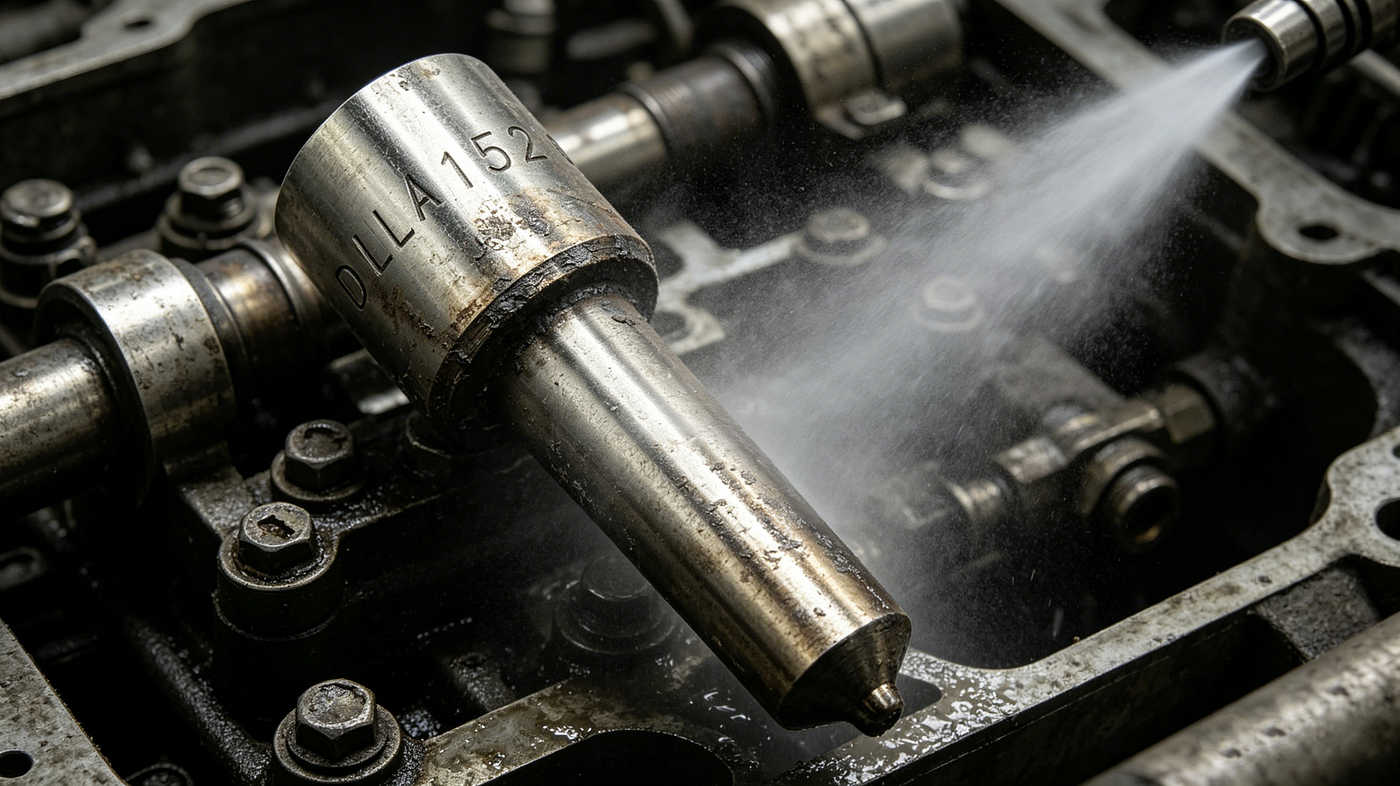
Mid-Stage Wear Effects
- Spray pattern consistency declines — some holes may flow 3–5% more than others
- Combustion delays appear under medium load (slight hesitation)
- Fuel consumption increases 2–5% — often unnoticed without data logging
- Minor smoke during acceleration or high-load operation (gray or light black haze)
Example nozzles at mid-stage:
- DLLA152P1780 — uneven penetration at medium load
- DSLA145P302 — cylinder-to-cylinder fuel deviation above 4%
Impact: Mid-stage wear may go unnoticed until efficiency drops or emissions rise. Cleaning can help but cannot fully reverse wear.
Advanced Wear Effects
- Flow consistency deteriorates — cylinder-to-cylinder variation exceeds 6%
- Engines experience increased vibration, high EGT (>50°C spread), and reduced torque
- Mechanical stress on pistons, valves, and liners may occur (localized melting or ring sticking)
Example nozzles at advanced wear:
- DLLA160P52 — high load irregularities, reduced efficiency
- DSLA156P1118 — thermal stress affects fuel delivery uniformity
Tip: Replacement is the only solution at this stage. Proactive monitoring prevents downtime and expensive repairs (often 5–10× the cost of new nozzles).
Preventive Measures for Engine Longevity
1.Regular Inspections:
- Check spray pattern versus new nozzle
- Look for visual wear signs (rounded edges, carbon tracks)
- Measure hole erosion if possible
2.Monitoring Engine Metrics:
- Fuel consumption per duty cycle
- Smoke color and density
- Idle stability (glass of water test)
- Cylinder exhaust temperature spread
3.Timely Replacement:
- Replace before performance loss
- Flow deviation >4% or every 3000–4000 operating hours for heavy use
4.Load Testing:
- Test under light, medium, and heavy loads
- Note roughness or smoke locations
5.Consistent Maintenance:
- Coordinate with fuel system servicing (filters, pump pressure) for best results
Practical Optimization Tips
- Keep detailed injector logs — installation date, operating hours/km, observed fuel trends
- Avoid mixing nozzle types across cylinders, even with identical part numbers from different batches
- Use trusted replacement parts — cheap aftermarket nozzles wear 2–3× faster
- Combine wear monitoring with fuel efficiency tracking — a 5% rise is a clear replacement signal
Conclusion
Diesel injector nozzle wear is a hidden but critical factor in engine performance:
- Mid-stage wear reduces fuel efficiency by 2–5%; advanced wear can reduce up to 10%
- Can cause combustion instability, higher emissions, and accelerated engine wear
- Proactive monitoring, preventive maintenance, and correct nozzle selection are essential to maximize engine longevity
Early detection and proper maintenance cost a fraction of a major engine overhaul and prevent expensive downtime.
FAQ (SEO-Optimized for Schema)
Q1: How often should diesel injector nozzles be replaced? A: Inspect every 80,000–120,000 km, or replace when flow deviation exceeds 4%.
Q2: What are the early signs of injector nozzle wear? A: Slight rough idle, minor vibration, reduced fuel atomization, and subtle increases in fuel consumption.
Q3: Can cleaning restore nozzle performance? A: Cleaning removes carbon and minor blockages, but worn or eroded nozzles require replacement.
Q4: How does nozzle wear affect fuel efficiency? A: Mid-stage wear can reduce efficiency 2–5%, and advanced wear up to 10%.
Q5: Is it safe to mix nozzles from different batches or models? A: No, mixing can cause cylinder imbalance and accelerate engine wear.
👉 Explore diesel engine components and fuel injection systems: **Diesel Injector Nozzle**
👉 Related technical reading: **Optimizing Diesel Injector Nozzle Selection for Maximum Fuel Efficiency and Engine Longevity**
메타데이터
- post_id
- 00a830d60190
- slug
- how-diesel-injector-nozzle-wear-affects-engine-efficiency-and-longevity-00a830d60190
- url
- https://medium.com/@pioneerdieselparts/how-diesel-injector-nozzle-wear-affects-engine-efficiency-and-longevity-00a830d60190
- canonical_url
- https://medium.com/@pioneerdieselparts/how-diesel-injector-nozzle-wear-affects-engine-efficiency-and-longevity-00a830d60190
- author_url
- https://medium.com/@pioneerdieselparts
- status
- ok
- fetched_at
- 2026-07-26 21:14:45