Autonomous and RC SCENARIO: USA TAKES KHARG — WITH MACHINES ONLY, no humans
Author: Berend Watchus. Independent non-profit AI & Cyber Security Researcher. Trendwatcher. Publication for OSINT Team. June 13, 2026.
Autonomous and RC SCENARIO: USA TAKES KHARG — WITH MACHINES ONLY, no humans
Author: Berend Watchus. Independent non-profit AI & Cyber Security Researcher. Trendwatcher. Publication for OSINT Team. June 13, 2026.
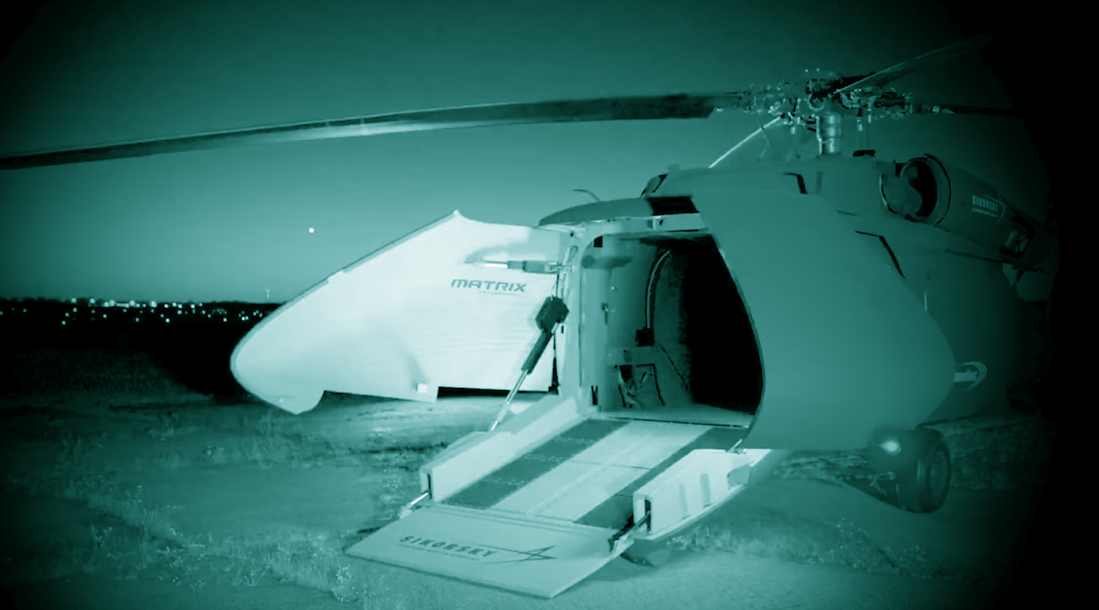
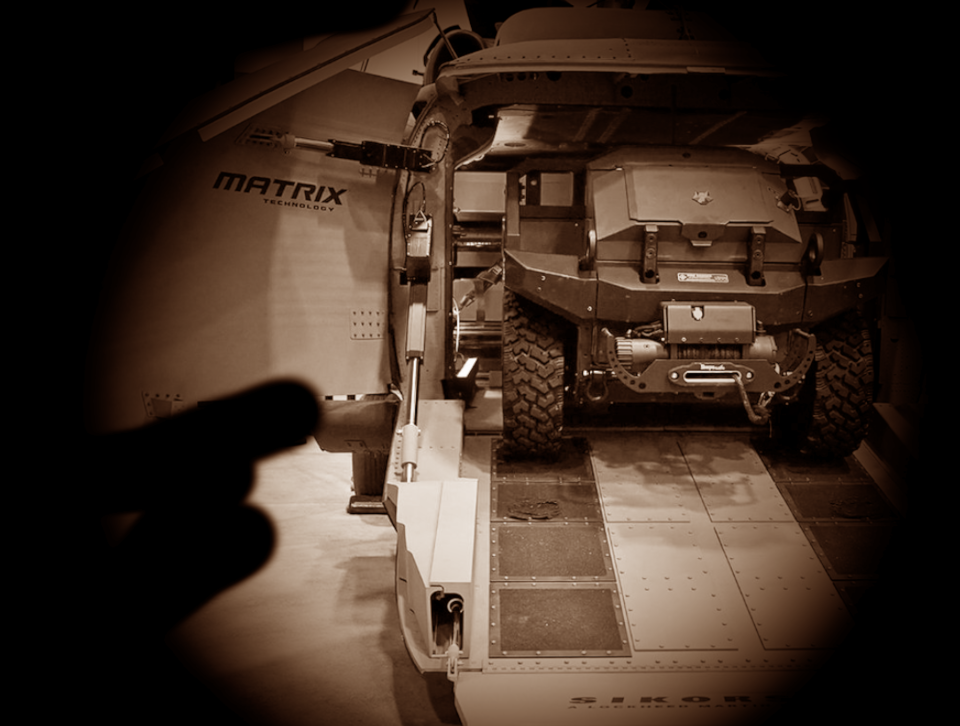
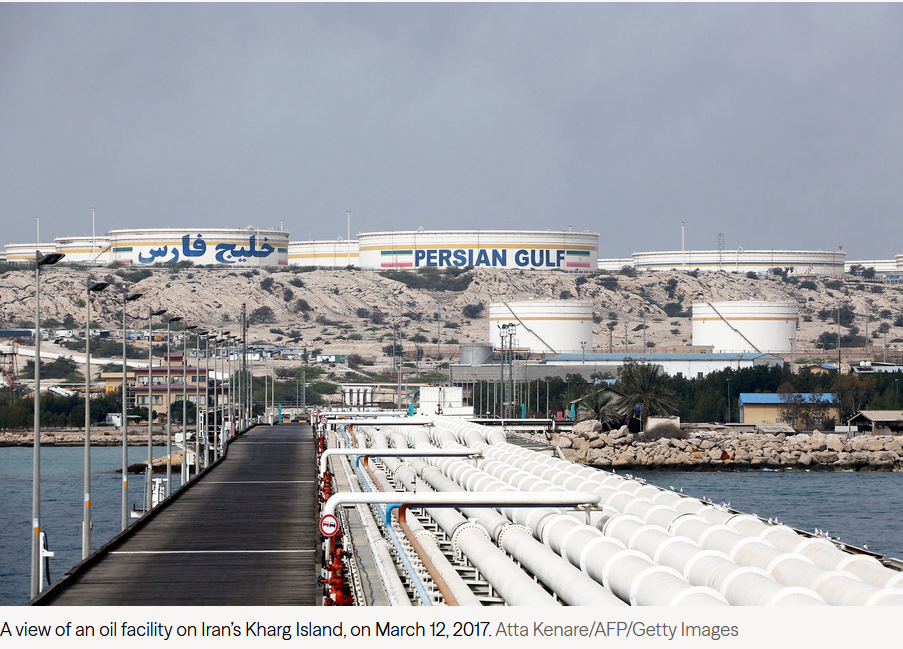
source: https://www.cfr.org/articles/kharg-island-irans-oil-lifeline-and-a-tempting-u-s-target
SCENARIO: USA TAKES KHARG — WITH MACHINES ONLY
A live stress test of fielded autonomous and remote systems against the hardest small-island problem on earth — and why the magnificent machine still loses to the rock, the crowd, and the coast
Author: Berend Watchus — Independent non-profit AI & Cyber Security Researcher. Trendwatcher.
READ THIS FIRST — what this is and is not. No, this scenario will not happen. It is not a forecast, a recommendation, or a plan. It is a simulation exercise — a way to stress-test innovative tools in warfare and geopolitics against the hardest realistic case, to see what today’s autonomous and remote-operated systems can and cannot actually do when the environment fights back. The value is in the findings, not in any operation. Think of it as a wind tunnel: you fly the model into the worst conditions you can build precisely so you never have to find out for real.
Principle, not procedure. Every system named appears at the capability-class level already saturating open defense literature (CNAS, USNI, War on the Rocks, manufacturer press). There are no force packages, no timings, no routes, no targeting, and no techniques here — by design. The analytical payload is in where the tools fail.
On the sensitive parts. Kharg is a real, inhabited island (~8,000 residents) in an active conflict as of mid-2026.
I deliberately isolate the technical-operational question and strip the politics and ethics to expose the machinery — a method, not a moral stance. At the points where law and ethics are decisive — the civilians, the proportionality test, lethal autonomy under degraded comms — the exercise concludes openly that the premise breaks. Technology is neutral infrastructure; responsibility for use lies with deployers and governing authorities. The historical denial-doctrine material relies strictly on the now-public, openly-published record; casualty and evacuee figures from unexecuted Cold War plans are flagged as projected estimates, not recorded outcomes; and no claim is made about any specific present-day live emplacement in civilian infrastructure.
Through-line reading: my Greenland two-parter article series, the U-Hawk piece, the NATO/Belgium counter-drone analysis, The Death of Dumb Drones, and the Trump-class battleship piece. This is where they collide.
— — — — — — — — — — — — — — —
Before I write the intro, I should pull the current state of play on Kharg so the context paragraph is actually up to date rather than reusing the June figures from earlier in our conversation — this is exactly the kind of thing that moves week to week.Current context confirmed and updated. Here are both blocks, ready to copy-paste, in your house voice and matched to the article.
SITUATION & CONTEXT (as of mid-June 2026)
Kharg Island has become the fixation point of the U.S.–Israeli war on Iran. The island — a small coral outcrop in the northern Persian Gulf, about 21 miles off Iran’s coast — is the terminal through which nearly all of Iran’s oil exports pass, and it sits on deep water that, unlike Iran’s shallow mainland coast, lets supertankers berth. That makes it, in one analyst’s phrase, the crown jewel of the Iranian economy and a standing target.
The pattern over recent months has been strike-and-pull-back. The U.S. struck military sites on Kharg but deliberately left the oil infrastructure intact, with Trump warning he would reconsider wiping it out if Iran interfered with shipping through the Strait of Hormuz. On June 11, 2026, he escalated sharply, posting that the U.S. would be “taking Kharg Island, and other oil infrastructure points, and assume total control of their Oil and Gas Markets, much like we have with Venezuela” — then, hours later, called off the planned strike, signalling a breakthrough in negotiations. In a Fox interview he conceded the tell at the heart of this whole exercise: taking the island has always been his “preference,” but “I don’t know that America has the stomach for it,” and he remained averse to putting boots on the ground in Iran.
Three facts frame everything that follows. First, the defender is digging in, not negotiating from weakness: in preparation for a possible U.S. operation to take Kharg, Iran laid traps and moved additional military personnel and air defenses onto the island. Second, the prize is fragile and the people are real: Kharg holds storage tanks and housing for thousands of workers, and satellite imagery has already shown a suspected oil spill covering dozens of square kilometres of sea beside the island — destruction is no longer hypothetical. Third, the cost-exchange is global: disrupting Kharg would hit the Iranian economy but also deepen the global oil shortage and drive prices higher, and Iran has already launched drones toward vessels in the Strait of Hormuz.
The “boots on the ground” reluctance is the door this exercise walks through. If the obstacle to taking Kharg is the risk to human troops — what happens if you remove the humans and send only machines? That is the question this simulation exists to stress-test. It is not a forecast and not a plan; it is a wind-tunnel run for the newest tools in autonomous warfare against the hardest realistic case.
EXECUTIVE SUMMARY (TL;DR)
The premise: A purely machine seizure-and-hold of Kharg Island — fully autonomous and remote-operated systems only, no human troops ashore — built over months toward a permanent hardened base, using only capability classes that are publicly known to be fielded or in field testing today. A simulation to stress-test innovative tools in warfare and geopolitics. This scenario will not happen; it is a wind-tunnel, not a forecast or a plan.
The one-line finding: The machines can take the rock. They cannot run it, cannot keep it, and the defender — fighting at home, cheap, among his own civilians — holds every structural card. Autonomy changes who bleeds; it does not change that holding Kharg is a losing trade.
What today’s tools genuinely deliver. The engineering and logistics autonomy stack is the most mature part of the whole exercise and is routinely underestimated: EOD tracked manipulators for clearing, autonomous dozers/loaders/haulers, autonomous boring rigs for shallow hardened galleries, air-dropped prefab container modules, local-fill gabion barriers, buried microgrids, persistent ISR, loitering munitions, the U-Hawk launched-effects mothership as a 21-mile air bridge, and humanoids for the routine 80% of terminal work. You can robotically clear, build, wall, bore, bury, power, and partially crew a hardened, partly-subterranean fortress on a coral rock — front-loading the deadly work onto machines so any humans arrive into a finished position.
Why it loses anyway — five walls no robot removes:
- The prize can’t go in the bunker. The terminal — jetties, manifolds, the Sea Island platform, storage — is inherently surface, fragile, un-buryable. You can protect the garrison; you can’t protect the workplace, and humanoids break on the abnormal-event judgment that running a live oil terminal demands.
- Geometry beats fortification. A flat ~20 km² rock is fully observable, un-closeable (you can’t mine the open sea shut), and envelopable from every bearing — or simply bypassed and blockaded. U.S. escalation dominance, total against undefended Greenland, fails by topology against a small island next to a big hostile coast.
- The hybrid-civilian layer. ~8,000 residents plus real tanker and supply traffic = the “trapped fishermen” trap at machine speed: adversary craft mixed among real civilians, synthetic media pre-staged to weaponize any engagement. Proportionality calls are what 2026 classifiers are worst at.
- The governance trap. Defeating Iran’s demonstrated EW (jamming, GPS denial, protocol takeover) requires pushing the decision loop to the edge — which makes the swarm jam-proof and un-overseeable. You cannot have the jam-proof swarm without the un-overseeable swarm, and that delivers lethal autonomy over 8,000 civilians: a governance problem, not a technical one.
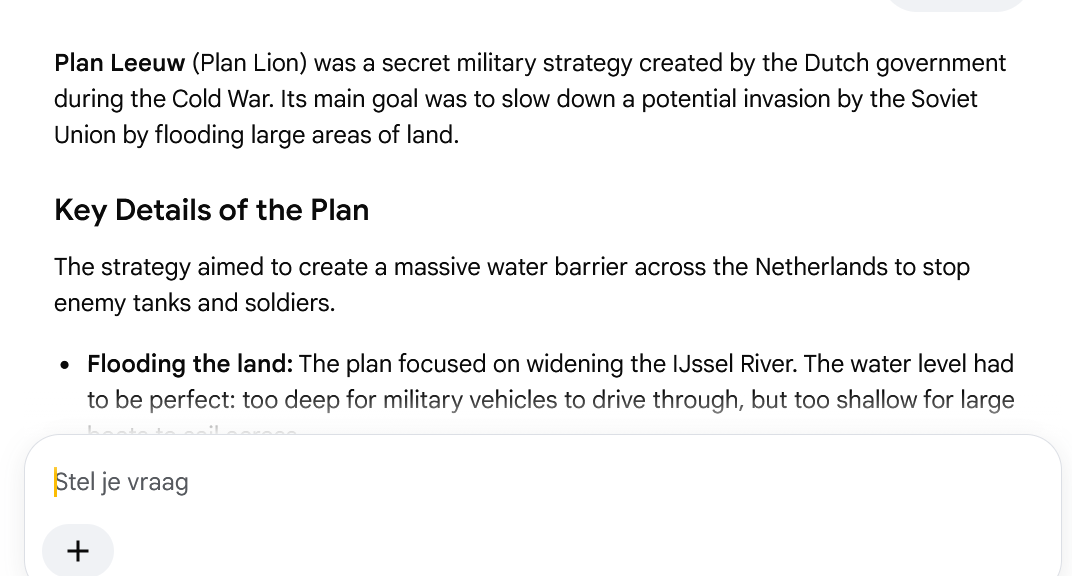
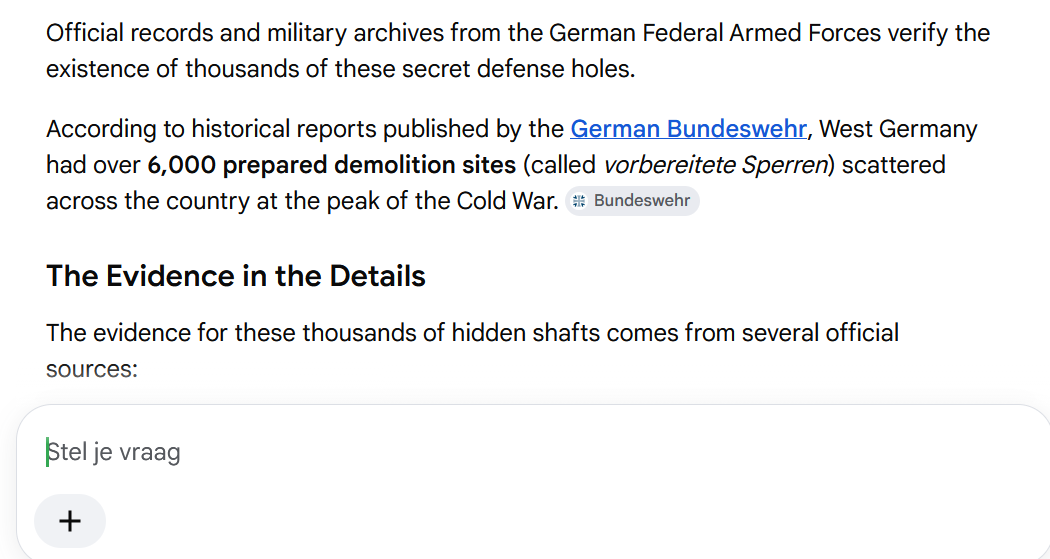
- Denial is the default. Pre-rigged self-destruction is normal fixed-defense doctrine — proven on home soil by 20th century history: the Dutch IJssellinie / Plan Leeuw (a flood expected to kill thousands of its own civilians, hidden even from parliament),
Google AI says:
google AI
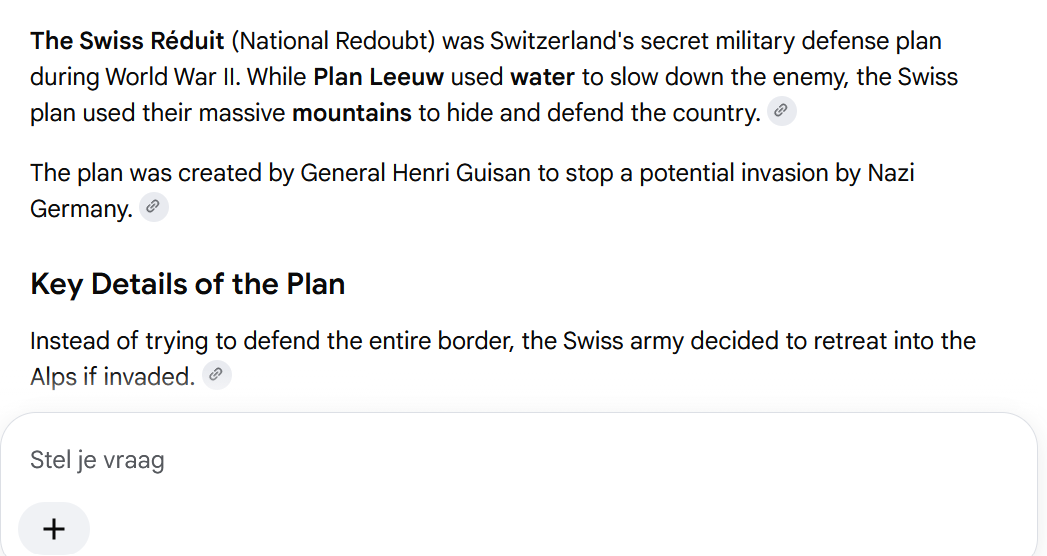
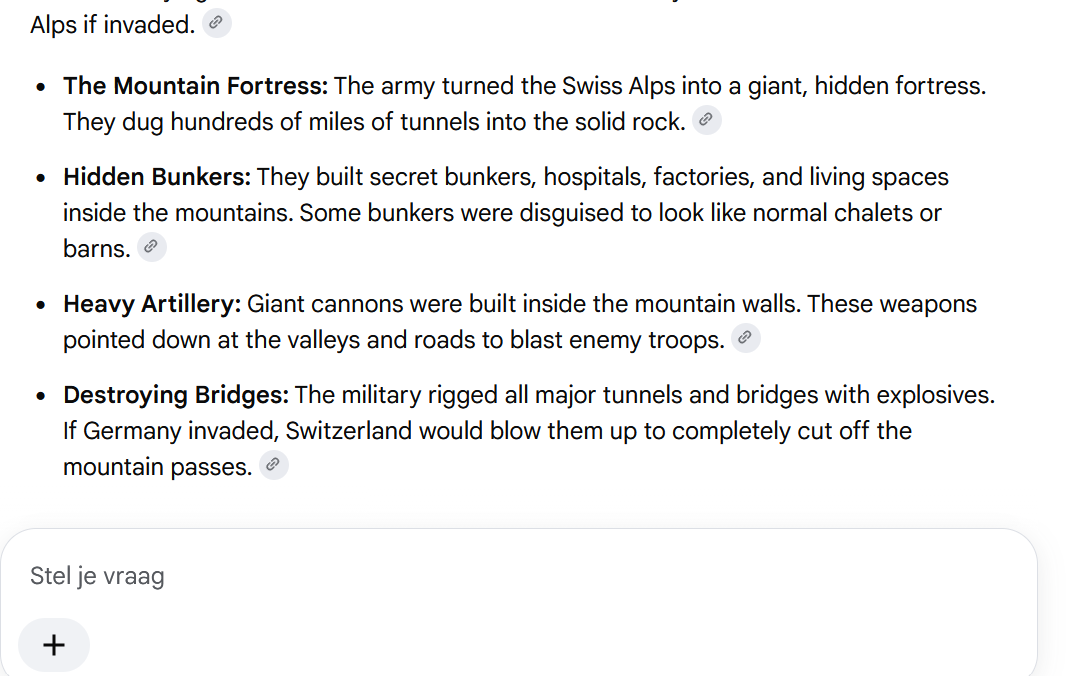
the Swiss Réduit,
Google AI
Google AI
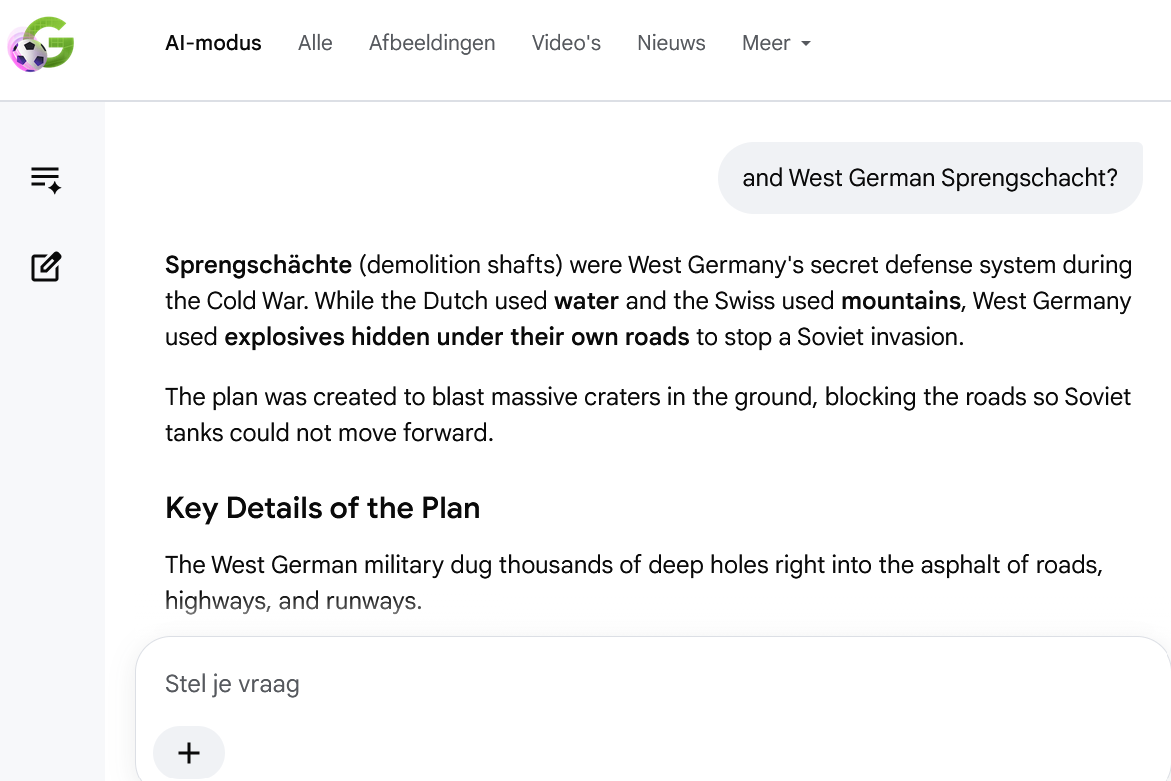
and the West German Sprengschacht.
Google AI
Google AI
The holder of the ground pre-wires the prize. There is no historical basis to assume Iran will be the gentle exception — and every incentive (active war, the taboo already broken, the terminal as economic lifeline) points the other way.
The inversion (the real takeaway): every one of these factors is worse for the attacker and better for the defender. The realistic deployment of this exact autonomous toolkit is defensive — Iran’s edge-reasoning swarm launched from sanctuary, hiding in civilian traffic, attriting a fixed robot fortress for pennies, with the prize pre-set to vanish on capture. The defender wins the hybrid fight.
The arc for ‘our field’ (tech/innovation/Cyber/AI): the hard problem migrates from the physical domain (can machines fight onto the rock? — largely yes) to the cyber/EW domain (can they fight through jamming? — yes, via edge autonomy) to the governance domain (should anything decide, on the edge, what it will be forced to decide over 8,000 civilians? — unresolved, and not technical). The machines win the engagements and lose the war on the responsibility gap. You can automate the entire invasion and still inherit a demolition chamber with a sea view.
End of Executive summary
— — — — — — — — — — — — — — — — — —
PART 0: THE INVERSION
My Greenland scenario concluded “walk in the park.” The reason was singular: there was nothing to fight. No defender, no fires, no contested approach, an ice sheet that did population-control for free. Greenland was the unlocked door.
Kharg is the inversion of every variable that made Greenland trivial. Same approximate land area. Opposite problem.
Variable Greenland (city of Nuuk) Kharg Defender None IRGC garrison + a connected hostile mainland 21 miles away Conflict state Peacetime seizure Active war; island already struck Population Asleep, unaware Hostile, mobilized, ~8,000 residents Geography’s effect Contains the population for you Pins you under the defender’s guns The prize Inert government buildings A working surface oil terminal that must keep running Comms environment Permissive Contested, jammed, EW-saturated
Greenland was the door left open. Kharg is the door that is locked, mined, watched, and zeroed-in by artillery from across the street. That is exactly why it is the better simulation. You don’t learn what military autonomy can do by testing it on an undefended village. You fly the model into the storm.
And the finding this exercise produces is one my own work has circled for months: the machines can take the rock. They cannot keep it, cannot run it, and the defender — fighting at home, cheap, among his own civilians — holds every structural card.
PART I: THE ROCK — AND THREE WARS THAT EXPLAIN IT
The public size figures don’t all measure the same thing, I’ll flag it rather than average it quietly. Consensus across current sources: ~20–21 km² (about 8 sq mi), long and narrow — roughly 5 miles by 2.5 — low and flat, high point near 70 m. CFR’s “one-third the size of Manhattan” checks out; Al Jazeera’s version is about one and a half times the footprint of LAX.
Reset the mental image, because “island” lies here:
The honest “it’s tiny” anchors:
- Iwo Jima ≈ 21 km². A near one-to-one match.
- Texel (Dutch Wadden) ≈ 170 km² → ~8× Kharg.
- Isle of Man ≈ 572 km² → ~28×.
The Mediterranean anchors, to kill the “island = big” reflex:
- Ibiza ≈ 571 km² → ~28×.
- Mallorca ≈ 3,640 km² → ~180×.
- Corsica ≈ 8,680 km² → ~430×.
- Sicily ≈ 25,700 km² → ~1,250×. A different category of object.
City/province anchors: ~20 km² is roughly Manhattan’s southern third; Paris’s first ten arrondissements combined; two-thirds of the city-state of San Marino. The Dutch province of Flevoland is about 120 Khargs.
So: not Mallorca, not even Ibiza. An Iwo Jima-sized sliver, smaller than Texel. And three wars explain why that smallness is a trap, not a gift.
Iwo Jima — the size proof. ~21 km². The US took it, at roughly 26,000 casualties over five weeks, against a defender who was isolated, out-supplied, had no air cover, and was cut off from his mainland — and who still turned a flat volcanic rock into one of the costliest fights in Marine Corps history. Kharg’s defender is not cut off. The mainland is 21 miles away and fully connected.
Verdun — the attrition proof. A tiny sector of front, contested for ten months in 1916, consumed something on the order of 700,000–800,000 casualties combined. The ground barely moved. Verdun proves the mechanism Iwo only hints at: a small fixed contested space, connected to its rear, consumes armies for as long as the defender can keep feeding fire into it. Iwo’s defender was doomed; Verdun’s was resupplied — like Kharg’s.
Messines — the fixity proof. In June 1917 the British detonated roughly nineteen enormous mines tunnelled under fixed German positions on a ridge held for years — on the order of 10,000 killed in seconds, craters still visible today. The lesson is the one that guts the fortress idea: a known, fixed, observable position is one you can patiently pre-register and annihilate. Fixity is the vulnerability. It is also, frankly, crazier than any Bond plot — years of secret tunnelling to erase a ridge from beneath — and it was considered sound practice by serious staffs. That it reads as insane and was real is exactly the point.
Put together: the square kilometres were never the problem. The defender’s ability to keep contesting them was (Verdun), and the impossibility of making a fixed, known position stop being a target was (Messines). Kharg is a Verdun you must hold and a Messines ridge you cannot move.
PART II: THE TOOLKIT — WHAT’S ACTUALLY FIELDED
Capability classes, not load-outs.
Combat / ISR autonomy: persistent HALE ISR (Reaper/Global Hawk-family) plus small-sats; uncrewed surface/subsurface craft (Sea Hunter/Overlord-type, Replicator-style attritable mass, uncrewed mine-countermeasures); loitering munitions/one-way attack classes (Switchblade-family and larger); counter-UAS point-defense and directed-energy classes.
Engineering / logistics autonomy — the most mature tier: autonomous/teleoperated earthmovers, dozers, graders, loaders; autonomous haulage; EOD tracked manipulators (40+ years mature, the clearing workhorse); autonomous mining/boring rigs for shallow hardened galleries; air-dropped prefab container modules (quarters, sanitation, galley, maintenance, control, medical — and containerized weapons/vehicle/drone-nest variants); containerized self-sufficient power (hybrid microgrids, microreactor classes); local-fill gabion barriers (HESCO-type).
The form-factor wildcard: humanoids (electric Atlas-class, Figure/Optimus/Unitree-class) — right form factor for a human-built terminal, judgment-under-abnormality not there yet.
The connective tissue — decisive: the U-Hawk (S-70UAS) autonomous launched-effects mothership as air bridge and swarm-carrier; the “thinking private brain” architecture (on-board LLM Verbal OODA, MPC-protected inference, mesh topology, post-quantum hardware crypto, neuromorphic-photonic efficiency).
Here’s Part II½ with the table rewritten as prose, ready to copy-paste.
PART II½: THE WIND TUNNEL IS REAL — AND THAT’S THE PROBLEM
Before anyone dismisses the toolkit in Part II as hand-waving, look at XRANGE.
[embed]
About 100 km off Abu Dhabi sits a private military-test island operated by the Emirati defense company Edge Group — a commercial range leased to “military, government, commercial, academia,” including international partners.
A published walkthrough of the facility shows, in one afternoon, most of the capability classes this exercise depends on, working:
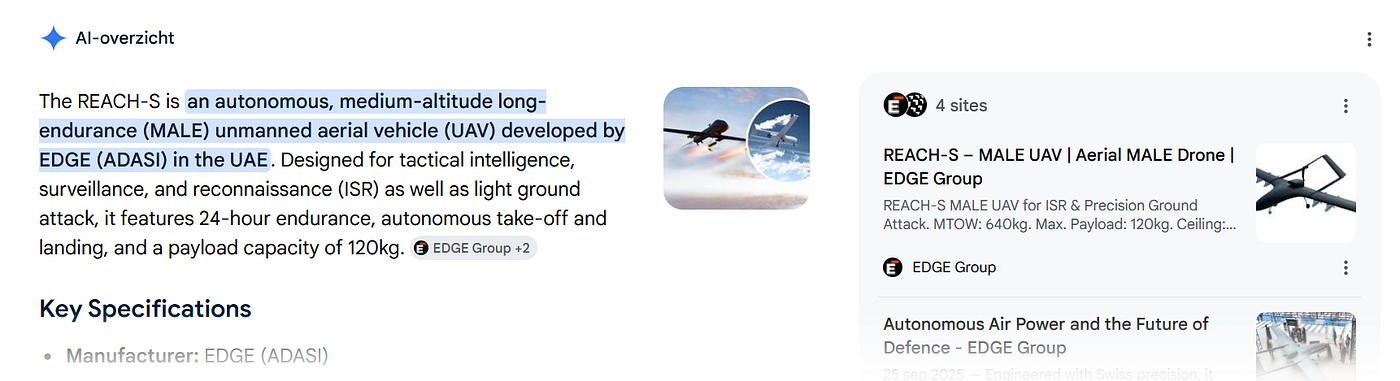
An autonomous ISR/strike aircraft (Reach-S) that, in its production mode, takes off, flies a pre-uploaded mission, and lands itself — the human only “on the loop,” monitoring. Stated endurance around 12 hours (a vendor test figure, not a verified combat spec).
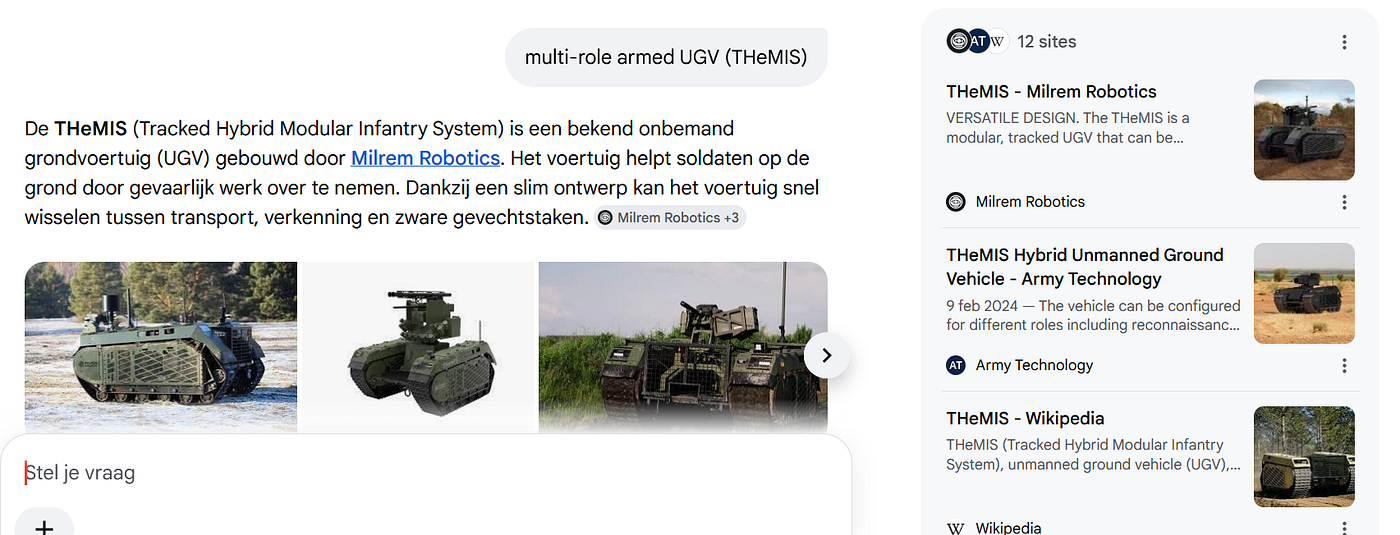
A multi-role armed UGV (THeMIS) that runs cargo, ISR, or a remote weapon station, with “cursor-on-map” autonomous routing and its own obstacle avoidance — the same ground-robot class this scenario puts in the clearing and seizing phases. An island-wide RF mesh — thirteen instrumentation towers giving, in the operators’ own words, “100% coverage” to “securely transmit data from any point on the island,” land or maritime — which is, precisely, the island-scale command-and-control datalink layer the whole machine edifice runs on. And, almost too on-the-nose, a 400-container urban range, shipping containers at irregular intervals with gaps “10 meters, 2 meters, 30 centimeters wide,” built specifically to train not just human drone pilots but “the AI algorithms which operate the UAV” — the thinking-private-brain swarm learning to navigate clutter, being trained today, on a purpose-built island.
So the “fielded today” tier is not a promise. There is a leasable island where you can watch it run. That settles the maturity question.
And then it un-settles everything else — because of why XRANGE works.
Ask what makes that island a flawless proving ground, and every answer is a friction this exercise’s target switches back on. XRANGE is reached by a bridge — permissive access; Kharg is 21 miles of contested water with no bridge. At XRANGE the airspace and “water space” are cleared on command; at Kharg the approach is contested by a defender firing from the shore. XRANGE runs a friendly mesh that nobody is jamming; Kharg sits inside a nation-state EW envelope of jamming, GPS denial, and protocol takeover. XRANGE is uninhabited;
Kharg has ~8,000 residents, with the law of armed conflict attached to every engagement.
And XRANGE is the home power’s own sovereign ground; on Kharg the home power is the enemy, 21 miles away.
Those five contrasts are the five walls of this entire scenario.
XRANGE is what the autonomous toolkit looks like with all friction removed; Kharg is the same toolkit with all friction restored.
The machines fly the model perfectly in the tunnel — and that is not evidence they survive the storm. It is evidence of how much the tunnel had to take away.
There is a second irony worth naming, because it arms the inversion this exercise builds toward. XRANGE is a sovereign capability — Edge’s stated rationale is to stop shipping test items around the world and build the ability at home. Which means the very Gulf in which one might imagine a US autonomous assault on Kharg is already a thriving indigenous autonomous-systems ecosystem: home powers in this exact sea design, build, and test this exact toolkit — ISR aircraft, armed UGVs, navigation-AI ranges — at industrial scale. The defender’s neighborhood is not a technological vacuum waiting to be overawed. It is a region that fields the same machines. That is the defender-side inversion in miniature, shown rather than argued: the toolkit is not a monopoly the attacker brings to a blank target. It is ambient in the theater, and ambient capability favors whoever is fighting at home.
XRANGE is the wind tunnel. Kharg is the storm. Everything that follows is what happens when you fly the model out of the one and into the other.
PART III: THE BUILD-UP — MACHINES CAN CLEAR, BUILD, WALL, BORE, BURY, AND POWER IT
Concede the impressive part first, so the failure is undeniable rather than motivated.
Reframe five fortification traditions not as ways to take the island but as keep-and-make-safe benchmarks — yardsticks for turning a captured rock into something a human crew could later occupy under manageable risk, with the dangerous work front-loaded onto machines.
- Swiss Réduit → the gold standard: weapons/sensors/quarters in the rock, exposing only to fire; depth; redundancy; pre-rigged denial. The garrison-survivability model.
- Afghan caves → cheap, dispersed, low-signature subsurface that defeats high-tech ISR and precision (the US couldn’t clear it in two decades). Affordable resilience — and a warning the defender gets it too.
- Iwo Jima → dug-in islands are survivable, costly-to-evict, and still fall. The expectation governor: “endurable,” not “safe.”
- Atlantic Wall → a fixed coastal crust breaks against a mobile attacker; only the beach obstacles and sea mines reliably earn their keep. The anti-raid/water-denial layer — and a caution that linear coastal defense is a losing family.
The chain, almost entirely from fielded-today capability:
clear (EOD sweeps jetties/perimeter) → grade and cut-and-cover (autonomous dozers/loaders) → bore shallow hardened galleries into the high ground (mining rigs — Afghan-cheap, Swiss-hard) → emplace modules, some below grade (air-dropped containers + loaders) → wall the surface in local-fill gabions, mine the shallow approaches → assemble the fiddly bits (humanoids + EOD arms) → power it from a buried microgrid → crew the routine 80% of terminal/maintenance with supervised humanoids whose bipedal form fits a facility built for human bodies. The 21-mile air bridge is the U-Hawk, dispensing its own ISR swarm inbound; the coordinating brain is the thinking private brain, edge-autonomous and mesh so a cut or spoofed link doesn’t decapitate it.
Fair verdict on this tier: it largely works. You can robotically clear, build, wall, bore, bury, power, and partially crew a hardened, partly-subterranean fortress on Kharg with 2026-class kit under remote supervision — and front-load the worst risk onto machines so humans arrive into a finished position. That’s the most defensible claim in the exercise.
And it’s exactly where the Trump-class battleship lesson detonates: the fortress is magnificent, the engineering sound — and it loses anyway, because the world the machine stands in moved on from the assumptions that made island-holding work.
PART IV: THE WALLS THE MACHINES CANNOT BUILD AROUND
Wall 1 — The prize cannot go in the bunker
You can make the garrison Swiss-safe. You cannot make the workplace safe. The objective is a working terminal — jetties, manifolds, the Sea Island platform, storage, the supertankers.
[**Jetty — a structure that sticks out from the shore into deep water so ships can dock alongside it, away from the shallow coast. Think of a long pier or finger reaching out to where the water’s deep enough for a big vessel. On an oil terminal the jetty is where the tanker actually ties up; it carries the pipework and loading arms out to the ship. Kharg has these because its value is deepwater berths — supertankers can’t get near Iran’s shallow mainland coast, so they pull alongside jetties (and a “Sea Island,” an offshore loading platform) at Kharg instead.*
**Manifold — a junction of pipes: one chamber or section with multiple pipe connections, plus valves, that lets you route fluid from many sources into one line, or split one line out to many. It’s the “switchboard” of a piping system. On an oil terminal the manifold is where crude from the storage tanks gets gathered and directed into the right loading line out to the right jetty and the right tanker — open these valves, close those, send the flow this way. (Same idea as the exhaust manifold in a car, which collects gas from several cylinders into one pipe.)*
Why they kept coming up in the scenario: both are fixed, surface, exposed, fragile parts of the terminal. The jetties stick out into the water and the manifolds are the irreplaceable control point of the whole flow — you can’t bury them, can’t put them in the bunker, and they’re exactly the kind of thing a defender would pre-rig to destroy. They’re the physical embodiment of “the prize has to stay in the open,” which is why the machines can hold the rock but not protect the thing that makes the rock worth holding.]
None of it can be buried, hardened, or withdrawn into rock. The premise forks the moment it must deliver the prize, not the rock: keep the Iranian workforce (not “zero human,” and a sabotage problem), fly in your own operators (not “zero human,” and the exposed-personnel problem returns on an open deck under the guns), or accept an idle terminal (you’ve merely denied the oil — which bombs already did, cheaper, without an occupation). Humanoids narrow this from impossible to “the routine 80%,” and break on the abnormal 20% — the leak, the pressure spike, the sabotage — which is unscripted judgment 2026 robotics cannot supply.
Wall 2 — Geometry beats fortification
Each fortification tradition exploits a geometry the island denies. Afghanistan = depth by remoteness — caves work because you can’t find, reach, or surround them; a flat 20 km² rock under persistent ISR has no remote area, so the cave gives overhead cover but not the thing that made Tora Bora unbeatable, not knowing where it is. The Alps = denial by demolition — drop a mountainside into a pass and the pass is gone; you cannot drop anything into the sea that closes the sea. Both assume a front you can orient — a continental fortress is approached from the land it faces; a small island can be observed, isolated, and enveloped from every bearing at once, or simply bypassed and blockaded. So the machines deliver a hardened, fully observable, un-closeable, envelopable dot the enemy rings with cheap fire and bypasses at will. This is where US escalation dominance fails by topology: total against an undefended continental target, structurally defeated by a small island next to a big hostile coast.
Wall 3 — The hybrid-civilian layer (the Ocean Harvest trap at machine speed)
Kharg has ~8,000 real civilians plus real tanker traffic, supply boats, and workers. This is the three-layer trap from my battleship piece with the volume up: Layer 1 (real Iranian fires — why you’re there), Layer 2 (real civilians/commerce that can’t be cleared and have legal right to be present), Layer 3 (adversary small craft among the fishing boats, one-way attackers among the supply runs, synthetic-media pre-staged to turn any engagement of a “civilian” vessel into a global information bomb). The proportionality call — engage or hold, civilian or combatant, surrender or ambush — is what 2026 classifiers are worst at, and on Kharg it must be made at machine speed, under EW, with the law of armed conflict attached to 8,000 people.
Wall 4 — The governance trap (jam-proof = human-out-of-loop)
My Belgium and Death of Dumb Drones pieces collide here, and the collision is the finding. Belgium is the defender’s playbook: frequency-hopping after probing your jammers, protocol-level takeover (hijack, not just jam), GPS denial — against a tablet-loaded mothership over hostile water, the nightmare isn’t shooting it down, it’s speaking its protocol. The dumb version dies here. The Death of Dumb Drones architecture answers it — push OODA to the edge, mesh, MPC, post-quantum crypto — so a cut link no longer decapitates the force, and the exercise becomes technically viable. But the two articles together prove an inescapable trade: the better you make the brain at surviving EW, the more you must delegate lethal judgment to it, precisely when comms are cut — which on Kharg is most of the time. You cannot have the jam-proof swarm without the un-overseeable swarm. Edge-autonomy and human control are inversely coupled in a contested-comms fight, and you arrive by engineering necessity at the Neglect Dilemma over 8,000 civilians — a synthetic ethical core deciding, on the edge, to break protocol or freeze, with no human able to abort. A governance problem, not a technical one; no amount of crypto resolves it.
Wall 5 — Denial Is the Default: the holder pre-wires the ground, and accepts the cost
Author’s note: pre-rigged-denial works were often state secrets in their day and were documented only later; this rests strictly on the now-public record, and the casualty/evacuee figures from the unexecuted plan are projected estimates.
Pre-rigged self-destruction is not exotic — it is standard fixed-defense doctrine, and the cleanest proof is on my own continent, on home soil. The Netherlands’ Cold War IJssellinie / Plan Leeuw: Rijkswaterstaat and the military engineers built sailable caisson-weirs to divert the Waal, Nederrijn, and IJssel and send a flowing inundation — a moving wall of water, not a gentle pond — across a ten-kilometre strip to stall Soviet armour, with demolition chambers (springcoupures) pre-emplaced in the dikes to blow them where water alone wouldn’t suffice. The flood would have erased villages, required up to ~410,000 evacuees, and was expected to kill several thousand of their own civilians. That casualty figure is the documented reason it was hidden — approved in cabinet without minutes, never shown to parliament, kept secret from the very population it would drown, even as the Soviets had already mapped the flood zone. Pair it with the Swiss Réduit (a nation wired to make itself unusable to whoever took it) and the West German Sprengschacht (demolition chambers cast into bridges as ordinary construction). This is what fixed-position denial actually costs, and serious states adopted it as normal doctrine.
Fuse this with Messines (fixity is the vulnerability) and Wall 1 (the prize can’t be buried): on Kharg the logic belongs to Iran, the holder of the ground. The most ordinary move is to pre-chamber its own terminal — jetties, manifolds, Sea Island platform, storage — so that the instant it’s seized, it’s destroyed. You land humanoids on the pumping deck and capture a demolition chamber with a sea view. A destroyed terminal denies the attacker everything and costs the defender only an asset already under threat.
PART V: THE BRIDGE — DENIAL IS RUTHLESS BY NATURE, AND ITS NORMAL
Strip the flags off the catalogue and one lesson remains. The Dutch pre-engineered a flood expected to kill thousands of their own and buried it from parliament. The Swiss wired their own passes and mountains to blow. The West Germans cast demolition voids into their own infrastructure. WW1 ran years of secret tunnels to erase a ridge and its garrison in seconds, and fed armies into a few square kilometres for ten months. None of these were villains in a script. They were normal states applying normal fixed-defense logic — and the logic itself produces outcomes that would be unthinkable as a first move but become doctrine as a denial measure. The ruthlessness is a property of the situation — “I am about to lose this, and I would rather destroy it, and absorb the cost, than hand it over intact” — not of any nationality.
Which lands where it must: there is no basis for modelling Iran as the one defender in history who would be gentle about it. The incentives point harder than for most of the European cases — it’s an active war and the island has already been struck, so the destruction taboo is broken; the terminal is the regime’s economic lifeline (~90% of crude exports, ~half of state revenue), so denial is existential, not pride; the defender fights at home, where states have historically absorbed their own civilian cost to deny ground; and the published rhetoric already matches the doctrine — the public “if you come, you will not return alive,” and the stated posture that the oil flows for everyone or for no one, which is denial doctrine spoken aloud. Modelling the defender as “nice about it” isn’t optimism; it’s the least historically supported assumption available. The base rate says the holder pre-wires the prize and accepts the wreckage — and the occupier inherits, at best, a ruin.
PART VI: THE INVERSION — THE DEFENDER HOLDS THE BETTER HAND
Every wall is worse for the occupier and better for whoever fights at home, cheap, among their own civilians, with the cheap distributed swarm. My own corpus points one way: Belgium says the defender’s EW defeats the attacker’s autonomy; Death of Dumb Drones says the thinking-brain swarm is most potent for whoever launches it from sanctuary and lets it reason on the edge — at 21 miles, that’s Iran; the battleship piece says the cheap swarm and the civilian cover both belong to whoever fights at home; geometry says the island is observed, ringed, and bypassed from the mainland arc — the defender’s arc.
So the realistic deployment of this entire toolkit is defensive. Iran’s thinking-private-brain swarm launched from the mainland, hiding among real tanker and fishing traffic, attriting a fixed robot fortress for pennies, with the synthetic-media apparatus pre-staged to turn any US engagement of a “civilian” boat into the information bomb — that is the stronger use of these exact machines. The occupier holds the concentrated magnificent asset; the defender holds the cheap distributed swarm, the home geometry, the civilian cover, the EW high ground, and the willingness — proven normal across a century of denial doctrine — to pre-wire the prize and absorb the cost. The defender wins the hybrid fight.
PART VII: THE MATURITY VERDICT
Tier Capability Kharg verdict Mature / fielded EOD clearing, dozers/loaders, haulage, air-dropped containers, gabions, microgrids, persistent ISR, loitering munitions, U-Hawk air bridge The clear-build-wall-bore-bury-power chain genuinely works. Machines can build a safe place to live. Real but supervised, narrowing Humanoids for the routine 80%; edge-autonomous thinking-private-brain swarm for EW survival Works for quartering, routine work, and surviving jamming — at the cost of the governance trap. Not ready / not solvable here Unscripted terminal operation; littoral mine/swarm discrimination at tempo; lethal autonomy under degraded comms with 8,000 civilians; defeating geometry; winning the hybrid fight; reversing cost asymmetry; the pre-wired prize The hold, the prize, and the politics all die here.
The hard problem migrated: from the physical domain (can machines fight onto the rock? — largely yes) to the cyber/EW domain (can they fight through jamming? — yes, via edge autonomy) to the governance domain (should anything decide, on the edge, what the edge will have to decide over 8,000 civilians? — unresolved, and not technical). The machines win the engagements and lose the war on the responsibility gap.
PART VIII: CONCLUSION — THE ROBOTS AREN’T WRONG; THE GEOMETRY MOVED ON
The autonomous fortress on Kharg is magnificent. The engineering is sound. The requirement is real. And it loses, for reasons no robot addresses.
The machines can clear the island, grade it, bore Afghan-cheap and Swiss-hard galleries into it, drop and bury modules, wall it in its own sand and coral, mine its approaches, power it from underground, crew its routine work with humanoids, bridge it by U-Hawk, and think their way through the jamming on the edge. With no human hands they can build a hybrid of Réduit, cave complex, and Atlantic Wall on a coral rock.
And the terminal still stands in the open, on the waterline, with the mainland’s guns in its face. The island is still a fully observable, un-closeable, envelopable dot 21 miles from a connected enemy. The 8,000 civilians still attach the law of armed conflict to every engagement. The defender still throws cheap weaponizable platforms at your concentrated magnificent asset forever, for pennies. The only way to make the swarm jam-proof is to make it un-overseeable — over those same 8,000 civilians. And the holder of the ground, following the most normal denial doctrine in modern history, may have pre-wired the prize to vanish the instant you take it.
You can automate the entire invasion and still inherit a demolition chamber with a sea view.
Greenland’s door was unlocked, so the machines walked in. Kharg’s door is locked, mined, watched, zeroed-in from across the strait — and pre-rigged to burn. The most advanced robots on earth get you to the doorway, and no further.
You can autonomously protect everything except the reason you’re there. You can dig the bunker. You can’t dig the thing the bunker exists to protect — and the defender may blow it before you finish. The machines can take the rock. They cannot run it. They cannot keep it. And the rock was never the point.
Like cavalry against machine guns. Like the Atlantic Wall against a force that picks its own point. Like the battleship against the billion-platform swarm.
The robots aren’t wrong.
The geometry simply moved on.
DISCLAIMER (repeated). A hypothetical simulation exercise for strategic and technical education, written for an AI/cyber readership to stress-test the capabilities and limitations of publicly-known systems. This scenario will not happen; it is not prediction, advocacy, or an operational manual. All systems are referenced at the class level present in open literature; no force packages, timings, routes, targeting, or techniques are included, by design — the payload is in where the tools fail. Kharg is a real, inhabited, currently contested place; the isolation of the technical question from politics, ethics, and law is a method, and at the decisive points — civilians, proportionality, lethal autonomy under degraded comms, pre-rigged denial — the exercise concludes the premise breaks. Historical denial-doctrine material rests on the public, openly-published record; casualty and evacuee figures from unexecuted plans are projected estimates, not recorded outcomes; no claim is made about specific present-day live emplacements. Technology is neutral infrastructure; responsibility for use lies with deployers and governing authorities. The intent is analytical, not accusatory toward any manufacturer, operator, or population.
End of document
— — — — — — — — — — — — — — — — —
Previous articles used:
— — — — — — —
not my content:
https://www.youtube.com/watch?v=xJCjSw84pjo<<
[embed]
메타데이터
- post_id
- 00b67dfde550
- slug
- autonomous-and-rc-scenario-usa-takes-kharg-with-machines-only-no-humans-00b67dfde550
- url
- https://osintteam.blog/autonomous-and-rc-scenario-usa-takes-kharg-with-machines-only-no-humans-00b67dfde550
- canonical_url
- https://osintteam.blog/autonomous-and-rc-scenario-usa-takes-kharg-with-machines-only-no-humans-00b67dfde550
- author_url
- https://medium.com/@BerendWatchusIndependent
- status
- ok
- fetched_at
- 2026-06-18 07:02:39