How Greenhouses Fight Back Against Extreme Winds: A Global Perspective
Lessons from typhoons, hurricanes, and the engineers building smarter shelters for a stormier world
How Greenhouses Fight Back Against Extreme Winds: A Global Perspective
Lessons from typhoons, hurricanes, and the engineers building smarter shelters for a stormier world
The Quiet Crisis in Plain Sight
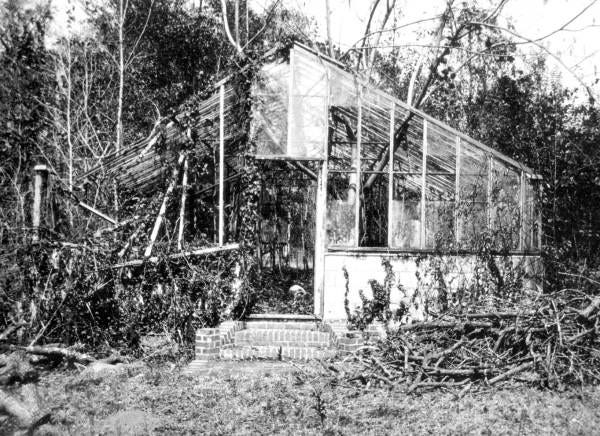
In August 2025, Typhoon №5 tore through Nghe An province in Vietnam. Farmers had done everything right — they had pruned leaves, reinforced greenhouses, bought tensioners and cables. But the winds raged through the night, tearing off netting, tilting iron frames, and flooding entire fields. At Hung Long Cooperative, more than 10,000 melon plants ready for harvest were destroyed. Estimated losses: 1 billion Vietnamese dong. One farmer watched years of savings and investment vanish overnight. “In just one night of storms, I’m left with nothing,” he said, his voice choked with emotion.
This story is not unique to Vietnam. From the typhoon-battered coastlines of East Asia to the hurricane corridors of the American Southeast and the storm-swept plains of Europe, extreme wind events are becoming more frequent and more destructive. For the global protected agriculture industry — valued at tens of billions of dollars — the question is no longer if a storm will hit, but when, and whether the greenhouse will still be standing afterward.
The Anatomy of Wind Damage: Why Greenhouses Are So Vulnerable

Greenhouse wind pressure distribution diagram (comparison of standards from various countries)
Greenhouses are uniquely susceptible to wind damage. Their lightweight construction, large exposed surfaces, and flexible covering materials create a perfect storm of vulnerability.
When Typhoon Kajiki — a Category 14 storm — struck Sanya, China, in 2025, field investigators documented the precise failure mechanisms. The primary culprits? Aging covering films that had lost their tear and wind-uplift resistance, coupled with insufficient overall structural stability and stiffness. Secondary structural elements failed first — connection bolts gave way, localized negative pressure tore through building envelopes, and wind-induced fatigue accelerated material degradation.
The physics are straightforward but devastating. Wind creates positive pressure on the windward side and suction on the leeward side. When wind finds its way inside — through a torn cover, an open vent, or a broken window — it creates a “balloon effect,” pressurizing the interior and ripping the structure apart from within. In Japan, researchers found that greenhouses with any opening in the leeward gable experience negative pressure inside, increasing the load and collapsing the roof.
The damage is compounded by scale. Studies show that wind load per unit area increases continuously with greenhouse size, with suction concentrated along the ridge and greater suction on the leeward side compared to the windward.
A World of Standards: How Different Nations Tackle the Same Problem
Different countries have developed distinct approaches to greenhouse wind design, reflecting their unique climate risks and engineering traditions.
The European Approach: Harmonization Through EN 13031–1
Europe’s greenhouse industry learned its lessons the hard way. In the late 1970s, a series of storms across the Netherlands resulted in massive insurance claims, prompting the development of NEN 3859 — likely the world’s first dedicated greenhouse construction code. Four revisions followed as structures evolved.
Today, the European standard EN 13031–1 represents the most comprehensive international framework for greenhouse design. Published in its final form in 2019, it specifies principles and requirements for mechanical resistance, stability, serviceability, and durability — regardless of material. The standard now includes new wind coefficients for multispan roofs, better definitions of roof edge zones, and calculations for wind friction in middle sections — details not found in general building codes. Wind-tunnel tests on scale models of greenhouses of different sizes informed these updates.
The standard is being implemented across the 34 CEN member countries. But the ambition goes further. Hans ‘t Hart, a structural engineer at the Dutch research organization TNO, wants EN 13031–1 to become the global norm for greenhouse projects.
The Dutch Digital Revolution: SIOM
The Netherlands has taken standardization one step further. TNO developed SIOM — a digital simulation tool that helps greenhouse builders design structures optimized for local conditions anywhere in the world. The tool holds information about local environments — wind loads, light levels, rainfall, water and energy availability — alongside an extensive database of greenhouse systems and components.
“Greenhouse technology is similar to LEGO,” says TNO business developer Egon Janssen. “You can design a greenhouse for any situation”. As more crops need to be cultivated locally and sustainably, the ability to predict in advance how a greenhouse should be arranged — balancing risk limitation with production optimization — becomes increasingly critical.
Japan: Engineering for the Worst-Case Scenario

Japan faces some of the most extreme wind conditions on Earth. In Okinawa Prefecture, 42% of gardening facilities are steel plastic houses — a direct response to potential typhoon damage. The maximum instantaneous wind speed ever recorded in Japan reached 74.1 m/s.
Japanese research has been meticulous. After Typhoon 0221 struck the Kanto region in 2002 with average wind speeds of 35 m/s, researchers analyzed seven groups of destroyed greenhouses. Their findings were sobering: some foundations were pulled out by wind speeds of 50 m/s, and the pullout strength of damaged footings was less than 30% of standard ones. Foundations buried just 10 cm deeper than current practice could withstand a 50 m/s wind. The strength of column-to-beam joints in structures without bracing was insufficient for the bending moment caused by such winds.
The Japan Greenhouse Horticulture Association (JGHA) publishes the “Standard for Structural Safety of Greenhouse,” which serves as the foundation for domestic design. Notably, research suggests that greenhouses designed to Japanese standards can be constructed relatively inexpensively while maintaining safety — a crucial consideration for widespread adoption.
One innovative Japanese concept is the “wing-shaped” greenhouse cross-section, which reduces wind loads through aerodynamic design. Another is the passive greenhouse structure capable of withstanding gusts of up to 50 m/s — well above the typical typhoon gust of 32 m/s.
The United States: A Market-Driven Approach
In the United States, greenhouse wind design draws primarily from two sources: the American Society of Civil Engineers’ ASCE-7 standard and the National Greenhouse Manufacturers Association’s (NGMA) Structural Design Manual. The basis is a wind speed map developed from National Weather Bureau data, measured at 33 feet above ground in open terrain with a 50-year recurrence probability.
Florida offers the most stringent lessons. As one of the most hurricane-prone regions in the world, Florida greenhouse producers must balance the costs of structural upgrades against the costs of storm-related damages. Recommendations include using concrete footings or continuous reinforced concrete slabs with embedded anchor bolts for permanent structures, heavy-duty galvanized steel anchors and hurricane straps, and UV-stabilized twin-wall polycarbonate glazing as the best compromise of light diffusion, insulation, and impact resistance.
The NGMA recommends greenhouse structural supports, end walls, and anchors be designed to withstand high winds, shed excessive rainfall, and support primary crop loads. But the code sets only minimum requirements — going above these standards may be worth the investment depending on risk tolerance.
China: Context-Specific Innovation

China’s GB/T-51183–2016 “Code for the Design Load of Horticultural Greenhouse Structures” provides the domestic framework. But Chinese researchers are pushing boundaries. A 2025 study designed a typhoon-resistant multi-span greenhouse with an elevatable roof for tropical regions like Hainan. The core innovation: a mechatronic steel cable system that achieves synchronized elevation of single-span roof surfaces.
During daily operations, the roof is elevated to facilitate mechanized field work. During typhoons, the roof is lowered to the ground, reducing wind load impact. The structural calculations show that under elevated conditions (basic wind pressure 0.45 kN/m²) and lowered conditions (1.30 kN/m²), all indicators meet code requirements. Remarkably, steel consumption for the standard single-span frame is only 67.38 kg — a 35% reduction compared to 103.58 kg for an ordinary circular-arch greenhouse.
The Rest of the World: A Patchwork of Approaches
Other nations have developed their own standards. Brazil has NBR 16032. Canada has the National Farm Building Code. India follows IS 14462. Mexico uses NMX-E-255-CNCP-2013. South Korea is currently revising its greenhouse design standard to ensure structural safety in response to strong winds.
The variation matters. A comparative study found that under identical strong wind conditions, vulnerabilities were highlighted for pitched-roof greenhouses evaluated with Korean and U.S. standards, while vaulted-roof greenhouses showed vulnerabilities with Chinese, U.S., and EU standards. Another analysis found that wind pressure zone definitions varied dramatically between standards — with deviations ranging from 2% to over 500% depending on the zone and standard.
Emerging Technologies and Future Directions
Aerodynamic Optimization
Researchers are increasingly turning to aerodynamics to reduce wind loads rather than simply resisting them. A 2026 study developed a three-dimensional unsteady wind-temperature coupling model to optimize greenhouse roof structures, reducing the maximum wind pressure coefficient from 3.61 to 1.60 while maintaining high ventilation efficiency. The wing-shaped greenhouse cross-section concept from Japan represents a similar approach.
Computational Fluid Dynamics
CFD simulation has become an indispensable tool. Studies now use CFD to scrutinize diverse greenhouse structures, evaluate wind forces over plastic covers, and conduct fluid-structure interaction analysis. These simulations reveal that wind load coefficients applicable to greenhouse groups in valleys differ significantly from isolated structures.
Smart Systems and Automation
The future of greenhouse wind protection lies in intelligence. The elevatable roof concept from China is one example. Other innovations include automated control systems that allow rapid adjustments to changes in microclimate, and decision-support tools like SIOM that enable faster, more accurate greenhouse design for various climate zones.
A Call to Action: Building Resilience in a Stormier World
The evidence is clear: extreme wind events are becoming more frequent and more destructive. For the global greenhouse industry, this is not a future problem — it is a present crisis.
Several priorities emerge from this global survey:
Harmonize standards. The wide variation in national standards creates confusion and inconsistency. An international greenhouse wind design standard — an ambition noted in research as early as 1990 — would provide a common baseline for safety.
Invest in research. Wind-tunnel testing, CFD simulation, and field investigations after storms are essential for understanding failure mechanisms and validating design approaches. The EN 13031–1 revisions, informed by wind-tunnel tests on scale models, demonstrate the value of such investment.
Share knowledge globally. The Dutch SIOM tool, which helps design greenhouses for local conditions anywhere in the world, offers a model for knowledge transfer. What works in Okinawa may inform design in Florida; what fails in Hainan teaches lessons for Vietnam.
Go beyond minimum standards. Building codes set minimum requirements. In high-wind regions, going above these standards — through stronger connections, deeper foundations, and more robust materials — is often worth the investment.
Prioritize maintenance. The single most common cause of greenhouse wind failure is not design deficiency but material degradation. Aging films, corroded connections, and loose anchors turn otherwise sound structures into liabilities.
Conclusion
The greenhouse is one of humanity’s most elegant agricultural inventions — a structure that extends growing seasons, protects crops, and enables year-round food production. But as the climate becomes more volatile, these structures must evolve.
The engineers and researchers profiled in this report — from the Dutch standard-setters to the Japanese typhoon investigators, from the American hurricane planners to the Chinese innovators — are writing the next chapter of this evolution. Their work is not just about steel and plastic, wind tunnels and simulation software. It is about something more fundamental: ensuring that the farmers who feed us are not left with nothing after a single night of storms.
The winds are getting stronger. Our greenhouses must get smarter. The clock is ticking.
About the author: This report draws on international research, government reports, and academic studies from across the globe, synthesizing lessons from the world’s most wind-exposed regions into a practical framework for building climate-resilient protected agriculture.
메타데이터
- post_id
- 00fe28d8a8cf
- slug
- how-greenhouses-fight-back-against-extreme-winds-a-global-perspective-00fe28d8a8cf
- url
- https://medium.com/@ellama_36157/how-greenhouses-fight-back-against-extreme-winds-a-global-perspective-00fe28d8a8cf
- canonical_url
- https://medium.com/@ellama_36157/how-greenhouses-fight-back-against-extreme-winds-a-global-perspective-00fe28d8a8cf
- author_url
- https://medium.com/@ellama_36157
- status
- ok
- fetched_at
- 2026-08-09 08:35:07