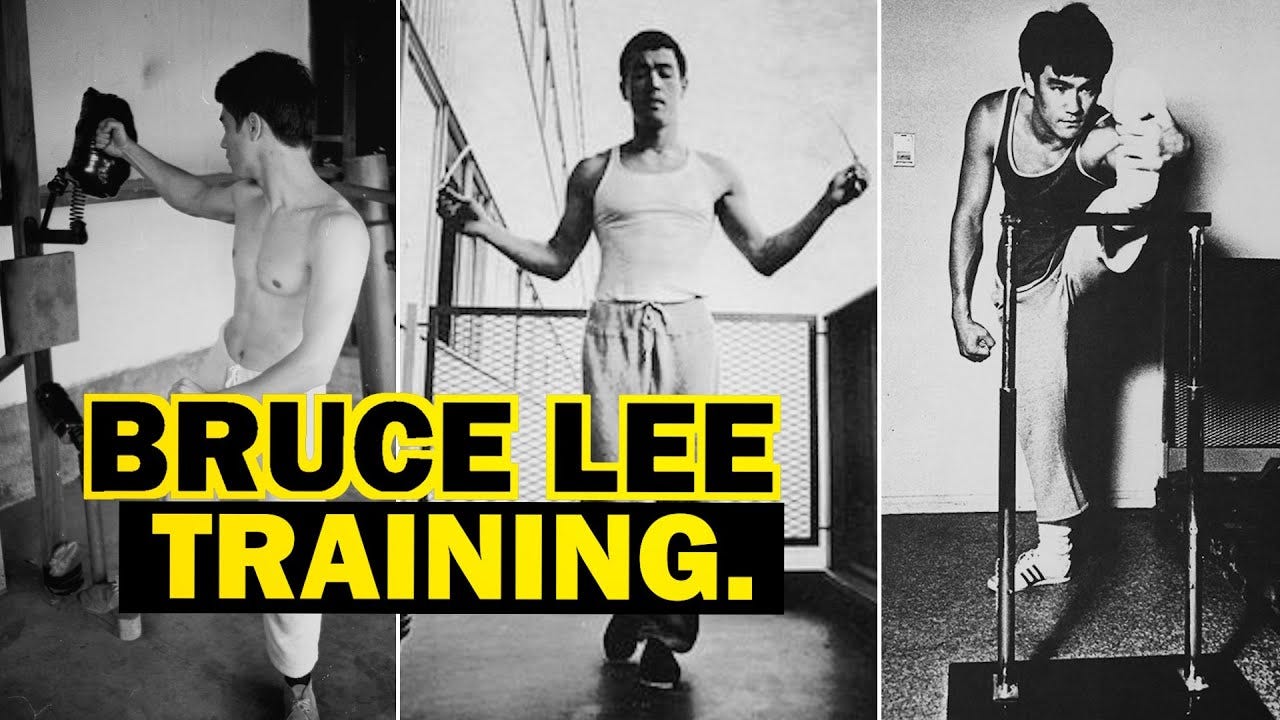
How to Train Like Bruce Lee at Home With No Equipment
Bruce Lee’s power came from three training methods most people have never tried. All three work with nothing but your bodyweight.
How to Train Like Bruce Lee at Home With No Equipment
Bruce Lee’s power came from three training methods most people have never tried. All three work with nothing but your bodyweight.
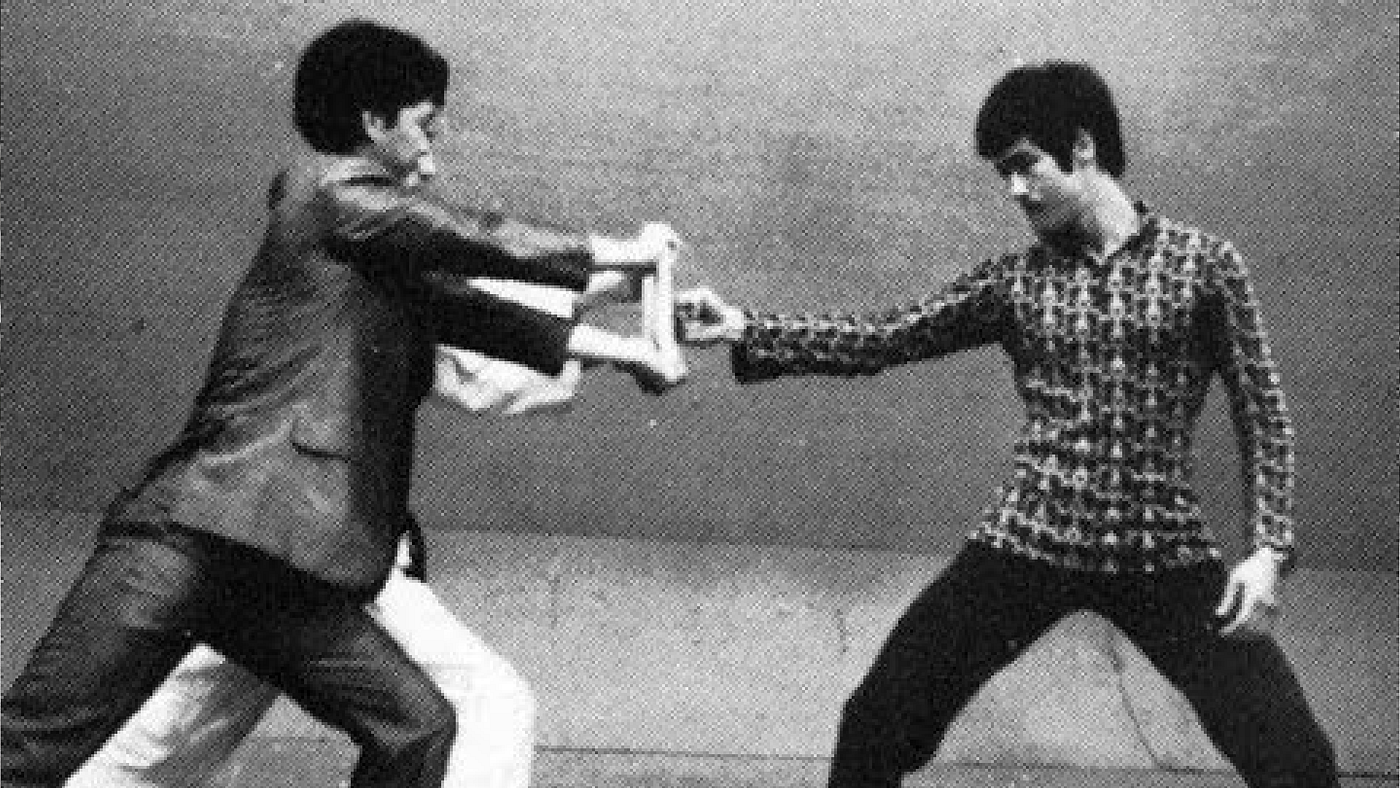
At 135 pounds, Bruce Lee could knock a man twice his size backwards with a one-inch punch. He could hold his entire body horizontal off a bench with only his shoulders touching. He did push-ups on two fingers.
And the bodybuilders — Arnold, Lou Ferrigno, the guys who outweighed him by 100 pounds — said he inspired them.
How does a 135-pound martial artist earn that kind of respect from the biggest men in the sport?
Not genetics. Not supplements. Not hours in a gym.
Method.
Bruce Lee trained differently from everyone around him, and he did it on purpose. While other martial artists avoided strength work entirely and bodybuilders trained for size, Lee built a system that optimized for one thing: functional power at low bodyweight.
The result was a physique that looked like it was carved from stone and performed even better than it looked.
Here are the three core methods behind it — and how you can start applying them today with no equipment.
1. Overcoming Isometrics — Maximum Force, Zero Movement
Most people think building strength means moving heavy things. Lee figured out you could build raw power by pushing against something that doesn’t move at all.
This is overcoming isometrics: exerting maximum effort against an immovable object. When you push as hard as you possibly can against something that won’t budge, your nervous system recruits a massive number of muscle motor units all at once. That’s the same neurological activation pattern behind lifting very heavy weight — except there’s almost no joint stress and very little muscle damage.
For Lee, this was strategic. He wanted strength without bulk. Isometrics build neural drive and force production without adding significant muscle mass. That’s why he could generate knockout power at 135 pounds while other fighters twice his size couldn’t match his output.
Lee outlined a full isometric routine in The Art of Expressing the Human Body — eight exercises, each held for six to twelve seconds at absolute maximum effort.
How to apply this at home:
You don’t need a barbell bolted to the floor. You need a wall and your own body.
Wall Push — Hands at shoulder height against a wall. Push as hard as you physically can for 6–10 seconds. You shouldn’t be comfortable. If it feels easy, you’re not pushing hard enough.
Isometric Squat Spread — Drop into a half-squat and drive your thighs outward against an imaginary resistance, as if trying to widen your stance through force. Hold 6–10 seconds.
Static Lunge Press — Lunge position, front foot driving into the floor as if trying to push through it. Hold the maximum contraction for 6–10 seconds per leg.
Palm Press — Interlock your fingers at chest height and crush your palms together as hard as possible. 6–10 seconds. You’ll feel this in your chest, shoulders, and forearms simultaneously.
Core Brace — Standing or seated, contract your entire midsection as if bracing for a punch. Not a crunch — a full 360-degree contraction around your spine. Hold 6–10 seconds.
Run these as a circuit. 3 rounds. Takes under 10 minutes and leaves your nervous system firing at a level most gym sessions never reach.
2. Speed Training — Make Light Weight Feel Heavy
Here’s something most people miss about force production: your body doesn’t distinguish between resistance and acceleration. Moving a light weight fast generates the same muscular demand as moving a heavy weight slowly.
Lee understood this before sports science had a name for it.
He took standard exercises and performed them as fast as mechanically possible while maintaining form. By compressing the same work into less time, he trained his fast-twitch muscle fibers — the ones responsible for explosive power, sprint speed, and knockout force.
This is the reason Lee moved the way he did. Every technique looked effortless because his muscles were trained to fire at maximum speed, not just maximum load.
How to apply this at home:
The key is intent. Every rep should be performed at maximum speed on the concentric (effort) phase. You’re not doing reps to get tired — you’re doing reps to get fast.
Explosive Squats — Drop into a bodyweight squat and drive up as fast as you can. The goal is speed out of the bottom, not depth or rep count.
Broad Jumps — Standing jump for maximum distance. Reset fully between reps. This isn’t cardio — it’s power training. 5 reps with full effort beats 20 sloppy ones.
Tuck Jumps — Vertical jump, knees to chest at the peak. Land soft, reset, explode again. Focus on the speed of the takeoff.
Lateral Bounds — Jump sideways from one foot to the other, covering as much distance as possible. This builds the lateral explosiveness that most bodyweight programs completely ignore.
Shadowboxing Combinations — 2–3 punch combinations at maximum speed with footwork. Not technique practice — speed training. The goal is to move your hands and feet as fast as your nervous system will allow.
Sprint Intervals — 20–30 meter sprints at absolute maximum effort. Walk back. Repeat. This was Lee’s approach to running: not long slow distance, but short violent bursts that train the same energy system as a fight.
Structure this as 3–4 rounds of 3–4 exercises, resting fully between sets. This is not a conditioning workout. It’s a power session. If you’re gasping for air, you’re resting too little and training the wrong system.
3. Isotension — The Full-Body Lock That Built the Dragon Flag
After training, Lee would do something most people skip entirely: he’d contract his entire body at once.
Not stretching. Not cooling down. Full-body tension.
This is isotension — simultaneously engaging every muscle group and holding the contraction. Bodybuilders do a version of this when they pose after a set. Lee took it further. He contracted everything: legs, core, arms, hands, back, chest — all at once, held for extended periods.
This creates something that’s hard to train any other way: integrated body tension. The ability to lock your entire body into a single rigid unit.
That’s how he did the dragon flag — lying on a bench with only his shoulders touching, body held perfectly horizontal. It’s not just core strength. It’s the ability to turn your entire body into one connected, tensed structure. Same principle behind the two-finger push-up: total body rigidity channeled through a tiny contact point.
How to apply this at home:
After your training session, stand upright and contract every muscle in your body simultaneously. Start from your feet — squeeze them into the floor. Flex your calves, quads, glutes. Brace your core. Make fists. Squeeze your arms. Tighten your back. Hold for 10–15 seconds.
Rest. Repeat 3–5 times.
It’s going to feel strange the first time. Most people have never tried to voluntarily activate every muscle at once. That’s the point. The disconnect between your brain and your muscles is exactly what this method closes.
Over weeks, you’ll notice something shift: movements that used to feel loose and inefficient start feeling tighter and more controlled. That’s the integrated tension Lee was building every day.
The Principle Behind All Three Methods
If you look at what connects isometrics, speed training, and isotension, it’s the same idea: Lee was training his nervous system, not just his muscles.
Most training programs focus on muscle size or muscle endurance. Lee focused on the signal between brain and body — how fast it fires, how many motor units it recruits, and how well the entire system works as one unit.
That’s why he was stronger than men who outweighed him by 50 pounds. His muscles weren’t bigger. His nervous system was better.
And that’s exactly the kind of training you can do anywhere, with nothing, starting today.
Where to Go From Here
These three methods are principles. If you want them built into a structured daily system — 30 days, mapped out, day by day, no thinking required — that’s what The Fighter’s Foundation is.
It takes the conditioning principles behind elite fighters (including the kind of training Lee pioneered) and lays them out in a 30-day calendar: what to do, when to do it, 30 minutes a day, zero equipment.
Day 1 is waiting whenever you are.
메타데이터
- post_id
- 00ffe6ef9b5a
- slug
- how-to-train-like-bruce-lee-at-home-with-no-equipment-00ffe6ef9b5a
- url
- https://medium.com/@takeshi.fit1/how-to-train-like-bruce-lee-at-home-with-no-equipment-00ffe6ef9b5a
- canonical_url
- https://medium.com/@takeshi.fit1/how-to-train-like-bruce-lee-at-home-with-no-equipment-00ffe6ef9b5a
- author_url
- https://medium.com/@takeshi.fit1
- status
- ok
- fetched_at
- 2026-06-22 12:55:45