Beyond ‘La Ropa Sucia’: Why Mental Health Feels Like Betrayal in Our Communities
is a phrase whispered across kitchens, living rooms, and backyard gatherings in Latinx communities. It emerges when someone dares to speak…
Beyond ‘La Ropa Sucia’: Why Mental Health Feels Like Betrayal in Our Communities
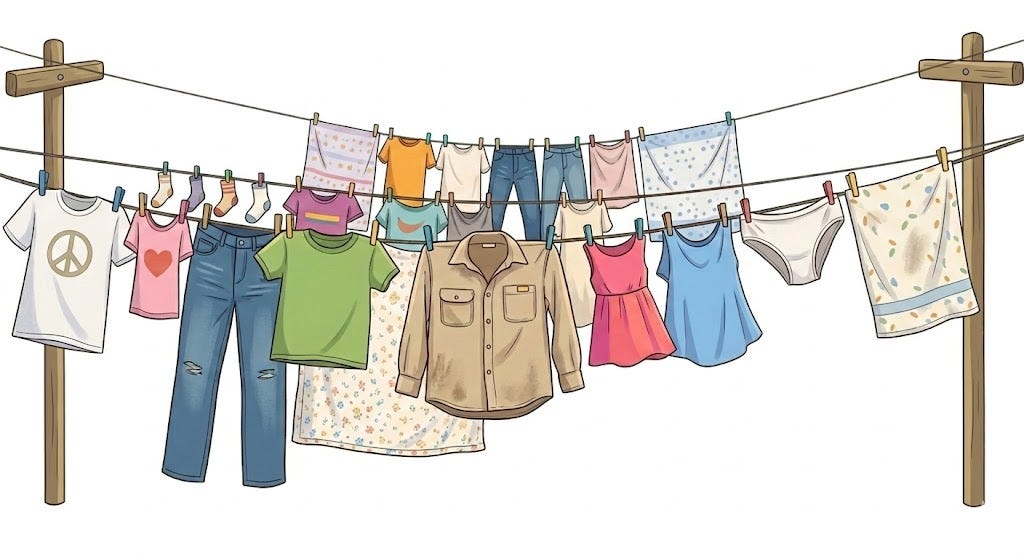
is a phrase whispered across kitchens, living rooms, and backyard gatherings in Latinx communities. It emerges when someone dares to speak of pain, of struggle, of the weight they carry alone. The response lands like a verdict: “La ropa sucia se lava en casa.” We don’t air our dirty laundry in public.
I have sat across from clients who described the sensation of seeking therapy as akin to betrayal. They spoke of entering a therapist’s office and feeling filial disapproval, the weight of their mother’s unspoken fear, the collective gaze of a community that taught them silence was love and suffering was loyalty.
This is not resistance to healing. This is something far more complex. It is the inheritance of survival.
The Protective Origins of Silence
To understand why mental health care can feel like betrayal in Latinx communities, we must first understand what “la ropa sucia” actually protected. This was not cruelty passed down through generations for no reason. This was strategy.
Historian and Chicana scholar Dr. Vicki L. Ruiz documents how Mexican American communities in the early twentieth century developed tight-knit social networks as a direct response to systemic exclusion, economic exploitation, and racial violence (Ruiz, 1998). When external systems offered no protection, communities became the protection. Family reputation was not vanity — it was currency. In communities navigating immigration enforcement, labor exploitation, and daily racism, appearing unified and appearing “respectable” could mean the difference between employment and hunger, between deportation and staying, between safety and harm.
Psychologist Dr. Lillian Comas-Díaz, in her foundational work on ethnocultural transference and cultural betrayal, explains that for many Latinx individuals, “the family constitutes the primary source of identity, protection, and support” (Comas-Díaz, 2006, p. 438). When an outsider — and particularly an institution — enters that sacred space, it can feel not like an intrusion but like a rupture in the very fabric of survival.
The message encoded in “la ropa sucia” was never simply “don’t share.” It was “we survive together, and anything that threatens our cohesion threatens our survival.”
Therapy as Cultural Dislocation
Decolonizing therapy founder Dr. Jennifer Mullan argues that Western mental health models are built upon “individualism, capitalism, and colonial values that pathologize communal ways of being” (Mullan, 2023, p. 15). The very structure of therapy — private, individual, focused on the self’s internal experience — can feel alien to those raised in collectivist cultures where identity is formed in relationship, not in isolation.
Dr. Hector Y. Adames and Dr. Nayeli Y. Chavez-Dueñas, in their work on racial trauma and healing among Latinx communities, describe the experience of “cultural incongruence” in mental health settings. They write that “many traditional therapeutic approaches emphasize independence and self-actualization in ways that conflict with Latino cultural values of interdependence and familismo” (Adames & Chavez-Dueñas, 2017, p. 89).
This is the betrayal. To heal in the way therapy asks — to speak of family wounds, to name intergenerational patterns, to set boundaries with loved ones — can feel like turning against the very people who taught you how to survive. I have witnessed clients describe the experience of therapy as “telling on” their parents, “exposing” their community, “breaking” the family code. These are not inaccurate descriptions. In a real sense, therapy does ask us to examine what we were taught never to examine, to speak what we were taught never to speak.
Thus, when a Latinx person enters therapy, it carries more significance than simply entering a room with a professional, it may sometimes feel like crossing a cultural border.
The Weight of Vicarious and Intergenerational Trauma
Research on intergenerational trauma among Latinx populations reveals that historical wounds — colonial violence, forced displacement, genocide of Indigenous ancestors, enslavement of African ancestors — do not simply end. They transmit. Dr. Maria Yellow Horse Brave Heart, who developed the concept of historical trauma among Indigenous peoples, documented how unresolved trauma impacts descendants generations later through epigenetic changes, family dynamics, and community patterns (Brave Heart, 2003). Subsequent research has confirmed similar patterns in Latinx communities shaped by colonial violence and displacement (Estrada, 2009).
When a client begins to unpack their family’s silence, their parent’s rage, their grandmother’s anxiety, they are not just exploring personal history. They are touching wounds that may be centuries old. The stakes of this examination are higher when we understand what Latinx communities carry.
And here is the deeper betrayal: The family that taught silence may have been trying to protect them from wounds they themselves could not name. The grandmother who insisted on “la ropa sucia se lava en casa” may have been carrying the memory of a village destroyed, a language stolen, a people scattered. Her silence was not absence of pain. It was a container for pain too large to hold.
Dr. Comas-Díaz writes that “many Latinos experience cultural betrayal when they attempt to address ethnocultural trauma within systems that do not recognize or validate their experiences” (Comas-Díaz, 2016, p. 628). When therapy fails to understand the sacredness of family loyalty, when it pathologizes enmeshment without understanding its origins, when it asks for separation without offering integration, it repeats the colonial pattern of demanding we abandon ourselves to be saved.
Toward a Decolonized Healing
Dr. Mullan writes that decolonized therapy “does not ask people to choose between their communities and their healing” (Mullan, 2023, p. 42). Instead, it invites healing that honors the wisdom embedded in survival strategies while creating space for new ways of being.
For Latinx communities, this might mean:
- Therapy that understands familismo not as pathology but as resource
- Practitioners who distinguish between protective silence and oppressive silencing
- Healing models that incorporate community, not just the individual
- Language that honors the sacredness of family while acknowledging its wounds
The path forward is not to discard “la ropa sucia.” It is to examine the laundry together. To ask: Who taught us this rule? What were they protecting us from? What did they carry that we never knew? And how do we now, together, decide what to wash, what to keep, and what to finally let go.
For in the end, the betrayal was never in the speaking. It was in the belief that we had to speak alone.
References
Adames, H. Y., & Chavez-Dueñas, N. Y. (2017). Cultural foundations and interventions in Latino/a mental health: History, theory and within group differences. Routledge.
Brave Heart, M. Y. H. (2003). The historical trauma response among natives and its relationship with substance abuse: A Lakota illustration. Journal of Psychoactive Drugs, 35(1), 7–13.
Comas-Díaz, L. (2006). Latino healing: The integration of ethnic psychology into psychotherapy. Psychotherapy: Theory, Research, Practice, Training, 43(4), 436–453.
Comas-Díaz, L. (2016). Racial trauma recovery: A race-informed therapeutic approach to racial wounds. In A. N. Alvarez, C. T. H. Liang, & H. A. Neville (Eds.), The cost of racism for people of color: Contextualizing experiences of discrimination (pp. 249–272). American Psychological Association.
Estrada, A. L. (2009). Mexican Americans and historical trauma theory: A theoretical perspective. Journal of Ethnicity in Substance Abuse, 8(3), 330–340.
Mullan, J. (2023). Decolonizing therapy: Oppression, historical trauma, and politicizing your practice. W. W. Norton & Company.
Ruiz, V. L. (1998). From out of the shadows: Mexican women in twentieth-century America. Oxford University Press.
메타데이터
- post_id
- 011cbbcf0b73
- slug
- beyond-la-ropa-sucia-why-mental-health-feels-like-betrayal-in-our-communities-011cbbcf0b73
- url
- https://medium.com/@irasemagarcia/beyond-la-ropa-sucia-why-mental-health-feels-like-betrayal-in-our-communities-011cbbcf0b73
- canonical_url
- https://medium.com/@irasemagarcia/beyond-la-ropa-sucia-why-mental-health-feels-like-betrayal-in-our-communities-011cbbcf0b73
- author_url
- https://medium.com/@irasemagarcia
- status
- ok
- fetched_at
- 2026-06-09 15:37:30