One of Traditional Shanghai Breakfasts: The Story of Glutinous rice
Glutinous rice(Ci fan gao/ Zīfàn'gāo, simplified Chinese: 粢饭糕; traditional Chinese: 簢飯糕), when outsiders discuss Shanghai’s local flavors…
One of Traditional Shanghai Breakfasts: The Story of Glutinous rice
Glutinous rice(Ci fan gao/ Zīfàn'gāo, simplified Chinese: 粢饭糕; traditional Chinese: 簢飯糕), when outsiders discuss Shanghai’s local flavors, is a niche item.
Outsiders love xiaolongbao. Northern hipsters rave about the sweet broth in soup dumplings, surrendering their nostalgia for the sake of a “Shanghainese” identity.
They think the current obsession with brunch isn’t enough. They still put effort into shengjian. They know every detail of the “muddy water vs. clear water” debate by heart…
Digression.
Ci fan gao is a block of something wrapped in old newspaper—hot, hard, and greasy. Held in hand, your fingers know it, but your mouth hasn’t yet.
Ci, ci. Old signs mostly read “粢饭糕,” but later, people got casual, and “糍饭糕” also worked. Radical for rice, radical for silk—at the end of the day, it’s still rice. Many things in Shanghai are like this. The names change back and forth, but inside, it’s still that bit of rice, that bit of oil, that bit of overnight air.
The character “粢” is ancient. Found in rituals. By the time it reached Shanghai’s alleyways, it became breakfast—grains once offered to ancestors, now offered to commuters. At 7:30 in the morning, the stomach matters more than the ancestors.
The method isn’t complicated. Press the rice firm, let it cool, cut into blocks, drop into oil. Then the sound comes.
Sizzle.
The trick is a little MSG in the rice…
Even without sauce, the rice becomes layered in complexity,
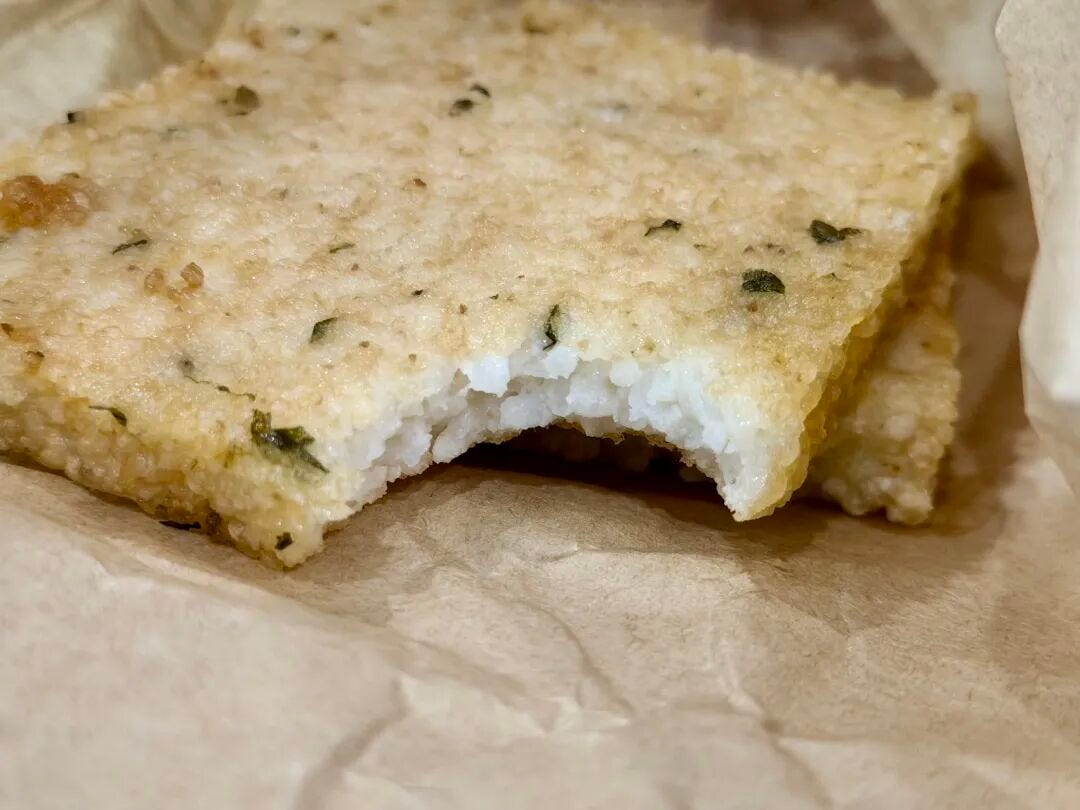
The grains, originally each minding their own business, now squeeze together like alleyway houses. Sticking close, pressing tight, fried in oil. Shanghainese love it. Hard on the outside, soft on the inside—just like life.
Among the “Four Heavenly Kings”—da bing, you tiao, soy milk, and ci fan—ci fan gao didn’t make the official list. It’s like a distant relative.
It stands alone, square, like a folded banknote, like a page torn from a notebook, like an old Shanghainese face—flat, tight, silent.
Writing about Shanghai breakfast easily stirs emotions. Too many emotions, and the food spoils.
Ci fan gao isn’t for big emotions. It’s not something you cry over; it’s something you fry. Hot oil is more real than tears. Tears fall—salty. Oil falls—fragrant. Fragrance is more useful than salt.
Some say it’s made from leftover rice. “Leftover” is an ugly word. Shanghainese don’t openly judge leftovers. Everything leftover gets a metaphor: congee is “a rest after feasting”; ci fan gao never mentions “reuse”—at best, it’s a stubborn bit of “food IQ” against the vulgar talk of the Four Heavenly Kings.
Of course, “leftover,” said another way, is “thrifty.” Thrift is a virtue… every Shanghai man should have it.
The most important part of ci fan gao is the edge. The middle is soft, the edge is crispy. The eater bites the edge first. Life is the same—you first hit the edges. How a person’s heart is, don’t rush; look at the boundaries first.
Shanghainese have clear boundaries. You be you, I be me. Once you’re familiar, the warmth comes from inside. First bite, crunch. Second bite, you know if the rice grains are any good.
At the alleyway entrance, the breakfast stall, the black oil pot, the shiny tongs, the thin paper bag, the oil stain slowly seeping through. Now, when people talk about it, it’s all about “the smell of life.” But back then, no one talked about that—they only talked about fast, hot, crispy, and less oily.
“Less oily”—that phrase is strange. Buying fried rice cake, yet asking for less oil. That’s Shanghainese for you: wanting fried food, yet wanting it clean. Wanting bustle, yet wanting quiet. Wanting affection, yet not wanting trouble. Wanting old times, yet wanting a flush toilet.
Now, shops have ci fan gao. The name changed, cut very small, some with English names. Served as an appetizer…
Everything about Shanghai’s food fears later generations romanticizing it. The alleyways are torn down, shikumen become tourist spots, the tiger stoves become exhibits—I’m afraid ci fan gao will be turned into tapas by those Anhui-born female Shanghai hipsters.
So-called past events, back then, were just ordinary. Only after many years do they become memories. People are always like this: they don’t know when they’re eating, and after digestion, they start writing essays.
One hand holding the paper bag, the other fumbling for change, mouth too burned to speak.

And in those moments when you can’t speak, you’re most like Shanghai.
메타데이터
- post_id
- 0152c2e06f38
- slug
- one-of-traditional-shanghai-breakfasts-the-story-of-glutinous-rice-0152c2e06f38
- url
- https://medium.com/@travel-shanghai/one-of-traditional-shanghai-breakfasts-the-story-of-glutinous-rice-0152c2e06f38
- canonical_url
- https://medium.com/@travel-shanghai/one-of-traditional-shanghai-breakfasts-the-story-of-glutinous-rice-0152c2e06f38
- author_url
- https://medium.com/@travel-shanghai
- status
- ok
- fetched_at
- 2026-06-15 22:55:51