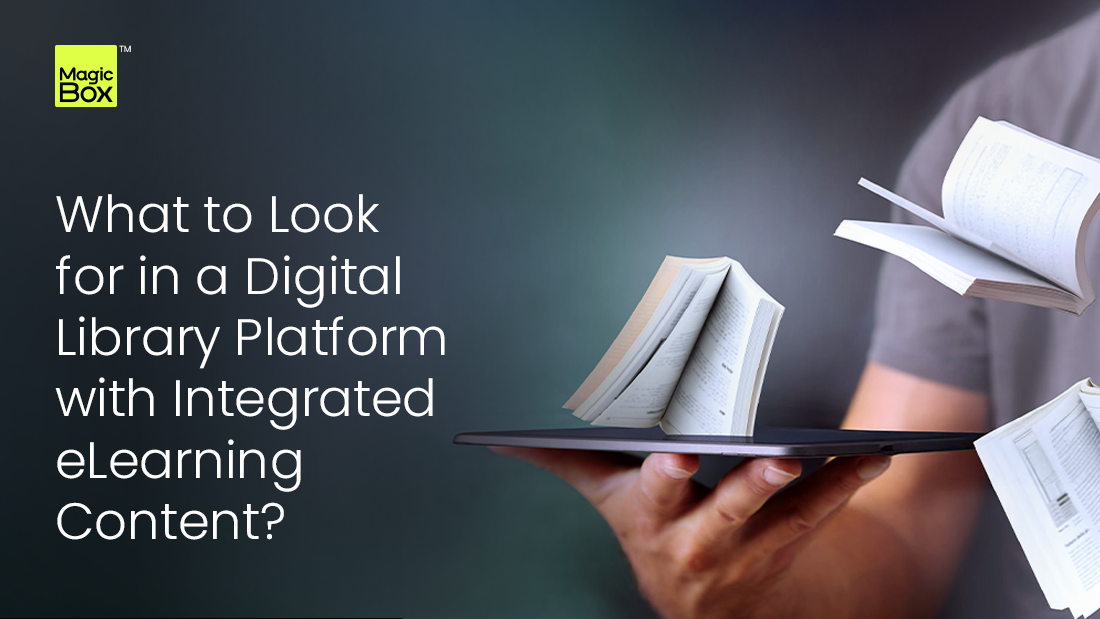
What to Look for in a Digital Library Platform with Integrated eLearning Content?
Imagine a student opening a single platform and finding everything they need to learn, practice, and grow, textbooks, interactive videos…
What to Look for in a Digital Library Platform with Integrated eLearning Content?
Imagine a student opening a single platform and finding everything they need to learn, practice, and grow, textbooks, interactive videos, skill-building courses, and even mock tests. That’s the promise of a modern digital library. But with so many options out there, how do you know which platform is right for your institution or organization?
Choosing a digital library platform isn’t just about having a place to store eBooks. It’s about creating an ecosystem where learning materials, assessments, and user experiences converge seamlessly. If you’re exploring a platform with integrated eLearning content, here are the key things to look for:
1. A Unified Learning Hub
A great digital library should feel like a single, cohesive environment, not a patchwork of tools. Learners shouldn’t have to jump between multiple apps for reading eBooks, watching videos, or taking quizzes. Look for platforms that bring all these experiences like content access, assessments, skill courses, and analytics together under one roof.
A unified hub means less confusion, less time lost, and more meaningful engagement. For administrators and educators, it simplifies content management, reduces duplication, and makes tracking learner progress far easier.
2. Diverse Content Support
Today’s learners expect variety. A platform limited to PDFs won’t cut it anymore. Make sure the solution supports multiple content types like interactive eBooks, concept videos, SCORM-based modules, audio resources, and question banks. Even better, check if it allows you to host your own content alongside third-party resources.
This diversity doesn’t just enrich the learning experience; it also gives institutions the flexibility to tailor programs to different learners whether they’re preparing for exams, upskilling for careers, or exploring new interests.
3. Seamless eLearning Integration
A digital library with integrated eLearning content is more than a repository; it’s a learning platform. Look for built-in capabilities such as:
- Course management tools (create and manage courses, modules, and lessons)
- Mock tests and quizzes (with instant feedback and analytics)
- Progress tracking (so learners can see their journey and educators can intervene early)
Integration should feel invisible. Students shouldn’t know where “library” ends and “learning management” begins. It should all just work together.
4. Secure Content Delivery and DRM
Content security is non-negotiable. If you’re providing premium resources especially from multiple publishers you need a robust Digital Rights Management (DRM) system. This ensures your eBooks, videos, and assessments are protected from unauthorized sharing or piracy.
Look for DRM that still respects user experience. Overly restrictive systems frustrate learners and educators alike. The right platform strikes a balance strong security with smooth, device-agnostic access.
5. An Engaging Reading and Learning Experience
The best platforms don’t just deliver content; they elevate how learners interact with it. Features like offline access, annotation, highlighting, bookmarking, and text-to-speech can transform passive reading into active learning.
A built-in eReader or player optimized for educational content (not just leisure reading) is a major plus. The smoother the experience, the more likely students are to engage deeply with the material.
6. Mobile-First Design
Your learners are on the move. Whether it’s a school student on a bus or a professional upskilling between shifts, mobile access is no longer optional. Choose a platform that offers a dedicated mobile app or at least a highly responsive web interface.
Beyond just access, check if the mobile experience mirrors the web platform. Can learners download resources for offline use, take quizzes, or track their progress on the go? That’s the mark of a truly learner-centric system.
7. Analytics and Insights
Data is the hidden superpower of digital learning. A strong platform should provide analytics at multiple levels:
- Learner-level (engagement, completion, performance)
- Content-level (which eBooks or videos are used most)
- Assessment-level (mock test scores, question analysis)
These insights help educators personalize interventions, improve content, and demonstrate ROI to stakeholders. Without analytics, you’re flying blind.
8. Scalability and Flexibility
Educational needs evolve quickly. Today you might serve 1,000 learners; tomorrow it could be 50,000. Make sure the platform can scale seamlessly without breaking performance or budgets.
Equally important is flexibility, support for multiple languages, integration with your existing LMS or SIS, and the ability to customize branding or workflows. A rigid system will slow you down just when you need to move fast.
9. Ease of Administration
Behind every digital library platform is a team of educators or administrators managing content, enrollments, and reporting. Look for platforms with intuitive dashboards, bulk upload options, and automation tools to minimize manual work. A system that’s hard to manage internally will erode its benefits externally.
10. Support and Roadmap
Finally, don’t overlook the human side. Even the most feature-rich platform can fall flat without responsive support and a clear product roadmap. Ask about onboarding assistance, training, and how often the platform releases updates or new features.
A partner-minded provider one invested in your long-term success is worth far more than a vendor who just sells software.
Bringing It All Together
A digital library platform with integrated eLearning content can transform how your learners access and engage with knowledge. But not all platforms are created equal. By focusing on the essentials, unified experiences, diverse content support, seamless integration, secure delivery, mobile-first design, and actionable analytics, you’ll be well on your way to selecting a solution that truly empowers your learners.
In today’s competitive landscape, institutions and organizations that choose wisely don’t just digitize their libraries, they create dynamic learning ecosystems that prepare people for the future.
메타데이터
- post_id
- 0163c4100018
- slug
- what-to-look-for-in-a-digital-library-platform-with-integrated-elearning-content-0163c4100018
- url
- https://medium.com/@magicboxlearningplatform/what-to-look-for-in-a-digital-library-platform-with-integrated-elearning-content-0163c4100018
- canonical_url
- https://medium.com/@magicboxlearningplatform/what-to-look-for-in-a-digital-library-platform-with-integrated-elearning-content-0163c4100018
- author_url
- https://medium.com/@magicboxlearningplatform
- status
- ok
- fetched_at
- 2026-07-22 09:32:34