Why Unused Data Is Healthcare’s Hidden Cost — and How Apixmed Turns It Into Action
In most healthcare systems, electronic health records (EHRs) store data — but rarely activate it. Large volumes of laboratory, clinical…
Why Unused Data Is Healthcare’s Hidden Cost — and How Apixmed Turns It Into Action
In most healthcare systems, electronic health records (EHRs) store data — but rarely activate it. Large volumes of laboratory, clinical, and genomic data remain static, unlinked, and underused.
This creates hidden costs: duplicated validation, slower decision-making, and higher manual workload. For hospitals and laboratories, it means longer turnaround times and operational inefficiency.
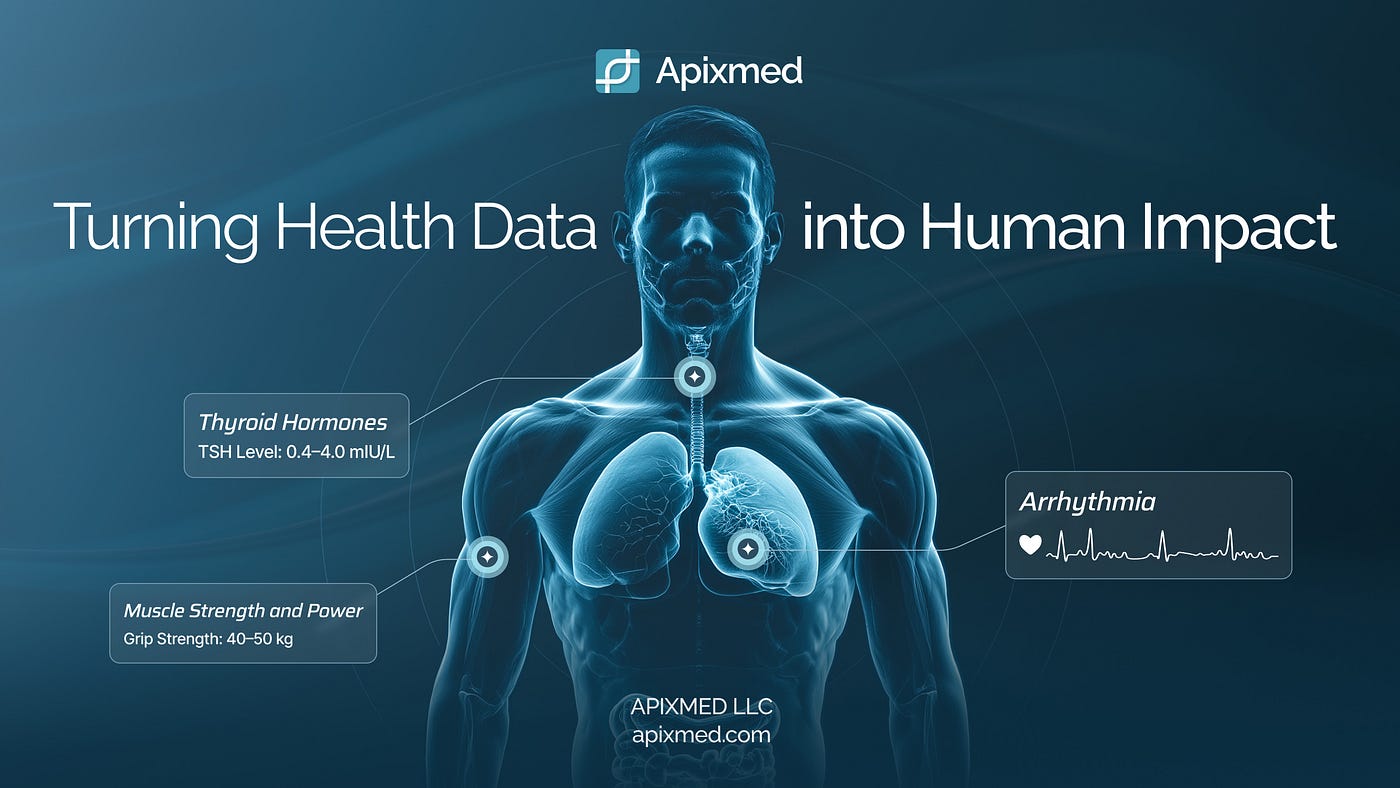
Behind every dataset is a person — a patient waiting for clarity, a clinician needing time for care, a team seeking reliable insight. Apixmed turns static data into human impact, enabling faster, evidence-based decisions that improve both outcomes and experience.
Why EHRs Don’t Deliver True Efficiency
Traditional EHR systems were built for storage, not interpretation. They record data but don’t transform it into understanding. Without interoperability standards such as HL7® FHIR®, LOINC, and SNOMED CT, information remains fragmented and difficult to share.
Interpretation still depends on manual work from clinicians and lab specialists. The gap between data collection and action creates inefficiencies that directly affect patient experience, clinician workload, and business performance.
Most healthcare organisations still rely on human-driven validation of test results, which delays care coordination and increases costs. Data often remain siloed, unstructured, or inconsistent. The result is a long delay between data generation and clinical action — an invisible cost that slows the entire care process.
Automation That Turns Data Into Decisions
Apixmed bridges this gap through automation, ensuring that data become a trusted driver of decisions, not a passive record of the past.
The platform integrates medical, laboratory, and genomic data into one analytical flow, powered by AI-assisted, rule-based algorithms aligned with CPIC, DPWG, EMA, and FDA guidelines.
Unlike uncontrolled neural networks, Apixmed’s system is transparent: every recommendation is traceable and reproducible, ensuring full clinical accountability.
Workflow example:
- Integrate: collect EHR, lab, and genomic data through HL7® FHIR® APIs.
- Interpret: apply evidence-based logic to generate structured, actionable results.
- Deliver: provide insights instantly through API or white-label portal.
This automation reduces interpretation time by up to 60 percent, freeing clinicians to focus on people — not paperwork.
Four Pillars of Trust and Efficiency
For healthcare organisations, automation is not only about speed — it’s about building systems that are safer, more efficient, and easier to trust.
In Apixmed’s architecture, this translates into four key pillars:
- Efficiency — automated workflows enable faster decision-making and fewer human errors
- Cost optimisation — reduced manual interpretation effort without compromising precision
- Interoperability — full compliance with HL7® FHIR®, LOINC, and SNOMED CT ensures seamless integration with existing EHR/LIS infrastructures
- Security — GDPR / HIPAA-ready, ISO 15189 and ISO 27001 aligned architecture guarantees secure and traceable data management.
By turning unstructured data into validated, standardised information, Apixmed helps clinicians make timely, confident decisions — and patients receive care that is both safer and more personal.
From Static Records to Actionable Insights
In most laboratories, valuable genomic and medical data are stored but not translated into knowledge that patients and clinicians can use. Apixmed transforms that information into structured, interpretable reports that support clinical reasoning and patient understanding.
Through automated parsing and rule-based logic, the platform generates professional and patient-friendly summaries that enable faster, data-driven action — without replacing medical expertise. By turning complexity into clarity, Apixmed helps clinicians communicate better, patients understand faster, and organisations deliver care that feels personal — even at scale.
This approach is already transforming how laboratories work. For example, a genetic testing provider integrated Apixmed’s pharmacogenomic (PGx) module for drug–gene interaction analysis. Instead of manually cross-referencing CPIC and FDA guidelines, the platform now automatically interprets genetic variants and generates recommendations. The implementation delivered consistent quality, traceability, and up to 60 percent faster report generation. Built on CPIC and FDA pharmacogenomic standards, the Apixmed PGx module ensures clinically validated interpretation logic.
Key Takeaways:
- Up to 80% of health data in EHRs remain unused — Apixmed activates it
- Automated interpretation turns complexity into real-time insights
- Standards-based interoperability enables secure, seamless integration
- Evidence-based logic strengthens trust and compliance
- Insight-driven efficiency creates measurable clinical and business value.
From Data to Action
Static data costs time. Smart data drives care.
With automation, interoperability, and compliance at its core, Apixmed turns stored information into actionable intelligence — enabling faster, safer, and more connected healthcare.
Data should serve people, not systems. We build technology that transforms information into understanding — and understanding into action.
메타데이터
- post_id
- 0196c1e5aafd
- slug
- why-unused-data-is-healthcares-hidden-cost-and-how-apixmed-turns-it-into-action-0196c1e5aafd
- url
- https://medium.com/@apixmed/why-unused-data-is-healthcares-hidden-cost-and-how-apixmed-turns-it-into-action-0196c1e5aafd
- canonical_url
- https://medium.com/@apixmed/why-unused-data-is-healthcares-hidden-cost-and-how-apixmed-turns-it-into-action-0196c1e5aafd
- author_url
- https://medium.com/@apixmed
- status
- ok
- fetched_at
- 2026-06-12 18:14:10