Cape Verde’s Maiden World Cup: Football, Tourism and Pride on the Biggest Stage
Cape Verde became the smallest country by land area and the second-least-populated nation to qualify for a World Cup in October 2025.
Cape Verde’s Maiden World Cup: Football, Tourism and Pride on the Biggest Stage
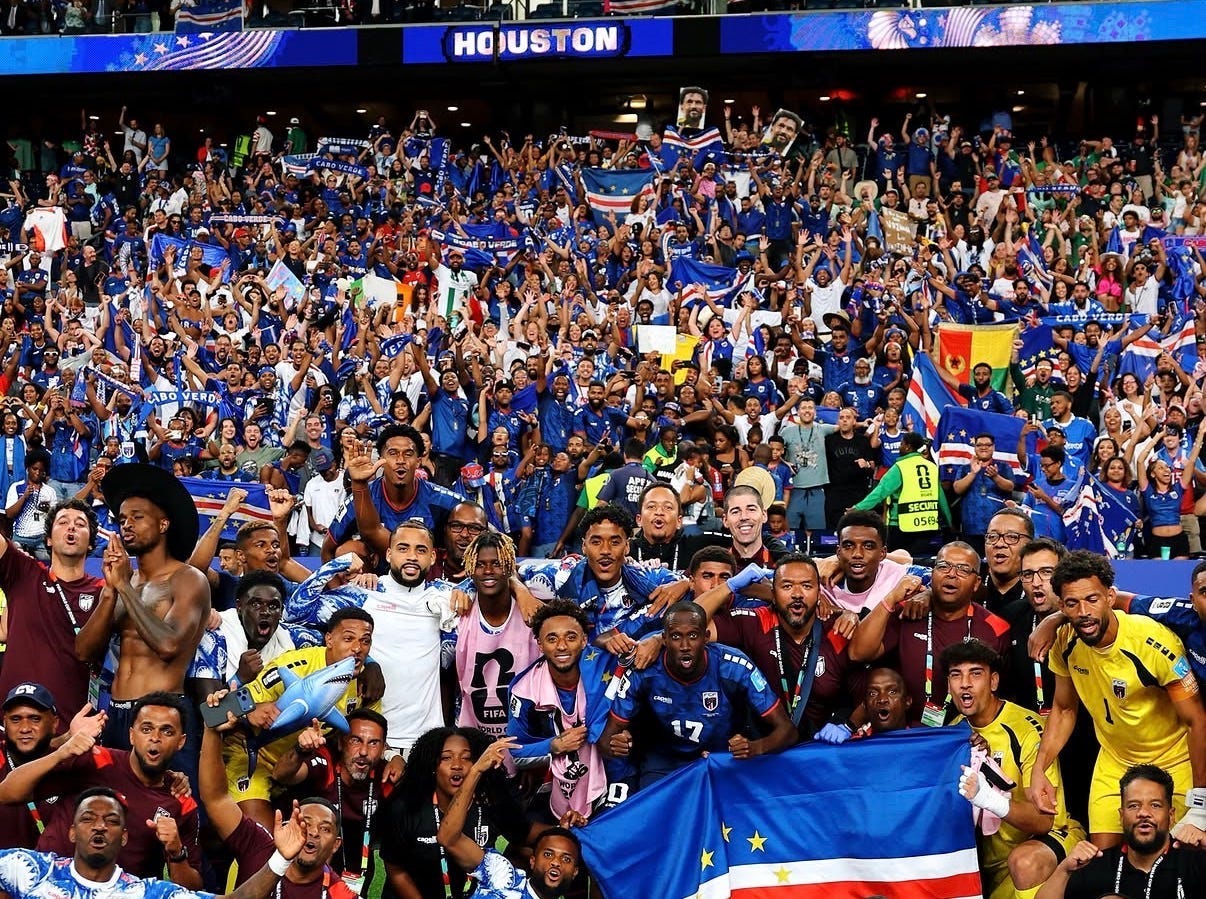
Despite elimination, Cape Verde players and fans celebrate their World Cup debut performance. Credit: @versus / Instagram
Cape Verde became the smallest country by land area and the second-least-populated nation to qualify for a World Cup in October 2025.
Cape Verde has never been an established name in the footballing world, having only qualified for their first African Cup of Nations in 2013.
Fast forward to this summer, and they have cemented themselves as the smallest-ever nation to qualify for the World Cup knockout stages, after an unbeaten group phase no less.
The island, whose population only sits at around 500,000, was certainly a beneficiary of the extension of the World Cup finals from the historical standard of 32 nations to 48.
During their debut on the world’s biggest sporting stage, Cape Verde held the eventual champions Spain to a 0–0 draw in the group stage, but were narrowly knocked out by fellow finalists, the defending champions Argentina.
Yet, Cape Verde’s World Cup story goes beyond what happened on the pitch.
The small collection of islands has announced themselves to the world and gained millions of new admirers and potential holidaymakers.
Emotional and Social Impact of the World Cup
As the prospect of supporting the Cape Verde National Team in person required huge financial sacrifice, the vast majority of the celebration and support came from home.
Due to measures taken by the Department of State, all visa issuances to nationals of countries, including Cape Verde, whose immigrants have a high rate of collecting public assistance, were paused.
Therefore, effective January 21st 2026, Cape Verdean nationals found otherwise eligible for a B1/B2 visa must post a bond of up to $15,000.
A figure that would challenge the depth of most pockets in the Western world, all for the sake of attending the World Cup.
Their maiden World Cup appearance, however, was a deeply emotional, unifying, and ‘bigger than football’ moment to be thoroughly enjoyed as a community back home.

Street party in Cape Verde as they celebrate making it past the group phase. Credit: @hotelmirabela / Instagram
Ivanilson Andrade, 36, of Cape Verde’s Sal Island, said, “It was an amazing experience for everybody. A lot of Cape Verdeans came to the streets to watch the games; it went beyond the football.”
Despite not being the biggest fan of football, Andrade believed that the atmosphere and the buzz of the World Cup felt different.
“Since the first game, everybody comes out giving all the support for the team, and it was magical; it’s hard to explain through words,” he said.
Socially, it also brought Cape Verde closer to those who no longer live in the islands, mainly in the United States and Europe.
The Cape Verdean diaspora represents those living outside of their native land, all while maintaining a shared memory and love for their homeland and its culture.
According to the International Organisation for Migration, the Cape Verdean diaspora (700,000) exceeds the number of Cape Verdean residents within the nine inhabited islands.
Andrade said that he noticed this support, seeing it “also outside of the country, not just in the USA and Europe, but many countries giving us support.”
Social media aptly displays the growth in support for Cape Verde and its players, as key players from the campaign saw their online following skyrocket.
After the side’s historic 0–0 draw with eventual champions Spain, 40-year-old goalkeeper Vozinha won the hearts of the world in what was a dominant personal display.
The keeper, who has since earned a move to Chilean side Colo-Colo, saw his Instagram following grow from 50 thousand pre-tournament to a staggering 29.4 million followers at current day.
A mind-blowing number of supporters, which is almost 60 times bigger than the population of his home country.
The Cape Verdean team’s arrival home was thus met by vast crowds of adoring fans.
[embed]
“It was a party at the airport, a party in the street; people had come with their drums, music from their cars, with their flags… it was impossible to drive around the street,” said Andrade.
Culture and Tourism
According to the National Statistics Institute of Cabo Verde, the islands welcomed a record-breaking 1.25 million international tourists in 2025.
This represented a six percent increase from tourist numbers in 2024, and exemplifies Cape Verde’s status as a tourist destination before the 2026 FIFA World Cup.
However, this status is only expected to grow, as during the World Cup, major booking platforms like Expedia and TUI reported regional spikes in search interest for Cape Verde between 265% and 800%.
Andrade said, “When people come, they are amazed by the place. I have many friends from England who are still coming back because of the culture of the people.”

Sal Island, Cape Verde. Credit: @about_caboverde / Instagram
Mabrica Smith, 22, represents part of the Cape Verdean diaspora in the United Kingdom, and relished Cape Verde’s increased exposure as a result of the tournament.
“People may have known us for the beaches, but during the World Cup they started seeing Cape Verde for what it is,” said Smith. “The music, the food, the dancing, the way we celebrate.”
Ultimately, Cape Verdeans are proud and grateful to have been able to experience the magic and exposure of the World Cup and the passion it brings out of the population.
Andrade said, “the main thing is the culture. We don’t have natural resources, so I think this is the beautiful thing we have.”
Future Opportunities
There is now a great deal of momentum within Cape Verde.
Young children and teenagers will have newly fuelled dreams of following this summer’s Blue Sharks and representing their nation at a World Cup.
Increased tourism will allow for reinvestment in both national issues and the further development of infrastructure for football to continue to grow across the nation.
Andrade said, “the football coordination in Cape Verde has to have this on the schedule now that we have this option, as people are aware of the Cape Verdean team and our players.”

Local football pitch in Cape Verde during the 2026 World Cup. @dominiquechandreperkash / Instagram
Continued performance at major sporting events would keep Cape Verde in the limelight, especially with their newfound support all over the world.
The Cape Verdean story from the 2026 FIFA World Cup is simply bigger than just the football.
It was a fairy-tale summer for a geographically small nation to defy all odds and leave their own mark on the biggest stage, gaining exposure for their people and their culture.
메타데이터
- post_id
- 01ae8a1dfdfa
- slug
- cape-verdes-maiden-world-cup-football-tourism-and-pride-on-the-biggest-stage-01ae8a1dfdfa
- url
- https://medium.com/@danlukecannon888/cape-verdes-maiden-world-cup-football-tourism-and-pride-on-the-biggest-stage-01ae8a1dfdfa
- canonical_url
- https://medium.com/@danlukecannon888/cape-verdes-maiden-world-cup-football-tourism-and-pride-on-the-biggest-stage-01ae8a1dfdfa
- author_url
- https://medium.com/@danlukecannon888
- status
- ok
- fetched_at
- 2026-08-21 10:42:18