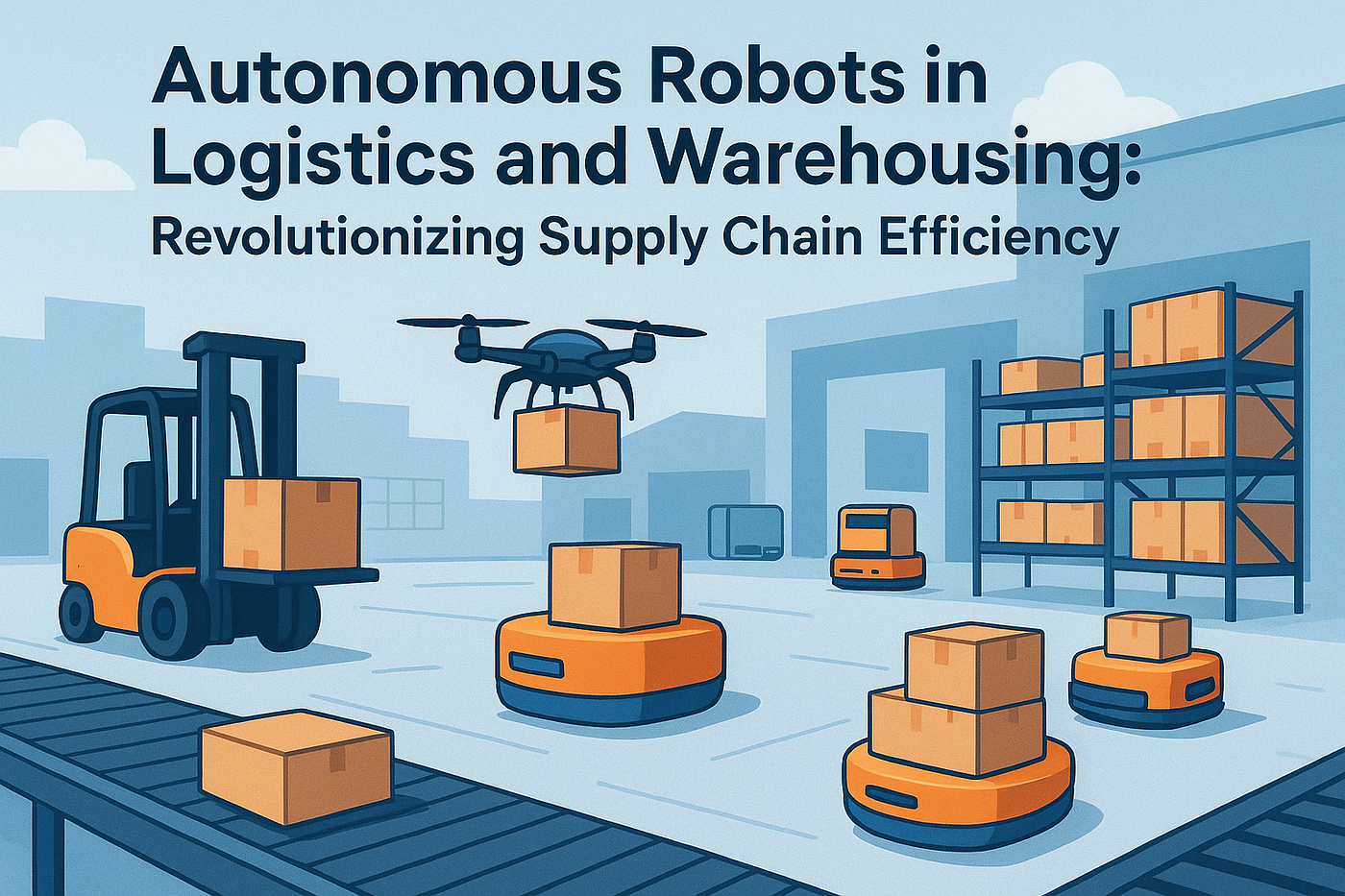
Autonomous Robots in Logistics and Warehousing: Revolutionizing Supply Chain Efficiency
In today’s fast-paced global economy, the demand for faster, more efficient logistics and warehousing operations has never been higher…
Autonomous Robots in Logistics and Warehousing: Revolutionizing Supply Chain Efficiency
In today’s fast-paced global economy, the demand for faster, more efficient logistics and warehousing operations has never been higher. Enter autonomous robots — a transformative technology reshaping the way goods are stored, picked, packed, and shipped. From reducing human error to optimizing workflows, autonomous robots are becoming indispensable in modern supply chains.
What Are Autonomous Robots?
Autonomous robots are intelligent machines capable of performing tasks without human intervention. Equipped with sensors, cameras, AI algorithms, and machine learning capabilities, these robots can navigate complex environments, make decisions in real-time, and adapt to changing conditions. In logistics and warehousing, they are used for tasks such as:
- Inventory management
- Order picking and packing
- Material handling
- Transportation within facilities
Why Are Autonomous Robots Gaining Traction?
The rise of e-commerce, increasing customer expectations for same-day delivery, and labor shortages have pushed companies to seek automation solutions. Autonomous robots offer several key benefits:
1. Increased Efficiency and Speed
Robots can operate 24/7 without fatigue, significantly speeding up operations. They optimize routes, reduce idle time, and ensure faster order fulfillment.
2. Improved Accuracy
With advanced vision systems and AI, robots minimize picking errors and ensure precise inventory tracking, reducing costly mistakes.
3. Cost Savings
While the initial investment may be high, autonomous robots reduce long-term labor costs, improve throughput, and lower operational expenses.
4. Scalability
Robotic systems can be scaled up or down based on demand, making them ideal for seasonal peaks or business growth.
Applications in Warehousing and Logistics
Autonomous robots are being deployed across various stages of the supply chain. Here are some notable applications:
1. Automated Guided Vehicles (AGVs)
AGVs transport goods within warehouses, moving pallets and containers from one location to another. They follow predefined paths and are ideal for repetitive tasks.
2. Autonomous Mobile Robots (AMRs)
Unlike AGVs, AMRs use sensors and maps to navigate dynamically. They are used for picking, sorting, and transporting items, especially in e-commerce fulfillment centers.
3. Robotic Picking Systems
These robots use AI and computer vision to identify and pick items from shelves. They are integrated with warehouse management systems (WMS) for real-time inventory updates.
4. Drones for Inventory Management
Drones equipped with RFID scanners and cameras can fly through warehouses to conduct inventory checks, saving time and improving accuracy.
Real-World Examples
Several companies are already leveraging autonomous robots to gain a competitive edge:
- Amazon Robotics uses thousands of robots in its fulfillment centers to streamline picking and packing.
- Ocado, a UK-based online grocery retailer, employs robotic arms and AMRs for high-speed order processing.
- DHL has implemented robotic solutions for parcel sorting and warehouse automation across its global facilities.
Challenges and Considerations
Despite the benefits, adopting autonomous robots comes with challenges:
- High Initial Costs: Implementation requires significant investment in hardware, software, and infrastructure.
- Integration with Existing Systems: Robots must be compatible with current WMS and ERP systems.
- Workforce Adaptation: Employees need training to work alongside robots and manage automated systems.
- Cybersecurity Risks: As robots rely on connected systems, they are vulnerable to cyber threats.
The Future of Autonomous Robotics in Logistics
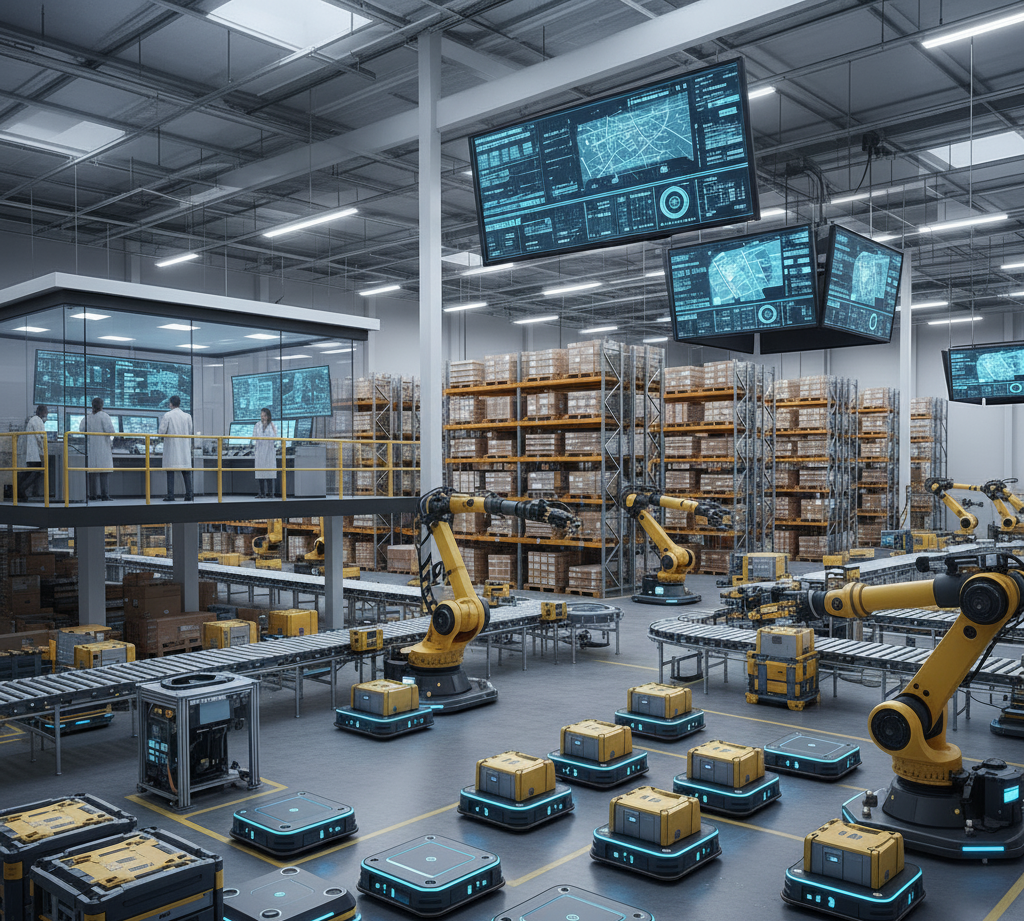
The future looks promising. With advancements in AI, edge computing, and 5G connectivity, autonomous robots will become smarter, faster, and more collaborative. Emerging trends include:
- Swarm robotics: Multiple robots working together to complete complex tasks.
- Human-robot collaboration: Robots assisting workers rather than replacing them.
- Predictive analytics: Robots using data to anticipate demand and optimize inventory.
To become up to date with AI technology you should enroll yourself with AI+ Certifications there are multiple platforms which are providing AI certifications here are some :
1. Google AI Essentials
Provider: Google Platform: Coursera Duration: Approximately 7 hours Level: BeginnerCoursera
This course introduces the fundamentals of artificial intelligence, focusing on practical applications in the workplace. You’ll learn to use generative AI tools to enhance productivity, craft effective prompts, and understand responsible AI usage. It’s designed for individuals seeking to integrate AI into their daily tasks without requiring prior experience.Coursera+2Coursera+2Coursera+2
🔗 Enroll in Google AI Essentials
2. AICERTs AI Certifications
Provider: AICERTs Duration: Varies Level: Beginner to Advanced
AICERTs offers a diverse range of AI certification programs suitable for various proficiency levels. Whether you’re a beginner or an experienced professional, their courses are designed to enhance your AI competencies.
🎁 Special Offer: Use code NEWUSERS25 to receive a 25% discount on all courses.
📞 Support: For inquiries or guidance, reach out to the AICERTs team they’re dedicated to assisting you throughout your AI certification journey.
🔗 Start Your AI Certification with AICERTs
3. Advanced Certificate Program in Generative AI
Provider: upGrad Duration: Varies Level: Intermediate to Advanced
This program delves deep into generative AI, covering topics like deep learning, natural language processing, and AI-driven content creation. It’s ideal for professionals aiming to specialize in cutting-edge AI technologies and applications.
🔗 Explore upGrad’s Generative AI Program
Enroll any of the course above and secure your future with AI.
Conclusion
Autonomous robots are revolutionizing logistics and warehousing by enhancing efficiency, accuracy, and scalability. As technology continues to evolve, businesses that embrace robotic automation will be better positioned to meet the demands of a dynamic supply chain landscape.
메타데이터
- post_id
- 01e90d2abfdc
- slug
- autonomous-robots-in-logistics-and-warehousing-revolutionizing-supply-chain-efficiency-01e90d2abfdc
- url
- https://medium.com/@sabit.chandwale/autonomous-robots-in-logistics-and-warehousing-revolutionizing-supply-chain-efficiency-01e90d2abfdc
- canonical_url
- https://medium.com/@sabit.chandwale/autonomous-robots-in-logistics-and-warehousing-revolutionizing-supply-chain-efficiency-01e90d2abfdc
- author_url
- https://medium.com/@sabit.chandwale
- status
- ok
- fetched_at
- 2026-08-07 05:35:12



