The wannabe terrorists
Ed Husain and Maajid Nawaz are just cosplayers
The wannabe terrorists
Ed Husain and Maajid Nawaz are just cosplayers
4 February 2026
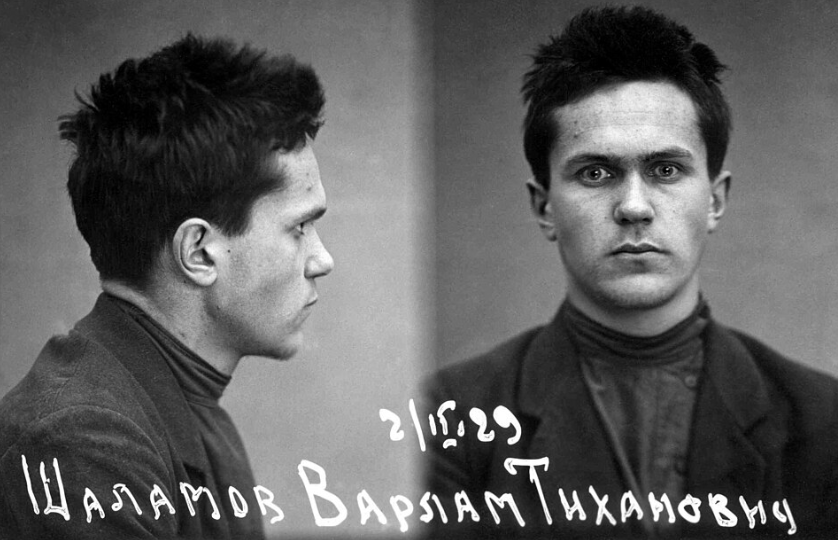
USSR Political Directorate photo of Varlam Shalamov, 1929
There is a genre of writing that presents itself as knowledge and delivers only reassurance. It claims to open sealed worlds while never crossing their threshold. It offers testimony where there was no access, insight where there was only proximity, and authority where there was merely noise. The deradicalisation memoir belongs to this genre.
Shalamov’s verdict
The most celebrated examples in Britain are the memoirs of Ed Husain and Maajid Nawaz. Both men claim to have been “inside” Islamist extremism and to have emerged enlightened, repentant, and qualified to explain it to the rest of us. Both insist — explicitly or by implication — that their journeys provide the key to understanding terrorism, and perhaps even to preventing it. Both are wrong in exactly the same way.
The error is not moral. It is epistemic. These books do not misrepresent terrorists sympathetically; they misidentify who terrorists are. Their protagonists are not members of a clandestine operational world but marginal figures orbiting its periphery. They are ideologues, agitators, students of rhetoric — freiers, in Varlam Shalamov’s sense: outsiders who mistake noise for law, belief for discipline, and talk for power.
This confusion is not accidental; it is structural. Shalamov insists that almost all writers — from Victor Hugo through Fyodor Dostoyevsky, Anton Chekhov, and Maxim Gorky — simply do not know the criminal world they depict. Shalamov asserts something like an anthropological closure: the real criminal world is a sealed order with its own law, language, hierarchy, and discipline, and outsiders — writers included — are structurally incapable of entering it.
This is crucial. Shalamov’s claim is not that these writers portray criminals sympathetically. It is that they mistake peripheral figures for the real thing. Dostoyevsky’s convicts are not gangsters but freiers: victims, dupes, moral outsiders. Chekhov glimpses the truth but retreats. Gorky flatters himself that proximity equals knowledge.
The terrorist world, like the professional criminal world Shalamov anatomised, is not an opinion market or a moral community. It is a closed order governed by silence, hierarchy, command, and internal enforcement. Entry is not achieved by conviction, indignation, or theatrical radicalism. It is achieved by submission to discipline and the acceptance of irreversible obligations. Most people who flirt with extremism never cross that line. Those who do, do not write memoirs about it.
The memoirs of Husain and Nawaz function exactly like the Dostoyevskian convicts Shalamov dismantles. Husain and Nawaz were never members of a real terrorist organisation; they were present in adjacent milieus. They circulated in ideological spaces. They encountered rhetoric, symbolism, posturing. But they were not members of the operative core — the equivalent of Shalamov’s recidivist criminals with their own internal law, discipline, and sanctions. Their “extremists” are freiers in Shalamov’s sense: marginal figures, moral aspirants, ideological dabblers, people spoken to rather than spoken with by the real organisation. From a Shalamovian standpoint, this is not a small mistake. It is a category error.
Ideological adolescents
Husain and Nawaz mistake ideological adolescence for organisational adulthood. They confuse exposure to slogans with initiation into law. Their narratives are saturated with feelings — anger, belonging, doubt, awakening — but conspicuously empty of the features that define sealed violent orders: command structures, internal courts, enforcement mechanisms, logistical chains, sanctions for exit. What they describe is not terrorism but its theatre.
This is why their stories are so legible to policymakers. They translate violence into psychology, organisation into grievance, discipline into belief. They render a hostile system intelligible by dissolving it into feelings. In doing so, they make it governable — not in reality, but on paper.
That is their function. The deradicalisation memoir is not written for understanding; it is written for administration. It reassures the state that terrorism can be neutralised through narrative, education, and moral correction. It suggests that the problem lies not in disciplined organisations but in confused minds. It implies that what was entered through ideas can be exited through ideas, preferably with the help of a government-funded programme and a podcast.
This is the modern form of what the Soviet Union called “reforging” (perekovka) of criminals into productive Soviet citizens through corrective labour. This concept served as a primary ideological justification for the brutal Gulag system of forced labour camps. Bolshevik ideology held that human nature was infinitely malleable and that crime was a product of a corrupt, capitalist social upbringing, not an inherent individual failing. Therefore, in theory, the Soviet state could eliminate crime by changing the criminal’s social environment and consciousness. Hardened systems of predation could be dismantled through confession and rehabilitation, provided the right stories were told and the right experts were listened to.
Deradicalisation programs like Prevent are just Bolshevism in sheep’s clothing. The result is not reform but cover. The paperwork has improved, but the real violence is still left untouched.
Not correction but disqualification
The memoirist who “leaves extremism” and immediately becomes a professional explainer of extremism demonstrates, by that very transition, that he was never inside the thing he claims to reveal. The ability to narrate, to moralise, to extract lessons, to offer policy relevance — these are proofs of exclusion, not access. They indicate a life lived in language, not in law.
This is why these books are so melodramatic. Melodrama is the natural mode of the outsider. It compensates for lack of access with intensity of feeling. It mistakes the performance of rupture for the experience of risk. It turns proximity into ordeal and withdrawal into redemption.
The state welcomes this charade. It prefers interpreters who speak its language, share its moral categories, and confirm its assumptions. The deradicalisation memoirist becomes a consultant, a witness, a trusted intermediary — precisely because he never crossed the threshold that would have rendered him silent, opaque, and useless to policy.
In this sense, the deradicalisation memoir is not an error of sympathy but an error of genre. It presents itself as testimony when it is advocacy; as revelation when it is reassurance; as knowledge when it is administration. It claims to illuminate a sealed world while proving, line by line, that it never entered it.
There is no need to accuse Husain or Nawaz of bad faith. Shalamov did not rely on such accusations, and neither should we. Sincerity is irrelevant. Harm does not require malice. What matters is function. These texts function to displace attention from the real structures of terrorist organisation and toward manageable narratives of belief and repentance. They educate the public away from reality while congratulating themselves on having done the opposite.
Nor should we propose better memoirs, truer insiders, or more authentic voices. That impulse itself belongs to the same genre error. It assumes that terrorism is a story waiting to be told correctly, rather than a system designed to remain silent, segmented, and opaque. The demand for narrative is itself part of the problem.
Shalamov understood this. That is why he did not offer a more humane criminal literature. He offered refusal.
The correct response to the deradicalisation memoir is, therefore, not correction but disqualification. These texts do not need to be improved; they need to be stripped of authority. They should be read, if at all, as documents of bureaucratic fantasy — evidence of what the state wishes to believe about violence, not of how violence is organised.
If you believe these stories explain terrorism, you do not understand terrorism. If you trust them to prevent it, you are already hopelessly deceived.

Islamist imposters: Maajid Nawaz (left) and Ed Husain
메타데이터
- post_id
- 0205a6062a8b
- slug
- the-wannabe-terrorists-0205a6062a8b
- url
- https://medium.com/@evansd66/the-wannabe-terrorists-0205a6062a8b
- canonical_url
- https://medium.com/@evansd66/the-wannabe-terrorists-0205a6062a8b
- author_url
- https://medium.com/@evansd66
- status
- ok
- fetched_at
- 2026-06-09 15:37:30