The Lower Falls Gorge: The Case for World Heritage Status
by George Cassidy Payne
The Lower Falls Gorge: The Case for World Heritage Status
by George Cassidy Payne
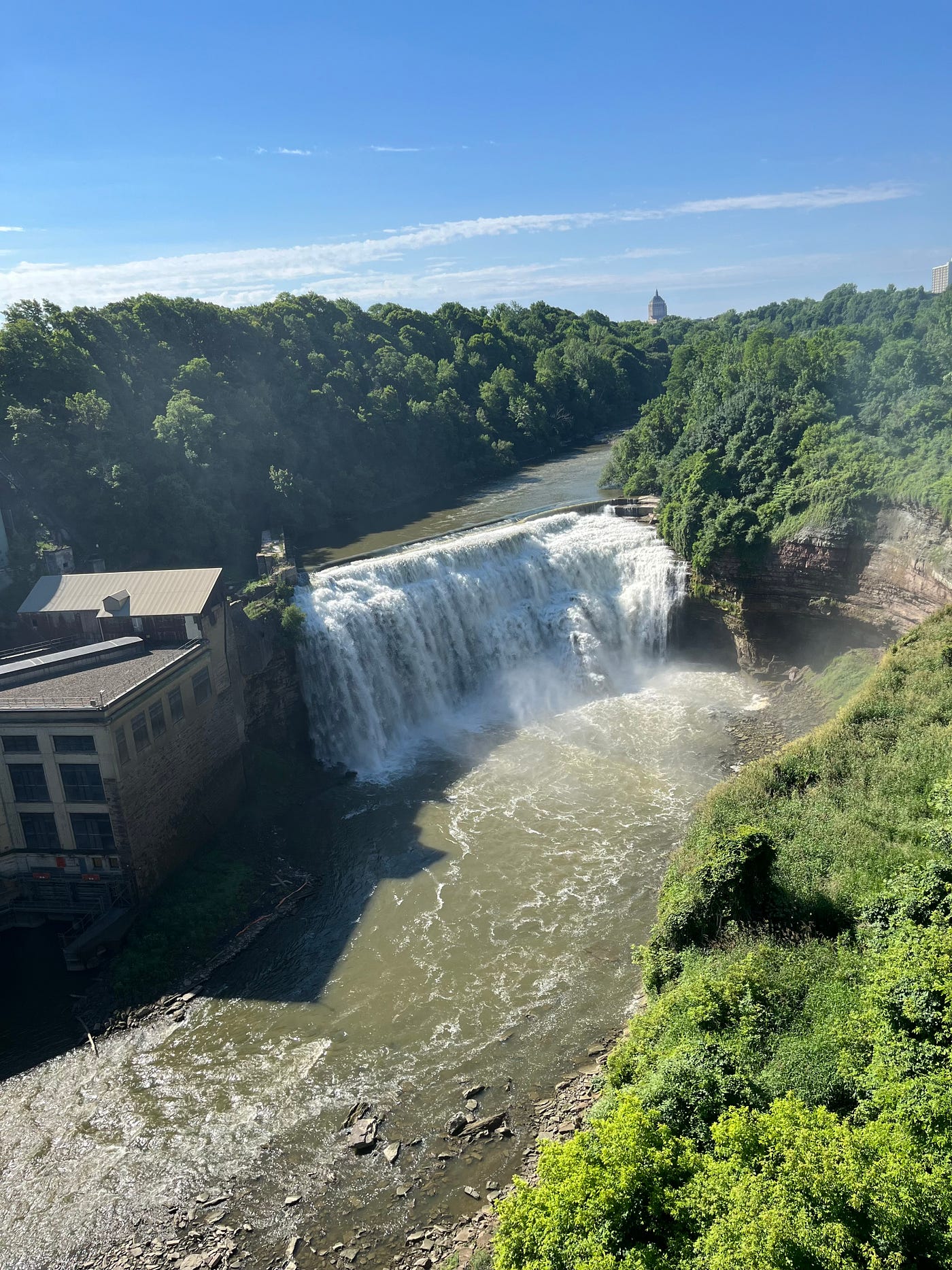
Photo of Lower Falls Gorge from Driving Park A Bridge (taken by author)
The Lower Falls Gorge in Rochester, New York, is not only a geological marvel but a site steeped in history. Located along the Genesee River, it offers a stunning landscape shaped by millions of years of natural forces and significant human events. The gorge’s beauty and historical importance make it a candidate for World Heritage recognition, as it has played a pivotal role in the story of America, from the Revolutionary War and Civil War to the global conflicts of the 20th century.
Geological and Natural Significance
Formed through millions of years of geological activity, the Lower Falls Gorge is an outstanding example of post-glacial landscape transformation. The Genesee River carved the gorge into its limestone and sandstone base, creating dramatic waterfalls and cliffs. These natural formations tell the story of Earth’s evolution and the enduring power of water and ice.
The Lower Falls Gorge is home to a rich and diverse array of plant and animal life, some of which are rare and endangered. The unique microhabitat within the gorge supports species that are not found elsewhere in the region, making it an ecological hotspot. Among these are:
- Peregrine Falcons: These majestic birds of prey, once nearly extinct in the eastern U.S., have found a haven in the cliffs of the gorge. The gorge’s dramatic vertical landscape provides an ideal nesting site, offering protection for peregrine falcon eggs and chicks. The species’ recovery in this region is a success story for conservation efforts.
- Indiana Bats: The Lower Falls Gorge is home to one of the few remaining populations of the endangered Indiana bat, a species that has been severely affected by habitat loss and white-nose syndrome. The gorge’s cool, dark caves and crevices provide important roosting sites for hibernating bats, helping sustain this fragile population.
- Eastern Massasauga Rattlesnakes: As one of the few venomous snake species in the state, the Eastern Massasauga rattlesnake is classified as threatened in New York. The Lower Falls Gorge provides a suitable habitat with its combination of wetlands, forested areas, and rocky outcrops. The gorge’s landscape offers a refuge for this species, which has seen significant population declines due to human encroachment.
In addition to these rare species, the gorge also supports a variety of plants and trees, such as American beech, hemlock, and rare orchids, contributing to its biodiversity and making it an important conservation site. Protecting the Gorge’s unique ecosystem is vital for preserving these species and maintaining the region’s ecological balance.
Cultural and Spiritual Heritage
The Seneca people, part of the Haudenosaunee Confederacy, have long revered the Genesee River and the Lower Falls Gorge as sacred. The site was integral to their way of life, providing resources for fishing, hunting, and spiritual ceremonies. Recognizing the gorge as a World Heritage Site would honor the cultural significance it holds for the Seneca and other Indigenous peoples, ensuring that this deep connection to the land is preserved and respected.
During the Revolutionary War, the Lower Falls Gorge and the surrounding Genesee River Valley were of strategic military importance. In 1779, General George Washington’s Sullivan Expedition, which aimed to weaken the British-aligned Iroquois Confederacy, passed through the area. The Seneca villages near the gorge were destroyed as part of this military campaign, a decisive moment in the conflict. This action disrupted the Iroquois presence in the region, contributing to the eventual settlement and development of the area by European colonists. The Lower Falls Gorge remains a powerful symbol of the intersection of Indigenous history and the birth of the United States.
During the Civil War, the Lower Falls Gorge played a critical role in the abolitionist movement. The nearby Kelsey’s Landing was an essential station on the Underground Railroad, where enslaved people seeking freedom were assisted by brave abolitionists. Frederick Douglass, the renowned abolitionist and former enslaved person, worked with other Rochester activists to guide those fleeing slavery along the Genesee River to freedom. Douglass himself used this route to escape to Canada after the failed raid on Harpers Ferry in 1859. The Lower Falls Gorge, thus, became a beacon of hope for those seeking refuge from oppression and a significant site in the fight for civil rights.
The World Wars: Industrial Contributions and Strategic Importance
The significance of the Lower Falls Gorge continued through the 20th century, particularly during the two World Wars. In World War I and World War II, Rochester’s industries, including the Kodak company, played a key role in the war effort. The area around the gorge became home to several industrial plants, including Kodak’s Hawkeye Works, which produced critical photographic equipment for military reconnaissance. The production of specialized film for the U.S. government, including for the CORONA satellite program during the Cold War, exemplified the region’s strategic importance during global conflicts.
The Lower Falls Gorge also served as a reminder of the resilience of the local community during times of war. As industrial workforces mobilized for the war effort, the landscape witnessed both the destructive and constructive forces of wartime industry, with the gorge standing as a natural witness to the tensions and triumphs of the 20th century.
The Driving Park A Bridge: A Steel-Arched Landmark
An integral feature of the Lower Falls Gorge landscape is the Driving Park A Bridge, a remarkable steel-arched bridge that spans the Genesee River. Constructed in the early 20th century, the bridge is an enduring symbol of the region’s industrial progress and architectural innovation. The steel arch design was groundbreaking for its time, allowing for greater durability and resistance to the forces of nature. The bridge’s elegant curvature enhances the visual appeal of the gorge, offering pedestrians and motorists alike stunning views of the falls and surrounding parkland.
The Driving Park A Bridge not only serves as a vital transportation link but also stands as a testament to the region’s architectural heritage. Its construction marked a shift towards modern engineering techniques, which would go on to influence infrastructure development throughout the country. As a steel-arched bridge, it represents the technological advancements that played a pivotal role in the urbanization and growth of Rochester, solidifying its place in the historical narrative of the area.
The Legacy of Frederick Law Olmsted
The Lower Falls Gorge is also linked to the urban planning legacy of Frederick Law Olmsted, who designed Maplewood Park in the late 19th century. Olmsted, famous for designing Central Park in New York City, recognized the gorge’s beauty and incorporated it into his vision of public green spaces. The park, which remains a treasured landmark in Rochester, allows visitors to appreciate the stunning views of the gorge while enjoying open spaces that encourage a connection with nature. Olmsted’s work was instrumental in making the Lower Falls Gorge a site for both recreation and contemplation.
At the heart of Maplewood Park is the Maplewood Rose Garden, which serves as a living tribute to the region’s natural beauty. Established in 1940, the garden is one of the largest rose collections in the United States and attracts thousands of visitors each year. The garden’s peaceful ambiance is a symbol of hope and renewal, much like the Lower Falls Gorge itself — a place where nature, history, and human resilience converge.
Final Thought
The Lower Falls Gorge’s geological, ecological, and historical significance make it a natural and cultural treasure that deserves to be recognized as a World Heritage Site. From its role in the Revolutionary War, the Civil War, and the World Wars, to its cultural ties to Indigenous peoples and its lasting influence on urban development and industry, the Lower Falls Gorge encapsulates the diverse narratives of American history. Its preservation will ensure that future generations continue to experience its breathtaking beauty and understand its profound historical and ecological importance.
George Cassidy Payne is a writer, philosopher, and advocate based in Rochester, NY. His work delves into themes of spirituality, social justice, philosophy, and the human condition. Known for his introspective essays, evocative poetry, and thought-provoking commentary, George contributes to various publications and platforms, offering a distinctive perspective on contemporary issues and timeless questions. He lives and works as a counselor in Irondequoit, NY.
메타데이터
- post_id
- 0255e8335cfd
- slug
- the-lower-falls-gorge-the-case-for-world-heritage-status-0255e8335cfd
- url
- https://medium.com/@icaj2000/the-lower-falls-gorge-the-case-for-world-heritage-status-0255e8335cfd
- canonical_url
- https://medium.com/@icaj2000/the-lower-falls-gorge-the-case-for-world-heritage-status-0255e8335cfd
- author_url
- https://medium.com/@icaj2000
- status
- ok
- fetched_at
- 2026-06-27 18:20:27