The Origin of Fluted Design in the Jewelry Industry: From Ancient Temples to Modern Treasures
When you run your fingers along a finely crafted fluted ring or admire the soft, rhythmic ridges of a sculpted gold bracelet, you’re not…
The Origin of Fluted Design in the Jewelry Industry: From Ancient Temples to Modern Treasures
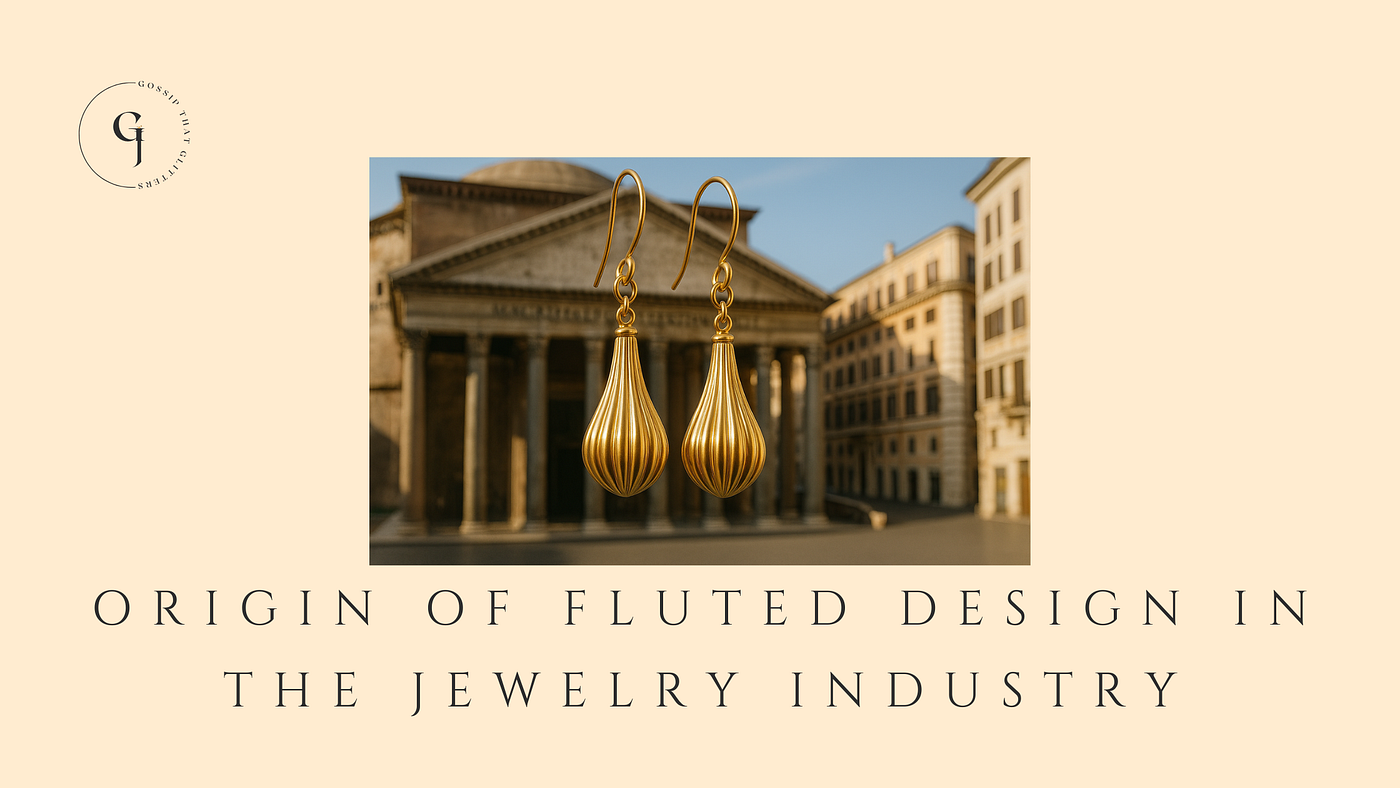
When you run your fingers along a finely crafted fluted ring or admire the soft, rhythmic ridges of a sculpted gold bracelet, you’re not just witnessing a stylistic choice, you’re touching history. The fluted design, with its iconic grooves and architectural texture, is one of the most enduring and symbolic elements in the jewelry industry. But where did it come from? And how did it evolve into a design language embraced by both classical and contemporary jewelers?
Let’s trace the fascinating journey of fluted design from stone columns in ancient civilizations to the refined gold bands worn today.
What is Fluting in Jewelry?
In jewelry, fluting refers to a series of parallel grooves or ridges, often carved into metal surfaces like gold, platinum, or silver. The grooves may be shallow or pronounced, running vertically, diagonally, or in spirals, depending on the piece. While often purely decorative, fluting can also influence how a piece reflects light, creating a dynamic shimmer that enhances its beauty without the need for gemstones.
Origins in Ancient Architecture
The roots of fluted design stretch far back not to the goldsmith’s bench, but to the architectural marvels of Ancient Greece and Rome.
Fluted Columns: The Birthplace of the Motif
Classical architecture often featured fluted columns, particularly in the Doric, Ionic, and Corinthian orders. The grooves weren’t just for aesthetics; they created an optical illusion of greater height, lent structural grace to buildings, and emphasized the harmony of form.
These vertical lines became synonymous with refinement, rhythm, and movement, and their beauty didn’t go unnoticed by artisans outside the world of architecture.
From Temples to Treasures: Fluting in Early Jewelry
As decorative arts flourished in ancient and medieval societies, motifs from architecture began appearing in metalwork, pottery, and eventually jewelry.
Early Fluted Metalwork
During the Renaissance and Baroque periods, European goldsmiths began experimenting with fluted forms. The technique was labor-intensive, typically requiring the artisan to hand-carve or hammer grooves into gold or silver a sign of exceptional craftsmanship. Fluting was used in rings, snuff boxes, and reliquaries, often commissioned by royals and religious elites.
These early fluted designs were not just ornamental they were symbolic, evoking the order, grandeur, and permanence associated with classical architecture.
Fluting in 20th Century Fine Jewelry
The fluted aesthetic gained renewed popularity in the early 20th century, particularly among luxury jewelry houses in France, Switzerland, and Italy.
Cartier and the Rise of the “Godron” Motif
No discussion of fluted design is complete without mentioning Cartier. In the 1930s and ’40s, Cartier popularized the godron style smooth, rounded fluting in gold that became a house signature. These ridged bands and accessories were often created without gemstones, letting the metalwork shine through with texture and sculptural form.
Fluting became a way to add interest and movement to minimalist pieces, aligning perfectly with the Art Deco and later Mid-Century modern tastes.
Van Cleef & Arpels, Boucheron, and Bulgari
Other maisons soon followed suit. Van Cleef & Arpels blended fluted elements with intricate floral motifs. Boucheron used it to enhance volume and contrast in their high jewelry. Bulgari, particularly in its Roman heritage pieces, embraced bold, wide fluted lines that nodded to its city’s ancient roots.
By the mid-20th century, fluted design was no longer a decorative afterthought it was a celebrated aesthetic in its own right.
Techniques Behind the Texture: How Fluted Jewelry is Made
Creating fluted jewelry is a meticulous process. Depending on the design and metal, jewelers may use:
- Die-striking or casting to produce symmetrical, clean grooves
- Hand-carving or engraving for custom fluted patterns in softer metals like gold
- Roller printing with engraved plates to emboss fluted textures onto sheet metal
- Hammering and chasing techniques for more organic or vintage-style ridges
The depth, width, and repetition of fluting require extreme precision — even minor inconsistencies can disrupt the visual harmony.
The Symbolism of Fluted Jewelry
Beyond beauty and texture, fluting carries rich symbolic meaning:
- Rhythm and continuity — echoed in the evenly spaced lines
- Light and shadow — a metaphor for life’s contrast and motion
- Eternity and strength — rooted in classical columns that have stood for millennia
This symbolism makes fluted jewelry especially popular in wedding bands, heirloom pieces, and milestone gifts.
Fluted Design Today: Minimalism with Depth
In today’s jewelry landscape, fluted design has seen a renaissance reimagined through the lens of modern minimalism and vintage revivalism.
- Independent designers use fluting to add texture to otherwise clean silhouettes.
- Sustainable brands love the fact that fluted designs require less stone setting and allow for bold looks using only metal.
- Bridal collections often feature fluted wedding bands as an alternative to traditional pavé or diamond styles.
On Instagram and Pinterest, fluted rings are trending for their tactile appeal, light-catching texture, and nostalgic elegance.
Final Thoughts: A Design That Stands the Test of Time
The fluted design is a powerful example of how the past continues to shape the present. What began as grooves in ancient stone now lives on in wearable art elegant, enduring, and endlessly versatile. Whether you favor bold ridges or delicate textures, fluted jewelry offers a quiet sophistication that will never go out of style.
In a world that’s constantly chasing the next big thing, fluting reminds us that true beauty lies in timeless craftsmanship and thoughtful design.
메타데이터
- post_id
- 025ea1c1828f
- slug
- the-origin-of-fluted-design-in-the-jewelry-industry-from-ancient-temples-to-modern-treasures-025ea1c1828f
- url
- https://medium.com/@thejewelrygossips/the-origin-of-fluted-design-in-the-jewelry-industry-from-ancient-temples-to-modern-treasures-025ea1c1828f
- canonical_url
- https://medium.com/@thejewelrygossips/the-origin-of-fluted-design-in-the-jewelry-industry-from-ancient-temples-to-modern-treasures-025ea1c1828f
- author_url
- https://medium.com/@thejewelrygossips
- status
- ok
- fetched_at
- 2026-07-20 03:01:46