Why I Didn’t Find Ladies First Funny
On the hidden costs of professionalism, especially for Black women.
Why I Didn’t Find Ladies First Funny
On the hidden costs of professionalism, especially for Black women.
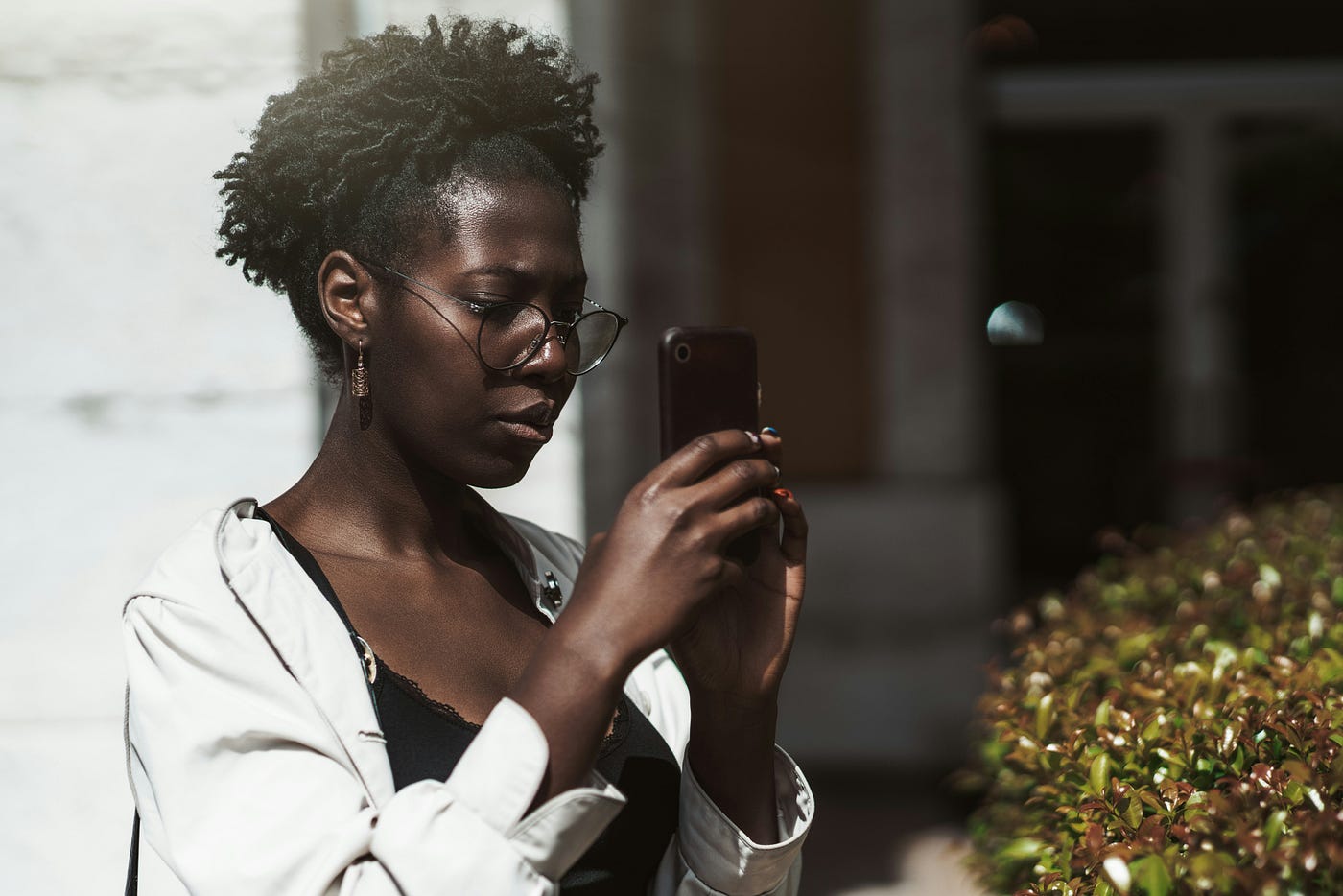
Getty Images for Unsplash+
I recently watched Ladies First, a new film starring Sacha Baron Cohen and Rosamund Pike. Spoilers follow.
The premise is straightforward. Cohen’s character is sexist and behaves in ways many women will recognize immediately, especially from professional life. Then he is transported into a world where the hierarchy is reversed. Women hold the power. Men are judged by their looks, diminished in the workplace, and subjected to the same kinds of disrespect and arbitrary standards women often face.
I’ve enjoyed other films with Sacha Baron Cohen, and I’ve long appreciated his comedic range and his ability to fully inhabit a wide range of characters. I will always love Rosamund Pike for her incandescent Jane in Pride & Prejudice. That is part of why this movie stood out to me. I understand what the film is trying to do: a funny role-reversal rom-com, somewhat in the vein of Groundhog Day. I can also see why some women might find it funny and even cathartic.
I didn’t.
For me, there were two reasons.
First, whether it is men behaving badly toward women or women behaving badly toward men, the behavior itself is still ugly. Reversal alone does not automatically become insight. Sometimes it is just cruelty with the signs flipped.
I understand the appeal of making a sexist man live inside the very rules he once benefited from. There is a certain justice in that. But if the point is satire, the reversal should reveal something deeper than hypocrisy alone. Otherwise, the audience is simply watching humiliation replayed for laughs. Maybe I have been in the work world too long, but I have seen too much of that behavior in real life to find it especially funny on screen.
Second, the movie brushed up against something more interesting than it was prepared to examine deeply: the labor of being seen as “professional.”
One beauty-related sequence especially stayed with me because it hinted at a truth the movie’s setup could not fully explore. To its credit, the film does mention the calibration many women live with every day: the need to appear desirable, but not too desirable; polished, but not excessive; attractive, but never so much so that it calls your seriousness into question. Yet looking acceptable, polished, or “professional” is not a neutral expectation. It requires time, money, and effort, and for Black women that burden is often significantly higher.
Depending on whether I wore my hair pressed, straightened, weaved, or braided, I could spend half a day every two weeks or a whole day every six to eight weeks maintaining an appearance that would be read as professional. That may not sound like much. But it looks different when you are already working six or seven days a week and still trying to be seen as hardworking, competent, and future-partner-level material alongside your male colleagues.
And for Black women, the insult is compounded further: we are often asked to absorb these extra grooming and presentation costs out of pocket while shouldering a pay gap that has stood stubbornly at one-third for decades. We are expected to invest more in looking “right” while receiving far less in return. Our appearance becomes nothing more than the price of the entry ticket that lets us keep coming back to the twisted carnival every day.
To be clear, this is not a critique of how Black women choose to wear their hair. It is a critique of corporate workplace norms that too often treat Black women’s natural hair or locs as less professional, and that make conformity to a so-called professional standard costly.
That is the part I wish the film could have conveyed in more depth than a montage: what looks like beauty is often hidden labor. What looks like professionalism is often compliance. What looks like personal style is often adaptation to someone else’s standards. These things have costs.
Those costs are not just financial, though they are certainly that and could easily run into the thousands of dollars per year. They are also temporal, logistical, physical, and emotional. They shape how you plan your weekends, how much rest you get, how much savings you have for a rainy day or even a vacation, and how much of your private life gets consumed by laboring to meet public expectations. Together, they serve as a continual reminder that you, as you are, are not good enough.
At one point in my career, I became very good at compressing my life into whatever time remained outside the office. I perfected doing all my errands for the month in one Saturday. At the time, that felt like a disciplined life hack. Looking back, I also see it as adaptation. It was what I had to do in order to keep everything moving while carrying forms of extra labor that were never acknowledged.
That is why Ladies First did not quite land for me.
Its premise is not wrong. In fact, it is obvious enough to make its point quickly. But it is not deep enough to say much about the structure underneath the joke. It captures the insult more readily than the cumulative impacts.
And for Black women like me, the accumulation is the story.
The issue is not only that adapting to misogynoir is demeaning; it is expensive. It extracts time, money and energy with all that self-monitoring and strategic calculation. It creates hidden work. It narrows your margin. It asks for ever more while giving you ever less, then pretends not to notice the asking.
Maybe in an alternate timeline, there is a version of the film that centers a Black professional woman and follows that reality all the way through. Not just the obvious insult. Not just the role reversal. But the relentless effort required to remain viewed as competent in a world whose standards were never designed with you in mind. Maybe that woman gets her happily ever after.
That would be cathartic.
Karen Spencer June 2026
메타데이터
- post_id
- 026fc0336db7
- slug
- why-i-didnt-find-ladies-first-funny-026fc0336db7
- url
- https://aninjusticemag.com/why-i-didnt-find-ladies-first-funny-026fc0336db7
- canonical_url
- https://aninjusticemag.com/why-i-didnt-find-ladies-first-funny-026fc0336db7
- author_url
- https://medium.com/@karenyspencer
- status
- ok
- fetched_at
- 2026-06-17 18:46:00