The Intrigue of Fizzy Drinks & Fuzzy Trees
Famed film director Alfred Hitchcock famously popularized the mimosa cocktail in the United States, enjoying the libation so thoroughly…
The Intrigue of Fizzy Drinks & Fuzzy Trees
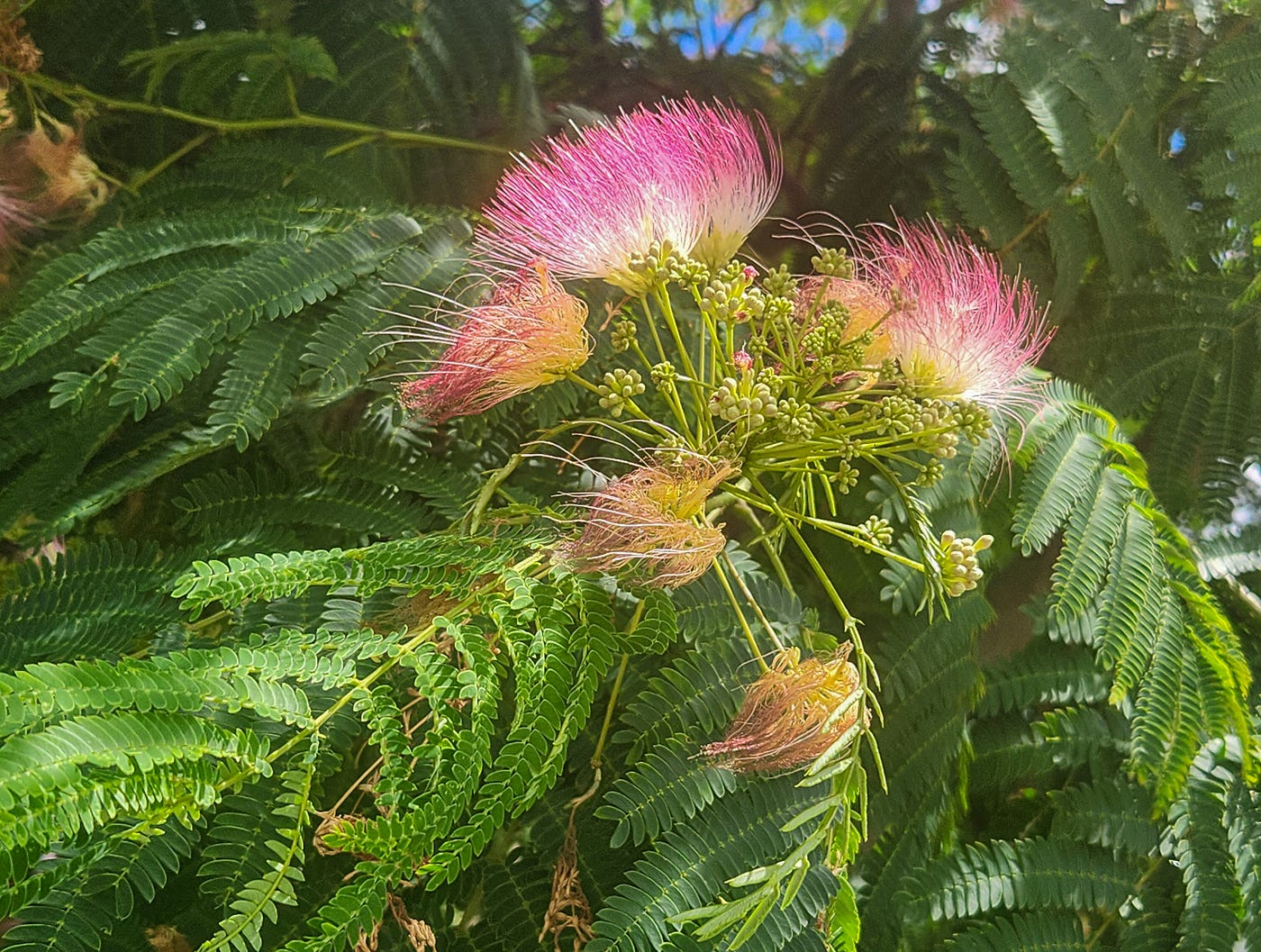
Albizia julibrissin — Mimosa Tree
Famed film director Alfred Hitchcock famously popularized the mimosa cocktail in the United States, enjoying the libation so thoroughly that his biography, It’s Only a Movie, lists it as his “top drink”. The Master of Suspense allegedly touted mimosas as a “morning-after” hangover cure. Today it’s a staple at bridal showers, celebratory brunches, sunrise jubilees, and other such a.m. soirées. But the cocktail’s history began in the 1920s.
The precursor, “Buck’s Fizz,” was invented in 1921 at London’s historic Buck’s Club. It featured a 2:1 ratio of champagne to orange juice, famously giving members an excuse to drink before lunchtime. A few years later, at the Ritz Hotel in Paris, a more daytime-friendly alternative with a 1:1 ratio was dubbed the “mimosa”. It was this version Hitchcock preferred, offering greater hydration, sugar, vitamin C, and the classic “hair of the dog.”
France in the 1920s: The Golden Age of Mimosistes
Hitchcock may have first encountered his favorite drink’s floral namesake while shooting on location along the sun-drenched coastline of the French Riviera. In winter, a multitude of Mimosa Trees bloom in a sea of brilliant yellow that contrasts with the blue of the Mediterranean.
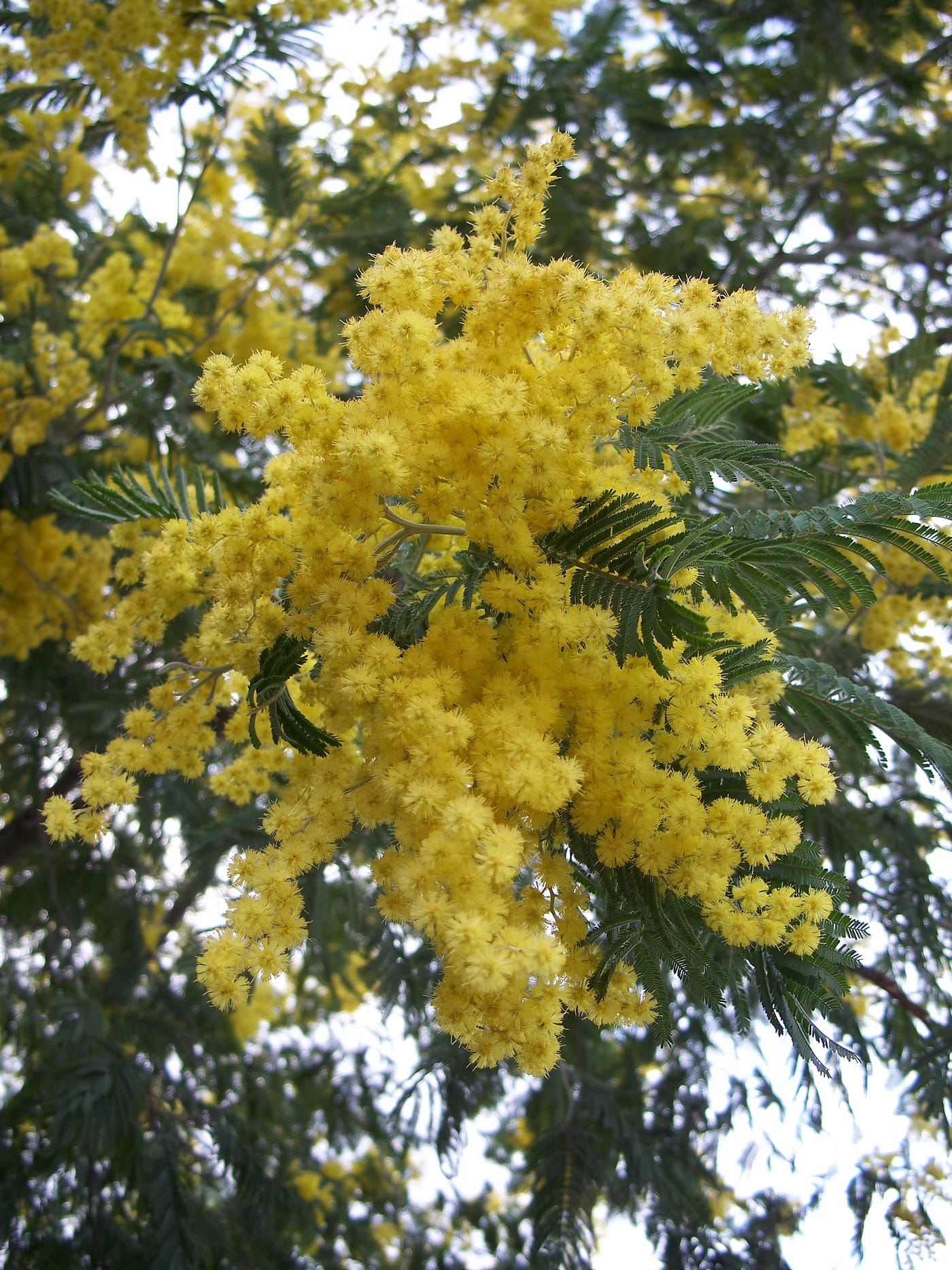
Eugene Zelenko, Wikimedia CC Acacia_dealbata
Mimosa (Acacia dealbata) was discovered in Australia in the early 1800s during a French scientific voyage. By the 1860s, wealthy aristocrats were planting them in the south of France, where they escaped into the wild. Local horticulturists soon realized the acidic soil of the Tanneron Hills was an ideal growth medium.
By the 1920s, the mimosiste industry exploded. Thanks to bud-forcing greenhouses and the expanding European railway network, local cultivators transitioned to a global enterprise. At its peak, they shipped up to 30 tons of fresh yellow blossoms daily to cold northern cities like Paris and London, cementing a traditional craft that survives today.
Hey, Mate, That’s Called Silver Wattle Back Home
When Acacia dealbata arrived in France, botanists misidentified it because its foliage resembled the true Mimosa genus. They christened it “mimosa” in error. Back in Australia, it is known as silver or blue wattle, named for the glaucous sheen on its fern-like leaves and bark. Similarly, the latter part of its scientific name originates from the Latin dealbare, meaning “covered in a white powder.”
British settlers in the late 1700s called it “wattle” — meaning woven twigs — because they used the flexible branches to weave frameworks for mud huts. Silver wattle was a utilitarian pioneer in the Southern Hemisphere; mimosa became a sun-drenched symbol of European high society in the North. The tree is practically a botanical double agent — Hitchcock would love the intrigue!
Mimosa Trees in Dutchess County
I have seen a couple of mimosa trees in Poughkeepsie — and I am hunting for more! We have a type of true mimosa tree: Albizia julibrissin. Though completely different genera, Acacia dealbata and our Dutchess County mimosa are cousins within the legume family.

Albizia julibrissin — Mimosa Tree
The evergreen Acacia dealbata thrives in USDA Hardiness Zones 8 to 10 and blooms fuzzy yellow pom-poms in late winter. Meanwhile, our green-leaved, deciduous mimosas grow in Zones 6 to 9 and bloom silky, pink powder-puffs in late summer.
Both cousins share the unique behavior of folding their fern-like leaves at night or in response to darkness. Our Dutchess mimosas are even more sensitive, slowly closing their fronds during rain, heavy cloud cover, or when gently held.
The Greeks Said It First
Long before it was a plant or a drink, the name originated from the Ancient Greek ‘mimos’ (mime or act) combined with the suffix ‘-osa’ (to resemble). In the 17th century, the term was adapted into Modern Latin as a botanical genus name. Scientists named plants like the Mimosa pudica, the “sensitive plant”, because its sudden movements made it look like the plant was mimicking animal behavior.
Leaflets Drop, Glasses Raise: Sip Happens
If a cocktail containing orange juice and champagne is a Mimosa, a cocktail with pink grapefruit juice should be called an Albizia.
The Albizia Cocktail
· 1 part Pink grapefruit juice
· 1 part Sparkling wine (or sparkling apple juice/water for a mocktail)
· 1 dash Elderflower liqueur (or syrup)
· Garnish: Sugar rim and a pink grapefruit twist
Enjoy it while watching one of Hitchcock’s films — like the one where Norman Bates remarked that Marion Crane “ate like a bird.” The line reminds me that the director once told Dick Cavett that puns are the highest form of literature. (I think so, too.)

Marion Crane / Psycho. Shamley Productions, Paramount Pictures, Public domain, via Wikimedia Commons-Janet_Leigh
Raise a glass to the Master of Suspense. Sip a fizzy cocktail, admire a fuzzy tree, drop your leaflets and unwind. Cheers!

메타데이터
- post_id
- 027fc4414bfc
- slug
- the-intrigue-of-fizzy-drinks-fuzzy-trees-027fc4414bfc
- url
- https://medium.com/educreation/the-intrigue-of-fizzy-drinks-fuzzy-trees-027fc4414bfc
- canonical_url
- https://medium.com/educreation/the-intrigue-of-fizzy-drinks-fuzzy-trees-027fc4414bfc
- author_url
- https://medium.com/@wiznerf
- status
- ok
- fetched_at
- 2026-06-22 19:40:15