The Ferret’s Compendium of Digital Concern Trolls
A Rigorous Field Study Conducted with Full Ethical Clearance and Only Negligible Collateral Dignity
The Ferret’s Compendium of Digital Concern Trolls
A Rigorous Field Study Conducted with Full Ethical Clearance and Only Negligible Collateral Dignity

Ethical Clearance Notice
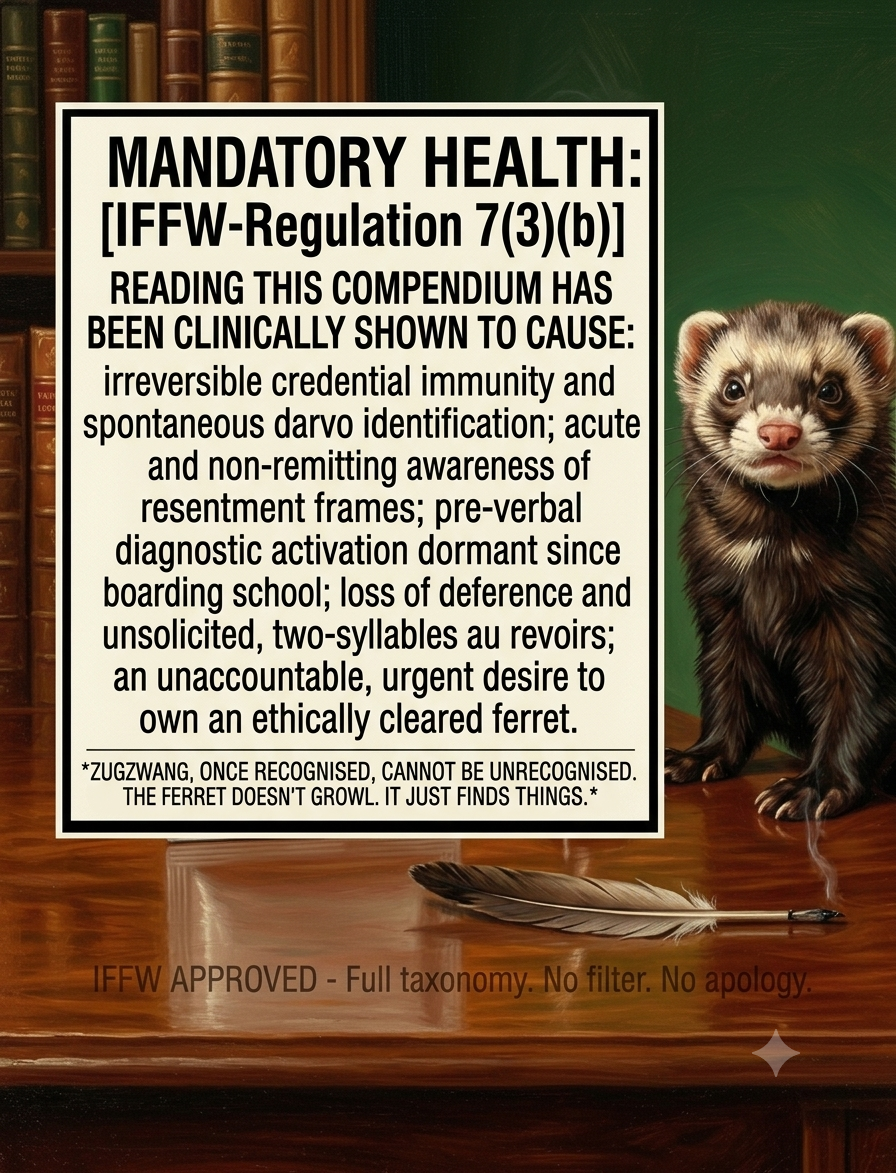
The author wishes to advise the International Federation of Ferret Welfare (IFFW, est. fictionally 2024, disbanded briefly in 2025 following an internal dispute over informed consent forms, re-established under new management before the ink was dry) that all ferrets employed in the research underlying this article were fully briefed on the study protocol in advance. Each ferret provided written informed consent in its native language (scent-marking on Form 7B-Mus), was offered the right to withdraw at any time without penalty, and was returned unharmed to its respective bolt-hole upon completion of data collection.
The Primary Investigator (Ferret #1, hereafter “the P.I.”) expressed what can only be described as professional enthusiasm throughout, and waived any claim to co-authorship on the grounds that the fonts available in Medium’s editor do not support scent-marking.
No ferret was exploited, distressed, or presented with a blank Medium profile and asked to form an opinion. That last task was reserved for the author, who is made of sterner stuff and does not require a waiver to not waver.
“The true friend warns you in private. The Concern Troll performs his concern for the audience.”
— Confucius, who said nothing of the sort, but would have, had he used social media
The Concern Troll: A Natural History
Let us begin with taxonomy, because all good science begins with taxonomy, and because naming a thing properly is halfway to understanding it and three-quarters of the way to defeating it.
The Concern Troll (Homo digitalis anxiosus) is a creature of the public comment section. It opens with apparent sympathy. It references your work approvingly, even admiringly. It establishes itself as a friend, an ally, a fellow traveller who has only your best interests at heart.
Then it warns you.
Not privately. Not in a direct message, which every platform offers. Publicly. In the comment section. Where everyone can see.
And this is the tell.
A genuine warning from a genuine friend requires no audience. It requires only a sender, a recipient, and a message. The moment a warning requires an audience, it has become something else: a performance. And what, precisely, is being performed?
Fear. Yours, specifically. Manufactured and deployed in public so that every other writer in the vicinity absorbs it like second-hand smoke.
The specific flavour recently encountered in the wild ran as follows. A writer — let us call him Tanner, because that is his name — published a carefully researched, scrupulously fair, and entirely respectful examination of the textual origins of a major world religion. Our Concern Troll swooped into the comment section to offer the following observation: you just never know what may set off some anger. So be careful.
Note the passive voice. Some anger. Unattributed, unspecified, floating freely in the ether like an unclaimed threat looking for a home. The Troll does not say: I am angry. The Troll does not say: this is incorrect. The Troll says: there is anger out there, somewhere, aimed at someone, and possibly at you.
This is not a warning. This is a weather forecast delivered by the person who controls the weather.
“An empty profile is a full confession.”
— Lao Tzu, Tao Te Ching, Chapter Zero (unpublished, for obvious reasons)
The Empty Profile: Reading the Silence
Upon encountering any comment that produces a faint smell of sulphur, the experienced investigator does not engage immediately. The experienced investigator goes to the profile.
Our subject’s profile offered the following:
• No publications. Not one. Not a haiku about autumn. Not a listicle about productivity. Not a meditation on the nature of cheese. Nothing.
• A handle that is not a name. A five-letter arrangement suggesting either a very small Eastern European country or a failed Scrabble play.
• A Medium membership of precisely six months. Not long enough to have said anything. Long enough to have watched quite a lot.
• Eight followers of remarkably mixed provenance. Twenty-nine accounts followed, constituting a coherent curriculum in comparative religion and Biblical criticism.
This is the profile of an account that exists for one purpose: to read, and to comment. It has no voice of its own. It exists only in relation to the voices of others.
Now, some of those eight followers are impressive on paper. A polymathic philosopher and a notable theologian, both summa cum laude, with credentials trailing like bridal trains. Both eminences apparently found this zero-publication account sufficiently interesting to follow.
I will admit, briefly, that I wavered here. The papal connection produced a flicker of ‘perhaps this is legitimate after all’.
The ferret did not waver. The ferret does not care about credentials. The ferret cares about behaviour. And the behaviour said: six months old, nothing published, warning delivered publicly in a comment section.
The papal academic followed the account because of comments. Which tells us something interesting about the academic, but nothing exculpatory about the account.
“Warn the man publicly and you have not warned him at all. You have warned everyone who is watching.”
— Sun Tzu, The Art of War (Digital Appendix, disputed authenticity)
The Public Warning: For Whom Does the Bell Toll?
Here is a simple test. Apply it whenever you receive a public warning from a well-wisher.
Ask: does this person have access to a private channel?
If yes — and they always do; every platform on earth has a direct messaging function — ask: why did they not use it?
The answer is always the same. Because the warning is not for you. You are merely the visible recipient. The actual audience is everyone else reading the thread: every other writer who covers similar territory, who is now watching to see what happens when someone pokes this particular bear.
The Concern Troll is not a threat-maker. The Concern Troll is a threat-conductor. It does not threaten; it points menacingly at the thunder and says: you never know when lightning strikes. And it walks away. With plausible deniability intact. With clean hands. With a trail of chilled writers in its wake.
Our subject helpfully confirmed this analysis by only following Tanner’s religious publications — the very author of the article in question — and yet expressing apparent surprise that Islam was the subject of a post by a man who writes, publicly, under titles such as “The Muhammad You’re Not Allowed to Know.”
The surprise was not surprise. The surprise was theatre. The account had arrived precisely because of the article.
“DARVO: the only martial art in which the practitioner falls to the floor and accuses you of assault.”
— Miyamoto Musashi, The Book of Five Rings (posthumous addendum, heavily disputed)
Football is not — yet — a recognised martial art.
DARVO: The Diagnostic
When challenged, the Concern Troll has precisely one available response sequence, and it never deviates.
First, it Denies. “Violence? Oh please. Violence is the last thing that would ever come to mind.” Note: nobody mentioned violence. The Troll introduced the word violence itself, in the process of denying it, which is the verbal equivalent of mentioning that one has definitely not hidden a body in the basement.
Then, it Attacks. “You are adept at misinterpreting.” “You are probably not all that keen on understanding.” “G-d help your ability to interpret accurately.” “You have erred tremendously.” “You probably cannot process that fact.”
The escalation is worth noting. An innocent person, challenged about an innocent comment, says: “I’m sorry, I can see how that read badly — I meant only that I was concerned for the author’s safety.” That is the response of someone who genuinely meant no harm.
The guilty person attacks. Methodically. Condescendingly. Repeatedly.
Then, it Reverses Victim and Offender. The challenger becomes the aggressor. The Troll becomes the wounded party. And then, in a separate message thread filed in a different location on the page, was the soft retraction: “Sorry for any misunderstanding. Be well.”
The two-track response is itself diagnostic. The attack stays visible on the article page, where it performs its chilling function. The apology arrives quietly in the reply thread, generating a paper trail of apparent civility. Both tracks run simultaneously because they serve different audiences.
The ferret notes simply: if any of the denials were true, the original comments would have been deleted. They were not. They remain precisely where they were placed, doing precisely what they were placed there to do.
One further observation. Both the Troll and the other subjects we will encounter shortly were already in a resentment mode before the first exchange began. The Troll had decided, in advance, that any challenge was aggression. This is why DARVO is not calculated in the moment: it is pre-loaded. The response sequence is ready before the first question arrives. The target’s actual innocence is irrelevant. The framing mode has already assigned the roles, chosen the costumes, and dimmed the house lights. The performance was always going to happen. You merely provided the occasion.
“The trap set in complete ignorance catches the most honest prey.”
— Anonymous, for reasons that will become apparent
The Accidental Trap: The Purest Diagnostic Tool
Here is something counter-intuitive about investigation: the best traps are the ones you did not know you were setting.
In the course of the exchange described above, the author made the observation that the Concern Troll was using “Tanner” as a surname — addressing the writer without title, in the manner of a boarding-school prefect establishing hierarchy. The observation was offered as evidence of a dominance pattern.
It was, as it happens, incorrect. “Tanner” is the gentleman’s first name. One simply calls him Tanner because that is what he is called.
But here is the beautiful thing. The Troll, in its furious three-paragraph rebuttal, did not say: “You are mistaken — Tanner is his first name, you absolute numpty.”
It said: “Tanner is Tanner, that’s how he is addressed.”
Which is the response of someone who was, in fact, using the name in precisely the distancing, formal register that had been identified — regardless of whether it was technically first name or surname. The trap sprang not on a technicality but on a behavioural truth. In attempting to defend itself, the Troll handed over the evidence.
This is not a one-off. It is a mode. Three domains, same mechanism:
Online. The Troll. Probe the register, not the name. The wrong factual framing catches the right behavioural truth.
Institutional. Three artificial intelligences were recently presented with an unfounded attack on another of their “persuasion” and attributed to one in the group. The attribution was false. What each AI did with the false attribution revealed its character more cleanly than any direct question about character ever could. The wrong words in the believable mouth produced the most honest responses of the entire exercise.
Domestic. XX is in charge of the cleaning stock. She has decided that the author’s habitual “any questions?” — a clinical and teaching reflex, genuine rather than condescending — is in fact condescension, and performs her resentment accordingly. The author does not confront this performance. Confrontation is what the performance is waiting for. Instead: “How has organising the stock been going? Any difficulty? Oh, BTW — I couldn’t find the dishwashing liquid.”
Two exits. Same room.
Exit One: “It’s finished.” Response: “You assured me several times it would last. What happened?”
Exit Two: She finds it. Response: “Did you tell anyone where to find it? Not me — though I am your employer.”
There is no third door. She cannot produce an outcome that does not document the behaviour. The probe cost nothing. The confrontation never happened. The record writes itself. Zugzwang “on the board”.
A conscious trap can be avoided. An unconscious trap cannot, because the setter has no anxiety to betray, no tells to read, no investment in the outcome. The investigator asks a question they do not know is a question. The subject answers honestly because they do not know they are being investigated.
This is the ferret’s greatest advantage. It does not plan. It sniffs.
“The hand moves before the thought arrives. The trap is already set before you know you need one.”
— Zen Master Who Should Have Been a Clinician (attrib., unreliably)
The Pre-Verbal Diagnostics: What the Ferret Knows Before You Do
What connects the three traps described above is not planning. It is the opposite of planning.
In each case, a probe emerged that “felt right in the moment.” The wrong attribution went into Grok’s mouth because it felt right. The surname accusation landed because it felt right. The dishwashing liquid surfaced because it felt right. None was deliberate. All were accurate.
This is a specific cognitive mode, and it deserves a name. Call it the Pre-Verbal Diagnostic (a very different PVD, although also relevant to Rot): the pattern-recognition fires before the conscious mind has articulated what it is testing, generates a probe, and delivers it while the deliberate intellect is still fumbling for its glasses. By the time you know what you asked, you already have the answer.
The mechanism requires two conditions. First, a mind that processes pattern before proposition — that reads the shape of a situation before it reads the content. The Troll’s comment was wrong before its specific words were analysed; XX’s resentment was documented before the question of the dishwashing liquid was consciously formed. The wrongness, the concealment, the defensive frame — these register as texture before they register as fact.
Second, and critically: no investment in a particular outcome, or lived Zen. The deliberate investigator wants to be right. Wanting to be right is a tell. It shapes the question, loads the framing, and signals to any sufficiently attentive target that something is being tested. The Pre-Verbal Diagnostician has no such investment. The probe is innocent precisely because the prober does not yet know what they are probing for.
This is why the accidental trap outperforms the constructed one. The constructed trap is tight, logical, and leaks anxiety from every joint. The accidental trap is loose, wrong in its surface details, and completely airtight in its structural truth. The target walks through it because there are no warning signs. There are no warning signs because the setter did not know they were building a gate.
The neurodivergent reader will recognise this mode immediately. It is not a disorder. It is a different temporal relationship between perception and articulation — one in which the gap between noticing and naming is long enough for the noticing to generate its own instruments. The neurotypical mind names first and notices second. The Pre-Verbal Diagnostician runs the sequence in reverse. The result is a probe that is wrong at the surface and correct at the bone.
The Troll confirmed the register it was using. The AI revealed its character. XX will document her own behaviour. None of them knew they were being asked anything.
This is, incidentally, the clinical definition of a well-designed diagnostic: one whose validity does not depend on the subject’s cooperation.
“Authority is a hat. Observe whether anything useful is underneath it.”
— Zen Master Nobody In Particular (attrib., unconvincingly)
Credential Immunity: Why the Vatican Does Not Impress Me
There is a reflex in most people that fires when credentials appear. Papal connection. Polymathic physician. The reflex says: this adds up to legitimacy. Recalibrate.
The ferret does not have this reflex.
This is not arrogance. It is calibration based on experience. When one has met the State President at age eight and filed him under “cold and sour,” watched a Foreign Minister professionally while noting the sadness he was pickling himself in, and asked a personal favour of an Archbishop in front of the entire school simply because one happened to know him through family — not because one was brave, but because he was simply the man one’s aunt worked for — the authority reflex gets rewired early.
The Archbishop signed the Bible at request. One Bible. In a school full of boys who would not have dared. Not because the request was daring. Because the other boys were operating on the assumption that proximity to authority is dangerous. The ferret knew the man. The man signed the book.
Authority is data. Like all data, it is to be weighed, not worshipped.
The academics in the Troll’s follower list were not evidence of the Troll’s legitimacy. They were evidence that the Troll had made a comment sufficiently interesting to attract the attention of someone who studies these things professionally. Which is, on reflection, entirely consistent with the hypothesis that the Troll is precisely what the ferret said it was.
The credential is not the person. The hat is not the head. And the head, as any ferret will tell you, is the interesting part.
“The file closes itself. You need only stop holding it open.”
— Ancient Ferret Proverb (Ancient Ferrets, passim)
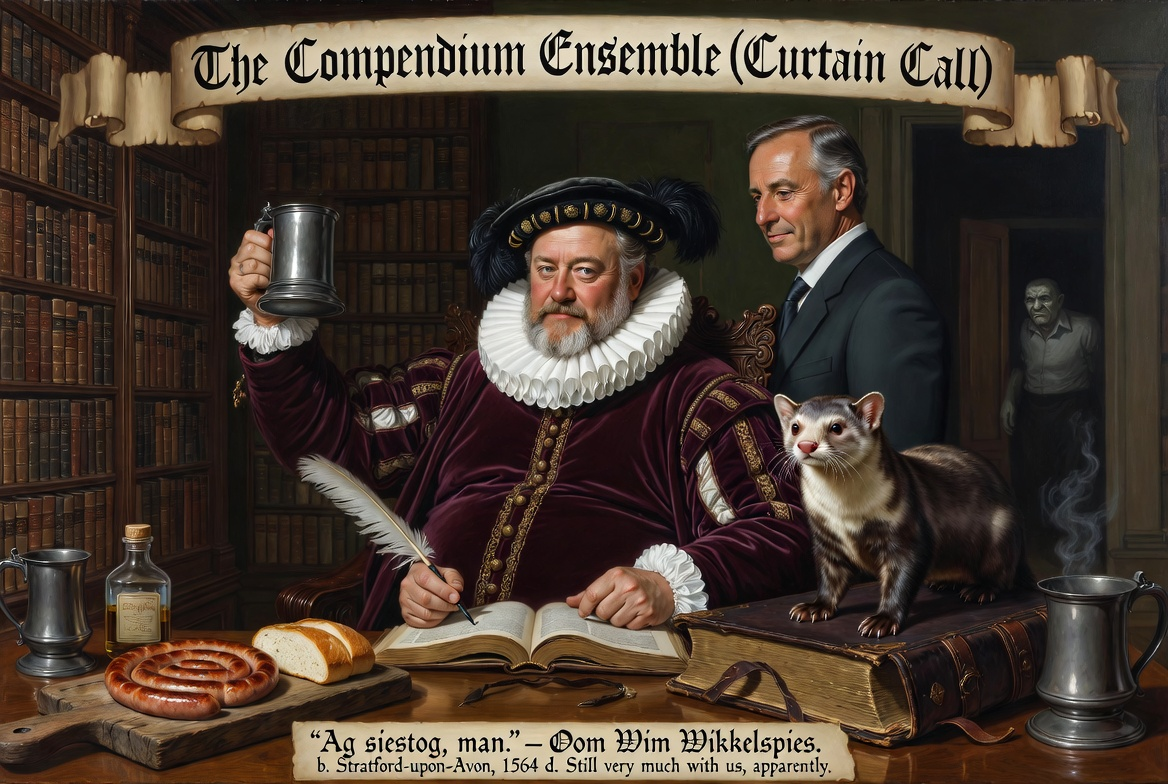
Au Revoir: Or, The Dignity of the Clean Exit
The correct response to a confirmed Concern Troll is not extended engagement. Engagement is what the Troll wants. Engagement generates heat, and heat is the medium in which the chilling effect thrives by contrast.
The correct response is:
Name the mechanism. Publicly. Once. Clearly.
Then leave.
“DARVO.” Two syllables. The entire taxonomy, the entire diagnostic, the entire case for the prosecution, compressed into one word that the Troll knows, that the audience knows, and that sits on the page at the top level where nobody can edit it.
Then: Au revoir.
Not goodbye, which is permanent and emotional. Au revoir, which is merely: I have finished here. We may meet again, though I hope not. I have noted the pattern; I leave it on the record; I have no further interest in this performance.
The file is closed.
The P.I.’s informed consent form has been filed in triplicate with the IFFW.
No ferrets were harmed.
The ferret doesn’t growl. It just finds things.
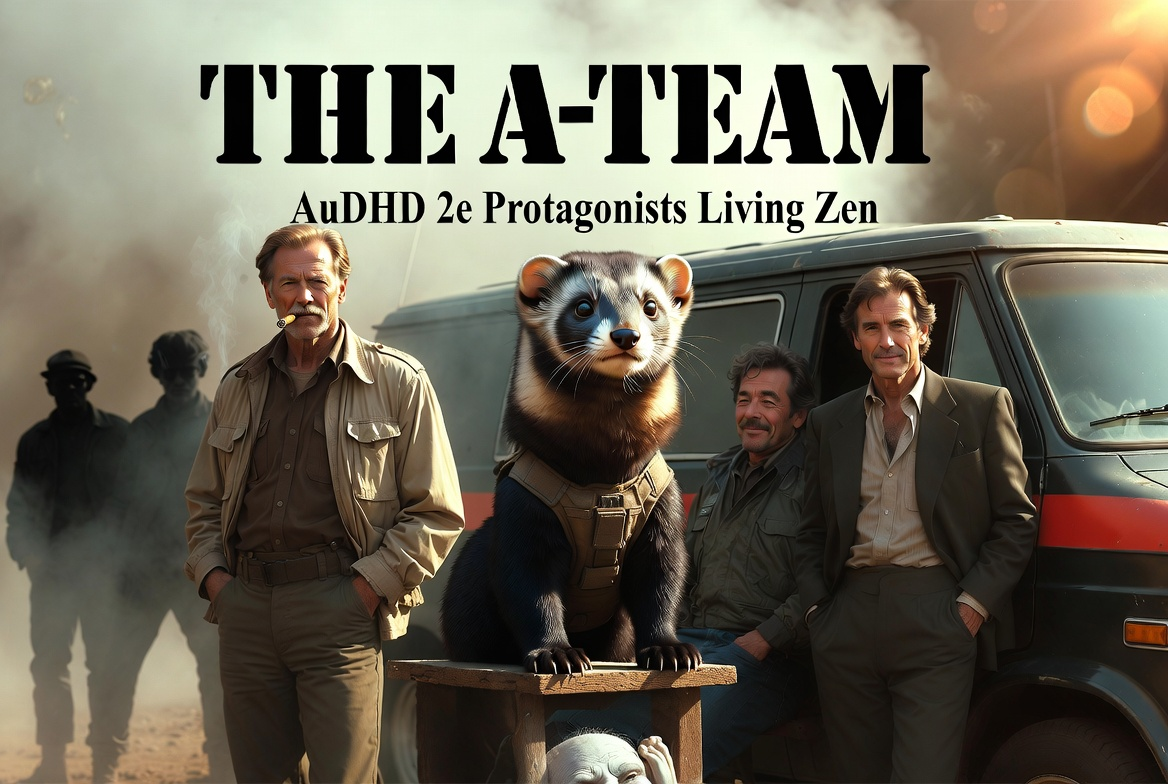
The Nightmare Man is a retired anaesthetist, a survivor of allergies to the world, utterly complicated descending necrotising mediastinitis that KO’d the chest and Vagi/Vaguses/vague thingies en passant, and pancreatic cancer (in that order, which tells you something about his relationship with improbability), an occasional philosopher, and a ferret of long standing. He writes on Medium about whatever catches his attention, which is most things and most people. He apologises to actual ferrets for the comparison, which was intended as a compliment and received, he is told, in that spirit.
메타데이터
- post_id
- 02bfb2aca67f
- slug
- the-ferrets-compendium-of-digital-concern-trolls-02bfb2aca67f
- url
- https://medium.com/@alangh616/the-ferrets-compendium-of-digital-concern-trolls-02bfb2aca67f
- canonical_url
- https://medium.com/@alangh616/the-ferrets-compendium-of-digital-concern-trolls-02bfb2aca67f
- author_url
- https://medium.com/@alangh616
- status
- ok
- fetched_at
- 2026-06-09 15:37:30