Handwriting Isn’t Dead — But Public Trust in Forensics Might Be
The irony of the digital age is that while we obsess over cybersecurity, we’ve casually discarded some of the most reliable analog…
Handwriting Still Exposes Fraud
The irony of the digital age is that while people obsess over cybersecurity, hacked metadata, synthetic voices, and AI-generated fraud, they have also grown strangely casual about one of the older evidentiary tools still standing in front of them. Handwriting is one of those tools. I am not talking about nostalgia, cursive drills, or handwritten letters from another century. I am talking about questioned-document work: forged checks, disputed signatures, anonymous threats, suspicious notes, altered records, and the physical evidence left behind when somebody still has to move a pen across a surface. NIJ’s plain-language guide on questioned documents still frames the work in exactly those terms, including authorship questions, signature authenticity, and document alteration.
Public trust in this field has slipped into an odd place. A loud layer of critics now treats all handwriting work as though it belonged in the same drawer as palm reading, personality memes, and internet theater. That flattening is lazy. Standards-based forensic handwriting examination is not a faith system. It is a forensic specialty concerned with discriminating features, comparison methods, sufficiency of material, reporting, and testimony, and NIST’s human-factors report was written precisely because the field is real enough to need tighter practice, better documentation, and stronger safeguards against error.
The Real Problem Is Not Ink
The real problem is not that handwriting stopped mattering. The real problem is that the public has become less capable of separating disciplined forensic work from folklore, and that confusion gets worse online.
When questioned-document evidence rubs up against a clean digital storyline, people often want the storyline to win automatically. A handwritten threat gets minimized because there is no email trail. A note gets accepted because the phone metadata looks orderly. A suspicious signature gets waved through because a digital timeline feels modern and therefore more objective. That is not how evidence works. Digital records can be altered, fabricated, selectively preserved, or misunderstood. Physical writing still leaves a different kind of trace, and in some cases it remains one of the few traces a faker cannot reproduce cleanly. NIST’s report makes the same broader point in more technical language by emphasizing the need to document discriminating features carefully and by treating handwriting examination as a pattern-comparison discipline with identifiable sources of human error, not as a magical intuition act.
AI Can Fake a Lot. Paper Still Pushes Back.
This is where the subject gets more relevant, not less. Generative AI can imitate signatures visually, produce synthetic documents, and help create fake narratives around records. It can mimic appearance. That does not mean it can faithfully reproduce the underlying movement characteristics, execution habits, and natural variation that a trained examiner is evaluating in real questioned-document work.
That is one reason NIST’s human-factors report, NIJ-supported measurement work, and training standards still matter. The issue is not whether a machine can make something look convincing on a screen. The issue is whether the questioned writing stands up when compared feature by feature against known writing under disciplined forensic methods. ABFDE’s certification process also reflects that distinction. The board does not train novices from scratch; it requires already trained document examiners and then tests whether they can support accurate opinions on multi-faceted real casework.
A few things still make questioned-document work valuable:
- disputed signatures and authorship questions still arise in wills, threats, checks, contracts, and anonymous notes
- trained examiners are expected to work from comparison features, sufficiency of material, and disciplined reporting, not from personality guesses
- newer digital fraud does not erase the value of physical writing evidence; in some cases it increases it
None of that places the field above criticism. It does place it outside the cartoon version critics like to attack.
Ethics and Evidence Are Not Optional
The field also has a real weakness, and pretending otherwise would be unserious. Not all examiners are trained equally. Not all testimony is equally careful. Not all labs manage human factors well. That is why the grown-up conversation is not “Is the field legit?” in the abstract. The better question is who is doing the work, how they were trained, what standards they follow, how they document features, how they express conclusions, and whether they can survive courtroom-level scrutiny without drifting past the evidence. NIST’s report exists because handwriting examination, like other forensic comparison disciplines, can be degraded by poor documentation, confirmation effects, sloppy reporting, and other human-factor failures.
That is not a reason to throw the field out. It is a reason to stop letting untrained YouTube personalities, Reddit pile-ons, and meme skeptics pretend they have said something serious by yelling junk science from the parking lot.
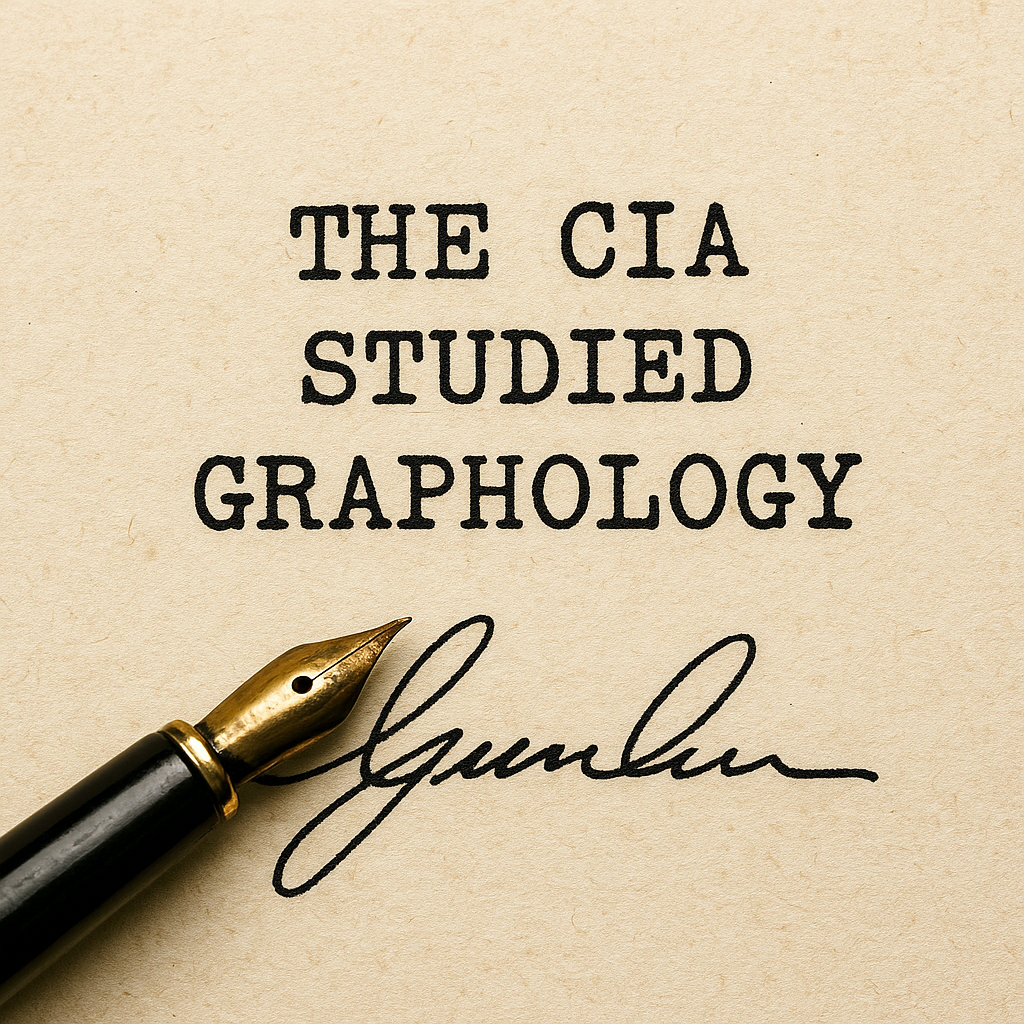
The CIA Footnote Is Not the Argument, But It Is a Footnote
I would not build the case for questioned-document work on intelligence-agency curiosity, and I do not need to. The modern case stands more cleanly on standards, certification, NIJ-supported guides, measurement science, and NIST’s human-factors recommendations. Still, one historical point is worth keeping straight because people love to call the field “woo” without checking their own history first.
CIA records released through the agency’s Reading Room show that MKULTRA Subproject 60 included graphology-related work and efforts to develop behavioral rating categories relevant to indirect assessment, and the broader document set references consultation with handwriting experts. That does not validate every claim ever made under graphology. It does show that U.S. intelligence was willing to spend time and money exploring handwriting-related behavioral assessment rather than dismissing it as beneath notice. The careful reading is narrower than the hype reading, but it is still worth knowing.
In a World of Synthetic Lies, Paper Still Speaks
Handwriting analysis is not about romance, and it is not about wanting the past back. It is about physical evidence that still resists some of the shortcuts people have come to trust too easily. In a world where digital narratives can be manufactured quickly, physical writing still carries evidentiary value when the material is sufficient and the examiner knows what they are doing.
The public does not need to treat questioned-document work as infallible. No serious forensic discipline deserves that kind of worship. The public does need to stop collapsing trained examination into internet folklore and stop acting as though metadata alone tells the whole truth. It never did.
Paper still speaks. The harder question is whether people still know how to listen.
Sources That Don’t Suck American Board of Forensic Document Examiners. (n.d.). About certification.
American Board of Forensic Document Examiners. (n.d.). FAQ.
Central Intelligence Agency. (n.d.). MKULTRA Subproject 60.
National Institute of Justice. (n.d.). A simplified guide to forensic document examination.
National Institute of Standards and Technology. (2020). Forensic handwriting examination and human factors: Improving the practice through a systems approach (NIST IR 8282).
National Institute of Standards and Technology. (n.d.). Forensic handwriting examination and human factors.
메타데이터
- post_id
- 02fbf8a73d52
- slug
- handwriting-isnt-dead-but-public-trust-in-forensics-might-be-02fbf8a73d52
- url
- https://medium.com/@drmozellemartin/handwriting-isnt-dead-but-public-trust-in-forensics-might-be-02fbf8a73d52
- canonical_url
- https://medium.com/@drmozellemartin/handwriting-isnt-dead-but-public-trust-in-forensics-might-be-02fbf8a73d52
- author_url
- https://medium.com/@drmozellemartin
- status
- ok
- fetched_at
- 2026-06-11 21:11:36



