Understanding the Hindu New Year
The Hindu New Year is a deeply symbolic and spiritually significant celebration that varies across regions but unites millions in the…
Understanding the Hindu New Year
The Hindu New Year is a deeply symbolic and spiritually significant celebration that varies across regions but unites millions in the observance of tradition and culture. While the world marks January 1 as the beginning of a new year, the new year of Hindu tradition aligns with the cycles of the moon and sun, making it a more astrologically significant transition. This event is more than just a calendar change; it is a profound moment of renewal, spiritual reflection, and festive joy.
What is Vikram Samvat?
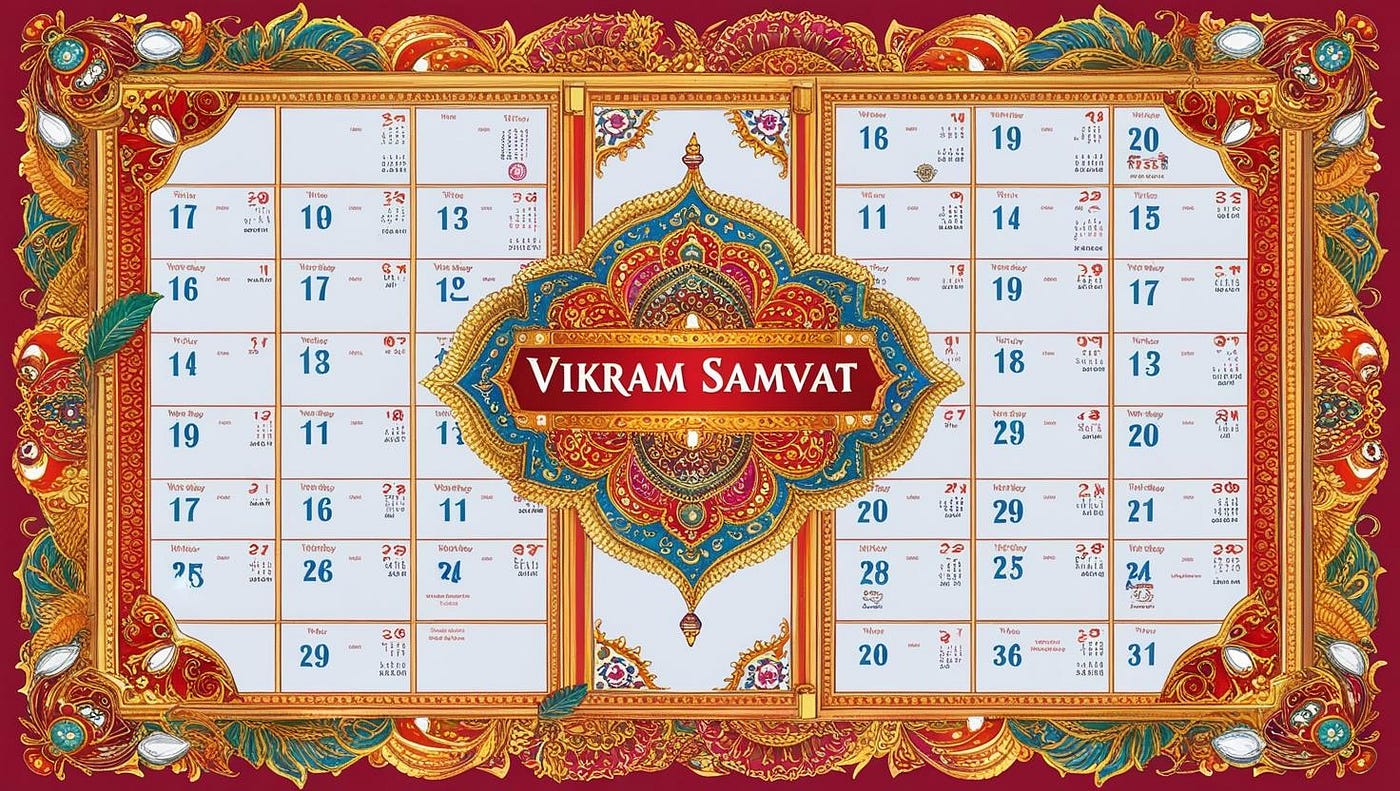
Vikram Samvat is the ancient Hindu calendar established by King Vikramaditya of Ujjain after his victory over the Sakas in 57 BCE. It is a lunisolar calendar system widely followed in many parts of India, especially in the states of Gujarat, Rajasthan, Maharashtra, and Uttar Pradesh. The Vikram Samvat New Year generally begins after Diwali, making it one of the most awaited celebrations in the Hindu tradition. The phrase “happy new year Vikram Samvat” is thus a common wish during this auspicious time, marking both a cultural and spiritual reset.
The Spiritual Essence of Happy Hindu New Year
When people greet each other with “happy Hindu new year” or “happy new year Hindu calendar,” it goes beyond formalities. This is a time for honoring deities, performing rituals, and invoking blessings for health, prosperity, and wisdom. The Hindu New Year wish, often expressed as “happy new Hindu year,” carries a heartfelt desire for personal transformation and community well-being. It aligns with cosmic energies that are believed to influence individual and collective destinies.
Hindu New Year 2025: A Preview
The Hindu New Year 2025, based on the Vikram Samvat calendar, will begin after Diwali, just like every year. The Vikram Samvat 2080 start date will fall around early November 2025, immediately following the celebration of Diwali. This transition from Diwali to the new year of Hindu tradition carries deep mythological and astronomical significance. For many, this marks a spiritual new year as well, where they leave behind the baggage of the past and enter into a realm of renewed aspirations and clarity.
The Role of Diwali in the Hindu New Year
Diwali, the festival of lights, is integrally tied to the beginning of the Hindu New Year in many Indian states. It symbolizes the triumph of light over darkness and good over evil. In regions like Gujarat, Diwali celebrations culminate with the new year for Hindu families. This is when people exchange sweets, send Hindu New Year wishes, and greet each other with phrases like “happy new year after Diwali.” The Hindu new year Diwali connection showcases how closely festival and tradition are intertwined in Indian culture.
How Hindus Celebrate the New Year
The customs surrounding the Hindu New Year differ across India. In the western states, especially Gujarat, the day after Diwali is celebrated as the first day of Vikram Samvat. In North India, rituals include cleaning homes, lighting oil lamps, and preparing special dishes. Wishes like “happy Indian new year” or “happy new year for Hindu” are shared generously. Meanwhile, in southern states, Ugadi and Vishu mark the beginning of the new year according to their respective calendars. Despite regional differences, the message of renewal and divine gratitude remains constant.
Happy New Year Wishes Diwali: The Tradition Lives On
A key element of the new year of Hindus is the exchange of heartfelt wishes. Greetings such as “happy Hindu new year,” “happy new year in Hindu,” and “happy new year in India” flood social media, personal messages, and festive cards. Families come together, offer prayers, and share blessings. Business owners start new accounting books on this day, marking a fresh beginning in their commercial endeavors. This is known as “Chopda Pujan” in Gujarati tradition and underscores the spiritual as well as economic reset.
Importance of Samvat New Year
The term “Samvat New Year” refers to the commencement of a new year in the Vikram Samvat calendar. It is a date that many consider more significant than January 1 because of its spiritual context. It is seen as a new cycle of karma, where devotees aim to cleanse the past and align their lives with dharma (righteousness). Wishes such as “hindu happy new year date” and “new year for Hindu” echo this sentiment of fresh beginnings with divine alignment.
New Year for Hindu Households: A Sacred Time
In Hindu households, the new year is marked with rituals like Lakshmi Puja, annadan (food donation), and temple visits. It is a family-centric celebration with deep religious tones. The essence of Hinduism new year revolves around spiritual awakening and honoring of ancestral traditions. Whether it is “happy new year wishes Diwali” or “Hindus new year,” the celebration is imbued with reverence and joy.
Why the Hindu Calendar Happy New Year Matters
The Hindu calendar happy new year is important because it is not just a human-made system but is tied to planetary movements and cosmic principles. It aligns with natural rhythms, unlike the Gregorian calendar, which follows a linear time structure. That’s why many believe that celebrating the happy new year in Hindu style brings balance and blessings. People pray for abundance and express gratitude for the cycles of nature that sustain life.
The Relevance of Hindu New Years in Today’s World
Despite globalization and the growing dominance of the Gregorian calendar, Hindu new years remain vital cultural anchors. From schoolchildren to spiritual leaders, from homemakers to entrepreneurs, everyone partakes in this grand observance. Wishes like “happy new year Hindu,” “hindu new year wish,” and “new Hindu year” reflect a longing for cultural continuity in a rapidly changing world.
Regional Variations in Celebrating Happy Hindu New Year
Across India, various festivals mark the beginning of the new year based on regional calendars. For example, Ugadi in Karnataka and Andhra Pradesh, Gudi Padwa in Maharashtra, Baisakhi in Punjab, and Vishu in Kerala. All these festivals are essentially different expressions of the Hindu new year. Yet, the Vikram Samvat happy new year holds a unifying thread, especially in Northern and Western India, where it closely follows Diwali.
From Past to Present: The Continuity of Vikram Samvat
The Vikram Samvat calendar has endured for centuries, sustaining the spiritual framework of Hindu society. Every year, as people say “happy Hindu new year” or “happy new Hindu year,” they not only follow a tradition but also reaffirm their cultural identity. The start of Vikram Samvat 2080 in 2025 will once again remind devotees of this lineage and encourage them to uphold its values.
A Time of Hope and Renewal
The Hindu New Year is not just an occasion to celebrate but a time to reflect, reset, and recharge spiritually. It is a time to make new beginnings with the blessings of the divine. Wishes like “happy new year Hindu calendar” and “hindu new year 2025” echo across communities, strengthening the bond between people and their spiritual heritage.
Historical Origins of the Hindu New Year
The origins of the Hindu New Year can be traced back thousands of years to ancient Vedic times. Unlike the modern January 1st New Year based on the Gregorian calendar, the Hindu New Year is deeply embedded in cosmic cycles and astronomical calculations. The concept of time in Hinduism is cyclical, marked by yugas, manvantaras, and kalpas. The usage of Vikram Samvat, initiated by King Vikramaditya, and Shaka Samvat, introduced by King Shalivahana, highlights how Indian civilizations used regal events to set epochal calendars. When people today celebrate “Happy New Year Hindu Calendar,” they are continuing an age-old tradition that honors time not merely as a measure but as a sacred flow.
Role of Astrology in Determining Hindu New Year Dates
Astrology plays a vital role in determining the start of the Hindu New Year. Panchang, the traditional Hindu almanac, is based on lunar tithis and planetary transits. The date of the Hindu New Year is often fixed when the sun enters Aries (Mesha Rashi), marking the solar new year. In many parts of India, this coincides with mid-April. However, in North India and among Gujarati communities, it falls around October-November, aligning with Diwali. Terms like “Happy New Year Hinduism” and “New Year of Hindu” take on deeper meaning when one understands the astrological precision behind these timings. The alignment of celestial bodies is considered auspicious for new beginnings, rituals, and personal resolutions.
Celebrating Hindu New Year in Temples
Hindu temples become the epicenter of celebration during the new year. From dawn until night, temples resonate with chants, bhajans, and Vedic hymns. Special aartis are performed, idols are adorned in festive clothes, and massive feasts (prasadam) are distributed among devotees. In South India, temples like Tirupati, Meenakshi, and Sabarimala see enormous footfalls during Ugadi, Vishu, and Puthandu respectively. In Gujarat and Maharashtra, temples remain open throughout the night after Diwali to welcome the Hindu New Year. People greet each other with phrases like “Happy New Year for Hindu” or “Hindu Happy New Year” while offering flowers and coconuts to deities.
Business and Financial Significance of Vikram Samvat New Year
For merchants, traders, and business families, the Vikram Samvat New Year is not just a religious occasion but a crucial financial milestone. In Gujarat and Rajasthan, new account books or “Chopda” are opened with Ganesh-Lakshmi Puja to invoke blessings for wealth and prosperity in the coming year. This is called “Muhurat Trading” in financial markets. Businessmen write “Shubh Labh” on their ledgers and seek divine blessings before starting the fiscal year. When they say “Happy New Year Vikram Samvat,” it encapsulates hope for successful ventures and ethical growth aligned with dharma.
Family Traditions and Community Gatherings
The Hindu New Year is incomplete without family traditions. Early morning oil baths, wearing new clothes, preparing festive dishes, decorating homes with rangolis, and exchanging gifts form the cultural essence of the celebration. Families come together to perform collective pujas and share stories of the past year. Communities organize fairs, dance performances, and cultural contests to bring people together. Expressions like “Happy New Hindu Year” and “Indian New Year Wishes” are shared during such gatherings. These moments create a collective emotional experience that connects generations through shared rituals.
Educational and Cultural Events Marking the New Hindu Year
Many educational institutions and cultural organizations mark the Hindu New Year with programs that showcase India’s heritage. Schools often organize special morning assemblies with patriotic songs, classical dances, and dramas based on mythological stories. In temples and cultural centers, scholars deliver lectures on the significance of Vikram Samvat and the Hindu calendar. Children are taught the meaning of greetings such as “Hindu New Year Wish” and “Happy New Year in Hindu.” These programs foster cultural literacy and help the younger generation understand the depth behind the customs.
Media and Entertainment Coverage of Hindu New Year
Mainstream media and OTT platforms have started acknowledging the significance of the Hindu New Year more prominently. News channels broadcast temple celebrations, astrologers give predictions for the new year, and devotional songs are aired throughout the day. Movies and TV series release special episodes on this occasion, and celebrities share “Happy Hindu New Year” messages on their social media handles. Phrases like “Happy New Year Wishes Diwali” and “Hindu Calendar Happy New Year” trend widely, indicating increasing public enthusiasm and cultural participation.
Environmental Significance and Sustainable Practices
Many Hindu New Year customs are deeply rooted in environmental awareness. People clean their homes, dispose of old items mindfully, and plant tulsi or neem trees as a symbol of health and renewal. Food offerings are made using organic, home-grown ingredients. Festivals like Vishu include the tradition of seeing auspicious items like fruits, vegetables, and flowers as the first sight of the day. This tradition fosters respect for nature. As more people become eco-conscious, they connect sustainability with tradition through practices aligned with the “Hindu New Year Diwali” celebrations.
The Role of Women in Hindu New Year Celebrations
Women play a central role in organizing and executing the rituals of the Hindu New Year. From preparing special foods and decorating the home to leading prayers and guiding children through the customs, their role is multifaceted and essential. In many regions, women organize community rangoli competitions, diya lighting events, and group prayers. Their greetings such as “Hindu New Year Wishes” are often filled with emotional depth, invoking prosperity and protection for the whole family. Their contribution reflects the integral connection between the feminine divine and new beginnings.
Youth Engagement with the Hindu New Year
The younger generation is increasingly engaging with the Hindu New Year through digital storytelling, photography, blogging, and social media outreach. Many youth-led organizations hold workshops explaining the significance of terms like “Vikram Samvat Happy New Year” or “Happy Hindu New Year 2025” in relatable formats. Short films, reels, and podcasts are being created to blend ancient rituals with modern expressions. This engagement not only keeps the tradition alive but also makes it vibrant and adaptable to changing times.
Exploring the Concept of Time in Hindu Philosophy
The Hindu concept of time is cyclical and infinite. Unlike the linear view of time in the West, Hinduism considers time as a repeating pattern of creation, preservation, and destruction. This philosophy underlies the celebration of every new year. The new cycle represents not just change but also continuity. “Hinduism New Year” is thus an acknowledgment of the eternal flow of time where every beginning has its seed in the end. Celebrating the “Hindu New Year 2025” is a way of reconnecting with this deeper cosmic understanding.
Interfaith Harmony and the Indian New Year
India’s pluralistic society allows different communities to participate in each other’s festivals, including the Hindu New Year. Friends from Christian, Muslim, Sikh, Jain, and Buddhist backgrounds often send “Happy New Year in India” wishes to their Hindu friends. Schools and workplaces across India celebrate the occasion with inclusive activities, showing respect for diversity. This harmony is central to India’s social fabric, making “Happy Indian New Year” not just a greeting but a message of unity.
How to Send Hindu New Year Wishes Online
In the digital age, sending Hindu New Year wishes has become easier and more creative. People use apps and websites to generate custom greeting cards with messages like “Hindu New Year Wish,” “Happy Hindu New Year,” or “New Year for Hindu.” Voice messages, video calls, and curated playlists are also used to convey emotions. Whether it’s through WhatsApp, Instagram, or email, the gesture of sending “Hindu New Year Wishes” reflects personal affection and cultural pride.
Hindu New Year as a Festival of Hope
Every new year brings a sense of hope, but the Hindu New Year, with its sacred rituals and spiritual practices, offers a unique kind of optimism. It is a time to leave behind negativities, forgive past grievances, and embrace the coming days with trust in divine grace. The phrase “Happy New Year Hindu” is more than a customary greeting — it is a blessing, a mantra, and a prayer. It affirms faith in life’s cycles and the belief that good times will return with dharma and patience.
Conclusion: A Celebration Beyond Time
Whether one celebrates it as Vikram Samvat, Hindu New Year after Diwali, or simply as the new year of Hindu tradition, the essence remains the same — transformation and transcendence. The calendar changes, but the spirit remains timeless. As you greet loved ones with a heartfelt “happy new year for Hindu,” remember that you are participating in one of the world’s most ancient, vibrant, and spiritually enriching traditions.
Join the celebration and immerse yourself in the wisdom and joy of the Hindu New Year: https://rajeevprakash.com/join-the-celebration-happy-hindu-new-year/
메타데이터
- post_id
- 02fedf4ffe8c
- slug
- understanding-the-hindu-new-year-02fedf4ffe8c
- url
- https://medium.com/@shashiastrodunia/understanding-the-hindu-new-year-02fedf4ffe8c
- canonical_url
- https://medium.com/@shashiastrodunia/understanding-the-hindu-new-year-02fedf4ffe8c
- author_url
- https://medium.com/@shashiastrodunia
- status
- ok
- fetched_at
- 2026-07-19 17:00:11