Control access, standardise data
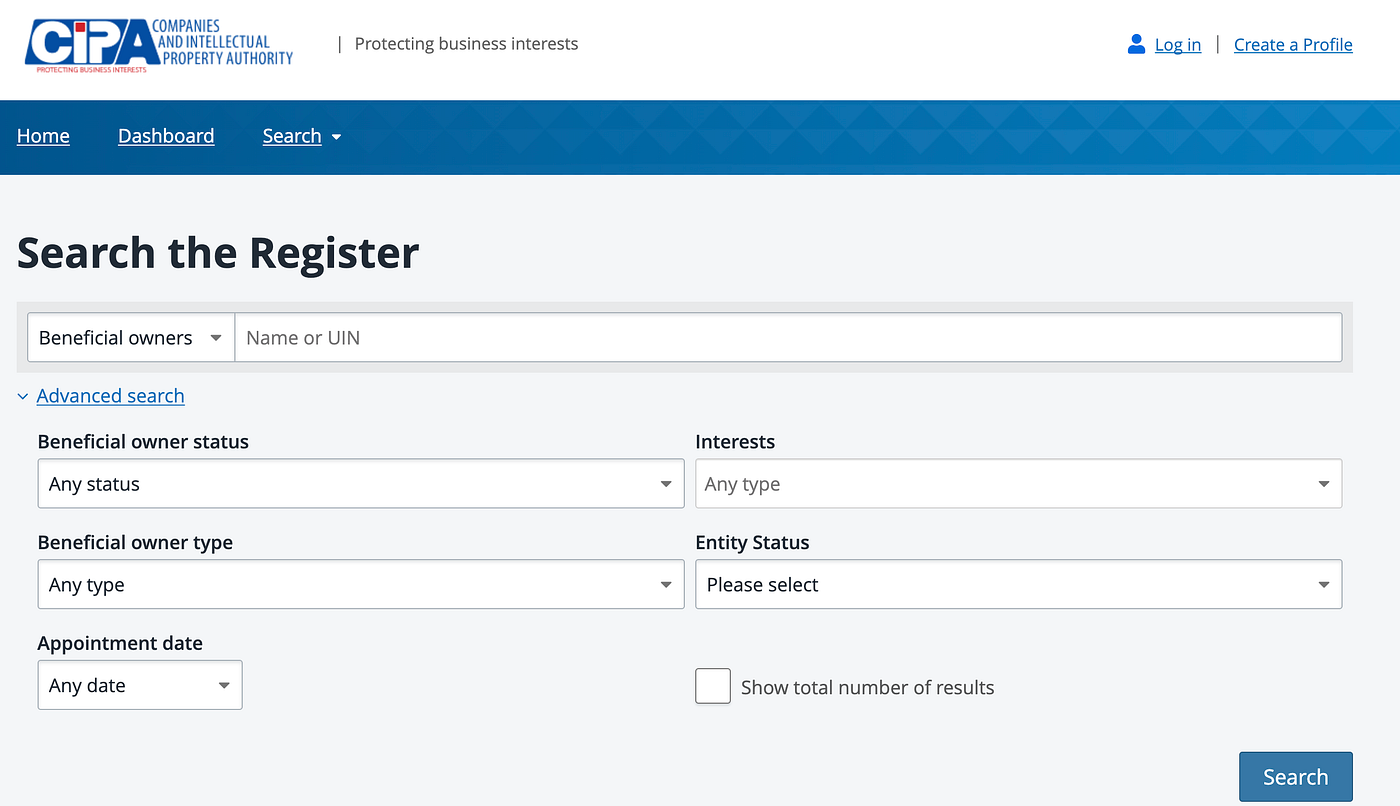
Today it is difficult both to access and to understand beneficial ownership data.
Control access, standardise data

Today it is difficult both to access and to understand beneficial ownership data.
To achieve international anti-corruption goals on ending anonymous ownership, we need to either solve the access problem or the data problem — and I want to argue that it is easier to solve the data problem.
The access problem
Most sources of beneficial ownership data are not fully public and won’t be— but international standard setters agree that government officials, law enforcement, expert investigators, procurement officials and (increasingly) users with legitimate interest should be able to access such information.
The European Union is doing work to standardise access to beneficial ownership information via requiring member states to transpose articles 11, 12 and 13 of the Sixth Anti-Money Laundering Directive by 10 July 2026.
The UK is also pushing its overseas territories and crown dependencies to follow the EU’s lead on introducing “broad and inclusive” legitimate interest access by the same deadline%20(priority%20commitment).).
But — let’s be honest — for the foreseeable future, users will have to jump through a wide variety of separate national processes to prove who they are and why they should be given access to beneficial ownership information.
The bigger challenge is that, once key users gain access, all the information and data is stored and made available in line with different data rules, models and formats with a dizzying number of national and international variations and nuances. This makes the information difficult to understand and use.
The data problem
Beneficial ownership information lies scattered across a wide range of registers and sources — and information often needs to be combined to understand international or complex corporate networks.
Authorities and jurisdictions face challenges in setting up robust beneficial ownership registers which can hold high-quality, up-to-date information on how companies and trusts are owned or controlled and which can easily be shared with approved users or exchanged internationally.
The good news is that this is exactly why the Beneficial Ownership Data Standard was created and why it offers free expert guidance to help solve the data problem by increasing data quality and interoperability:
The Beneficial Ownership Data Standard is the world’s leading open standard providing a specification for modelling and exchanging information on the beneficial ownership and control of companies, trusts and other types of entities and arrangements.
Its documentation is available in English, French, Spanish and Russian.
For anyone grappling with issues relating to trusts, nominee arrangements, complex ownership chains, state ownership, public listed companies, identifiers, transliteration or tracking how information changes over time, there is expert guidance and example data.
It is already in use across the world and has been developed and tested against the beneficial ownership data from a wide range of jurisdictions:

The value of having more standardised data has been emphasised by many of the world’s leading standards setters in this space:

The development of robust, innovative beneficial ownership registers in Armenia, Bermuda and Botswana has been sped up and delivered for less money, thanks to the availability of this free, open standard.
It also offers answers for challenges on the horizon such as collecting beneficial ownership information on real estate, in business wallets and increasing the transparency of complex, corporate structures which span multiple countries.
Having more data formatted in line with a common standard like BODS would help solve the data problem by making understanding and using beneficial ownership data a lot easier.
And did I mention it’s free?
For four years, I was the product owner of the Beneficial Ownership Data Standard, the world’s leading open standard for beneficial ownership information and continue to advocate to improve beneficial ownership data quality and standardisation. To learn more or if you need technical guidance or consultancy support, contact me via beneficialownership.co.uk.
메타데이터
- post_id
- 03287d82eb9d
- slug
- control-access-standardise-data-03287d82eb9d
- url
- https://medium.com/@stephenabbottpugh/control-access-standardise-data-03287d82eb9d
- canonical_url
- https://medium.com/@stephenabbottpugh/control-access-standardise-data-03287d82eb9d
- author_url
- https://medium.com/@stephenabbottpugh
- status
- ok
- fetched_at
- 2026-06-09 14:34:10