Beyond mere “translation”: the underlying logic of keyword localization translation
In global digital marketing, keywords serve as the primary bridge connecting users to products. Yet many companies fall into a common…
Beyond mere “translation”: the underlying logic of keyword localization translation
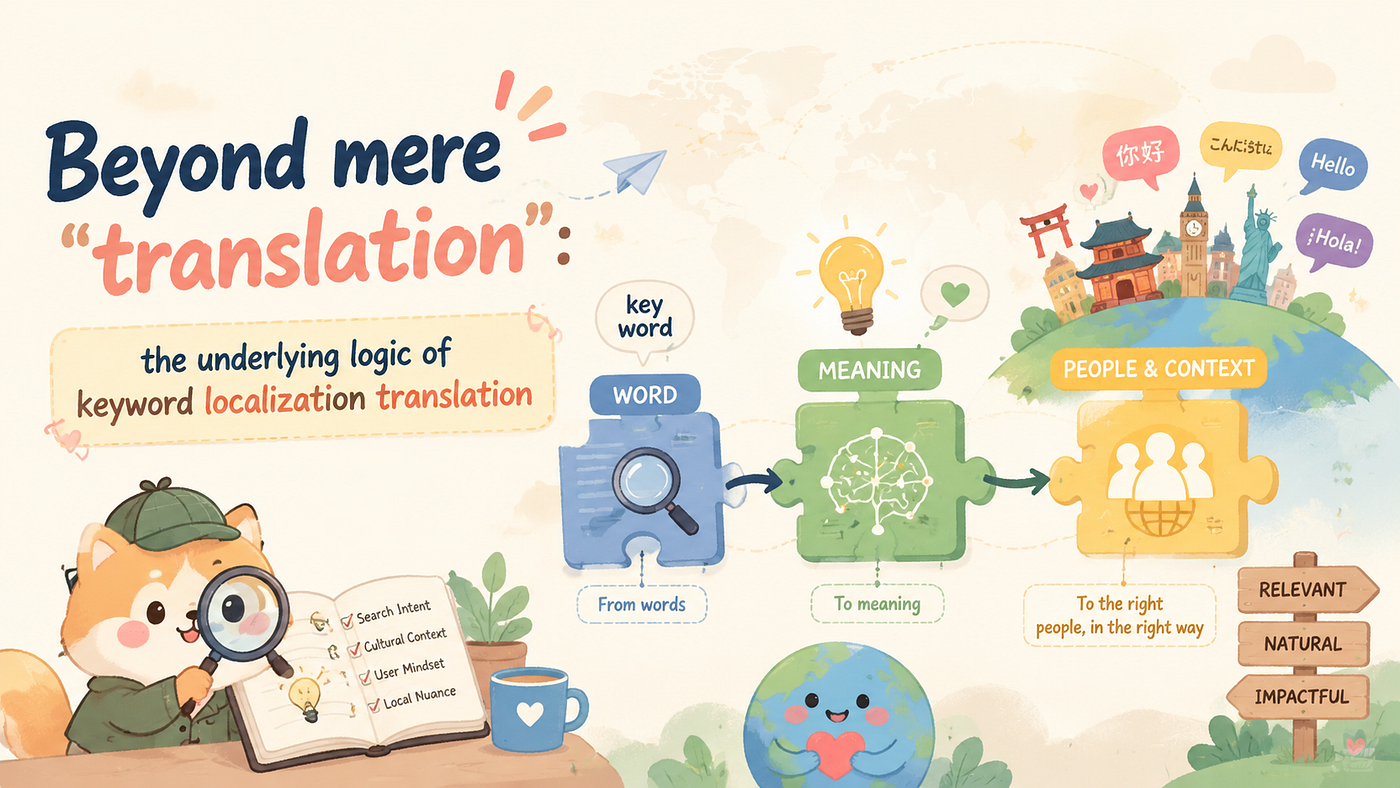
In global digital marketing, keywords serve as the primary bridge connecting users to products. Yet many companies fall into a common misconception: they view keyword strategy merely as translating native-language terms word-for-word into target languages. This “translation mindset” is precisely the root cause of poor SEO performance and soaring advertising costs.
What is “keyword localization translation”?
It consists of three progressive levels:
First layer: Translation — literal conversion, e.g., translating “notebook computer” as “laptop”, which only improves readability.
Second layer: Localization — adapting to contextual and regional variations; for example, “apartment” in the United States versus “flat” in the UK.
Third layer: Keyword localized translation — deeply aligns search intent by analyzing actual phrases entered by target users and dynamically adjusts based on search data.
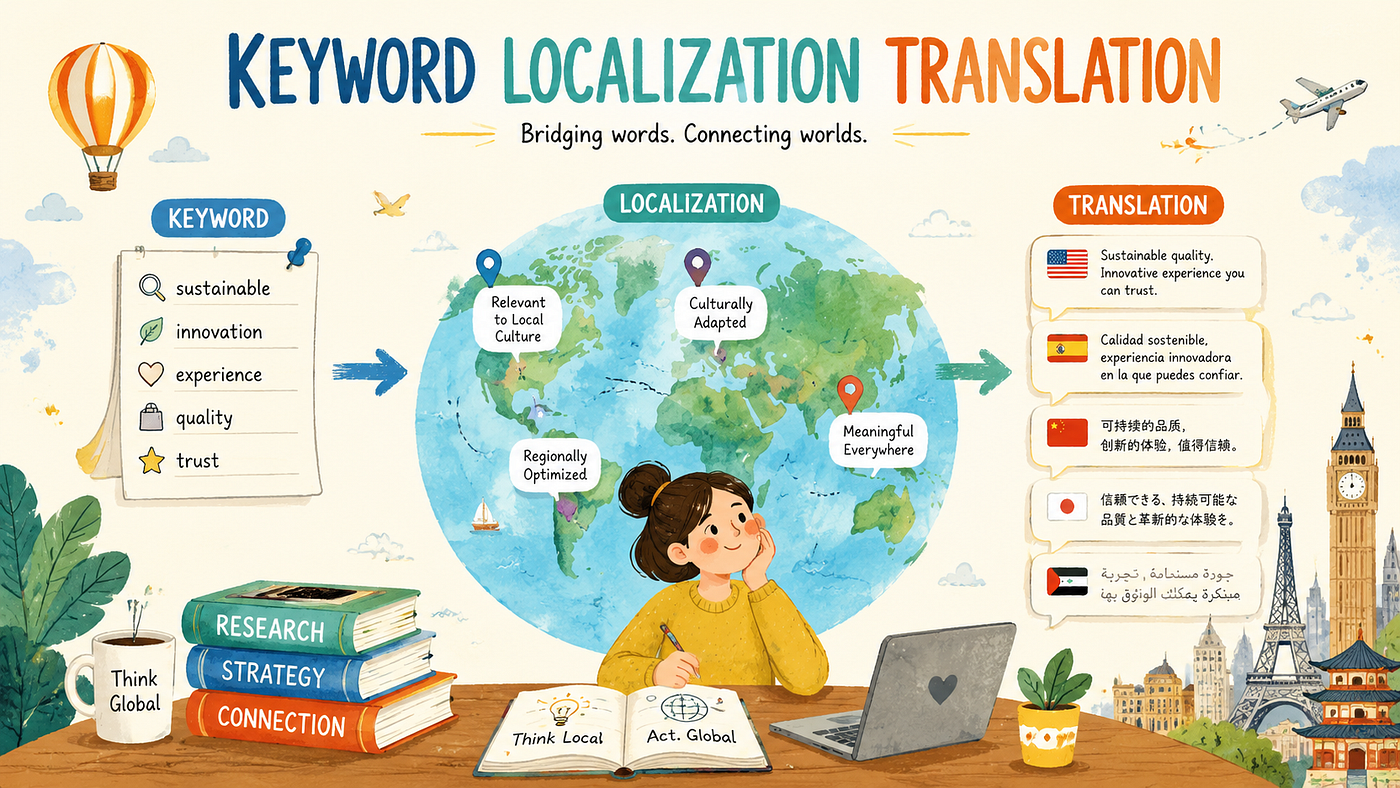
The Three Major Traps of Literally Translating Texts
Un localized searches: While grammatically correct, they are irrelevant to local users. For example, a literal translation like “high-efficiency energy-saving air conditioner” generates far fewer search queries than the localized version “high SEER AC unit”.
Cultural bias: Colors, numbers, and slang carry vastly different connotations across cultures, potentially leading to misunderstandings or offense.
Intention mismatch: A literal translation focuses solely on product terms while ignoring the varying search behaviors across user decision-making stages (information gathering, price comparison, purchase).
Four-step implementation method
Intention Classification: First label the intent of source keywords (navigation, information, transaction, business inquiry) to guide subsequent word selection.
Competitor and Variant Research: Use tools like SEMRush or Google Keyword Planner to identify commonly used synonyms and competitor terms in the target market, and verify language variants (e.g., distinguishing between French for France and Canada).
Cultural calibration: Involve native speakers to assess the cultural appropriateness of candidate terms, eliminate words with inappropriate associations, and create entirely new localized terms when necessary.
Data validation and iteration: Run small-scale ads or monitor SEO rankings, track click-through rates and conversion rates, and continuously optimize based on search term reports.
Only when your keywords are no longer “translated foreign terms” but “native terms rooted in local culture” can a brand truly transition from “going global” to “going deep into local markets.” This represents not merely a triumph in traffic acquisition, but a pivotal step in any globalization strategy.
메타데이터
- post_id
- 032b1d4e9ead
- slug
- beyond-mere-translation-the-underlying-logic-of-keyword-localization-translation-032b1d4e9ead
- url
- https://medium.com/@asoranknet/beyond-mere-translation-the-underlying-logic-of-keyword-localization-translation-032b1d4e9ead
- canonical_url
- https://medium.com/@asoranknet/beyond-mere-translation-the-underlying-logic-of-keyword-localization-translation-032b1d4e9ead
- author_url
- https://medium.com/@asoranknet
- status
- ok
- fetched_at
- 2026-07-25 17:14:12