Investing $3,000 in a Scooter in Turkey: Is the Daily $7.5 Really Possible?
Every time people hear about “passive income from scooters,” they react in one of two ways: either “that sounds interesting” or “that…
Investing $3,000 in a Scooter in Turkey: Is the Daily $7.5 Really Possible?
Every time people hear about “passive income from scooters,” they react in one of two ways: either “that sounds interesting” or “that sounds too good to be true.” The honest answer is that it can be real — but only if you understand what exactly is generating the return, what assumptions sit behind the numbers, and what can go wrong.
In our case, the question is simple: if one scooter in Turkey costs around $3,000 to put into operation, is it really possible for that scooter to generate about $7.5 per day for an investor? The short answer is: possible, yes; guaranteed, no.
This article breaks down how the model works, where the number comes from, and what a serious private investor should check before treating scooter income as a real asset class.
Why this model exists at all
Turkey is one of the markets where small urban transport is moving from “optional convenience” to everyday infrastructure. In dense coastal cities with tourism, young populations, heavy traffic, and high taxi costs, two-wheel mobility fills a real gap between walking, public transport, and private car ownership.
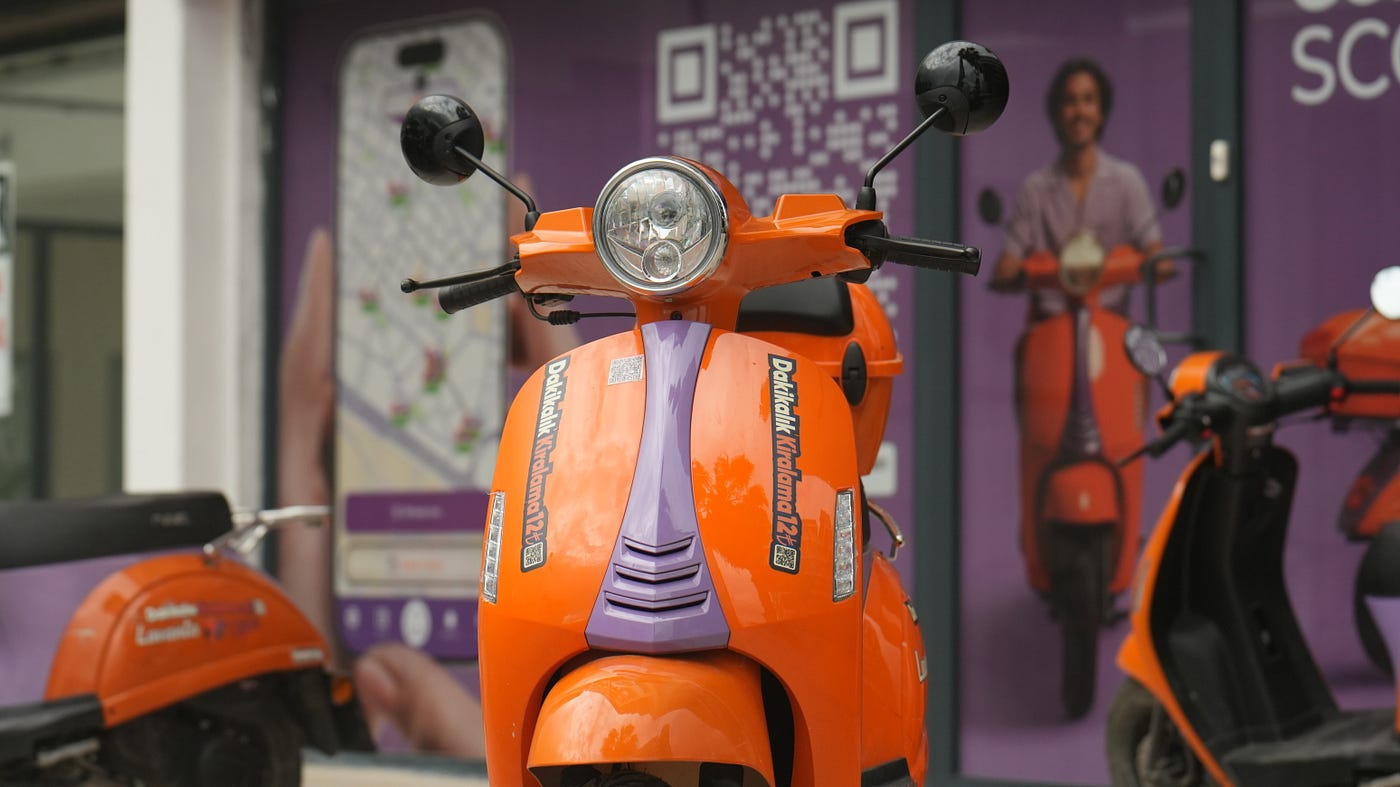
Lavanta Ride built its model around 50cc gasoline scooter sharing in Antalya. The logic is not to sell a financial product first and then find a story around it. The logic is the other way around: operate a real mobility business, then allow private investors to own individual scooters that are placed into that operating fleet.
That distinction matters. If the operational business is weak, no spreadsheet will save the investor return.
Where the $7.5 per day comes from
According to the investor presentation, one scooter is priced at about $3,000, with a target average daily income of $7.5 and an estimated payback period of around 13 months. In annualized terms, that implies gross income of roughly $2,737.50 per scooter before considering all real-life variability in utilization, seasonality, maintenance, downtime, and fleet management.
The number becomes more understandable if you stop thinking in “investment language” and instead think in operating language. A scooter earns because:
- it is used repeatedly throughout the day by paying riders;
- the company handles the app, dispatching, support, maintenance, and turnover;
- demand comes from a mix of local users and tourist traffic;
- the asset is shared, not tied to one customer or one long lease.
In other words, the $7.5 is not “interest.” It is operating income generated by a real vehicle inside a real transport system.
Why investors find this attractive
For many private investors, the appeal is easy to understand. The entry ticket is relatively low compared with real estate, franchise ownership, or direct startup investing. A scooter is also a visible, understandable asset: you are not buying a line in a complex fund structure, but a physical unit that goes into a functioning fleet.
There is also a behavioral advantage. A lot of small investors do better with assets they can explain in one sentence: “I own a scooter in a rental fleet in Antalya, and I receive income from its operation.” Compared with abstract high-yield promises, this feels more tangible and easier to monitor.
That said, tangibility is not the same as safety. A scooter may be easier to understand than a venture fund, but it is still an operating asset exposed to demand, damage, downtime, regulation, and execution risk.
What has to be true for $7.5/day to work
For the daily target to be realistic over time, several things must hold at once.
1. The city must produce enough rides
The entire model depends on real usage density. If scooters spend too much time idle, the daily average drops quickly.
2. Operations must be disciplined
A scooter only earns when it is available, functional, trackable, and properly managed. Weak maintenance, delayed recovery, poor fueling logistics, or bad app performance all translate directly into lower investor returns.
3. Damage and fraud must stay within model limits
Shared transport assets live in the real world, not inside a spreadsheet. Theft, vandalism, rough use, accidents, and misuse are not theoretical risks — they are part of the business and must be priced into the system.
4. The operator must know how to scale
A few scooters can be a pilot. An investor model needs a repeatable fleet system: software, support, service routines, unit economics, and local execution.
If one of these four pillars weakens, the $7.5 figure becomes much harder to sustain.
What makes the model more credible
There are a few reasons why this is more credible than a generic “earn from mobility” pitch.
First, the model is tied to an operating business with its own app, service logic, and physical fleet, rather than just a resale promise. Second, the returns are framed through scooter-level economics, not purely through vague passive-income language. Third, the payback period presented — around 13 months — is aggressive, but not absurdly disconnected from transport-asset utilization if the fleet is genuinely active.
That does not make it safe. It makes it analyzable.
Full transparency
This is the section many investment articles skip, so let’s make it explicit.
What the $7.5/day is
It is a target operating income figure presented in investor materials, not a legally guaranteed daily payout.
What it is not
It is not a bank deposit, not a bond coupon, not a regulated fixed-income instrument, and not a guaranteed passive return.
What can reduce the real result
Real returns can be lower because of:
- seasonality in tourism and city demand;
- downtime from repairs or maintenance;
- slower-than-expected utilization;
- accidents, theft, or vandalism;
- changes in local regulation or operating conditions;
- scaling costs inside the company itself.
What investors should ask before investing
A serious private investor should ask for:
- how payouts are calculated;
- what percentage is gross vs. net;
- who owns the scooter legally;
- what happens if the scooter is damaged or written off;
- whether there is insurance and what it actually covers;
- how downtime is reported;
- how often investors receive reporting and in what format.
Most important point
A scooter investment should be treated like a small operating-asset investment, not like guaranteed passive income.
So, is the daily $7.5 really possible?
Yes — as an operational target inside a functioning, high-use scooter fleet, it is possible. But it only makes sense if the underlying city economics, utilization, and operator execution are strong enough to support it.
If you are evaluating this kind of opportunity, the right question is not “Can a scooter make $7.5 per day?” The right question is: What has to happen every day, operationally, for that number to remain true over time?
메타데이터
- post_id
- 032c562f5ceb
- slug
- investing-3-000-in-a-scooter-in-turkey-is-the-daily-7-5-really-possible-032c562f5ceb
- url
- https://medium.com/@natalia.kolieva.business/investing-3-000-in-a-scooter-in-turkey-is-the-daily-7-5-really-possible-032c562f5ceb
- canonical_url
- https://medium.com/@natalia.kolieva.business/investing-3-000-in-a-scooter-in-turkey-is-the-daily-7-5-really-possible-032c562f5ceb
- author_url
- https://medium.com/@natalia.kolieva.business
- status
- ok
- fetched_at
- 2026-06-09 15:37:30