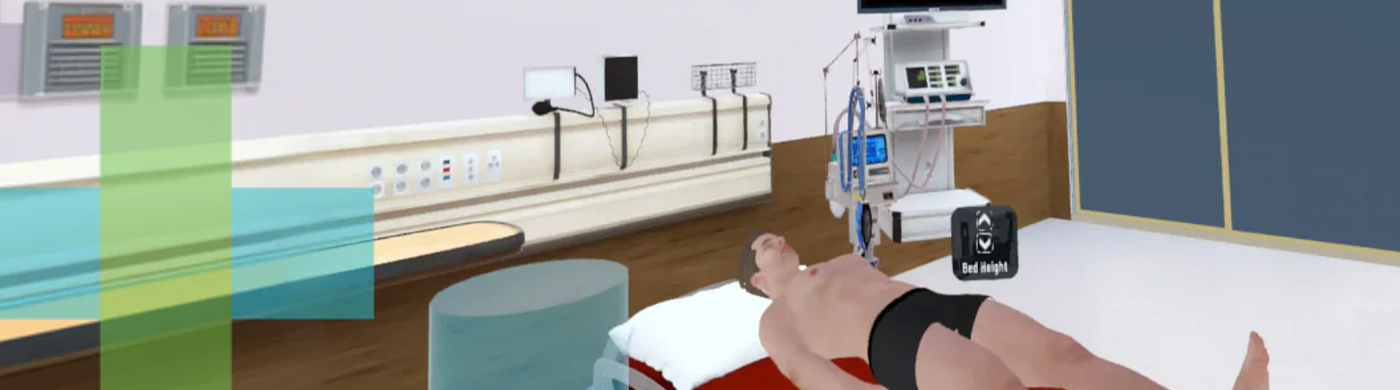
What Are the Advantages of VR BLS Training Over Traditional Courses?
For hospital leaders, VR BLS training delivers measurable business value that traditional manikin-based courses can’t match: lower training…
What Are the Advantages of VR BLS Training Over Traditional Courses?
For hospital leaders, VR BLS training delivers measurable business value that traditional manikin-based courses can’t match: lower training costs, reduced compliance risk, less clinical downtime, and objective competency data across every site. By replacing scheduled, labor-intensive classroom sessions with scalable on-demand practice, virtual reality turns Basic Life Support (BLS) training from a recurring cost center into a measurable driver of patient safety and operational efficiency.
Here’s why hospitals and academic medical centers are rethinking how they invest in BLS training.
1. Lower Total Cost of Training
Traditional CPR training carries hidden, recurring costs: manikin purchase and maintenance, instructor hours, facility space, and — most expensively — clinical staff pulled off the floor for scheduled classes. VR BLS training compresses these into short, self-directed modules, reducing cost per learner while freeing instructors to focus on high-value coaching instead of routine drills.
2. Reduced Compliance and Liability Risk
Certification proves a moment in time; it doesn’t prove sustained competency. When skills decay between one- to two-year cycles, hospitals carry silent risk during real emergencies. VR training with objective performance tracking gives administrators defensible, audit-ready evidence that staff are genuinely competent — not just certified — strengthening patient safety and reducing liability exposure.
3. Less Clinical Downtime
Booking manikin labs means coordinating rooms, instructors, and shift schedules, often pulling clinicians away for hours. On-demand VR modules of 5–10 minutes fit into existing shift patterns, so training happens without disrupting patient care or triggering overtime and backfill costs.
4. Standardization Across Multi-Site Systems
For health systems operating across multiple hospitals, instructor-led training produces inconsistent results. VR delivers identical, protocol-aligned instruction to every clinician at every location. That standardization simplifies reporting, ensures uniform quality of care, and makes competency comparable across the entire organization.
5. Data That Informs Workforce Decisions
Traditional training measures attendance. VR platforms measure ability — compression depth, rate, rescue-breath timing, and AED workflow accuracy — in real time. This gives clinical education directors and operations leaders actionable data to target coaching, allocate resources, and demonstrate ROI to the board.
How BLSXR™ Delivers Business Value
BLSXR™ by VRKure is a clinician-designed VR BLS training platform. It replaces subjective observation with real-time Meta Quest hand-tracking and is powered by the Pulse Physiology Engine for medically accurate patient responses — turning training into measurable competency data.
Ready to turn BLS training into a strategic advantage? Discover how BLSXR™ can help your organization train smarter, cut costs, and save more lives.
메타데이터
- post_id
- 03410a2f0191
- slug
- what-are-the-advantages-of-vr-bls-training-over-traditional-courses-03410a2f0191
- url
- https://medium.com/@vrkure-blsxr/what-are-the-advantages-of-vr-bls-training-over-traditional-courses-03410a2f0191
- canonical_url
- https://medium.com/@vrkure-blsxr/what-are-the-advantages-of-vr-bls-training-over-traditional-courses-03410a2f0191
- author_url
- https://medium.com/@vrkure-blsxr
- status
- ok
- fetched_at
- 2026-07-18 02:00:43