The Infrastructure Imperative: How $90 Billion Grid Investments and Historic Clean Energy Growth…
Introduction: The Convergence of Capital, Technology, and Policy
The Infrastructure Imperative: How $90 Billion Grid Investments and Historic Clean Energy Growth Are Reshaping Global Decarbonization

Introduction: The Convergence of Capital, Technology, and Policy
June 30, 2026, marks a watershed moment in the global energy transition narrative. Today’s news reveals a fundamental shift from aspirational climate commitments to the concrete infrastructure, financial instruments, and regulatory frameworks required to operationalize decarbonization at scale. Great Britain’s projected £90 billion electricity network overhaul exemplifies the staggering capital requirements of energy system transformation, while six charts documenting clean power as the world’s largest source of new energy in 2025 confirm we’ve crossed a historical inflection point.
Yet this progress unfolds against a paradoxical backdrop. Corporate innovators advance 24/7 clean power procurement and North America’s first direct air capture carbon credits emerge, demonstrating technological maturity. Simultaneously, geopolitical headwinds manifest as the World Bank scraps climate financing targets following US criticism, threatening the multilateral architecture upon which developing economies depend. China’s commitment to 50% non-fossil energy by 2030 and Delhi’s ban on new gas-powered vehicles signal policy determination, while new physical risk assessment tools and the integration of TNFD metrics into ISSB standards reflect maturing risk management frameworks. This constellation of developments illuminates both the accelerating momentum of decarbonization and the formidable financial, technological, and governance challenges ahead.
Global Picture: The Great Re-Wiring and the New Energy Economics
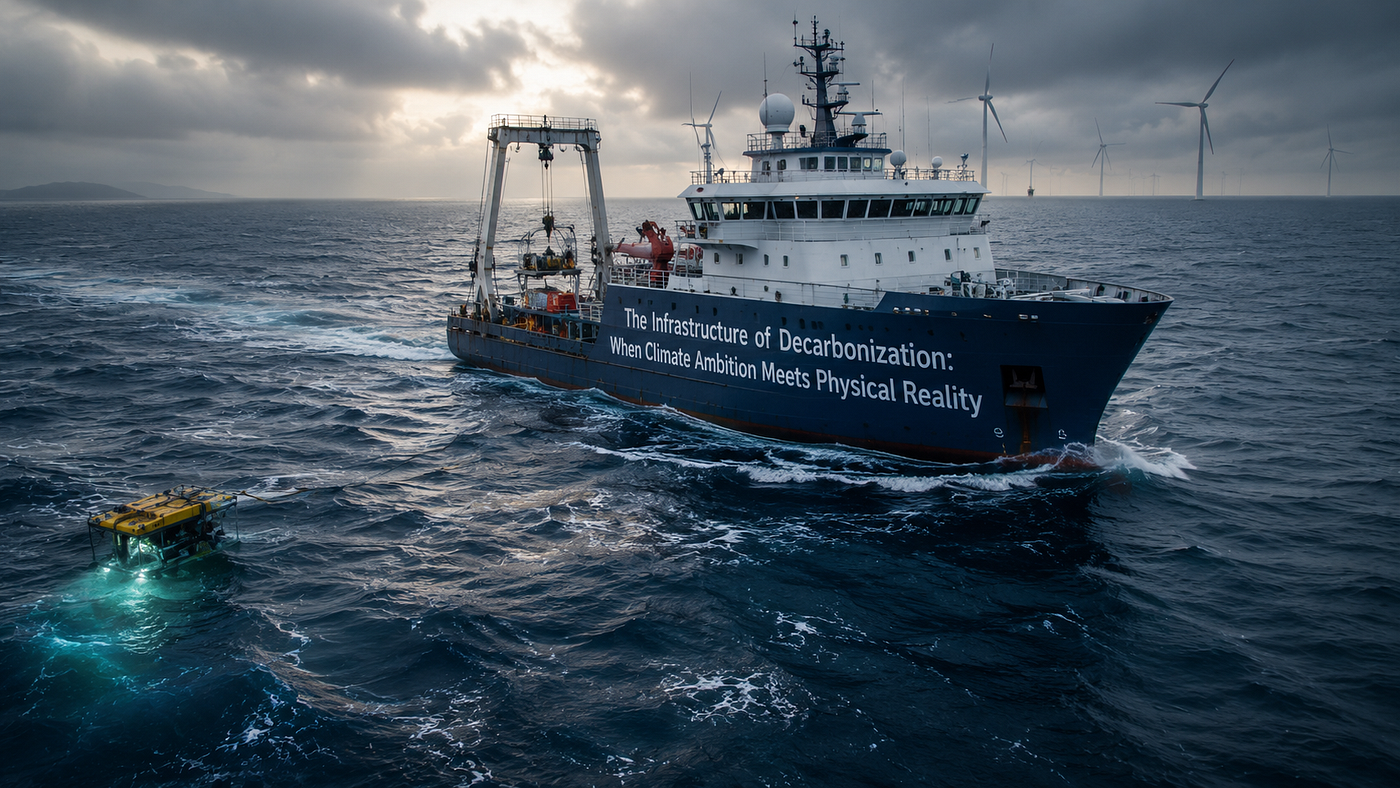
The £90 billion required to rewire Britain’s electricity grid represents far more than national infrastructure spending — it exemplifies the universal challenge facing every economy committed to Paris Agreement targets. Traditional electrical systems, designed for centralized fossil fuel generation with unidirectional power flows, cannot accommodate the distributed, intermittent, and bidirectional nature of renewable energy systems. This infrastructure deficit creates a critical bottleneck between renewable capacity installation and actual grid integration, a phenomenon visible from California’s curtailment challenges to Europe’s transmission constraints.
The evidence that clean power became the world’s largest source of new energy in 2025 validates decades of policy support, technological innovation, and cost reduction. Solar and wind installations now systematically outcompete fossil alternatives on economic fundamentals in most markets, fundamentally altering investment calculus. This transition materially impacts ISO 14064 greenhouse gas accounting methodologies, as grid emission factors decline globally, improving Scope 2 emissions profiles for electricity-consuming enterprises without operational changes — a phenomenon requiring careful disclosure to distinguish genuine decarbonization from incidental grid improvement.
However, the World Bank’s abandonment of climate financing targets following US pressure introduces systemic uncertainty into climate finance architecture. Multilateral development banks have historically bridged the capital gap for clean energy infrastructure in emerging markets where commercial financing remains constrained by perceived political risk, currency volatility, and inadequate enabling policies. This policy reversal threatens to widen the adaptation finance gap precisely when physical climate risks intensify, potentially undermining the just transition principles embedded in international climate frameworks.
ESG Applications: From Renewable Procurement to Carbon Removal and Physical Risk
The corporate advancement toward 24/7 clean power procurement represents a sophisticated evolution beyond conventional renewable energy certificates (RECs). Traditional RECs allow companies to claim renewable energy consumption based on annual matching — purchasing certificates equivalent to total electricity consumption regardless of when that renewable energy was actually generated. The 24/7 approach demands temporal and geographic matching, ensuring every hour of consumption aligns with clean generation. This methodology, pioneered by Google and increasingly adopted across technology, manufacturing, and financial sectors, delivers substantially greater grid decarbonization impact by incentivizing storage deployment, transmission expansion, and dispatchable clean generation technologies.
Deep Sky’s delivery of North America’s first direct air capture (DAC) carbon credits operationalizes Article 6 of the Paris Agreement while addressing corporate net-zero strategies dependent on carbon dioxide removal (CDR). For companies in hard-to-abate sectors — aviation, cement, steel, agriculture — residual emissions necessitate permanent carbon removal to achieve net-zero targets scientifically aligned with 1.5°C pathways. DAC technology, while currently expensive ($600–1,000 per tonne), offers permanent geological sequestration with robust monitoring, reporting, and verification protocols. Amazon’s investment in sustainable aviation fuel producer GranBio similarly addresses aviation’s decarbonization challenge, where electrification remains technologically infeasible for long-haul routes. These investments signal sophisticated corporate climate strategies recognizing that comprehensive decarbonization portfolios must encompass Scope 3 value chain emissions through technology deployment rather than purely offsetting approaches.
Clarity AI’s physical risk tool launch addresses a critical gap in ESG data infrastructure. While transition risk — the financial impacts of policy changes, technological disruption, and market shifts toward low-carbon economies — has dominated climate-related financial disclosure, physical risks from chronic climate changes and acute weather events increasingly materialize on corporate balance sheets. TCFD recommendations explicitly require scenario analysis incorporating physical and transition risks, yet data availability, modeling sophistication, and sectoral expertise have constrained implementation. Physical risk assessment tools integrating climate projections, asset-level exposure mapping, and financial impact modeling enable investors to incorporate climate adaptation requirements into valuation models, capital allocation decisions, and engagement strategies.
Standards & Frameworks: ISSB, TNFD, and the Converging Disclosure Architecture
The International Sustainability Standards Board’s decision to allow TNFD (Taskforce on Nature-related Financial Disclosures) metrics for nature-related disclosure requirements represents critical interoperability within the emerging sustainability reporting architecture. Following the issuance of IFRS S1 (General Requirements for Disclosure of Sustainability-related Financial Information) and IFRS S2 (Climate-related Disclosures), the ISSB now confronts expanding scope to biodiversity, water, social dimensions, and governance — the comprehensive “E,” “S,” and “G” of ESG. By recognizing TNFD’s LEAP approach (Locate, Evaluate, Assess, Prepare) and disclosure recommendations, ISSB avoids duplicative standard development while accelerating corporate nature-related risk assessment.
This convergence addresses a longstanding criticism of sustainability reporting: fragmentation across multiple frameworks (GRI, SASB, CDP, CDSB, IIRC) creating compliance burden without proportional decision-usefulness for capital providers. ISO 14046 water footprint assessments and ISO 14064 greenhouse gas inventories provide measurement methodologies, while ISSB standards increasingly define disclosure requirements, creating clearer pathways for companies navigating sustainability reporting obligations. For multinational corporations, this alignment reduces compliance complexity as jurisdictions from the European Union’s Corporate Sustainability Reporting Directive to securities regulators in Japan, Singapore, and Brazil adopt or align with ISSB standards.
The technical challenge remains integration across environmental domains. Water stress and biodiversity loss interconnect with climate change through complex feedback loops — deforestation accelerates warming while reducing watershed integrity; drought intensifies through both direct climate impacts and groundwater depletion from irrigation. Comprehensive ESG reporting must therefore capture these interactions rather than treating climate, nature, and water as discrete silos, requiring sophisticated data systems and cross-functional expertise many organizations are still developing.
Emerging Markets Perspective: Infrastructure Deficits as Leapfrog Opportunities
China’s commitment to 50% non-fossil energy generation by 2030 and Delhi’s ban on new gas-powered vehicles demonstrate how emerging economies increasingly drive global decarbonization momentum. China already accounts for over 50% of global renewable capacity additions and dominates solar panel, wind turbine, battery, and electric vehicle manufacturing. This industrial positioning creates economic incentives reinforcing climate policy — renewable energy deployment supports domestic manufacturing, reduces energy import dependence, and positions Chinese firms advantageously in the global energy transition.
Delhi’s vehicle ban addresses the twin crises of air quality and climate change, recognizing that urban air pollution causes millions of premature deaths annually across South Asia while transportation emissions constitute growing shares of national carbon footprints. Electric two-wheelers and three-wheelers offer particularly compelling economics in emerging markets — lower total cost of ownership, reduced maintenance requirements, and suitability for shorter urban trips. However, implementation success depends critically on charging infrastructure deployment, electricity grid reliability, and financing mechanisms enabling lower-income consumers to access electric vehicles despite higher upfront costs.
The World Bank’s retreat from climate financing targets particularly impacts emerging economies where infrastructure deficits create both vulnerability and opportunity. Without adequate multilateral climate finance, countries face impossible trade-offs between development priorities and climate commitments. Yet this infrastructure deficit also enables leapfrogging — building distributed renewable microgrids rather than extending centralized coal-powered systems, deploying electric vehicle fleets rather than fossilizing transportation infrastructure, and implementing circular economy principles from industrial development outset rather than retrofitting linear systems. The £90 billion required to retrofit Britain’s grid demonstrates the “legacy infrastructure penalty” developed economies face — emerging markets can potentially avoid these costs through thoughtful initial design, provided capital availability doesn’t become the binding constraint following reduced multilateral climate finance.
Conclusion & Action Steps: Mobilizing Capital for the Great Re-Wiring
Today’s developments crystallize the central challenge of the 2020s: mobilizing unprecedented capital for energy infrastructure transformation while managing geopolitical complexity and ensuring equitable access to clean energy transition benefits. The £90 billion grid investment requirement, multiplied across every major economy, demands innovative financing mechanisms blending public capital mobilization, institutional investor engagement, and corporate procurement commitments.
Concrete next steps for ESG practitioners:
-
Corporate sustainability officers should evaluate 24/7 clean power procurement feasibility, develop carbon removal strategies for residual emissions, and integrate physical risk assessments into enterprise risk management frameworks using newly available tools.
-
Investors and financial analysts must incorporate infrastructure capital requirements into energy transition scenarios, engage portfolio companies on ISSB/TNFD-aligned disclosure, and assess physical and transition risk exposure using enhanced data platforms.
-
Policy advocates should champion alternative climate finance mechanisms compensating for multilateral institution retreat, support regulatory frameworks enabling grid modernization investment recovery, and advance international cooperation on technology transfer for emerging markets.
-
Standards organizations must continue harmonizing disclosure frameworks while expanding methodological guidance on nature-water-climate integration, carbon removal accounting, and physical risk quantification.
The transition from fossil to clean energy systems is simultaneously inevitable and imperiled — technologically feasible yet financially daunting, policy-enabled yet geopolitically contested. Success requires confronting these tensions directly rather than treating them as temporary obstacles to linear progress.
Berat Arda Dedekoca MBA, Cekirdek GLOBAL
메타데이터
- post_id
- 0341c55a5afc
- slug
- the-infrastructure-imperative-how-90-billion-grid-investments-and-historic-clean-energy-growth-0341c55a5afc
- url
- https://medium.com/cekirdek-global-insights/the-infrastructure-imperative-how-90-billion-grid-investments-and-historic-clean-energy-growth-0341c55a5afc
- canonical_url
- https://medium.com/cekirdek-global-insights/the-infrastructure-imperative-how-90-billion-grid-investments-and-historic-clean-energy-growth-0341c55a5afc
- author_url
- https://medium.com/@cekirdekglobal
- status
- ok
- fetched_at
- 2026-07-09 10:05:04