The Origin of Christianity — Blurted Bluntly
A The resurrection of Jesus is an important theological truth to a large portion of the world’s population. Resurrection from the dead is…
The Origin of Christianity — Blurted Bluntly
A The resurrection of Jesus is an important theological truth to a large portion of the world’s population. Resurrection from the dead is a religious belief requiring faith because it is a supernatural claim.
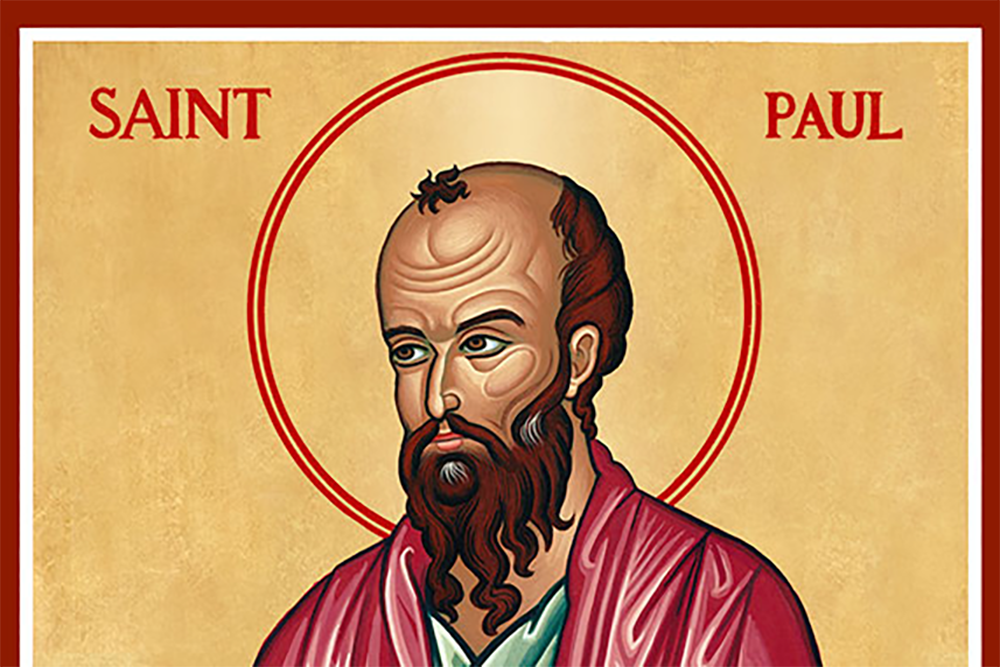
Legitimate application of scholarly methods does not accept supernatural claims. If we do not accept supernatural claims, Jesus did not engage in any activity after his death. If Jesus did not engage in any activity after his death, then the apostle Paul did not receive any information from Jesus after Jesus was dead. Acceptance of Paul’s claim that he received information from Jesus after Jesus died is a confession of religious faith in the resurrection of Jesus Christ. We will assume that Jesus did not communicate with Paul or engage in any other activity after his death, in accordance with standard methods of inquiry.
Paul claims that on the night Jesus was betrayed Jesus told his followers to drink wine, which is his blood, in remembrance of him. Blood is unclean. Participating in the Eucharist by drinking blood would be a violation of dietary law for Jews. This is very similar to an event that occurred about 200 years before. At that time, Jews were encouraged to eat pork in violation of dietary law.
Paul claimed that Jesus did the same as the Greek Seleucid ruler, Antiochus IV Epiphanes — encourage Jews to violate dietary law. Academic methods require that Paul’s supernatural claim be discounted. We would need to hear from Jesus’ followers if Jesus told them to violate dietary law by drinking his blood.
Peter had a vision of a sheet. Three times Peter said nothing unclean had ever touched his lips. Blood is unclean. Peter does not confirm, in the report of his vision, that he was told by Jesus to violate dietary law by drinking his blood, or that he had done so.
After his vision, Peter set out to go to Jerusalem and tell the other leaders there, ‘What God has called clean, let no man call unclean.’ This is the same theme found in 4 Maccabees 5 in a speech given by Antiochus IV Epiphanes urging Torah-observant Jews to eat pork.
Paul also went to Jerusalem to have his teachings checked by the leaders there. At Jerusalem, James the Just, the brother of Jesus (along with Peter, John and the elders) issued the Jerusalem Decree telling Paul not to teach blood and three other things. Jesus’ blood is an element of the Eucharist Paul taught.
The followers of Jesus told Paul not to teach the sacred meal that Paul taught.
People who actually knew Jesus do not confirm that Jesus told them to drink his blood in violation of the dietary law. Paul’s conversion is not confirmed by the followers of Jesus. There is continuing conflict between Paul and the followers of Jesus.
Accepting Paul’s claim of conversion requires religious faith because it involves accepting a supernatural claim. When we discount the supernatural, Paul could only have converted by natural means. Excluding supernatural causes, Paul’s conversion to the religion of the followers of Jesus would depend upon Paul’s social attachment to them. Religious conversion occurs when a person develops greater social attachment to people of their new religion than their old.
Paul never met Jesus. Paul violently persecuted Jesus’ followers and wrote that only two of them, Peter and James, the brother of Jesus, would recognize his face. Paul had a conflict with Peter at Antioch, calling Peter a hypocrite. James might have thought that it was not very nice of Paul, hostile even, to claim that he drank the blood of his martyred brother. James, as a lifelong Nazirite, was not allowed to drink wine.
According to the source texts, to whom was Paul socially attached? Paul’s entrance to the story brings him to leadership in Antioch joining another leader there, Menaen, the foster-brother of Herod Antipas (raised as children together in Rome). Paul’s social attachment to Menaen locates Paul in a social network three people away from Herodias — and the head of John the Baptist.
Several other indications also appear to locate Paul in the Herodian ruling circle.
· Roman citizenship.
· Paul received permission to perpetrate violence on his fellow nationals in another country’s jurisdiction.
· After the Jerusalem Decree, which instructed Paul to stop teaching blood, he was rescued by a very large number of Roman troops — 200 soldiers, 200 spear men and 70 horsemen. Horses were also provided for Paul and his entourage.
· Paul sends greetings in his letters to the household of Caesar and to his kin named Herodion.
· Paul appears in Acts with three siblings: Princess Drusilla, King Agrippa II and Queen Berenice, all of the Hasmonean branch of the family of Herod. Paul had face time with the royals, but not with Jesus’ disciples.
New Testament evidence locates Paul socially distant from, and in conflict with, Jesus and his followers. The evidence locates Paul socially close to the family of Herod. If we limit our analysis to natural causes and effects, if Paul had converted as a result of making new social attachments upon being called to Antioch, he would have converted to the religion of the people he met in Antioch. Church leadership in Antioch was connected to the Herodian ruling family.
In any case, a new convert cannot be an authoritative teacher of a religion to which they have just converted even when they are socially attached to people who practice that religion.
If we exclude Paul’s supernatural assertions and interpret the texts using standard methods of reasoning:
· Paul’s conversion was from opposing Jesus’ followers with violence to opposing them with rhetoric. Paul was a propagandist marketing a new variant of Judaism that did not observe Torah.
· Paul was an apostate Jew who encouraged other Jews to openly violate Jewish dietary law.
· Jesus was not an apostate Jew who encouraged other Jews to openly violate Jewish dietary law. Paul’s last supper claims are not confirmed by people who were with Jesus at the time.
New Testament texts do not show that Jesus and his followers were apostate to Jewish dietary law by drinking blood except for Paul’s account, which is a supernatural claim and therefore not credible.
The disciples were once accused of picking corn on the Sabbath and of not washing their hands before eating but of no other infractions. Peter is not shown violating dietary law in Joppa, just making a speech advocating it. Straight-arrow Torah behavior in the Jesus group throughout.
Jesus is regarded as the only person who perfectly fulfilled Torah requirements for a lifetime. Jesus showing this dedication to a faith then renouncing it and behaving the same as the foreign ruler who offered pork in willful violation is not like anything we see in the natural world. There would need to be a supernatural construction to account for this. And there is — in theology but not in the application of logical reasoning using accepted methods in a legitimate manner.
There are two problems: Why did Paul suddenly change to the opposite behavior? And why did Jesus suddenly change to opposite behavior? Both problems are solved at once if the solution is they didn’t. If we don’t accept a supernatural claim, Paul could not have been converted by Jesus and we only have Paul’s testimony that Jesus reversed course.
Step back and look at the historical flow:
· John the Baptist was Torah observant and led a Torah observant group.
· Jesus was non-Torah observant but led a Torah observant group.
· James the Just, the brother of Jesus, was Torah observant and led a Torah observant group.
The flow is corrected to normal by removing Paul’s supernatural claim.
Jesus was a Torah observant leader who led a Torah observant group and did not do what Paul claimed he did — encourage Jews to violate the customs of Moses. Jesus was non-Torah adherent only because of what Paul said. Jesus’ family and disciples do not agree. Paul’s claim that Jesus was apostate and taught Jews apostasy is evidence only of Paul’s continuing opposition to the conservative Jesus movement.
Paul’s conversion was a change in his oppositional strategy, using rhetoric instead of violence against the conservative group that included Jesus.
But didn’t the real Jesus tell his Jewish disciples to violate dietary law by drinking his blood in the Last Supper scene in the gospel?
B The gospel is a hero story: A protagonist has a problem, a hero appears and performs heroic deeds and as a result of the heroic deeds, the protagonist’s problem is resolved.
At the start of the gospels there is a conflict. John the Baptist objects to the illegal marriage of Herod Antipas to Herodias. Jesus then appears and performs heroic deeds. As a result of the heroic deeds of Jesus, it is no longer necessary for Jews to adhere to Torah requirements.
The protagonist whose specific problem was resolved by the actions of the hero was Herodias, not John the Baptist. As a result of the hero’s actions, it was no longer necessary for Jews to observe the customs of Moses, including marriage law.
People are free to have religious beliefs, but we may not allow that there was any supernatural influence on the writing of the New Testament when we properly use academic methods.
People pay scribes to write hero stories in which the hero resolves their problem. People do not pay scribes to write hero stories in which the hero resolves the problem of their opponent. Herodias was responsible for the beheading of John the Baptist in response to his objection to the illegality of her marriage. Herod Antipas did not have agency over that decision. The hero resolved the problem of Herodias.
Application of standard critical methods requires making the hypothesis that Herodias paid a scribe to write a hero story. The problem resolved by the hero in the gospel story was hers.
In another canonical text this heroic resolution blesses the even more illegal marriage of Drusilla, sister of King Herod Agrippa II, to Roman procurator Felix. Felix had no intention of being circumcised or converting to Judaism. Despite this, Paul claimed Felix was eligible for salvation in the new Jewish supernatural atonement innovation. The problem listed at the beginning of the gospel story, illegal marriage, was resolved in favor of two Herodian women named in the canonical texts, Herodias and Drusilla, who both married contrary to the Law. Our hypothesis about gospel authorship adds a second Herodian woman.
The text solves the problem of one side but is written from the point of view of the other side. Interesting.
A donor portrait is also a useful critical tool to infer authorship of a work. The financier of the work can request to be featured in the commissioned product. Donor portraits are representations of religiously significant events, places, objects, or people into which the financier has been inserted.
The key event in the gospel story to expect a donor portrait to appear is at the very moment it became no longer necessary for Jews to obey the Law — at the cross and the tomb. At the foot of the cross and at the tomb we find women who are socially connected to Herodias.
At the cross and tomb are Mary Magdalene, Joanna, Mary the mother of James, Salome, and the other Mary. And other women. (And a photo-bomb of some guy — in John only). Some of these women are associated with the court of Herod Antipas. Some of them are associated with the family of Jesus and his followers.
Joanna is the wife of Chuza, the chief steward of Herod Antipas, which puts her in direct social contact with Herodias — their husbands were the Galilean ruler and his right-hand man, both based in the Galilean capitol city, Tiberias. Mary Magdalene and Susanna are introduced as associates of Joanna, the wife of Herod’s chief steward.
Women who appear in the key scenes of crucifixion and resurrection were in the immediate social circle of Herodias. More potential authors of the hero story. We have seen that Paul is socially connected to this group of women.
Another way to determine who funded a work is, did they say in the text that they funded the work? The text records that Mary Magdalene, Joanna and Susanna provided funding to the ministry of Jesus. The only remnant of the ministry of Jesus that exist are some texts that somebody paid to produce. They contain supernatural claims making them fiction. They are not an accurate record of historical events and are biased toward the author’s interests.
Having the hero solve your problem, appearing in donor portraits, and claiming to have provided funding, are all clues to authorship. Critical methods suggest that the gospels were commissioned by women in the Herodian social circle. Herodias, Drusilla, Mary Magdalene, Joanna and Susanna are the names we know. These may also have been the people who converted Paul (away from violence). But there is a problem with this hypothesis. The earliest gospel was written about forty years after the time in which it is set. There must have been an oral tradition for several decades among the households of Herod.
Jesus’ ministry was blessed by John the Baptist, so the Jesus group was of the stripe that upheld Torah requirements and condemned the illegal marriage of Herodias to Herod Antipas. The canonical text says Mary Magdalene, Joanna and Susanna accompanied Jesus on his ministry, as if they didn’t know how the story would turn out. But the earliest gospel was written about forty years later, so they did know how it would turn out. This can be interpreted as the gospel authors alleging close social attachment with their conservative opponents when this was not the case.
A critic might wonder why Mary Magdalene, Joanna and Susanna would turn against their associate, Herodias, and leave the opulence of the palace to go tromping around the countryside with poor people who opposed her marriage only to find later that her illegal marriage was just fine. Except that the critic would understand the text to be biased in favor of the sponsor of the written scribal product. Religion is a human social behavior so an author promoting apostasy would think the appearance of them having social attachment to conservative religious figure Jesus would be persuasive to their target audience.
Herodias is the protagonist of the hero story. John the Baptist is the antagonist. So, what role did the disciples of Jesus play? They were clueless. They didn’t get it. The whole time. Or at least, their fictional characters didn’t, even when women associated with Herodias tried to tell them the Good News about the resurrection of Jesus. This is an indication that the disciples did not have input into producing the gospels. Sponsors would not portray themselves negatively in their commissioned work. Jesus and his disciples should be viewed by the critic as fictional characters created by the authors to serve the purpose of the authors.
Paul and the gospel authors had a shared goal of persuading Jews to violate the customs of Moses by drinking the blood of Christ. They wrote marketing materials to serve this purpose. They were vendors of a new religious product, not historians. The new religious product is Jewish but drops Torah requirements for Jews.
C Blood is better than pork
Conservative Jewish resisters who ate the pork of Antiochus IV Epiphanes two centuries before the Christian Era did not have anything to gain by eating it except public apostasy from a faith they held dear. If they resisted — and were killed for resisting — their martyrdom could gain them life after death. This is the event that caused afterlife belief to first enter Jewish tradition.
Life after death is a very valuable religious product.
Belief in resurrection is a feature of eschatological (or messianic, or apocalyptic) hope. It occurs across societies in indigenous demographic groups witnessing such drastic changes in society that practice of their ethnic traditions and customs becomes less and less feasible due to encroachment of foreign culture. Eschatological hope arose about 200 years before Jesus. The Maccabees succeeded in postponing, but not ending, foreign encroachment that began with Alexander the Great.
A schism started within the Jewish nation when Alexander the Great conquered Judea in 332 BCE and two advanced cultures merged. Progressives Jews who collaborated with the Greek occupying power were awarded political power and social and economic opportunities. Things did not go so easy for the resisters.
Resistance to change causes hardships that produce eschatological hope. Accommodating and adapting to change does not.
The Greek Seleucid ruler Antiochus IV Epiphanes was not the only driving force behind coercing Jews to eat pork. Hellenized Jewish High Priest Jason asked Antiochus for his permission to introduce Greek practices to Jerusalem, which was granted. And Greek customs were introduced to Jerusalem. High Priest Menelaus, successor to Jason, continued them. Greek religion was practiced in the Temple and a gymnasium was built. Jewish boys displayed their uncircumcised state in the new gymnasium. There were atrocities committed in Jerusalem against holdouts who continued to adhere to Torah traditions. The Hellenized priestly regime did not appoint a High Priest for a seven-year intersacerdotium between 159 and 152 BCE after High Priest Alcimus left office. Menelaus and Alcimus were not even of the correct hereditary lineage to hold the high priesthood. They won the office by bribing the foreign ruler.
Conservatives witnessing these ‘abominations’ (in their view) responded with eschatological fantasies of revenge and retribution. As a result of the Hellenization of his colleagues, conservative High Priest Onias III fled to Egypt and established a new Temple to YHVH in Leontopolis so ancestral customs would not be entirely neglected.
The Books of Maccabees and Josephus describe a civil war between Hellenized Jews who were eager to abandon the Torah, and traditional Jews — the rebel Hasmoneans — who favored continued adherence. The civil war reflected a religious schism over adherence to Torah.
Those who resisted Greek hegemony were seen, and are still seen, as heroes but they could not retain their ethnic traditions unless there was a regime change. Traditionalist High Priest Judas Maccabee and his supporters fought in resistance against the Hellenized priestly families and, after many years, gained power back from them. It helped the resistance that there were challenges to the throne back in the Seleucid capitol Antioch and that Greek armed forces were pulled from Jerusalem to counter this threat. The Hasmoneans rededicated the Temple where previous Jewish High Priests had willingly practiced Greek rituals and had left the office of Jewish High Priest vacant.
Two hundred years later, the conservative Judean resistance in the first century had no such luck. They too created apocalyptic end-of-the-world fantasies of revenge and retribution, but Rome made their resistance a top priority.
Judea was the only nation that refused to accept the Pax Romana. Zeal for the Law by conservative-faction Jews set up a showdown with Rome. The Romans committed massive military resources to fight three decisive wars against the conservative Jewish resistance between 66 and 136 CE. As a result, the number of conservative resisters dropped dramatically, and the surviving Pharisees were chastened and toned down their nationalist rhetoric. There were a large number of widows and orphans during that period.
The destruction of the Temple in 70 CE ended a franchise that had a monopoly claim to the Jewish religious market. This created an opening for religious entrepreneurs. The gospels can be thought of as franchise documents containing marketing materials and product specifications. Their writing was timed to the market opening created by the destruction of the Temple.
Blood and pork are both unclean. But the blood of Christ contrasts with the pork of Antiochus IV Epiphanes. They are both apostasy from Jewish dietary law, but the blood of Christ has many product improvements and marketing advantages over the pork:
· Wine/blood was served at private household tables and not public altars. Offering privacy — public apostasy from the Law in a controlled private setting.
· The blood is a symbol of eternal life offered to those participating. Great product!
· The blood was endorsed by the only Jew in history who was said to have been fully compliant with Torah legal requirements for his entire lifetime vs. promoted by a foreign pagan ruler. Traditionalists should be happy about that.
· The blood is a violation of both divine covenants — those God made with Moses and with Noah. Good for interfaith marriages, like Drusilla’s to Felix. Each violates their own respective covenants with no need for Felix to convert.
· The ‘blood’ is an intoxicating beverage. Party time! Wealthy people can be generous hosts.
· The wine might not really be blood, but if the communicant doesn’t believe it was supernaturally transubstantiated into blood, he/she is asked not to participate, which gives:
o Plausible deniability if observed in the act of ritually violating the Covenant.
o Stealth: An unsuspecting person, possibly Peter at Antioch, might not know they were participating in violating the Covenant.
That last bullet echoes an approach used with Eleazar, who heroically chose death over eating the pork of Antiochus. In 2 Maccabees 6:21 and 4 Maccabees 6:14–15, Eleazar is urged to supply his own meat that he can lawfully eat and only claim that it was pork — to persuade onlookers to comply while not himself complying. This deceptive substitution is made a permanent feature in the Pauline Eucharist with the blood being acceptable wine and the wine being unacceptable blood, both at once.
It is likely that a second attempt by Hellenized Jews to get their nation to abandon their ancient customs would be more successful than the first attempt because of lessons learned from the ham-handed attempt of Hellenized Jews allied with Antiochus IV Epiphanes to get Jews to eat pork. People learn from their mistakes.
Authorities can force change upon society, but it is necessary to continue to apply the force. Consumers don’t willingly buy things they don’t want. The blood is designed to have consumer appeal. No force is necessary when consumers want the product.
Unlike in Hellenized Jewish High Priest Jason’s era, Hellenized Jewish elites of the first century CE also seem to have developed a more critical attitude toward the culture of their imperialist allies. Christianity retained all Jewish cultural assets except for the Law and of course the Temple, which was destroyed in 70 CE. But the new progressive sect of Judaism (later called Christians) did not endorse the Roman emperor claiming to be a god, or Rome’s uncaring attitude toward lower classes, or the idea that there had been a Golden Age and that the present and future were decay from an ideal past.
Christian creators posited a rival human/divine persona to the Roman Caesar’s divine claims; asserted that, in the divine hierarchy, the least among people is equal to the greatest; and that the human condition would improve over time.
Christians who drank blood might have sided with their fellow apostate Jews two hundred years earlier who ate pork. But they were not fully on the side of the imperial power this time.
Jews who eventually came to be called Christians used the same hierarchical structure in their churches as the Romans: ecclesia, diocese, episcopos, pontiff, basileos, etc. If they did so with the intention of taking control of the Roman Empire, they succeeded.
D The theological mechanism
The God of the Torah is a God who acts in history.
Groups of people who develop apocalyptic hope, across global cultures, are forced by outside groups to abandon their traditional way of life. The same End Days themes emerge wherever this occurs.
The concept of resurrection from the dead was first introduced to the Jewish tradition in the Books of Maccabees. Those who refused the pork, and were killed for it, merited resurrection. The Problem of Evil — how a just God can allow the righteous to be persecuted and killed while the unrighteous prosper — is solved if there is an afterlife in which the righteous are rewarded and the unrighteous are punished. Maccabean martyrs who were killed for their righteous resistance were promised not only everlasting life but also the right to judge the eternal fate of the unrighteous who killed them.
A similar social situation arose in the first century. Herodian rulers were seen by Jewish conservatives as unrighteous ‘half-Jews,’ allied with a foreign ruler which compromised national values, yet they prospered. Several messianic movements arose in the first century and were brutally suppressed. It’s possible that an apocalyptic conservative resistance group, led by John the Baptist, then Jesus, then the brother of Jesus claimed the crucified Jesus was raised from the dead as a solution to the problem of evil, as during Maccabean times, using eschatological reasoning.
Belief in the resurrection of Jesus fits the eschatological pattern observed across cultures. An oppressed group experiencing rapid cultural change rebels, is crushed, and looks for other-worldly redemption. The situation with the blood is a repeat of the pork situation from 200 years earlier.
The Pharisees pioneered case law. The Torah needs to be interpreted to fit situations it does not address directly. Pharisees developed written records allowing interpretation of the Law to be consistent with the outcome of prior cases. The trend was for the Law to become more strict — to “make a fence around the Law.” This tradition of interpretation caused meat to be separated from dairy, and utensils used for meat to be separated from utensils used for dairy because You shall not boil a kid in its mother’s milk.
This type of scriptural interpretation, citing precedent, can also be done by the side that wants the Law to be less strict.
Paul’s progressive teaching uses the Pharisaic tradition of case law, but against them, with a progressive bias. The progressive side’s story of Jesus says, yes, your conservative guy rose from the dead, and that’s why righteousness is no longer defined by what your side values most — Torah adherence.
Accepting the claim of resurrection made by the conservative Jewish side, progressive Jews scripturally interpreted a new post-resurrection historical situation using shared cultural precedent.
Now that resurrection has occurred:
· Everlasting life has been granted to humans.
· The crucifixion of Jesus can be interpreted as an unjust act and martyrdom, but also as an unblemished human sacrifice to God because Jesus was perfectly Torah-adherent for a lifetime.
· The reason given for the Torah prohibition of blood is because the life is in the blood.
o If everlasting life has now been given by God to humans, the life no longer belongs only to God but to humans also. There is no longer a valid reason for the scriptural prohibition of blood in the newly created myth of the resurrection of righteous martyr Jesus Christ.
o Drinking the ritual eucharistic blood, instead of being merely a violation of Torah, becomes an exalted symbol of living forever in the new historical situation caused by the life no longer belonging only to God.
· In the Garden of Eden, humans were not allowed to eat the fruit of the Tree of Knowledge. After Adam ate fruit from the tree of knowledge, God said “He must not be allowed to reach out his hand and take also from the tree of life and eat, and live forever.” Then humans were banished from paradise. Because Jesus rose from the dead, everlasting life has now been given by God to humans. We are now in the next age after the post-Eden age. God has acted in history and as a result our situation has irretrievably changed. A new pathway to eternal life has been opened for us and Jesus is the way.
The above bullets are Pauline theology — using precedent to establish new rules when faced with a new and horrible (to conservatives) or wonderful (to progressives) historical development. A brilliant marketing strategy because both sides seem to win.
By accepting the conservative claim of their unrighteously crucified leader’s resurrection, the progressive side was able to use standard conservative methods of exegesis to determine:
· We are now given the life, so the prohibition of blood is no longer needed.
· We have reached out our hand to eat from the Tree of Life, so all humans can now live forever (not just martyrs).
· The Law is now fulfilled, meaning no longer in effect — a New Age.
The apocalyptic hopes of Jews bemoaning their traditions eroding away became a religious product that progressive Jews enabling those erosions could sell.
And life after death is a very valuable religious product. The cost of immortality was also greatly reduced. Instead of dying as a Torah-adherent martyr Jew, it is now only necessary to live as an apostate Jesus-believing Jew to be resurrected. (Also their non-Jewish spouses.) Religion is just another market phenomenon when supernatural claims are removed.
There was war when the pork was pushed upon the conservatives. There was war when the blood was being pushed upon the conservatives. James, the brother of Jesus — whose brother’s blood that is — was killed in 62 CE. By 66 CE, war had started, with conservative Galilean rebel groups taking control within the city of Jerusalem.
Josephus (Jewish Wars) tells of Costobarus and Saulus who “used violence with the people.” It may not be a coincidence that New Testament Paul who was named Saul did that too. Saulus and Costobarus in Josephus were brethren of the royal family, and kin to King Agrippa. Saulus’s violence occurred around the time that Jesus’ brother James was killed, while Judea was temporarily unsupervised by imperial power, before the arrival of the replacement procurator, Florus.
Later, Saul and his friends went to Rome “to lay the blame of their kindling the war upon Florus, as hoping to alleviate his own danger, by provoking his indignation against Florus” (Wars). Florus did some bad things, but so did the other Roman procurators. Josephus does not divulge why Saulus was suspected of causing the war.
If the Saul of Josephus is the same as Paul in the New Testament, the reason Saul might have been suspected of starting the war was because he taught blood. We know that New Testament Saul taught blood at this time, and that blood is unclean. Also, that there was violent opposition among conservatives over the violation of their customs. There was war when Jews tried to get other Jews to consume pork. There was another war when Jews tried to get other Jews to consume blood.
The Romans had three allies among Jewish groups.
· Hasmoneans (‘Maccabean’ rulers of Judea until 37 BCE).
· Pharisees (opposed to Hasmoneans).
· Herodians (rulers starting 37 BCE, intermarried now with Hasmoneans).
Two Jewish religions emerged from the Roman period after the Temple was destroyed.
· Rabbinic Judaism — from Pharisaic tradition.
· Christianity — from poor peasants and lots of miracles?
If history had proceeded normally, we would expect two Jewish religions to emerge from the period, one for each ally of the victor. The religion associated with the Herodians is conspicuously missing. It’s very unusual when the victors do not write history, especially when closely aligned with imperial power. The historical flow is corrected to normal if the gospel is not the story of conservative Galilean Jewish peasants, zealous for the Law until their leader recanted just before he died, and who eventually acquired control of the empire by supernatural means. Herodians were much better-placed to assume eventual control of the empire.
It’s not really a mystery why the wealthy, powerful and influential Jewish-Roman Herodian family “disappeared into history” in 92 CE when King Agrippa II died. (They didn’t.) Herodians ‘disappeared’ because it was a theological necessity. The rich told their story as if they were the poor. Theology is marketing in the religion sector of the economy. The pork didn’t sell. But the blood did.
When the Herodians told their story they used conservative opposition characters, in the gospel narrative they created, to tell their story. Poor peasants very zealous for Torah, many miracles amongst them, leading to the end of Torah observance among Jews.
The new religion redirected the Jews’ zeal from the Law to the Shema: Hear, O Israel: Adonai is our God, Adonai in One! Blessed is God’s name; His glorious kingdom is for ever and ever! And you shall love Adonai your God with all your heart, with all your soul, and with all your might.
Zeal is a useful thing when harnessed. Christians eventually took over the Roman Empire. There were demographic trends involved, but no miracles.
Christianity is a Jewish religion except for Torah adherence. (And the Temple.)
· Who is apostate is a matter of opinion. The earliest Christian writings are very heavy on Jewish history and culture. The earliest Christians were Jews ethnically and culturally, but they were not zealous for the Law.
· The vast majority of 1st century Jews lived in the Diaspora, far from Judea. They were Hellenized, hyphenated Jewish-[insert Diaspora nationality] residents of their home nation, who read the Pentateuch in Greek. They would not all have passed the purity tests of the most conservative Jewish-Judeans upon visiting Jerusalem.
· In later Christian history, Jewish traditions were not dropped from Christianity. Later Christians forgot all about Socrates, Plato and Aristotle. They did not forget the role Rahab the prostitute played in their history.
Christian texts were originally produced by the Hellenized Jewish ‘apostate’ ruling class. At the very beginning it was probably women of Hasmonean branch of the Herodian family if we trust the evidence. Women were generally not allowed to speak in public or publish under their own names. These women did not lack influence though. Male members of their families were Roman citizens, many of whom held high Roman offices and were personal friends of Caesar and his family.
Remember, there was only one problem listed at the beginning of the gospel — the illegal marriage of Herod Antipas to Herodias. If we accept that Paul’s conversion was sudden, he may have been converted to a Judaism that no longer observed Torah by the woman who experienced the problem, Herodias, after discovery of the theological mechanism involving blood. Or by female associates of Herodias. These same women may have commissioned the synoptic gospels decades later. If so, that would bring us to the very beginning of the Christ myth. And also explain why so many of Paul’s fellow leaders in the church were women.
메타데이터
- post_id
- 034f28420972
- slug
- the-origin-of-christianity-blurted-bluntly-034f28420972
- url
- https://medium.com/@Russellonius/the-origin-of-christianity-blurted-bluntly-034f28420972
- canonical_url
- https://medium.com/@Russellonius/the-origin-of-christianity-blurted-bluntly-034f28420972
- author_url
- https://medium.com/@Russellonius
- status
- ok
- fetched_at
- 2026-06-11 22:20:54