Rahu-Ketu Guidance and Shree Kalahasti Virtual Puja: What Devotees Should Know
Rahu and Ketu hold a distinctive place in Vedic astrology. Unlike the visible planets, they are calculated lunar nodes associated with…
Rahu-Ketu Guidance and Shree Kalahasti Virtual Puja: What Devotees Should Know
Rahu and Ketu hold a distinctive place in Vedic astrology. Unlike the visible planets, they are calculated lunar nodes associated with eclipses, karmic patterns, worldly desire, detachment, uncertainty, transformation, and spiritual growth. Their influence is often discussed during kundli analysis, planetary dashas, major transits, and important turning points in life.
Because Rahu and Ketu are linked with complex experiences, people sometimes approach them with fear. They may worry that every difficulty, delay, confusion, or sudden change is caused by these shadow planets. This can lead to anxiety and unnecessary dependence on remedies.
A balanced astrological approach is more helpful.
Rahu and Ketu should not be understood only as negative forces. They can highlight areas where a person may experience strong ambition, attachment, confusion, unusual circumstances, detachment, inner awakening, or a need for deeper self-understanding. Their results depend on the entire birth chart, including their signs, houses, planetary rulers, aspects, conjunctions, dashas, and the strength of other planets.
Shree Kalahasti is traditionally associated with Rahu-Ketu worship and Lord Shiva. Devotees visit the sacred temple to pray, participate in rituals, and seek spiritual strength during challenging astrological periods.
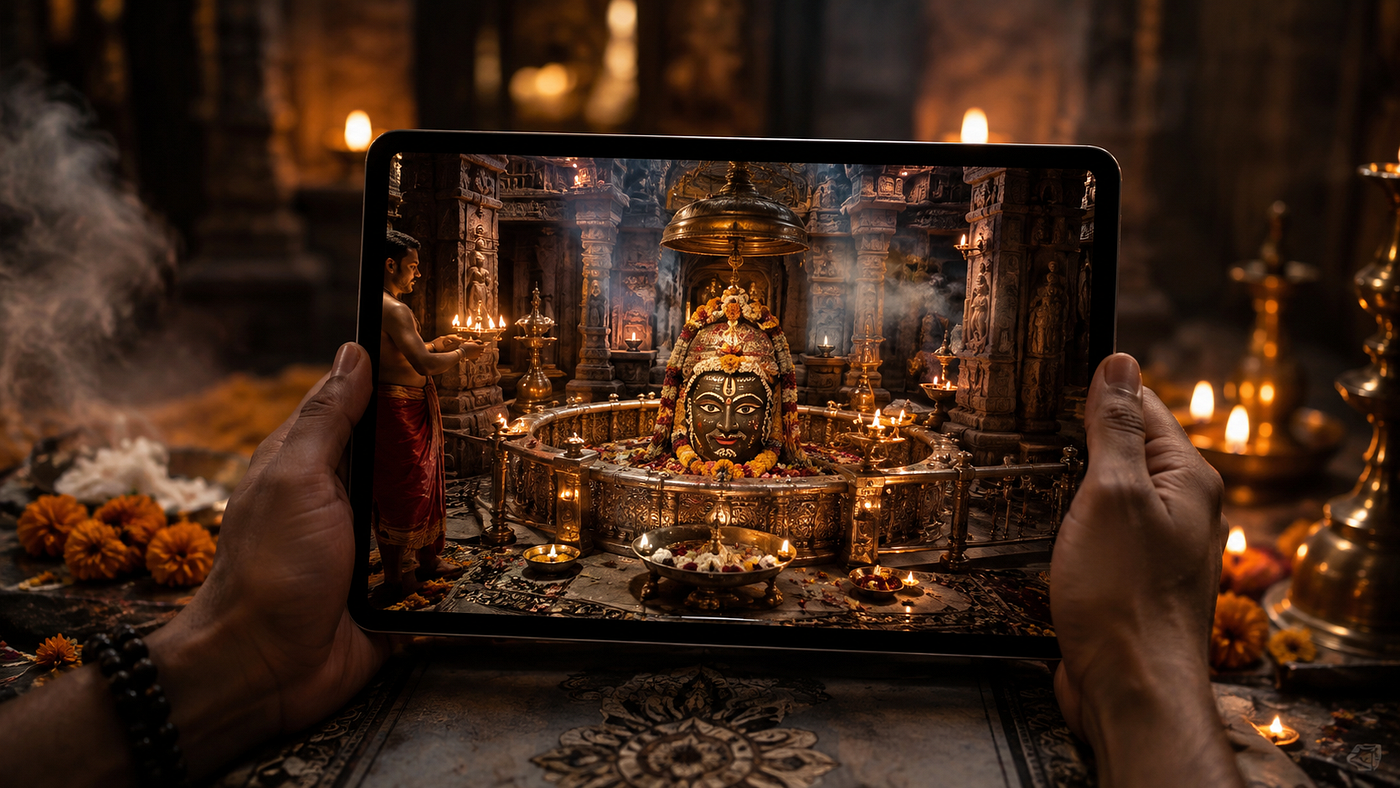
For people who cannot travel, Shreelok offers an accessible Shree Kalahasti virtual puja experience. Users can enter a 3D temple environment, experience darshan, light a diya, offer flowers, listen to mantras, perform aarti, and complete pushpanjali.
A virtual puja does not replace a physical pilgrimage, a temple priest, or a traditionally performed Rahu-Ketu ceremony. However, it can help devotees maintain prayer, reflection, and spiritual discipline from home.
Understanding Rahu and Ketu in Vedic Astrology
Rahu and Ketu are known as chhaya grahas, or shadow planets, in Vedic astrology. Astronomically, they represent the two points where the Moon’s orbit crosses the apparent path of the Sun.
The ascending lunar node is called Rahu, while the descending lunar node is called Ketu.
These points are connected with solar and lunar eclipses. Their symbolic meaning in astrology is therefore often linked with obscurity, hidden influences, sudden changes, karmic lessons, and shifts in perception.
Rahu and Ketu always appear opposite each other in a birth chart. If Rahu occupies one house, Ketu will be positioned in the seventh house from it.
This opposition creates an important life axis. Rahu may show the areas toward which a person feels strongly drawn, while Ketu may indicate familiarity, detachment, incompleteness, or spiritual questioning.
Neither should be interpreted in isolation.
What Rahu Traditionally Represents
Rahu is commonly associated with desire, ambition, expansion, foreign connections, unconventional paths, technology, material fascination, illusion, and intense worldly experience.
A strong Rahu influence can make a person highly ambitious and willing to explore unfamiliar territory. It may support innovation, research, digital technology, mass communication, international work, or unusual career paths when well placed and supported.
However, Rahu may also increase restlessness, confusion, excessive desire, obsession, or dissatisfaction. A person may continue seeking more without feeling content.
Rahu can magnify whatever it touches. Its influence may feel powerful because it encourages the mind to pursue experience intensely.
The lesson of Rahu is not always to reject ambition. It may be to develop awareness, ethics, patience, and discrimination while pursuing worldly goals.
What Ketu Traditionally Represents
Ketu is associated with detachment, introspection, past experience, spiritual inquiry, liberation, research, isolation, intuition, and the desire to look beyond material appearances.
A strong Ketu influence may support meditation, philosophical thinking, spiritual study, technical research, or the ability to understand hidden subjects.
However, Ketu can also create uncertainty, withdrawal, dissatisfaction, disconnection, or difficulty remaining interested in ordinary matters.
Where Rahu seeks experience, Ketu may feel that it has already seen enough. This can create a sense of detachment even when external circumstances appear favourable.
Ketu is not automatically spiritual, just as Rahu is not automatically materialistic. The complete chart determines how their energies may be expressed.
Why Rahu-Ketu Interpretations Require Care
Rahu and Ketu are sometimes described in dramatic language. People may hear that these planets guarantee loss, separation, accidents, or failure.
Such statements are usually oversimplified.
A responsible astrologer studies the entire chart before reaching a conclusion. The house placement, zodiac sign, nakshatra, conjunctions, aspects, dispositors, planetary periods, and divisional charts may all influence the interpretation.
The same Rahu placement can produce different results in different charts.
A Rahu period may bring foreign opportunities, technological progress, or sudden recognition for one person. For another, it may create confusion or unstable decision-making.
Similarly, Ketu may encourage spiritual insight and research in one chart while producing isolation or uncertainty in another.
Astrology should describe probabilities, tendencies, and themes rather than unavoidable outcomes.
Rahu-Ketu Dashas and Transits
Rahu and Ketu may become especially important during their mahadashas, antardashas, or major transits.
A Rahu dasha can last for many years and may emphasise ambition, change, foreign connections, unconventional experiences, or the desire to break existing boundaries.
A Ketu dasha may increase introspection, detachment, spiritual questioning, or a desire to simplify life.
However, the results depend on how Rahu and Ketu are placed in the individual’s kundli.
Their transits may activate particular houses and create temporary emphasis on the areas represented by those houses. For example, a transit through a career-related house may draw attention toward professional change, while a transit through a relationship-related area may bring new questions about partnership.
Transit interpretations should be combined with the birth chart and current dasha. A single transit should not be used to make extreme predictions.
Why Shree Kalahasti Is Connected With Rahu-Ketu Worship
Shree Kalahasti is one of the most revered Shaiva pilgrimage centres in South India. The temple is closely associated with Lord Shiva and is widely known for Rahu-Ketu worship.
Devotees visit Shree Kalahasti to pray during periods they believe are influenced by the lunar nodes. Many seek blessings for clarity, peace, family harmony, spiritual protection, and the strength to face uncertainty.
The temple’s connection with Rahu and Ketu has made it a major destination for people seeking traditional astrological remedies.
However, visiting the temple should not be treated as a guaranteed transaction. A ritual cannot promise that every difficulty will disappear immediately.
The deeper value of pilgrimage and puja often lies in faith, surrender, reflection, discipline, and the willingness to improve one’s actions.
A devotee may leave the experience with greater calm and clarity, but practical effort and responsible decision-making remain necessary.
Lord Shiva and the Rahu-Ketu Symbolism
Lord Shiva represents transformation, stillness, destruction of ignorance, and freedom from excessive attachment.
These qualities connect naturally with the symbolism of Rahu and Ketu.
Rahu can produce intense desire, restlessness, and fascination. Shiva worship may remind the devotee to seek awareness beyond uncontrolled desire.
Ketu can create detachment, isolation, or spiritual questioning. Shiva worship may help give this inward energy a meaningful direction.
The purpose is not to view Lord Shiva merely as a remedy for difficult planets. Devotion should remain rooted in reverence and spiritual connection.
Astrological circumstances may encourage a person to begin the practice, but the relationship with the deity can become deeper than the original concern.
What Is Rahu-Ketu Puja?
Rahu-Ketu puja is a traditional ritual performed according to specific temple, regional, or family customs.
Its exact form may vary. It can include prayers to Lord Shiva, Rahu and Ketu mantras, offerings, sankalpa, archana, abhishekam, or other ritual elements performed under the guidance of a priest.
People may participate in Rahu-Ketu puja during important dashas, transits, eclipse-related concerns, or when an astrologer identifies a strong nodal influence in the kundli.
The ritual should ideally be approached with understanding rather than fear.
Devotees should know why they are participating, what the ritual represents, and what personal qualities they wish to develop.
Prayer can support patience, clarity, discipline, and emotional strength. It should not replace medical care, legal advice, financial planning, or practical action when those are required.
What Is Shree Kalahasti Virtual Puja?
A Shree Kalahasti virtual puja is a digital devotional experience inspired by the sacred associations of Shree Kalahasti.
Through Shreelok, devotees can enter an immersive 3D temple environment related to Shree Kalahasti and participate in guided devotional actions.
The experience may include darshan, lighting a diya, offering flowers, listening to mantras, performing aarti, and completing pushpanjali.
This format allows users to do more than watch a recorded temple video. They participate in a structured virtual journey.
The digital actions are symbolic. They do not create the same ritual conditions as a ceremony performed by a priest in the physical temple.
However, they can help the devotee pause, pray, and maintain spiritual focus.
How the Shreelok Shree Kalahasti Journey Begins
The virtual puja begins when the user selects the Shree Kalahasti temple experience.
Entering the 3D environment creates a transition from ordinary screen use to devotional participation. Temple architecture, sacred lighting, flowers, lamps, and the deity altar help establish a peaceful atmosphere.
The devotee can begin with darshan and a clear intention.
The intention may involve seeking mental clarity, patience, emotional balance, or the strength to handle a difficult period responsibly.
A person may also pray for family well-being, spiritual understanding, or freedom from unhealthy patterns.
The virtual environment provides the setting, but the sincerity of the prayer comes from the devotee.
Lighting a Diya During Virtual Puja
Lighting a diya represents the movement from darkness toward awareness.
This symbolism is particularly relevant to Rahu and Ketu, which are associated with eclipses, uncertainty, hidden patterns, and changing perception.
During Shreelok’s virtual puja, the devotee can light a digital diya before the altar.
The action can become a moment of reflection. The user may silently pray for the ability to recognise confusion, release fear, and make clearer decisions.
The virtual flame is symbolic, but the intention behind it can be genuine.
The diya reminds the devotee that astrology should ultimately support awareness rather than anxiety.
Offering Flowers With Devotion
Flowers are associated with beauty, purity, respect, and surrender.
Offering flowers during the Shree Kalahasti virtual puja allows devotees to express gratitude before Lord Shiva.
The user can mentally offer a difficult emotion, harmful habit, or unnecessary fear along with the flowers.
This transforms the action from a simple animation into a personal spiritual exercise.
Astrological remedies become more meaningful when they encourage inner change. A ritual should not be used only to demand that external circumstances improve.
The devotee can also ask for the wisdom to respond better to whatever life presents.
Listening to Mantras
Mantras can support concentration and create a devotional rhythm.
During the virtual puja, users may listen to sacred chanting connected with the temple experience. They may sit quietly or chant along when they know the words.
The purpose is not to repeat a mantra mechanically.
The devotee should try to remain present and aware. Even a short period of focused chanting may feel more meaningful than a large number of distracted repetitions.
People seeking specific Rahu or Ketu mantras should use versions received from reliable spiritual sources, qualified priests, or trusted teachers.
Pronunciation, intention, and tradition may matter, especially for advanced mantra practice.
Performing Virtual Aarti
Aarti brings together sacred light, circular movement, sound, and devotion.
In Shreelok, the user can participate in virtual aarti before the Shree Kalahasti altar.
The experience allows the devotee to become an active participant instead of a passive viewer.
Aarti can serve as the emotional centre of the virtual puja. The flame may symbolise clarity, surrender, and the removal of inner darkness.
The devotee may pray for the strength to use Rahu’s ambition responsibly and Ketu’s detachment wisely.
This balanced intention is more constructive than simply asking for the planets to stop causing difficulty.
Completing Pushpanjali
Pushpanjali creates a peaceful conclusion to the virtual puja.
The devotee offers flowers and completes the session with gratitude and reverence.
This final stage can be used to release the original fear or anxiety that may have motivated the puja.
The user may conclude with a simple prayer for clarity, patience, right action, and acceptance.
A respectful ending is important because spiritual practices should leave the devotee calmer and more grounded, not more frightened.
After completing the puja, the user can remain silent for a few moments before returning to daily activities.
Who May Find Shree Kalahasti Virtual Puja Helpful?
The virtual experience may be useful for people who feel connected with Lord Shiva and Shree Kalahasti but cannot visit the physical temple.
Busy professionals may struggle to arrange travel. Students and Indian families abroad may live far from major Hindu pilgrimage centres.
Elderly devotees or people with mobility limitations may also find physical travel difficult.
The virtual puja can provide an accessible devotional companion in these situations.
It may also help beginners understand the general flow of a guided puja before they learn more from family elders, priests, or traditional teachers.
The experience should remain voluntary and peaceful. No devotee should feel pressured to perform it because of a frightening prediction.
What Virtual Puja Can and Cannot Do
Virtual puja can help create a devotional pause. It can encourage prayer, spiritual discipline, and cultural connection.
It can also help users become familiar with actions such as lighting a diya, offering flowers, listening to mantras, performing aarti, and completing pushpanjali.
However, a virtual puja cannot reproduce every element of a physical temple ceremony.
It does not create the consecrated environment of Shree Kalahasti. It does not replace a priest-led ritual or the experience of pilgrimage.
It also cannot guarantee the removal of every Rahu-Ketu-related difficulty.
Its value lies in accessibility, remembrance, and sincere participation.
The Role of Astrodunia in Rahu-Ketu Guidance
Before deciding that Rahu or Ketu is responsible for a problem, devotees should seek a balanced kundli analysis.
Astrodunia can help users explore planetary placements, dashas, houses, signs, nakshatras, and traditional interpretations.
A full analysis may reveal whether Rahu and Ketu are strongly activated or whether other planetary influences are equally important.
This prevents users from applying the same remedy to every situation.
For example, career uncertainty may involve the tenth house, its lord, Saturn, the Sun, current dashas, and transits. Relationship concerns may require analysis of the seventh house, Venus, Jupiter, and other relevant factors.
Rahu and Ketu may form part of the picture, but they should not automatically receive all the blame.
Should Everyone Perform Rahu-Ketu Puja?
Not every person needs to perform a specific Rahu-Ketu ritual.
The lunar nodes appear in every birth chart. Their presence alone does not mean a person has a special dosha or must perform urgent remedies.
A qualified astrologer should consider whether the nodes are functionally challenging, strongly activated, or connected with important chart areas.
Even when a puja is recommended, it should be approached calmly.
Devotees may also choose to worship Lord Shiva out of faith rather than because of an astrological concern. This devotional relationship does not require a difficult planetary placement.
Spiritual practice should remain meaningful even after the astrological period changes.
Understanding Kala Sarpa Concerns Carefully
Rahu and Ketu are often discussed in relation to Kala Sarpa Yoga or Kala Sarpa Dosha.
Definitions and interpretations of this combination vary among astrologers. Some consider it highly significant, while others believe its effects are often exaggerated.
A chart should not be judged on this combination alone.
The strength of the ascendant, benefic planets, yogas, planetary aspects, dashas, and overall chart structure may reduce or modify the results.
People should avoid fear-based conclusions after reading a simple online description.
A careful consultation can help determine whether the combination is present according to the astrologer’s method and whether it is genuinely important in the individual chart.
Rahu-Ketu Remedies Beyond Puja
Astrological remedies may include prayer, mantra, charity, meditation, service, ethical behaviour, and changes in personal habits.
For Rahu, a person may benefit from reducing dishonesty, manipulation, obsession, or uncontrolled ambition. Clear thinking and responsible use of technology can also be meaningful themes.
For Ketu, the person may work on avoiding excessive withdrawal, confusion, or neglect of practical duties. Meditation and spiritual study may help when balanced with everyday responsibility.
Charity and service should be performed sincerely rather than only as a transaction with the planets.
The strongest remedies often involve correcting behaviour alongside devotional practice.
Avoiding Fear-Based Predictions
Devotees should be cautious when someone claims that Rahu or Ketu guarantees disaster.
Astrology is a complex interpretive tradition. It should not be used to pressure people into expensive rituals or repeated services.
Warning signs include absolute statements, urgent threats, guaranteed results, and claims that only one specific remedy can prevent harm.
Responsible guidance explains both challenges and constructive possibilities.
It also encourages practical action.
A career concern may require skill development and planning. A relationship issue may require communication. A financial problem may require budgeting and professional advice.
Prayer can support the individual emotionally and spiritually, but it should work alongside these efforts.
Choosing the Right Time for Virtual Puja
A devotee can perform the Shree Kalahasti virtual puja whenever a peaceful and focused moment is available.
Some may prefer mornings, while others may choose the evening. The most useful time is often one that can be followed consistently.
A person does not need to wait for a frightening prediction or a major crisis before praying.
The virtual puja can be included in a weekly routine, during a personally important astrological period, or whenever the devotee feels connected with Lord Shiva.
Traditional timings may be followed according to family custom or qualified guidance, but sincerity remains essential.
Creating a Simple Rahu-Ketu Spiritual Routine
A balanced routine does not need to be complicated.
The devotee can begin by finding a quiet place and reducing digital distractions. The Shree Kalahasti virtual temple can then be opened through Shreelok.
The user may spend a few moments in darshan, light the diya, offer flowers, listen to a mantra, perform aarti, and complete pushpanjali.
After the virtual puja, the devotee can reflect on one practical action for the day.
This may include speaking honestly, avoiding impulsive decisions, completing a delayed responsibility, or releasing an unhealthy attachment.
Connecting prayer with responsible action gives the routine deeper value.
Supporting Indians Living Abroad
Devotees living outside India may feel a strong emotional connection with Shree Kalahasti but be unable to travel there regularly.
The virtual puja creates an accessible way to remain connected with the tradition.
Parents can also use the experience to explain Rahu, Ketu, Lord Shiva, temple worship, and the meaning of puja to younger family members.
The interactive format may help children understand rituals more easily than a long theoretical explanation.
However, the family should avoid presenting Rahu and Ketu as frightening forces. Children can be taught that astrology describes symbolic patterns and encourages self-awareness.
This balanced approach supports both cultural continuity and emotional well-being.
Shree Kalahasti Virtual Puja for Families
Families can participate in the virtual puja together.
One person may light the diya, another may offer flowers, while everyone listens to the mantra and joins the aarti.
Parents and grandparents can explain each action and share stories about Lord Shiva and Shree Kalahasti.
This shared experience can turn screen time into an opportunity for devotion and learning.
It can also create a regular family ritual, particularly when physical temple visits are not possible.
The experience should remain gentle and inclusive. Family members should be invited rather than forced to participate.
Maintaining Realistic Expectations
Devotees should approach both astrology and virtual puja with realistic expectations.
A puja may help someone feel calmer, more disciplined, or spiritually supported. It may inspire constructive changes.
However, it should not be treated as a guaranteed method for obtaining a promotion, marriage, financial gain, or instant solution to every difficulty.
Astrological predictions are also not fixed commands.
Rahu and Ketu may describe important themes, but human effort, choices, environment, education, relationships, and practical circumstances still matter.
A mature spiritual approach combines prayer with action.
The Deeper Lesson of Rahu and Ketu
Rahu and Ketu represent an axis of desire and detachment.
Rahu pulls toward experience, ambition, and worldly exploration. Ketu encourages separation, introspection, and the search for something beyond material satisfaction.
Every person may experience this tension in some form.
The goal is not to eliminate one side completely. It is to develop balance.
Ambition can be useful when guided by ethics. Detachment can be healthy when it does not become avoidance.
Shiva worship and the Shree Kalahasti tradition can remind devotees to observe these forces without becoming controlled by them.
Using Technology Without Losing Devotional Meaning
Shreelok uses modern 3D technology to make virtual temple experiences more accessible.
However, the graphics, animations, and interactive features should remain secondary to the spiritual purpose.
The devotee should not rush through the puja only to complete actions or collect points.
Each step can be performed slowly and intentionally.
The virtual diya can become a reminder of clarity. The flowers can represent surrender. The mantra can guide concentration, and the aarti can express gratitude.
Technology creates the environment, but the devotee creates the meaning.
Shreelok Complements Physical Shree Kalahasti Worship
A virtual temple and a physical temple serve different roles.
The physical Shree Kalahasti temple carries history, architecture, pilgrimage, priest-led worship, community, and a consecrated sacred presence.
These elements cannot be recreated completely on a mobile screen.
Shreelok provides access when travel is not possible. It can support prayer between temple visits and help users become familiar with the devotional journey.
A virtual experience may even inspire devotees to plan a physical pilgrimage when circumstances allow.
The two forms of participation can complement each other without being treated as identical.
Conclusion
Rahu and Ketu are important symbolic influences in Vedic astrology. Rahu is associated with ambition, desire, expansion, foreign connections, and unconventional experience. Ketu is connected with detachment, introspection, spiritual inquiry, and the search for deeper meaning.
Their influence cannot be understood through one placement or a simple online description. A responsible interpretation requires analysis of the complete kundli, including houses, signs, nakshatras, conjunctions, aspects, dispositors, dashas, and transits.
Astrodunia can help devotees explore these astrological factors and seek balanced Rahu-Ketu guidance without relying on fear-based conclusions.
Shree Kalahasti holds a respected place in traditions connected with Lord Shiva and Rahu-Ketu worship. A physical pilgrimage and priest-led ritual remain unique experiences.
For devotees who cannot travel, Shreelok provides an accessible Shree Kalahasti virtual puja. Users can enter a 3D temple, experience darshan, light a diya, offer flowers, listen to mantras, perform aarti, and complete pushpanjali.
The virtual puja should be viewed as a devotional companion rather than a guaranteed remedy or replacement for traditional worship.
Its deeper value lies in helping devotees pause, pray, reflect, and develop the clarity to respond responsibly to life’s challenges.
Explore Rahu-Ketu guidance, kundli analysis, and Vedic astrology through Astrodunia:
Explore the Shree Kalahasti virtual temple and guided puja experience through Shreelok:
메타데이터
- post_id
- 036ba33e596b
- slug
- rahu-ketu-guidance-and-shree-kalahasti-virtual-puja-what-devotees-should-know-036ba33e596b
- url
- https://medium.com/@techinfoastrodunia/rahu-ketu-guidance-and-shree-kalahasti-virtual-puja-what-devotees-should-know-036ba33e596b
- canonical_url
- https://medium.com/@techinfoastrodunia/rahu-ketu-guidance-and-shree-kalahasti-virtual-puja-what-devotees-should-know-036ba33e596b
- author_url
- https://medium.com/@techinfoastrodunia
- status
- ok
- fetched_at
- 2026-08-09 18:29:35